Take All the Wallet Payments! – Captive Transit User Series Part 17

By: Giselle General

This is part of an ongoing series of posts discussion issues I personally encounter while taking public transit in Edmonton. Links to other posts will be added on an ongoing basis:

What is a Captive Transit User? I learned about the term for the first time from the City of Edmonton’s website. The easy definition is: someone who takes public transit because it’s the best (or only available) option for them to travel around. The part about feeling ‘captive’ comes from the restriction that sometimes comes up, perhaps because one is too poor to own and maintain a vehicle, one does not know how to drive, or for medical reasons, cannot operate a vehicle. In many ways, I relate to this a lot. Though I’m pretty fortunate to afford the occasional taxi ride, and with my husband having a car.


Joy to the transit nerds and transit users this month! The ability to pay transit fare through debit, credit, and e-wallets have finally arrived.

Kudos to both the city government social media pages and the city council politicians promoting it heavily. Right when I started seeing the social media posts, the timing had worked out perfectly because I had two dollars or so left in my ARC card. The flashing yellow light in the ARC card scanner on the bus was a clear sign that I have to top up. But I got to try to pay up with my own payment cards instead.

Now, I know that my debit card has some strange 70% success rate. In some places where I don’t even spend a lot of money, like the café by my work building, or even when grocery shopping, sometimes it doesn’t work. So that cold morning waiting for the trusty number 2 bus to take me to downtown, I tried my debit card, hoping for it to work. And it did NOT!

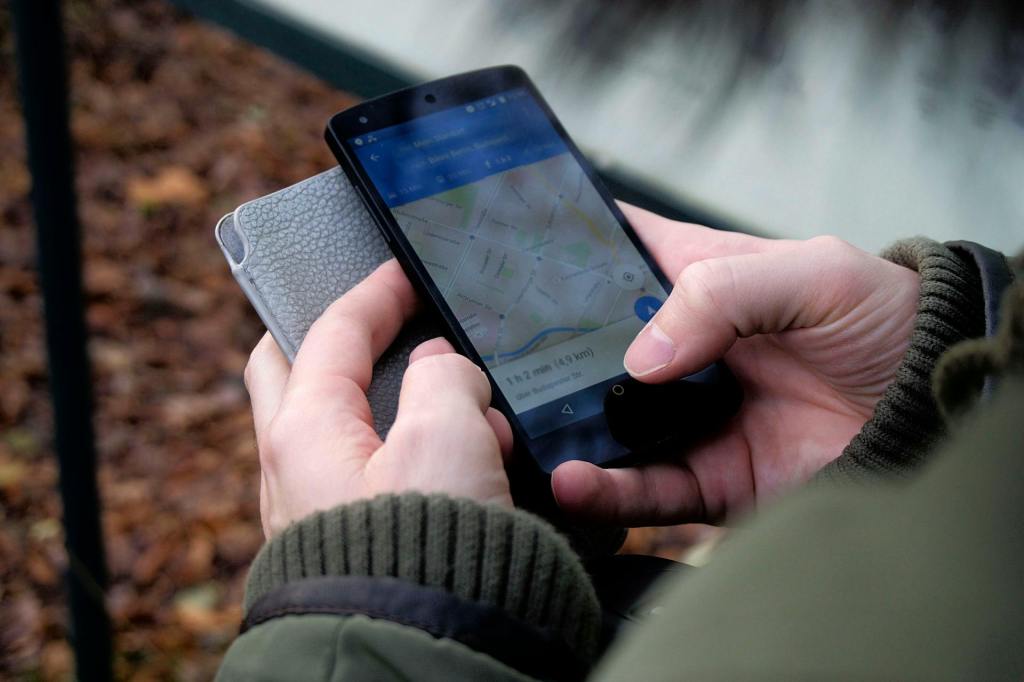
So my freezing hands had to dig out my credit card right away to tap it while the bus is running so it doesn’t get late the closer it got to downtown. The detour to 107 Ave plays a role on whether I’d arrive 2 minutes or 15 minutes after the projected time from Google Maps.

I continued using my credit card for those next three workdays. Then I checked the transactions through my online banking. I was not surprised seeing a single charge in one day despite taking two trips. Looks like the ARC or ETS system tracks all trips and then determines the final charge at the end of the day, which makes sense to me. But I was confused at the amount. $5 seemed too low. But the transactions were still marked Pending, so I figured I wait.

The following week though, when I logged in again to my online banking, the fee changed to $6 per day. That sounds about right.

My ARC card is in a keychain with some bling, my house key and a sturdy plastic sleeve with my card covered with cute transit-related stickers from a local artist. Unfortunately, that very first day I was paying with my credit card instead of my ARC card, I lost the whole keychain! I was relieved that I have the other way to pay for bus fare, but I’m more upset about losing the stickers that I put on my ARC card. I also had to send my husband on an errand to have a new key for me. I have a replacement ARC card now, and I’m eagerly waiting for those amazing transit-related stickers to be available again.

One time this week, I tapped my new ARC card on the scanner in front of the bus and it flashed red with the very aggressive BEEP sound. The screen said “cannot read” as opposed to “low balance”, and as I was about to tap it again, the driver immediately said “you can pay with debit now.” The very reflexive way the driver said it made me realize, that the ability to pay with debit, credit and e-wallets is likely something that passengers have asked about so many times. Luckily for that trip, my second attempt tapping the card worked!

I gave myself a full week to try this out before I felt comfortable enough to tell my brother. He’s been waiting for this for so long. We hang out about once a month, and when it is a location near a bus stop with frequent routes, or near the WEM transit centre, he would take the bus home. At random times he had asked me for change or tickets if I had some to spare. At one point, I even gifted him an ARC card that I preloaded with money. He’s complained to me several times when he had to refill the card with money in winter, as the machine by WEM transit centre glitches a bit when it’s too cold. I know this problem very well, I’ve experienced it myself and sent a few complaints to the city through the 311 app.

He was so happy when I told him. His wallet is very compact, the type that has room for maybe a few cards and bills, not even a compartment for coins. He’s forgotten his ARC card a few times. But that won’t be an issue anymore. Then again, he just moved to a new apartment rental that is way southwest of our city ward, an area served by only a 3-digit, community bus route. It’s likely he will use the bus less frequently anyways.

But at least for him, and for anyone else who would be a very occasional user, this option will serve them well.

People just need to remember that the scanners get confused when several cards and wallets are within the scanning proximity. So it’s best to take out the card that you intend to use, instead of tapping your whole wallet to it.

And I really hope that people do tap off when leaving the bus or an LRT station.

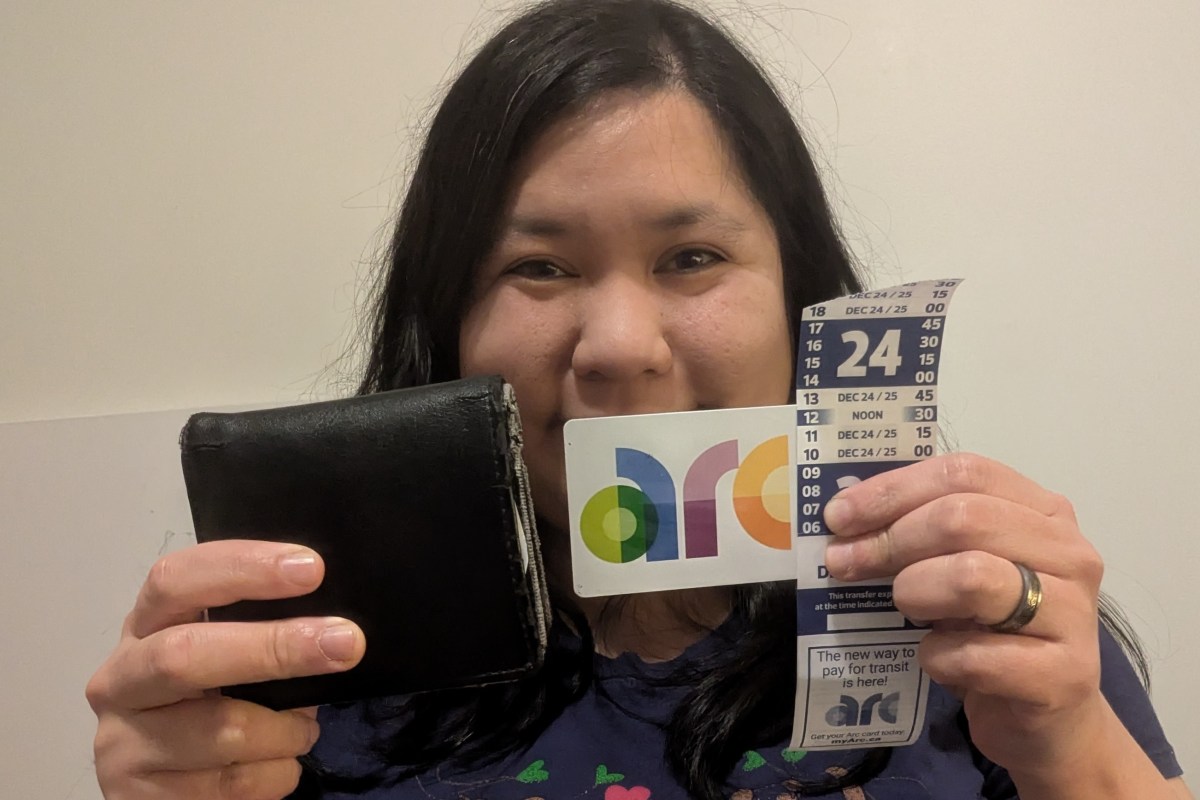
On Christmas Eve my ARC card ran out of money again. Instead of using my credit card, I used it as an opportunity to get rid of some change from my wallet. As my coins jangled through the cash fare box, I asked for a transfer. It was a bit amusing how the driver had to set up the transfer ticket sheet, as if no one has asked them all day so far. As I held my transfer ticket on my way to Christmas Eve dinner, I’m glad to experience for myself all the digital and physical payment methods offered to passengers.

The few paper tickets I have though, they will be souvenirs I’m saving, along with all the transit-related merch, books and old bus passes I’ve collected over the years!
Who To Call for Help? You Don’t Know?! – Captive Transit User Series Part 17

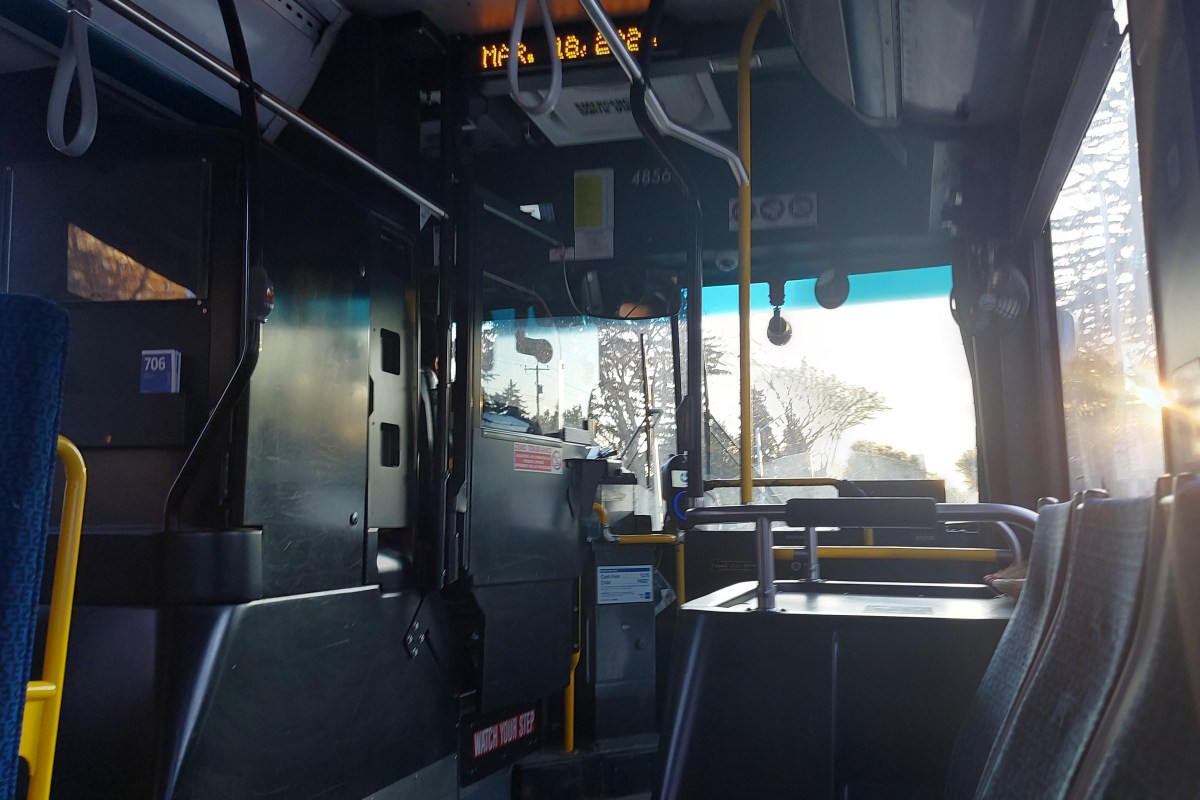
The inside of the regular sized Edmonton transit bus. The front area near the driver's compartment has no information or printed signage about the Transit Watch contact line.

By: Giselle General

This is part of an ongoing series of posts discussion issues I personally encounter while taking public transit in Edmonton. Links to other posts will be added on an ongoing basis:

What is a Captive Transit User? I learned about the term for the first time from the City of Edmonton’s website. The easy definition is: someone who takes public transit because it’s the best (or only available) option for them to travel around. The part about feeling ‘captive’ comes from the restriction that sometimes comes up, perhaps because one is too poor to own and maintain a vehicle, one does not know how to drive, or for medical reasons, cannot operate a vehicle. In many ways, I relate to this a lot. Though I’m pretty fortunate to afford the occasional taxi ride, and with my husband having a car.


In my first few years in Canada, I had to learn how to keep track of all the different phone numbers, watch lines and apps for reporting different issues. In fact, because I knew that this can be confusing for other people, I’ve written a resource articles on this subject a few times for multicultural media outlets in the city. It can be hard to tell right away what constitutes an emergency. When someone is in the middle of an unsafe situation, regardless of whether someone’s bleeding or not, everything seems urgent.

Frankly this is why I have major concerns that the information to ask for help when taking transit can be hand to find. If my personal feedback can be summarized in one word, that would be consistency.

Consistency on where the information can be found, both on the buses and LRT vehicles, would be handy. When I used to take the LRT more frequently, I eventually trained my eyes on where the emergency buttons and alarm strings to ask for help are located. I’m too short to reach the alarm strings – but that’s a different subject altogether. Also, on a 25- minute trip which is typical for my travels, there had been the rare occasion when the same automated robot voice that announce the next LRT stop would also talk about Transit Watch, the phone number where people can call or text if they feel unsafe.

But unfortunately, for those who take the buses, this information is definitely hard to find. On top of the fact that Transit Watch is actual full 10-digit phone number instead of the 3-digit ones like 911 or 311, so it’s not something that people will instinctively remember and dial. I mean, even I don’t know the full number in my mind, but I had saved it as a contact on my phone. In my experience, upon entering a bus, 75% of the time I don’t see any posters about Transit Watch at all. When it does, the posters are in different parts of the overhead compartment for the posters.

In my typical 30- 45 minute bus trip, I don’t hear a single robot-voice announcement about Transit Watch as well. Back in 2023, Edmonton Transit Service had a marketing campaign encouraging people to take one of six potential actions when they see harassment while taking public transit. These posters were in many of the buses but not as much these days. Although I was relived to see it a dozen times so far this year.

Inside an Edmonton transit bus, with a poster about Transit Watch 780-442-4900.

In transit stations, not all of them have a PA system to blast audio announcements. In the places that do, one of which is the South Campus LRT station, I have heard a few robot-voice announcements for different topics, including bus delays, scheduling changes, and even encouraging participation on Stuff A Bus. I have heard a handful of times about Transit Watch. But how about other locations? Sure, it is a temporary station, but I think it’s important to have more visible signs and reminders at West Edmonton Mall transit station for example. It truly would be nice to have a consistent approach in every transit station.

I have taken bus trips with the smaller community buses as well, and I don’t recall seeing a poster about Transit Watch. It’s been a few months since I have taken an On-Demand buses which are much smaller, and I know there’s no space there for paid advertisement or even a small bulletin board. Perhaps a decal or sticker somewhere prominent can be strategically placed somewhere. Or maybe even a QR code that’s quite popular these days.

The inside of the smaller-sized Edmonton Transit bus, the shuttle bus along Jasper Place Transit Centre. There is no poster for the Transit Watch number because there's no good space to put one.

Consistency builds trust. I think if there’s more consistency in communicating that 1 – harassment is not okay , 2 – reporting unsafe situations when taking transit is truly worth the effort, 3 – the contact number is repeated often enough while people are taking transit that they might eventually memorize it, and 4 – that the person who reported can see the resolution, perhaps people could be more understanding about unpleasant situations about taking transit. I agree with what the City officials had said that majority of public transit trips happen successfully, on time and no issues. But for the times when it does, people need to trust the system for reporting and the response to it. This starts with knowing when and how to report.

The Transit Advocacy Group Is Here! The Captive Transit User Series Part 16

By: Giselle General

This is part of an ongoing series of posts discussion issues I personally encounter while taking public transit in Edmonton. Links to other posts will be added on an ongoing basis:

What is a Captive Transit User? I learned about the term for the first time from the City of Edmonton’s website. The easy definition is: someone who takes public transit because it’s the best (or only available) option for them to travel around. The part about feeling ‘captive’ comes from the restriction that sometimes comes up, perhaps because one is too poor to own and maintain a vehicle, one does not know how to drive, or for medical reasons, cannot operate a vehicle. In many ways, I relate to this a lot. Though I’m pretty fortunate to afford the occasional taxi ride, and with my husband having a car.


The name Edmonton Transit Riders (ETR) sounded very much like the city group where I volunteered for six years, the Edmonton Transit Service Advisory Board (ETSAB). But they are different and once I heard about ETR, I’m very happy that they exist.

Over many years I have observed different ways that people use their voice to advocate for improvements in our public transit system. There are people like me that use our personal social media platform sharing our own individual experiences and opinions. There are people who create anonymized accounts with a group name to build an impression it is part of a collective of thoughts who care about a common goal. There are people who join established organizations or groups to share their time, energy and insights in a formalized way within the city government’s system – I’m talking about ETSAB here. And there’s ETR, the external organization who wanted to combine the power of being a formalized group willing to mobilize in a wide range of ways to make public transit better.

A selfie of Giselle and Danielle Witte, board chair of ETR, in front of the under-construction Meadowlark LRT Station.

Sometime in the fall, Danielle Witte, the board Chair of ETR contacted me for a meeting to learn more about what I mentioned above, how current groups have been giving feedback to improve public transit. I offered a unique kind of meeting – a walking meeting where we discussed his questions and I gave him a tour of the West Edmonton LRT construction sites from future West Edmonton Mall to the future Meadowlark Station. I told him how excited I was for the group, and that ETR, ETSAB and the actual public transit city employees for ETS have a lot of positive opportunities to work with each other.

On October 20, the group hosted a official launch party which included an announcement with speeches, and then a private tour of the Blatchford LRT station that is not yet open to the public where the attendees can connect and chat with each other. It was nice to see the current board chair of ETSAB, actual representatives from ETS, city politicians, and other people enthusiastic about transit.

Giselle taking a selfie in front of the Edmonton LRT Blatchford station, during a private tour as part of the Edmonton Transit Riders launch.

Interestingly enough, I remembered a discussion about the Blatchford station during an ETSAB meeting, and see the station still not being used was a reminder that our recommendations to city staff sometimes get implemented. It does make an impact.

In some ways, the word hype feels superficial, but with what ETR is doing, I think building hype about public transit is not only just a good thing, it is an excellent thing that is very much needed. There’s a lingering disdain from everyday people about public transit, combined with an undercurrent of classism and car culture. I’ve said countless times, people complain about hiccups on public transit too quickly and harshly but if those experiences are tied to their driving experience, people are more forgiving.

When I was chatting with the ETR volunteers and board of directors, I was amazed that they were planning to go to Ottawa for a conference about transit. There’s a lot of flexibility they have that made me wish I had something similar when I was with ETSAB. Then again, ETSAB is a part of the city and funded by taxpayer money, so I understand the limitations that where in place. It is nice though that ETSAB board members get a chance to attend the Canadian Urban Transit Association fall conference every year.

Front view of the Blatchford LRT station. Crowds of people are by the platforms observing the space.

One thing I really appreciate is that both organizations seem to have a relationship with the staff of the city’s transit system. Everyone seem to have a well-known common ground of sharing the desire to actually make public transit better.

In future years I eagerly look forward to seeing more of what ETR does. I subscribed to their e-newsletter and social media accounts and they are a lot more public with their advocacy which is fantastic. They had several media interviews, organized an automated e-petition to speak about the low-income transit programs, and had plans to advocate to the provincial and federal orders of government. It’s quite remarkable. Once the actual transit department launches their merchandise line I bet that the ETR supporters would be the first in line to buy or market these items ala influencer style – yes that includes me.

Looking back at the LRT launch for the Valley Line East last November 2023, it is nice to join along a group of fellow transit nerds. If I am lucky enough to be the next city councillor of my area of the city on the west end, I’ll be thrilled to organize the official launch or tour of the LRT along with them! The warm drinks, train-themed cake and ceremonial scissors would be on me – unless someone beats me to it which is very possible!

Being the Human Transit Navigator: The Captive Transit User Series Part 15

By: Giselle General

This is part of an ongoing series of posts discussion issues I personally encounter while taking public transit in Edmonton. Links to other posts will be added on an ongoing basis:

What is a Captive Transit User? I learned about the term for the first time from the City of Edmonton’s website. The easy definition is: someone who takes public transit because it’s the best (or only available) option for them to travel around. The part about feeling ‘captive’ comes from the restriction that sometimes comes up, perhaps because one is too poor to own and maintain a vehicle, one does not know how to drive, or for medical reasons, cannot operate a vehicle. In many ways, I relate to this a lot. Though I’m pretty fortunate to afford the occasional taxi ride, and with my husband having a car.


People unfamiliar with a transit system, whether it is because they are new to an city, a neighbourhood, or just so happened to not use transit for a specific event, benefit from the help of a fellow human who seemed to know their way around. A few times this summer, it was nice to be that fellow human, even as a stranger, to be that source of help and companionship to someone. Here’s a few stories when I by myself, or with my husband, did this to people in the city.

Edmonton Folk Festival

This summer was the first time that my husband and I went to Edmonton Folk Festival. Because we had little time between having dinner at the bar near his work by the Manchester Square, we took an rideshare to the festival location. But we decided to take the relatively-recently-opened Valley Line LRT to her back.

While walking through the green space to get to the station, someone called out to us. They seemed confused and asked where the LRT station is. My husband and I pointed to the direction that we are headed. In the spot where we were standing, it seemed easy to miss the LRT station, as the glass pyramids of the Muttart Conservatory is right close by. The people seemed relived to know that the LRT station was indeed close by, which is a great reason why the festival organizers heavily promoted transit as a way to get to and from the festival.

This is the first year that the festival is going on with the LRT access. I bet that in future years, it would be a no-brainer for most people to get to the festival through transit, either to get to the bottom or top of the hill.

New worker going to downtown

On a Thursday morning in August, I was waiting to get on my usual bus to get to downtown. A man was talking passionately over the phone, in a language I cannot understand. He hung up, browsed his phone for a few minutes and then he approached me, speaking in limited English. Asked which buses go to downtown by 109 Street, and whether the bus is arriving since it’s been late for 5 minutes. I can imagine how a late bus for a route you’ve never used before would make anyone anxious. So I told him “yes that’s the number 2, it will come soon, and we can take it together!”

The bus arrived and we hop on together. He was restlessly looking at the window to check where we are going. I placed the address of his destination on my Google maps app, and showed him the blue moving dot that symbolizes the bus. We were sitting close to the front, so I also point to him the digital screen that was showing the intersection of the upcoming bus stops. I told him, “once we are close to downtown, the screen and the audio annoucement will say.. 121 Street – Jasper Avenue, 116 Street – Jasper Avenue, 112 Street – Jasper Avenue… and then that’s when you pull the stop alert and get off. Then when you get off, you just need to walk 2 blocks that way, and you’ll be in your destination!” I finished my instructions while pointing towards the south.

He shared to me that it was his first day at his job. He shyly told me that his English is “not very good” but he will be starting classed at Norquest college very soon. I said that Norquest is very close to where he was getting off for work, so he can take the same bus and just wait for a few stops further into downtown. I shared that I am an immigrant too, only that I’ve been here for 17 years. He sounded amazed upon hearing that.

As his stop approached, I got him to pull the string for the stop request. As he left the bus, I said good bye and waved at him through the glass, while making sure I press the button again as I was getting off at the next stop. I sent a silent prayer, wishing him a good day at work as I headed out to start mine.

Lady navigating west end construction zone

One morning, I was on the bus heading to work and after a few stops, a woman wearing business clothes came in. There were several vacant seats at the front, but she didn’t sit right away. Clutching her phone tightly, she talked to the driver asking if the bus would be passing by 139 Street and 102 Avenue. He said yes, and continued to drive. She continued standing at the front craning her neck, seemingly wanting to have the same line of sight as the driver.

Only a few stops later, she asked the driver again how close we are getting to her destination. We were still on 87 Avenue, about 15 minutes away. I do know though that she is getting off on a very busy construction zone and might miss where the bus stop is.

I waited for catch her eye, I smiled and said, yes the bus is heading that way. I pointed at the digital sign above her head and said “as you can see, and you will hear, the upcoming bus stops will show on the sign. So you will hear when the next step is 139 Street and 102 Avenue and press the button then.” As we waited along the very congested 142 Street, the bus finally got a chance to turn on 102 Avenue. The bus arrived at the intersections and the got off one of the temporary-looking bus stops.

Honestly, I’m quite relived that smartphones are around. It helps communicating bus routes and travel times better. One can argue that if someone has a phone and data, people can just look at the directions and go where they need to go. But I think that the additional element of human help can provide that extra level of reassurance. Many times, I’ve seen passengers come up to the bus, show their phone to the driver and confirm, and happily enter the bus once they get the okay from the driver. But in a pinch, whether in a random location around the city, a busy transit station, or a bus stop, I enjoy pitching in when needed. It’s a fleeting moment of kindness, lasting a few minutes at most, but can help with those unfamiliar with our transit system get the hang of it.

Book Review and Thank You Letter: Coming to Canada, the Ultimate Guide, by Chidi Iwuchukwu

Cover of book “Coming to Canada, The Ultimate Success Guide for New Immigrants and Travelers”

The remarkable thing about volunteering in the community and pursuing community-focused endeavours is the gift of meeting amazing people right in the city. This is how I felt when during my election campaign for Edmonton City Council, I met Chidi Iwuchukwu. He volunteered a few times helping with door-knocking during the last month of my campaign, and he was delightful in my telephone and email conversations with him.

Right around election month which was October 2021, he was finalizing the publication of this book that aims to help newcomers in the country, to ensure that the vital first days of arriving in Canada is as smooth and productive as possible. This is a thank you letter and a review of his book Coming to Canada, The Ultimate Success Guide for New Immigrants and Travelers


Hi Chidi,

Thank you for sharing to me about the book you were working on last summer. I bought a copy as soon as I got the online link from you and eagerly waited for the shipment to arrive. Here are my key takeaway after reading the book.

Immigrants from different cultures and backgrounds should read guides and information from people outside their communities. It helps with finding common struggles and identify tips and strategies that we might not necessarily think about, likely because of biases from our own cultural perspectives.

The language is pragmatic and straightforward with an easy to follow timeline, particularly the chapter of the first seven days. You can pretty much use this as a checklist. If I could, I’ll hand this over to people and have them go through it page by page, and check off the items as it gets completed. Page 15, getting your SIN – check! Page 18, getting your cellphone – check! Page 24, Connecting with Settlement Agencies, check!

Then this logical flow continues. Page 31-33, finances and credit card – check! Page 62 – learning about workplace etiquette- check!

Do not assume, communicate, read everything thoroughly, these seem like obvious things to do, but with the overwhelming and overstimulating environment brought about by being in a new country, these can slip one’s mind.

I really appreciate the discussion about mental health and social relationships with spouses and children.

I like that it is framed more as list of very important things to be aware of and adhere to, while also acknowledging the potential differences in people’s situations. As far as the topics, this is the most comprehensive list that I have ever seen, and it included chapters that didn’t even occur to me but are very helpful, such as the potential impact of coming to Canada on one’s marriage, if your societal values are different back home. It is not heavy handed in the sense that it dictates who should behave in a particular way, but it helps spark awareness to encourage people to have these deep conversations about these topics.

From a political and systemic view, it was sad to be reminded, yet again, about the social issues that you noted and. I felt compelled to do my part to minimize this, or to try to resolve in my own way. For instance, transit is portrayed as a potentially difficult way to get around, because unfortunately, it is 100% true. It reminded me of why I volunteer for the Edmonton Transit Advisory Board. You encourage newcomers to volunteer for their community leagues because every neighbourhood has one, but not the new neighbourhoods that are still being built so one hasn’t been established yet. Since I volunteer for the organization that supports community leagues, I raised this as an important issue. My dream is that every newcomer to Edmonton who is trying to get settled, will find their neighbourhood group in just a few months, where they can attend events, participate in activities and learn about Edmonton just a few steps away from their home.

I also wrote a more comprehensive review for the February 2022 edition of our community’s ethnic paper in Edmonton, the Alberta Filipino Journal. I hope that through my article, it helped spread awareness of this resource that you worked so hard to develop.

Overall, I’d say, well done! And if you decide to expand on this project, you know where to find me for ideas and content.

End of the Journey of a First-Time Councillor Candidate: Repost from the Alberta Filipino Journal

Giselle outdoors in a neighbourhood holding her election flyer

By: Giselle General

Introduction: This is a re-posting of the articles I have written about my journey as an candidate for the 2021 Edmonton Municipal Elections. Politics and political participation in Edmonton will be a topic I would like to discuss on an ongoing basis, now that I had this experience. But since at this point, it has only been a month Election Day where I only got second place, I am still processing my emotions, compiling documents, and reflecting on everything I have observed and learned.

This was the third article, submitted on November 2021, but was written just two weeks after the election day. You can get a free copy of the paper, published monthly, from many Filipino-owned businesses in Edmonton. You can also everything digitally at: https://www.albertafilipinojournal.com/


The election is over for the municipal elections and I wasn’t successful in my campaign to be city councillor for the city. I came second place. Here is my preliminary reflection of the end of this journey.

Relief in safety and campaign principles

I was determined to run the campaign by following very important principles. These are: positivity, transparency, inclusiveness, collaboration, and care for community. As a result, some of the tasks in the campaign took extra time, such as properly preparing maps for volunteers, calculating fundraising numbers for the weekly social media posts, or adding subtitles to all videos for the benefit of people who are deaf. With that said, both during and after the elections, people have messaged me expressing their appreciation for my thoughtfulness. My actions made the election informative for the average person, and people from the disabled community appreciated that I went above and beyond to ensure they can access the digital content that I published.

Another key component in my campaign is safety, given the reality of COVID19 and additional risk due to Anti-Asian Racism. Many times, I played it safe by avoiding entering  homes with tall gates, not door-knocking alone, and being careful when walking through uneven landscaping and front steps. While other campaigns were door-knocking as early as March, but I waited and observed closely the COVID numbers and the impact of changes in the rules. Sure, it meant I didn’t go to as many homes, but I’m glad that throughout the campaign, I didn’t get seriously ill or injured.

Anguish at missing the goal and systemic hurdles

Just like most people in the world who are ambitious and competitive, not winning definitely hurts for me. On top of that, I felt the weight and pressure of my endeavour, as the only Filipino candidate in the entire city for any municipal seat, after the other candidate withdrew. I definitely would have been great if I achieved this important milestone for the community. My heartbreak at not winning is not just for me, it’s for the entire community.

The optimistic side of me dismissed the idea that money plays a huge role in campaigns, but seeing it firsthand gave me a wake-up call. While I’m confident that I did everything I could to have a well-run campaign, it came to a point where certain gaps can only be filled by additional funds or additional people helping. With this realization in mind, I know what I will advocate for moving forward to help those like me with passion and drive to make positive changes in government, and need just a bit more resources to be successful.

Marvel at the support, outcome, and generosity

Since I don’t have in-depth experience that seasoned politically-engaged people have, I don’t have context of the election outcome. All I know is I didn’t get enough votes and I lost. The cool thing is that many days after the election I received messages of kind words and

As it turns out, getting 5000+ votes is a remarkable accomplishment for a first time candidate, and for a budget that I have it is impressive. I am very grateful to those who have supported the campaign, from the donations, those who made time to volunteer consistently, those who gave advice.

Drive moving forward

One thing I want to make clear is that this is the end of the journey of being a first-time candidate, and not the end of the community involvement journey, and likely not the end of the political journey. If you think about it, if I run for public office, I will be a second-time candidate, with a better understanding of processes, and the unspoken rules of the political world. In the meantime, my focus is to resume all my community service activities that I am already doing to make our city better for everyone.

Update on the Journey of a First-Time Councillor Candidate – Repost from the Alberta Filipino Journal

Giselle wearing a blue top and white blazer outside in a park in Edmonton

By: Giselle General

Introduction: This is a re-posting of the articles I have written about my journey as an candidate for the 2021 Edmonton Municipal Elections. Politics and political participation in Edmonton will be a topic I would like to discuss on an ongoing basis, now that I had this experience. But since at this point, it has only been a month Election Day where I only got second place, I am still processing my emotions, compiling documents, and reflecting on everything I have observed and learned.

This was the second article, submitted on September 2021. You can get a free copy of the paper, published monthly, from many Filipino-owned businesses in Edmonton. You can also everything digitally at: https://www.albertafilipinojournal.com/


My journey of being a first-time candidate for Edmonton City Council is coming to an end on October 18, Election Day! Here my reflection of the journey of being right in the front lines of a campaign.

It is much harder than anticipated. When I first told my brother that I am running, he was scared for my safety! It made sense, given how dangerous it is to run for public office in the Philippines. I reassured him that I likely won’t get murdered here, win or lose. But that doesn’t mean that there are no dangers. As a visibly Asian woman, the risk of racists attacking me is a possibility, given the rise of Anti-Asian Hate due to COVID. There are even practical dangers, as well; many people’s stairs, entryways and landscaping are not always stable, so a slip and fall is a risk when going to thousands of homes.

The harsh reality that it takes money and connections to run for public office became evident. Expenses line up really quickly. I am running against the current councillor, who spent $84,000 in her campaign in 2017. I wondered, how can I even match that? Advertising in bus shelters are at least $1,000, billboards start at $1,500. I spent $2,500 earlier this year for flyers and $3,500 on lawn signs, as name recognition is paramount to being successful.

I see many candidates who get a lot of help, in terms of time, money, and connections, from their parents, and my heart breaks into a thousand pieces every time. It’s a painful reminder of losing my parents too soon. I tearfully wondered every time, in what way would they have helped if they are still alive? Would my parents be proud? Think their daughter is crazy for being this ambitious?

COVID is a mixed blessing when it comes to attending events and activities. Typically, in an election campaign, there is a lot of traveling involved for meetings and gatherings, and it would have taken so much time while taking public transit, or I would need to spend a lot of money taking taxis, or a lot of stress arranging rides from other people. The switch to digital for many meetings and tasks proved to be helpful.

This campaign journey is also quite incredible in many ways that continue to uplift me. As of writing this, I got $17,000 worth of donations, money sent through e-transfers and online payments as well as in-kind donations, it’s just remarkable. For many weekends in the spring and summer, people joined me in delivering flyers to neighbourhoods so I don’t have to spend money on postage. Professionals shared their skills voluntarily, from websites design, graphic design, translating my flyers, mapping routes, strategy, and more!

Another remarkable thing is connecting with people who are not within my immediate network, those who, after researching all the candidates, discovered that I have what it takes to be their next Edmonton City Councillor.

This experience opened my eyes to the simple and complex reasons why our political system is the way it is right now. I really wish that for immigrants, women, and working-class people, that running for politics is not this cumbersome. After the election this is something that I want to address, by finding a way to share all the lessons learned from this campaign journey.

This election candidacy is a journey five years in the making. I hope that by October 18, that history can be made for the sake of the Filipino community in Edmonton and in Alberta, that I can be the first Filipina-Canadian councillor that Edmonton would have.

The Journey of a First-Time Elections Candidate – Repost from Alberta Filipino Journal

Woman in business suit standing in front of the entrance of Edmonton City Hall Council Chambers.

By: Giselle General

Introduction: This is a re-posting of the articles I have written about my journey as an candidate for the 2021 Edmonton Municipal Elections. Politics and political participation in Edmonton will be a topic I would like to discuss on an ongoing basis, now that I had this experience. But since at this point, it has only been a month Election Day where I only got second place, I am still processing my emotions, compiling documents, and reflecting on everything I have observed and learned.

This is the first article, submitted on April 2021. You can get a free copy of the paper, published monthly, from many Filipino-owned businesses in Edmonton. You can also everything digitally at: https://www.albertafilipinojournal.com/


This election candidacy is a journey five years in the making.  Here is a reflection on my experiences as of this date as someone running for the first time.

A main challenge is informing people on different topics. There are many issues that affect our daily lives, and it can be difficult to remember which level of government is responsible. On top of that, there are issues that are a shared responsibility between the municipal, provincial and federal government. So it is important for me, my campaign team, and other candidates to be informed and patient when discussing with others/   

The electoral district boundaries not only changed in composition, but also the names have changed. They are changed from numbers to Indigenous names. I think the names are beautiful and meaningful, but many are frustrated and unwilling to learn. I can personally attest that all it takes is practice, just like learning Asian geography back in high school. After a few rounds of practice, I can confidently say without missing a beat that “I am running for city councillor for West Edmonton, the ward of sipiwiyiniwak!” Those in ward Dene and O-day’min will have an easier time, while those in ward Ipiihkoohkanipiaohtsi would need to practice a few more times.  

I found out that apartments and condo buildings are usually ignored by campaign teams. I found this shocking and unacceptable! Because most apartment buildings are rentals, this means that many people who are not homeowners and from lower economic background are not given the same opportunity by election candidates to share their thoughts about political matters. No wonder the voter turnout in municipal elections is only 30%. Like a spark that ignited in me, I felt a fierce sense of determination to go against the tide and find ways to connect with people living in higher-density places. I hope that landlords and building managers would cooperate with my campaign team so we can engage with residents effectively and safely.  

A harsh and true advice I received was “you need a lot of money”. And I don’t have a lot. I feel motivated to find creative ways to compensate for the shortage of money, and fun ways to raise money and support. From virtual dance-a-thons as a fundraiser, using social media for marketing instead of spending money on billboards, and asking volunteers to drop off brochures instead of paying Canada post thousands of dollars, the ideas seem to be endless. Necessity is the mother of invention as they say, and I’m excited to find innovative ways to connect with potential voters and supporters. I hope that I get hundreds of volunteers from all walks of life, and that even those who cannot vote yet, the newcomers and under 18 years old, feel inclined to join the campaign team as well.  

The election day is in October, and given how time feels like it’s slipping through our fingers, it will be here before we even realize it. All the spare time I have, between breakfast and starting work, between dinner and bedtime, between laundry and cooking on the weekends, are occupied by the seemingly endless tasks to gain more resources, to recruiting volunteers, to ensuring we consult with people with different perspective. Door-knocking officially starts in May and I’m eagerly looking at the calendar counting down the time.  

I am excited to be transformed by this experience. I suppose, turning 30 years old this year also highlights the significance of this adventure. I’d love to win of course, but it’s more that that. My hope is that I am just one of the many people from under-represented backgrounds, of the women, the young adults, the migrants and the Filipinos who would take the leap and throw their name in an election race. I hope that my experience can serve as inspiration and a resource guide in navigating an election candidacy that appropriately considers the complications that arise from our lived experiences. If I don’t end up being that trailblazer, I hope that someone else does not too long after I run.  

Blog on Hiatus – Giselle is Running for Public Office in Edmonton!

Woman in business suit standing in front of the entrance of Edmonton City Hall Council Chambers.

Exciting news!

I will be taking a break from posting regular content on the blog. 2021 is a hectic year as I pursue an adventure that is new in a sense (because this is the year of making it into reality) but at the same time, is half a decade in the making.

I am running for public office, for the City of Edmonton’s municipal elections, as a city councilor candidate for the district I live in, which is ward sipiwiyiniwak in West Edmonton, the current Ward 5 that with additional neighbourhoods from Ward 1 captured as well. The pronouncination is like this: silent yi, as in see-pee-wee-nee-wak. The campaign website is here! https://www.gisellegeneral.ca/

So is this website going to be the campaign page? No. It’s just that there may be longer breaks between posts. I might post a blog or two in case I decide to procrastinate (haha!) but it will be less frequently than what I do now.

Where’s the campaign information? Right now? It’s not ready. Once it’s ready, they will be posted here. However, on my personal Twitter account https://twitter.com/gisellegeneral I am posting personal perspectives on the campaign trail so far. Once the campaign accounts (both website and social media) are set up, I will post more content about policy and platforms.

How are you feeling? So far, overall okay. There are stressful, isolating, overwhelming moments yes, but so far, most things are figure-outable if you know what I mean. Part of my goal is to demystify the campaign process for the average Edmontonian, to showcase what it takes. I want to show the trials and tribulations of being a first-time candidate, in order to inspire participation from my fellow average Edmontonians, to inspire my fellow Filipinos to care a bit more about municipal politics, and smash some glass ceilings along the way and bring forward perspectives that seem to be typically overlooked when it comes to polity. It would be nice to be the first Filipino-Canadian city councilor in Edmonton, or at least someone considered a very strong candidate who aimed to reach that goal as hard as possible. I am running against the incumbent again, which is consider an additional, usually insurmountable obstacle, but as Barney Stinson says in the show How I Met Your Mother, “Challenge Accepted!”

I hope that the articles I posted here in the past are helpful or entertaining. And if you live in Edmonton, I hope to see you on the campaign trail – mostly electronically because you know, it’s still a pandemic.

The Privilege of Work Benefits

By: Giselle General

As the end of the year is approaching, I double-checked my Health Spending Account (HSA) which is part of my benefits as an employee of a nonprofit organization. I’m pleased to see that for this year, I have used up about 75% of the total allocated funds for a wide range of services and products for my health and wellbeing. I bought hand braces for my hands to deal with my carpal tunnel and nerve issues, and for physiotherapy appointments early in the year.

Then when the pandemic happened, I tried to book a few online appointments with my psychologist which worked really well! At the earliest opportunity I booked massage therapy appointments again, almost once a month, because my furniture for my working at home arrangement is okay but not ideal, causing issues with my arms and shoulders from poor posture. Filing a claim to get reimbursed is a smooth and easy process thank goodness.

Living in two different parts of the worlds, for almost half my life in each country, has given me an opportunity to observe the vast differences when it comes for companies compensating and caring for employees.

I grew up in a remote village that was dominated by a single industry, mining precious metals. Workers of the company were given benefits such as a home, with utilities included, free schooling for the kids (elementary and high school) and a medical clinic. These incentives makes sense, because working for the company requires living in that location all the time. This is why when I was younger, thinking of these items as expenses didn’t occur to me. There are also trucks and buses that transport the employees to and from the mines and other facilities and then to waiting sheds that are a few steps away from their home. I knew that these were additional perks in addition to the salary that the workers picked up twice a month.

It wasn’t until my parents passed away (which included my father, the employee of the company) that I realized that there was a specific exchange taking place here. As my grandma and I settled into the store we owned and integrated our living quarters there, I became aware of other bills that people have to pay, such as electricity and water. I was permitted to continue to go to school that was meant for the children of the mining company’s employees. This is because we are still part of the community as an independent business owner, but there were some additional administrative school fees I have to pay.

person's hand catching a medicine pill being poured out of the bottle.

In my recent visits of the Philippines, I’m learning that more of my relatives are working for call centres. It’s a growing industry over there. Many of them were thrilled of what they will be given such as higher-than-average wages, and health benefits to cover hospital expenses and prescriptions. Having a fund to tap on to pay for medication is a huge deal because it’s not common. Regular medication or treatments for illnesses such as hypertension, diabetes, or kidney troubles is financially burdensome.

Another type of employee benefit I observed in the Philippines is recreational trips, and company-wide outings. It seems like the attitude of ‘work hard, play hard’ is commonplace for companies with demanding responsibilities. A cousin who is a year younger than me told me stories of very busy periods at their work, where they practically sleep in the office for a week straight in order to meet a deadline, as in with sleeping mats and dinners provided by the company! I thought to myself, once it hits 10 PM, how productive are their workers really, when having to work for the rest of the night? But it looks like that’s the way it works there. And then, after this grueling time period, a weekend is scheduled for the entire company to have a trip in a resort to have fun in the beach, with picnics, swimming and more. For companies that employ majority younger adults, who are motivated by adventure and have the stamina to pull all-nighters, it seems to be a workable arrangement.

Being an employee here in Canada was a learning curve for me. I admit I was reluctant to maximize my benefits as I don’t completely understand what that entailed. The first time I tried to sort out the details of using my work benefits to go to the dentist, and I realized that I don’t have to pay a single penny after the procedure, was shocking to me. For so long, growing up, I felt fearful to seek dental care, to the point that two of my adult teeth were damaged so badly they have to be extracted and I wear partial dentures ever since. This has motivated me to have a predictable and positive dental health moving forward.

After moving into our house where my husband connected me to the dental clinic he used since he was a child, my dental appointments are regular. One year I had to have a major procedure, taking all four of my wisdom teeth, with my work benefits and my husband’s benefits, I didn’t have to pay a cent for the procedure and the prescription painkillers. It’s incredible!

Retirement contributions was another learning curve for me too. I remember being told that after passing my probation period that my paycheque is going to have another rows of numbers in the document, explaining the amount that will be docked out of my pay for RRSP contributions and how much my employer is adding as well. I remember in the personal finance forums online that this is a common topic when it comes to employee benefits.

Closeup of a woman's face and shoulders, while lying on a massage bed getting a shoulder massage.

Finally, I gradually got into using benefits for paramedical procedures. The first time I went to therapy for my mental health, it was free of charge because I obtained services from an nonprofit specifically helping people like me – sexual assault survivors. At first, there was only insurance company we use to claim expenses for these procedures, until it was separated and we had a Health Spending Account, which covers expenses for a wide range of things such as physiotherapy, massage, psychologist, and a lot more.

Coordinating benefits packages and coverage between my husband’s and mine took a bit of initial work but now it’s very seamless. I felt really good about being able to partially pay for my husband’s eyeglasses, as he needed a prescription starting last year. As a couple we now tap into each other’s benefit packages when we officially became common-law a few years ago.

With all the current conversation due to the current pandemic, these conversations are at the forefront of many working people. One’s paycheck usually goes to major expenses and if there are any benefits it helps ease the financial burden on some of those purchases that meaningful but never prioritized.

It goes without saying that I feel fortunate to still be employed at this time, and even more blessed and priviledge to not only benefit from these work benefits, but to also acknowledge the wide range of options that are out there.