When Community Service and Self Care Goals Conflict

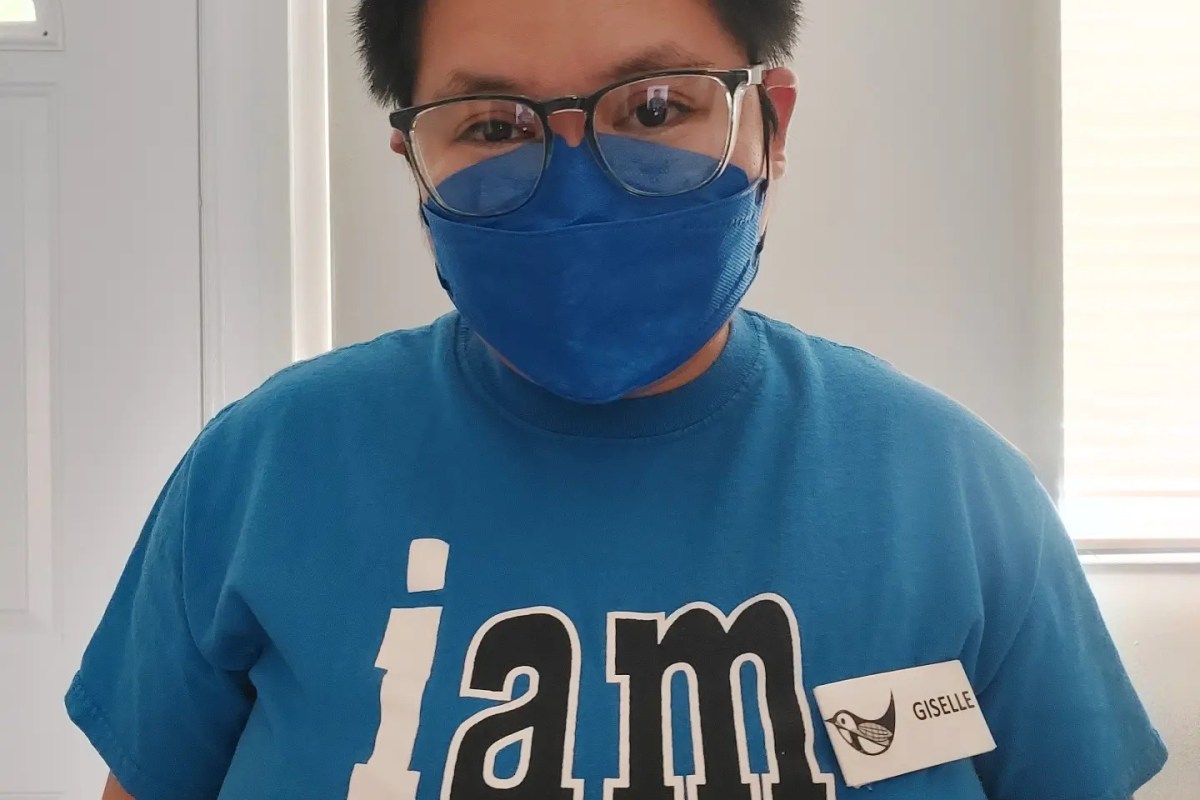
Giselle wearing a stylish safety glasses, KN95 mask and a volunteer Tshirt

By: Giselle General

Last fall, I had an an eye-opening moment as I went about doing my volunteer activities. During the third weekend of September 2023, I had two activities back-to-back, both outdoors. From morning until early afternoon, I was in my neighbourhood park helping with an annual gathering that includes serving lunch, having activities for kids and families to enjoy, and for residents to apply for their membership with our organization. Shortly after, I went to an Philippine arts event at an outdoor park in downtown Edmonton.

When the day began, I checked the air quality index and it is a 4. Not yet a concern which is great. But as we approached the lunch hour, my eyes started to feel irritated so I wore my glasses. It’s not the type that corrects your vision, but a cuter version of safety glasses I got a few years ago. Turns out, my eyes get irritated by the wildfire smoke, more easily that the average person.

It was 3 PM when I rushed to the arts event, where I kept my glasses but didn’t wear an N95 mask. That was my mistake. Although I must say that communicating and connecting with my fellow writers in our booth was so much more efficient without the mask. Also, since we were outdoors, I figured the COVID risk would be minimal.

Unfortunately on my bus ride home, as I sat on my seat resting my legs from walking and standing all day, that’s where it hit me. When taking transit I still wear a mask because I definitely don’t want to catch any of the respiratory viruses spreading around. As I sat patiently waiting for the bus to reach the west side of the city, I checked the air quality index app again. It went up to 8 – high risk! No wonder my eyes were irritated for the afternoon. As soon as I arrived home, I plopped on the couch while struggling to answer my husband’s question about what we plan to have for dinner. After dinner, my chest started to hurt, and I have to make an effort to breath in for the rest of the night.

I had plans to attend other neighbourhood events the next day, but when I looked out the window and saw the familiar orange haze in the sky I knew it’s a bust. The air quality index app showed a rating of 8 in the morning which went up to 10+ in the afternoon. I have to stay in.

This is just frustrating. I very much hate the fact that my own body seems to now get in the way of my volunteer activities. I also know that since COVID precautions are virtually nonexistent in public spaces, the burden on individuals to protect themselves is just more significant. The worst part is, event individual precautions are less effective especially if let’s say, you are one one of the 100+ people in an indoor hall during a community engagement event. While on one hand, I know that my assistance and contributions will be very helpful during the said event or activity, none of the organizers, fellow volunteers, or attendees would step in to help me if I get permanent harm from attending.

Perhaps that is part of the reason why that even more so the past few months, I make sure that majority of my volunteer activities can be done from home. Writing two informative articles for the monthly ethnic paper for the Filipino community in Edmonton continue to be rewarding. Over winter and until now, I started to do volunteer sewing tasks, upcycling old merchandise from my husband’s running group and turning them into personalized outfits. The documentary and book projects are also tasks that hopefully will make a positive impact in the future and can be done without risk of being exposed to smoke, fumes, viruses, hostile weather or all of the above.

There’s really no solid takeaway message I can pin down. During my election campaign a few years ago, I made decisions that I know prioritize my wellbeing and my life over potentially winning over votes. “My goal is to come home alive” and “if I’m sick, severely injured, or dead, then I won’t be able to help” are my personal constant reminders when I feel guilty about missing community events or volunteering opportunities.

In the new year, I tried to nudge more of my free time towards improving my personal health. Weekends offer what seems to be an unlimited opportunities to get involved and volunteer, whether it is events, workshops, rallies, and more. However, given that my husband goes out for a run with his running group in the afternoons (in the winter), I discovered that it is best to try a fitness related activity that I can try to stick to on a weekly basis. So for that past three months, that has been swimming for about 45 minutes at the local YMCA.

Giselle wearing a swimsuit getting ready for a swim.

This weekly swim routine has paid off really well in just a few weeks. It’s hugely help reduce my shoulder, neck, and back pain from doing office work full time. Swimming laps and treading water is definitely good cardio without aggressively hurting my joints. And slowly, as I gain confidence in learning how to tread in deep water, I also manage my fear while celebrating my incremental improvements.

This tradeoff has been worth it for now. My community service time and activities are sprinkled over week nights, lunch breaks and weekends, so I figured carving out a premium time for my self is the right call for now. I do dread the upcoming summer though with the greater likelihood of forest fires and smoke risk. Maybe volunteering for public and indoor activities is the approach moving forward.

A Month of Cool Transit Milestones: The Captive Transit User Series Part 13

Giselle posing beside a table with a sheet cake. The design on the cake says "Train, Choo! Choo!"

By: Giselle General

This is part of an ongoing series of posts discussion issues I personally encounter while taking public transit in Edmonton. Links to other posts will be added on an ongoing basis:

What is a Captive Transit User? I learned about the term for the first time from the City of Edmonton’s website. The easy definition is: someone who takes public transit because it’s the best (or only available) option for them to travel around. The part about feeling ‘captive’ comes from the restriction that sometimes comes up, perhaps because one is too poor to own and maintain a vehicle, one does not know how to drive, or for medical reasons, cannot operate a vehicle. In many ways, I relate to this a lot. Though I’m pretty fortunate to afford the occasional taxi ride, and with my husband having a car.


November 2023 was such an incredible month for all things transit in Edmonton. On a typical day, it is understandable that many everyday people, the media, and those politically engaged have many frustrations about our transit system and are quite vocal about it. But November was a bit special as there were precious opportunities of celebration and showcase.

Valley Line Southeast LRT Line Opening

On November 5, the long-awaited LRT line from downtown to Southeast Edmonton finally opened. While there wasn’t an official event organized by the city, it felt really festive right at 5 AM throughout the LRT stations along the line. This is thanks to enough people in the city who organized, shared enthusiasm and as a result, filled up the LRT vehicles during their first trip from downtown to Mill Woods and back. I described those wee hours of dawn as ‘festive in a nerdy way.’ There was cake, coffee, an opportunity for everyone to take turns to cut a ribbon with large ceremonial scissors, and run into other people in the city who are keen on municipal politics, love trains or active transportation, or both.

I am super grateful to my husband (who is not a big politics or transit nerd like me) who convinced me to go to this ‘opportunity of a lifetime’ event and offered to come along with me, since there are no buses available at 4 AM from our place to downtown.

Here are some of the media articles that captured the enthusiasm of the opening day. It was pretty fun trying to spot my husband and I in the photos and video snippets.

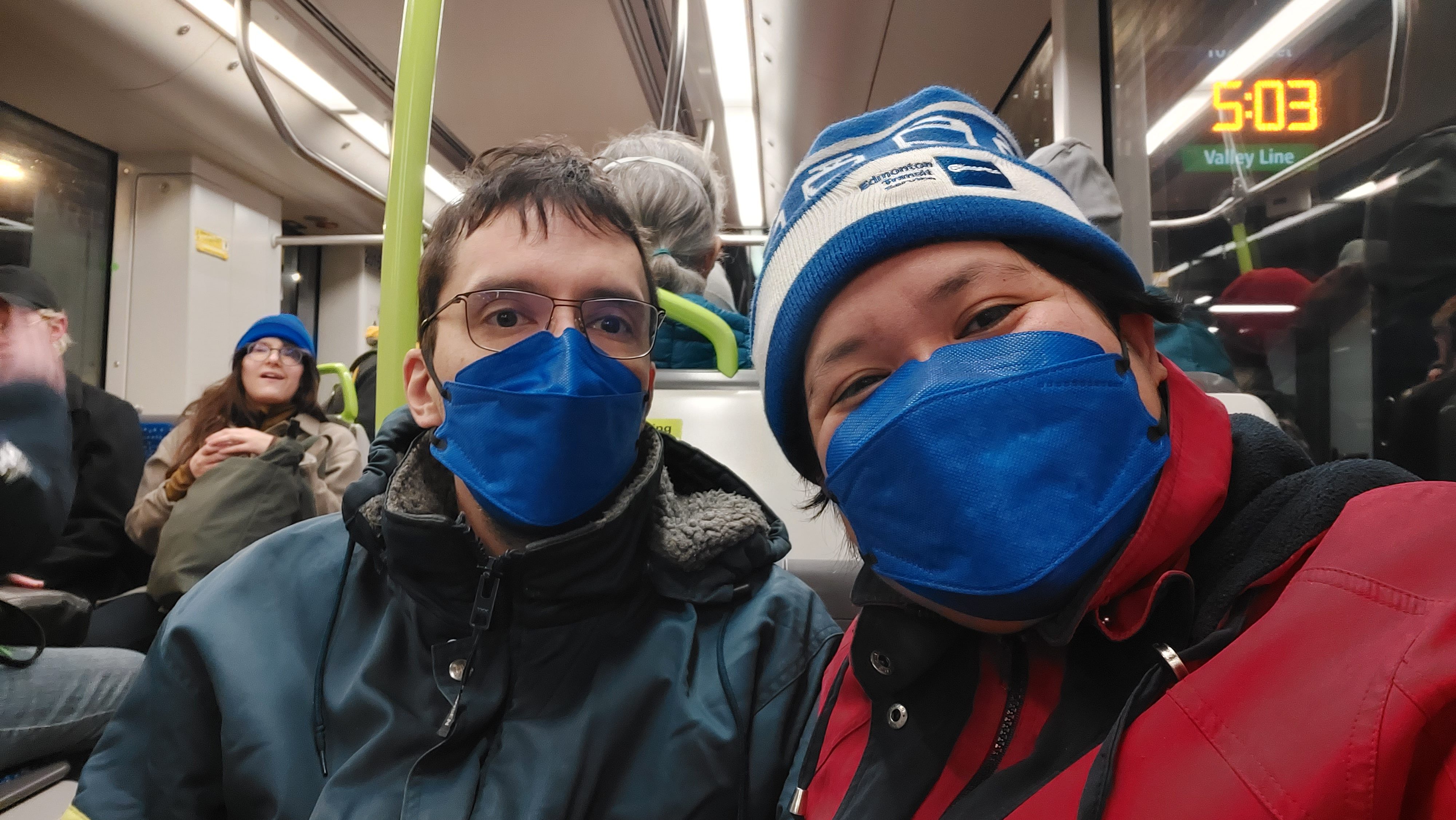
At 5:03 AM, after the passengers did a countdown, the LRT departed from the 102 Street station on the way to Mill Woods. My husband and I were lucky to find seats.

Edmonton Hosted the annual Canadian Urban Transit Association Conference

In mid-November, Edmonton hosted several transit-related conferences, the Youth Transit Summit and the regular Canadian Urban Transit Association convention. The CUTA conference happens twice a year, a smaller spring convention and the main fall convention, in various locations across Canada. Back in 2018, during my first year as a board member of the city’s transit advisory board, I was able to attend the CUTA conference in Toronto. So it was very exciting to have my home city host it. I got sick in the middle of that week, but the fact that multiple members of our board were able to attend was wonderful.

The fact that the new LRT line opened just in time for the conference, so that it can be showcased to all the conference participants who signed up for technical tours, was a bonus. The technical tour I was able join, the recently re-opened Stadium Station, was informative and enjoyable. The best part for me is that not only was the tour focused on the station itself, but the changes in the residential areas nearby. The new cluster of tall residential towers is the first time I’ve witnessed a real-life example of TOR (Transit Oriented Development).

Edmonton Transit Service staff shared information and answered questions of the crowd during the technical tour of the station. One surprising fact I learned is that the undergound station is still functioning and was renovated into a service room.

Thinking back to my last vacation in Manila, Philippines, I chose to rent a condo that was walking distance to an LRT station and a mall. It made travel very convenient as it was an effective way to beat the horrible road traffic during the holiday season. My current home here in Edmonton will have the same convenient access as well. My husband and I walk to the mall and business plazas nearby. We are walking distance from a hospital, gas station, convenience store and a car wash. When the LRT finally gets opened in a few years, it would make getting around even more flexible. I’m curious to see what will happen now to the areas within blocks off every transit station.

Showcasing the Transit System to a City Councillor

Then in late November, I did something for the first time, something I have casually offered on social media to the politicians of the city but no one took it up until that day. On Sunday November 26, I spent the morning with one of our city councillors and their staffer on multiple ETS transit trips across the city, experiencing various methods including the bus, LRT, replacement service, on-demand bus, and walking to a destination as opposed to taking a bus. I admit I was nervous, worried that I may sound irritating with too many complaints and concerns I was pointing out all throughout the trips. But they were both receptive and the blog that was published afterwards is insightful.

I showed Councillor Cartmell the various ways temporary bus stops are designed. I pointed to him that this one along 102 Avenue and 133 Street has good platforms for the front and back doors.

Transit, safety in public spaces, homelessness, and ‘value for taxpayer money’ arguments take up a lot of discussions on city politics lately. I’m curious to see what additional decisions that are made politically and the changes that city administration would make to work on these issues.

Report it on the App: The Captive Transit User Series Part 12

By: Giselle General

This is part of an ongoing series of posts discussion issues I personally encounter while taking public transit in Edmonton. Links to other posts will be added on an ongoing basis:

What is a Captive Transit User? I learned about the term for the first time from the City of Edmonton’s website. The easy definition is: someone who takes public transit because it’s the best (or only available) option for them to travel around. The part about feeling ‘captive’ comes from the restriction that sometimes comes up, perhaps because one is too poor to own and maintain a vehicle, one does not know how to drive, or for medical reasons, cannot operate a vehicle. In many ways, I relate to this a lot. Though I’m pretty fortunate to afford the occasional taxi ride, and with my husband having a car.


Whenever I take the bus or LRT, regardless of whether I’m alone or traveling with my husband, I try to pay attention to my environment. Sure, at some point I end up getting slightly bored and browse on my phone, but I don’t do that until a few minutes after getting on the bus. It’s also why I don’t wear headphones while taking transit.

Frankly speaking, the reason I feel inclined to stay alert is not related to safety. Sure, that is important, but thankfully I personally haven’t experiences direct and aggressive treatment on the bus which is a relief. I have a different motivation, that is to observe whether something is going wrong with the bus, train, bus stop or transit station that needs to be fixed. The moment I spot it, I report right away on the 311 app.

The City of Edmonton has an app called the 311 app, that enables people to report different things that the city can resolve. It includes a feature to take a photo (although it is not mandatory which is good), text boxes to add a summary of the issue, automated geo-location, and a check box to indicate whether the issue causes accessibility concerns.

As far as transit, the categories are:

Late Bus: For this section there are questions such as the location, bus stop and route number, and whether the delay is due to weather conditions. I personally don’t make a report when a bus is 15 minutes late and if the travel apps like Google or Transit had actually indicated it. It means that it is a real-time update. But if it is winter and the bus is 20 or more minutes later, then definitely I would report.

Transit Feedback: I am guessing that this category is for other types of feedback that are not related to buses being late, or not related to broken and dirty things in transit facilities. In the past, the third category is specifically related to vandalism and cleanliness, so I have used this category to report something that is simply not working, like a digital sign. I also haven’t used this option in a while.

Transit Maintenance: This is the option I use most often. What I typically report falls under two categories: items related to cleanliness or vandalism, and items related to functionality of electronic items in the bus. The vandalism I’ve reported vary, from scribbles on the seat in front of me written with pen or paint, broken wayfinding signage in downtown right beside a bus stop, a few bus shelters where the glass walls had completely shattered, and the one I know should be addressed quickly – colorful and sticky stains on the bus seats, especially the fabric ones.

As far as functionality of electronic items in the bus, there are two main ones. First is the ARC Card machines where people are supposed to tap on their way in or out. The sounds from the machine are quite distinct whenever it doesn’t function. When after 10 minutes on the bus, I can still hear the particular beep that indicates it’s not working, then I make a report. If the display screen is not working, I do the same. The most frequent report I do though is whenever the device that is supposed to announce the next stop is not working. as indicated in this post, I’ve learned to appreciate the value of hearing and also reading the information of the next stop, especially when it’s hard to see over the window. The best part about the app is whenever I report issues, there’s a check box that asks whether it is a disability issue. Whenever it does, I check if off every single time. I truly hope that the issue gets escalated.

It’s truly unfortunate that I cannot see whether the issue is fully resolved or not. The odds of me taking the same bus with dirty seats right after I made a report is unlikely. The only update is seeing the ticket being closed or “redirected to other business area.”. However, in our data-driven society, I know that every report gets added in the statistics. In fact, there are public databases available on all the 311 reports made to the city, for those who want to do analysis on a certain issue and want to use the number of complaints filed as supporting evidence.

If there’s one change I’d like to see on the app, is to know for sure whether the issue is fully resolved or not. A photo to show the issue is fixed or cleaned would be so nice. A once-sentence update that says the broken speaker or digital sign is fixed on a certain date would be so reassuring. Even a statement saying that the issue is considered and can be addressed by future policy gives an indication that it is a long-term problem. Maybe this can help prompt people to use these reporting methods more and trust them.
For now, I still use the app. It’s more productive that venting on social media.

Two Small and Impactful Gestures of Two (Former) City Councillors

This time around I am going to publicly name two politicians for what they have done! What a timely post shortly after one year since the most recent municipal elections here in Edmonton.

Cue scary noises!

Actually, I’m just joking, really!

I think it helps that they are both former former city councilors, but either way, I am actually actually not naming them and shaming them. I’m naming them because yes, I think they probably won’t even remember doing these two things at all. These seem to be very small gestures but had really impacted the way I look at things here in the city where I live, and had shifted my life in a very noticeable way. It is a positive impact – no shaming will be happening here.

First is former City Councillor Scott McKeen, who represented Ward 6, downtown Edmonton. He was pretty active in his social media accounts, and I followed his Twitter account to stay up to date with city politics. One day, he re-tweeted about a Repair-a-thon event a few days before it was about to happen. I like sewing, fixing things up and making them usable again. This event is an opportunity for people to get everyday items and clothing repaired, and people can volunteer their skills to help get these stuff fixed up. Because of a scheduling conflict and the fact I just found out about it a few days before the weekend, I cannot make it and I was pretty upset. I could have helped patch up clothes, sew back buttons and fix hems on shirts and bottoms. At the time, I already figured that Home Economics is not a a typical part of the curriculum for children here, so many don’t have the skills to do simple repairs with clothing, household objects or electronics.

From seeing this event being promoted, I also discovered a Twitter account called Boomerang Bags Edmonton. It is very much related to sewing and upcycling. The goals is to get volunteers to sew fabric shopping bags that can be re-used as opposed to single-use plastic bags, and donate them to local stores so they can encourage customers to use them instead of buying bags. It’s a win-win and I loved the concept. So I got involved, signed up to volunteer and made a lot of bags. If I tally them up it probably will go up to the hundreds at this point.

It’s interesting because the preferred terminology that is gender-neutral is “sewist”. But it’s difficult to use since as someone who is ESL, whenever I hear the term I think of someone who is doing something related to plumbing, like sewage. Because of this I still use seamstress especially when talking to people who might not be as familiar with the community.

Anyways, because of being a volunteer seamstress with Boomerang Bags, working with fabric become a larger part of my hobby time. I’ve already been quilting for years and I’ve made enough quilts, throw blankets, pilllowcases for my home. And during the pandemic, our community’s talents had an opportunity to shine in a major way. Hundreds of crafters, seamstresses (or sewists), quilters worked together for months to help with two major fabric-related goals: to make fabric masks for those who cannot afford them, and to make fabric laundry bags for healthcare workers to store their contaminated scrubs after work that they can just toss into the laundry.

A dining chair with a dozen fabric bags draped by the backrest.
These were the first batch of bags I’ve sewn in March 2020, as part of the province-wide effort to make fabric bags for healthcare workers who need a place to store their dirty uniforms. Just a year beforehand, I discovered Boomerang Bags Edmonton through social media posts of a city councilor.

I wonder if the former councillor realized that from this very small act, it opened me to Edmonton and Alberta’s community of creatives sewing.

Second is former City Councillor John Dziadyk, who represented Ward 3 on the north side. He caught my attention during his election campaign in 2017 because his marketing strategy was frequent, consistent, and his viewpoints were phrased in a way that resonated with a lot of people frustrated with how things are done in city government. After he got elected, his social media, particularly Facebook, continue to be very active in sharing information about community matters.

He published a short video during spring time 2018, encouraging people to help with the snow melting and puddles in drains by chipping off the ice of a blocked drain when they see one. It’s clear that the video was a simple one, likely just him and another person holding his phone. He used an ice chipper, a common tool used in the winter, tried to strike a puddle a few times and then the muddy water started to drain. He said, doing this helps prevent flooding and from stagnant ice water to collect. This can be dangerous if the puddle freezes again which tends to happen in March and April.

It blew my mind that it is something that an everyday person can do. I definitely have seen these slushy puddles on sidewalks and intersections all the time. As someone who frequently walks, I’ve been splashed by them a few times. I thought there’s nothing anyone can do other than hope for warmer weather so all the water evaporates.

As a result, I started to observe sidewalk drains whenever I walk around. While I don’t always have the time or I forget sometimes, whenever I could, I would also remove pieces of garbage or leaves that would block the drain. That way, when it rains or there’s a large amount of snow and ice melting, all the water have somewhere to go. It’s one of those seemingly invisible things that if someone looks at proactively, it can save people from inconvenience, potential accidents, and soggy footwear.

A sidewalk in the spring time, with snow and slush piled up.

What’s most interesting about these two experiences is that these actions are not even closely related to their actual roles, which is advocating and addressing political issues under the municipal government. A few times, I’ve heard people say that being a politician for a city or municipality, is the toughest one compared to being a provincial or federal politician. Either way, I’m thankful that something as simple as browsing social media platforms and finding these information from their posts had made a positive impact on me. A re-tweet, and a simple video, who would have thought! Well, I hope these two former politicians are doing well these days after moving on from political life.

Community Resource Article – When Debt Issues Arise

By: Giselle General

This article was also submitted by the author as a contribution to the Alberta Filipino Journal (a cultural/ community newspaper in the province of Alberta, Canada) in June 2022.

Managing one’s finances is an important responsibility in order for us to have a comfortable life. But sometimes, unexpected things happen, and we find ourselves in a difficult financial situation. Perhaps the bills, mortgage, rent or credit card payments were left unpaid too many times and things have escalated a bit. Perhaps you are about to lose your home, or received a court document, or been subjected to aggressive phone calls or messages from those who want payment.

Here are some resources that can help when financial problems turn for the worse.

When Financial Debt Requires Legal Help

  1. Consumer Debt Negotiation Project Program – Edmonton Community Legal Centre: Many of us have consumer debt, such as credit card payments, car loans, personal loans, even a mortgage. You might be falling behind on payments, and you discovered that there is a legal action that happened, let’s say, you received a court document from the bank or the company you owe money to. You can contact this free program so you can get an opportunity to speak to a lawyer to get help.To contact this service, to go the website https://www.eclc.ca/need-legal-support/ and then click on the box that says “For Consumer Debt Negotiation Project”

Emergency Financial Supports

  1. Community Bridge Program: Funds To Prevent Getting Kicked Out by Landlord: If you are renting the place where you live right now, and you fell behind on rent payments, it is likely that your landlord would want to evict you. Getting kicked out of the place where you live can be very stressful and disruptive. This program is a financial ‘rapid response’ as a last resort so you can stay in your place and make payments you missed. The link to access this program is https://bissellcentre.org/programs/individual/community-bridge/
  2. Emergency Needs Allowance – Government of Alberta: This is a program direct from the Alberta Government for when you face an unexpected emergency that can present a health risk and caused by unexpected circumstances that you cannot pay for. It can cover a wide range of needs such as food, clothing, childcare, temporary shelter, utility payments, eviction payments and more. The link to get more information and how to apply is:    https://www.alberta.ca/emergency-financial-assistance.aspx

Financial Literacy – Learning about Money Management

  1. Credit Counselling Society – Online Courses: This is a self-paced online course that focus on financial management skills such as learning the realities of credit, budgeting, spending on food, and more. In addition to the online courses, they also have other ways to support when you are currently facing financial difficulty. https://nomoredebts.org/financial-education/online-courses  
  2. Each One, Teach One: This program is designed for bankers to deliver basic financial literacy workshops to newcomers, refugees, individuals who face barriers to financial services, and people living in low-income communities, in a “teach the teacher” type of format. It is comprehensive, as it covers topics beyond just budgeting and debt, such as investments, contracts, and fraud prevention.  https://www.myunitedway.ca/each-one-teach-one/
  3. Money Mentors Financial Education: Money Mentors also provides services to help people in financial difficulties, and they have also educational content on their website. The catalogue is even more comprehensive than the other two, addressing other complex but common issues like preparing financially for a baby, having unpredictable income sources, home ownership, money discussions in inter-generational households, and many more.   https://moneymentors.ca/financial-education/  

This is not an exhaustive list, but I hope that this is a useful starting point. After you contact these resources, it is possible also that they might recommend other programs and services to help with your situation. Having financial issues can be stressful and embarrassing, but a lot of the time, the staff and volunteers that are part of these programs are understanding and compassionate. When contacting them, I highly recommend sharing all the necessary details and not leave out information even if it feels shameful. Complete transparency is important for them to understand your compete situation in order for you to get the best help you need.

Community Resource Article – Opportunities to Volunteer

By: Giselle General

This article was also submitted by the author as a contribution to the Alberta Filipino Journal (a cultural/ community newspaper in the province of Alberta, Canada) in April 2022

In hounour of National Volunteer Week which is on April 24, I would like to share some opportunities and resources when it comes to volunteering. A short definition of volunteering is doing a task where you are unpaid, or paid a very small amount that it wouldn’t fit the minimum wage requirements, that supports a charitable or community-oriented objective.

This is a very small list of the thousands of opportunities available, but the ones I’d like for our readers to consider.

Right In The Neighbourhood and the City of Edmonton

  1. Community League of your Neighbourhood: “Bayanihan para sa kapitbahay” is my simplified description of community leagues. Being helpful toward our neighbours, is the spirit of the neighbourhood Community League. Much like a people-run barangay association, your community league is a volunteer-based organization in the neighbourhood that helps plan social events, help advocate for issues in your neighbourhood, and at times they might have a hall where they maintain some local amenities. To know where you community league is, go to the website of the Edmonton Federation of Community Leagues: www.efcl.org
  2. City of Edmonton Volunteer Catalogue: The City of Edmonton, as in the actual municipal government, offers many services to everyday Edmontonians. For some of these event or programs, there are ways to volunteer and help! I personally have been a greeter for the city’s Free Admission Day in a local tourist attraction, and I have helped plant trees in a large park one summer. The link to set up your account and apply is: https://app.betterimpact.com/PublicEnterprise/9e275823-c9e5-46df-a092-b2c5b18d2526

Volunteer in the Filipino Community

  1. Edmonton Philippine International Centre: The goal of this organization is for the Filipino community to have our own building as a gathering place, event space and place we can go for support and connection. This is a remarkable and ambitious goal and help is needed from as many people as possible. The website to learn about them is https://www.epicalberta.com/
  2. Migrante Alberta: This is an organization that does advocacy work to help better the lives of migrants in our province. Helping hands and attendance is always appreciated in many of their activities, whether it is to lobby the government to address certain policies, events to help educate the community, or providing direct assistance to our fellow migrants in crisis. https://www.migrantealberta.ca/
  3. Organizations under COPA and CEFA: Congress of the Philippine Associations of Alberta (COPA) and CEFA (Council of Edmonton Filipino Associations) can be an opportunity to be more connected to the Filipino community, whether it is by helping these organizational bodies, or finding an affiliate association in the group. Both organizations are searchable on Facebook. 

Interest-Oriented Opportunities

  1. Next Gen Men: Their mission is to have “a future were boys and men feel less pain and cause less harm”. If you are a parent, a community member or someone keen on ensuring men and boys are supported in their development as physically and emotionally healthy individuals, getting involved with them might be a good idea. https://www.nextgenmen.ca/
  2. Political Parties and the Provincial Elections: The provincial election is next year, and volunteer opportunities are available to those who want to either a candidate running under a political party name, or a political party overall. If you do an online search for your location and for a political party you are interested in, there will be opportunities to be hands on in making the change you want to see and that’s on the ground level of election season.
  3. Big Brother Big Sisters: For those who enjoy working with kids on helping them, this organization can be a great way to volunteer. There are different programs, from one-on-one mentorship, after school programs, and even virtual mentoring. https://bgcbigs.ca/ pexels

There are numerous ways to volunteer and the benefits are mutual, not just for the people or organizations being helped, but also for the person volunteering. Volunteering helps someone gain new skills, maintain positive mental health through socialization and positively impacting another person’s life, and can also lead to other career and learning opportunities.

Community Resource Article – Supports for Women

By: Giselle General

This article was also submitted by the author as a contribution to the Alberta Filipino Journal (a cultural/ community newspaper in Alberta, Canada) in March 2022.

These are some community resources that can help provide programs, inspiration, physical and emotional support and more for the women and girls in your life and community.  

Supports for Young Girls and Teens

  1. YWCA Girls Counselling Group: The counselling group is for girls aged 14 – 16, a crucial time in one’s teenager years, and is a weekly drop-in program. It provides a safe, and structured space for teens to discuss the challenges they are facing, get guidance, support, and a listening ear from the facilitator who is a Registered Psychologist. In addition, YWCA also offers other services for women of all ages.https://www.ywcaofedmonton.org/programs-and-services/girls-counselling/
  2. Terra Centre for Teen Parents: An unexpected teen pregnancy can be daunting and stressful, but there are supports for the teen parents, the babies and their families. The agency provides programs and practical items to help young families reach their full potential.  https://terracentre.ca/what-is-terra/
  3. Girls Who Code: The goal of this organization is to inspire and support girls and teens into considering a career in technology, where women are still very under-represented. This can be a worthwhile resource if you work with children or youth in educational settings, or if you want to support girls in your family who loves computers, programming, engineering, robotics and more. https://girlswhocode.com/en-ca

Resources on Women’s Health, Including Reproductive Health

  1. Re:Pro, Podcast on Sexual and Reproductive Health: This podcast series launched by University of Alberta medical students are meant for those reproductive and sexual health questions “that you are too embarrassed to talk to your doctor about”. Listen online at https://reprohealthpodcast.libsyn.com
  2. O School, Online Resource on Sex and More: This online resource was founded by Filipina-American Andrea Barrica. She believed that no one else should have to struggle to unlearn sexual shame resulting from incomplete education growing up. Sexuality is a natural part of human lives and relationships. The comprehensive online resource covers the medical, practical, relational, and pleasure-focused aspects of reproductive and sexual health. https://www.o.school/

Resources for Leadership, Community and Career

  1. Alberta Women Entrepreneurs: They provide programs, events, and practical supports such as loans for women who want to launch their businesses and make it as successful as possible. To sign up, visit https://www.awebusiness.com/
  2. GROW Women Leaders: GROW Women Leaders launched in 2017, in celebration of Canada 150 out of the desire to spotlight incredible accomplishments of immigrant women in Canada. Now they provide programs and events to help immigrant women advance in the workforce. To get involved, visit https://www.growwomenleaders.com/
  3. Changing Together, A Centre for Immigrant Women: This charitable organization provides programs and supports for immigrant women, both citizens and newcomers to Canada. They also conduct research and publish content that highlights the challenges that immigrant women face, in order to spread awareness and bring change in the community. To join in their programs or volunteer, visit https://www.changingtogether.com/  

This is not a comprehensive list but can be a good starting point to let you know that there are resources that are available in time of need and to help you improve your life. It can be helpful to access services that have more comprehensive directories like 211 to learn about all the services available.

“Matanim ay ‘di Biro!” On Indoor Plant Care

By: Giselle General

Magtanim ay di biro, Maghapong nakayuko, Di naman makatayo, Di naman makaupo! (Planting is not a joke, as you need to bend over all afternoon, you cannot stand, you cannot sit!)

This is a folk song I remember learning as a child, about the hard work that is required to plant rice in farming fields. While I personally haven’t experienced that as a child since I grew up in a mountainous region in the Philippines before coming to Canada, it got instilled in my mind that care for plants is a serious and important thing.

Potted plants were a common thing in the homes where I lived in both countries. They came in different forms: an outdoor plant box, milk cans or clay pots for indoor plants, or just a raised garden bed right by the stairs leading up to the house. But plant care in Canada was a whole different ball game since the drastically changing seasons dictate what, when and how plants need to be care for.

I started paying more attention to indoor plants in the places I lived in, when I moved in with my then boyfriend, now husband. In his condo, he had one potted plant that he got from his mom as a housewarming gift. It’s one of those generic types of plants seen in many people’s homes. He had a nickname for it that stuck, Mr. Plant. We found the perfect spot for it, right beside the narrow living room window, perched by the edge of the TV stand. It was relatively low maintenance, watering it once a week and not putting any fertilizer was enough for it to survive long enough for us to take it to the house we moved in to in 2015.

That house came with one plant that was hanging by the stairwell ceiling, so we nicknamed it H. Plant, and yes H stands for “hanging”. We watered it regularly but didn’t put fertilizer as we never got into the habit of it. When there were a few leaves that were dying, I’d cut them off and put it in the pot, hoping to myself that it can be somehow a fertilizer substitute. I thought, it’s organic material, right? We also inherited an Aloe Vera plant from our friend, after their then newly-acquired cat kept on attacking it, which we aptly nicknamed A.V. Plant. It’s quite obvious that we name things in a practical, not creative way. We got a few other small pots of plants that didn’t survive as long, such as the one I got as a wedding gift, and one free pot I got from work for Earth Day.

A plate of spaghetti with homemade pesto sauce.

Sometime later in the year 2021, when we were shopping at Costco, my husband decided to take an impulse purchase, which is very rare. He decided to get tabletop Aerogarden, which is a techy pot for plants that uses water, fertilizer, with buttons and a digital screen to remind you to add water, change water, put fertilizer, and more. This was set up for planting herbs. I was at first skeptical of it, but the husband seems eager to try it, and promised to be on top of the maintenance. And it worked! Some of the plants grew early and quickly, and I had to keep up with trimming and harvesting the herbs and integrate them in our meals. That has been pretty fun, and delicious! The best part for me is being able to make homemade pesto with the very healthy basis plants (both Genove Basil and Thai basil) that is tasty and nut free. The dill has died and we tried to put a root of a spring onion and it also worked!

As a couple, we’ve never really been the type to pick plants for our house because they are pretty. We were so low maintenance and unmotivated to put plants in our front lawn and backyard in the bigger house we had! But the Aerogarden sparked a new interest to plant things that are more of a win-win for us, healthy because of better air quality inside the house, and healthy because they are edible. In Edmonton, there’s also additional conversations about edible gardens in outdoor settings. More people are setting up fruit and vegetable garden beds and pots in their front yard, more neighbourhood groups are setting up community gardens (including my own), and the city is helping those who want to put edible food plants in trails and neighbourhood ponds.

In addition to increased conversations about planing for sustenance, there’s also more encouragement towards planting outdoors with a goal towards naturalization. As in, planting pants, shrubs, bushes that are native plant species in the area, and in a way where mowing won’t be necessary. I thought that there’s merit to the idea, and I’m eager to see more people take up on it. Now that we moved to a townhouse with a very small patch of dirt under our property lines, I don’t think we’ll be able to contribute much to this idea. Overall, it’s pretty neat to see what captures people’s interest in plant care in their homes and immediate surroundings!

Book Review and Thank You Letter: Coming to Canada, the Ultimate Guide, by Chidi Iwuchukwu

Cover of book “Coming to Canada, The Ultimate Success Guide for New Immigrants and Travelers”

The remarkable thing about volunteering in the community and pursuing community-focused endeavours is the gift of meeting amazing people right in the city. This is how I felt when during my election campaign for Edmonton City Council, I met Chidi Iwuchukwu. He volunteered a few times helping with door-knocking during the last month of my campaign, and he was delightful in my telephone and email conversations with him.

Right around election month which was October 2021, he was finalizing the publication of this book that aims to help newcomers in the country, to ensure that the vital first days of arriving in Canada is as smooth and productive as possible. This is a thank you letter and a review of his book Coming to Canada, The Ultimate Success Guide for New Immigrants and Travelers


Hi Chidi,

Thank you for sharing to me about the book you were working on last summer. I bought a copy as soon as I got the online link from you and eagerly waited for the shipment to arrive. Here are my key takeaway after reading the book.

Immigrants from different cultures and backgrounds should read guides and information from people outside their communities. It helps with finding common struggles and identify tips and strategies that we might not necessarily think about, likely because of biases from our own cultural perspectives.

The language is pragmatic and straightforward with an easy to follow timeline, particularly the chapter of the first seven days. You can pretty much use this as a checklist. If I could, I’ll hand this over to people and have them go through it page by page, and check off the items as it gets completed. Page 15, getting your SIN – check! Page 18, getting your cellphone – check! Page 24, Connecting with Settlement Agencies, check!

Then this logical flow continues. Page 31-33, finances and credit card – check! Page 62 – learning about workplace etiquette- check!

Do not assume, communicate, read everything thoroughly, these seem like obvious things to do, but with the overwhelming and overstimulating environment brought about by being in a new country, these can slip one’s mind.

I really appreciate the discussion about mental health and social relationships with spouses and children.

I like that it is framed more as list of very important things to be aware of and adhere to, while also acknowledging the potential differences in people’s situations. As far as the topics, this is the most comprehensive list that I have ever seen, and it included chapters that didn’t even occur to me but are very helpful, such as the potential impact of coming to Canada on one’s marriage, if your societal values are different back home. It is not heavy handed in the sense that it dictates who should behave in a particular way, but it helps spark awareness to encourage people to have these deep conversations about these topics.

From a political and systemic view, it was sad to be reminded, yet again, about the social issues that you noted and. I felt compelled to do my part to minimize this, or to try to resolve in my own way. For instance, transit is portrayed as a potentially difficult way to get around, because unfortunately, it is 100% true. It reminded me of why I volunteer for the Edmonton Transit Advisory Board. You encourage newcomers to volunteer for their community leagues because every neighbourhood has one, but not the new neighbourhoods that are still being built so one hasn’t been established yet. Since I volunteer for the organization that supports community leagues, I raised this as an important issue. My dream is that every newcomer to Edmonton who is trying to get settled, will find their neighbourhood group in just a few months, where they can attend events, participate in activities and learn about Edmonton just a few steps away from their home.

I also wrote a more comprehensive review for the February 2022 edition of our community’s ethnic paper in Edmonton, the Alberta Filipino Journal. I hope that through my article, it helped spread awareness of this resource that you worked so hard to develop.

Overall, I’d say, well done! And if you decide to expand on this project, you know where to find me for ideas and content.

The Life-Changing Impact of School Choirs in My Life

By: Giselle General

Humans of New York is a Facebook page I have been following for the past decade, with is compelling and artful way of capturing people’s portraits and their stories of the subjects, usually narrated from their perspective. A series of posts not too long ago talks about a subject that was dear to me, children’s and youth choirs. It was a story of the founder of the Young People’s Chorus of New York City.

Music, particularly singing in groups, was a regular part of my own life starting in elementary school. I would say it is my first ongoing experience as a child learning how it’s like to contribute something to a collective whole. Usually the settings are religious, where students from every grade level take turns being the main choir for the monthly Catholic mass at school. I learned then the phrase “singing is twice praying” which I find compelling to this day, even if I don’t regularly go to church. There is something deeper, spiritual, and elemental about music, and even more so for me, when the sounds come from my own body, my own breath, my own vocal chords.

I continued this musical journey through the Catholic Youth Ministry student group in my first two years of high school, still in the village where I grew up. By then, it has been three years since my parents and sister died, and I’m very well set in my ‘parental’ and provider roles for my brother and myself. Home life was not a place of ease and acceptance. Being part of the Youth Ministry choir was great way for me to maintain some sense of age-appropriate exposure and belonging, one of the few ways I felt like an actual teenager.

When I moved to a high school in the nearby city, I was too intimidated to join the Performing Arts Club of my new school in the city, but I did join the Liturgy Club. That involved a lot of singing in the daily church service from 7 PM – 7:30 AM before the morning bell.

“Hear me Jesus, hide me in thy wounds that I may never leave thy side. From all the evil that surrounds me, defend me! And when the call of death arrives, bud me come to thee. That I may praise thee with thy saints, forever!

When I came to Canada at 16 years old, I joined the school choir for Holy Cross high school in St. Catharines Ontario, during my only year in high school here, Grade 12. It seemed like an easy, seamless way to be part of a club. I can already sing in English and despite not being able to read music, I can follow along once the instructor plays the piano and demos the notes. The first song I learned is O Canada which was really cool. It meant I was years ahead in preparing for my citizenship ceremony, haha! On top of religious songs, I also learned how to sing pop songs in a choral setting. I learned how to be the backup melody while our vocalist Danica would sing the main lines. This one I remember well, which is Apologize by Timbaland.

Danica our lead vocalist: “I’m holding on your rope, Got me ten feet off the ground. And I’m hearing what you say, But I just can’t make a sound. You tell me that you need me, Then you go and cut me down, but wait. You tell me that you’re sorry, Didn’t think I’d turn around and say.”

The other students, including me throughout this entire verse: “Ooooh, na na na. Oooh na na na.

Staying after school on Thursday afternoons, sometimes also Tuesdays, was something I really looked forward to then, because I was not used to the way things were in Canada with school being done at 3 PM. It felt way too early and I’m usually at home alone after school. It opened remarkable experiences and opportunities for me, such as performing in front on a baseball stadium in Toronto and me taking the yellow school bus for the first time. And also, getting a loyalty award at the end of the school year for being involved in the choir. This has significantly helped in my adapting to life in Canada, followed by discovering the Filipino-Canadian Association of Niagara and its cultural youth dance group.

When I moved to Edmonton and stared university, I considered auditioning for the choir, but got intimidated by the fact that the members are likely music majors, so those with superior vocal skills who are planning to make this their career. As I went through the motions of completing my university degree, the show Glee came about. I thought the show was entertaining and fun and cool. While in this case, the choir is more of a show choir and is flashier, I’ve seen glimpses of what reminded me about what high school choirs, and high school clubs in general, can provide to young folks going through one of the most transformative stage of their lives.

I got teary-eyed when I watched one of the performances of this youth choir featured in Humans of New York, the Young People’s Chorus of New York City. The combination of the vocals of the performers and picking up the distinctive sound of youth, especially for the male students who seem to have just started puberty. Seeing how many of the kids are way shorter than their instructor/ conductor, and seeing how animated they are singing their parts.

My youth choir experience was something I personally cherish in my younger years. It kept me out of trouble and at the same time, helped me reconnect to my actual age and stage in life, that I was an actual kid who is still growing up, not saddled with adult responsibilities such as earning income and being the parent for me and my brother. When they are run well, youth choirs can serve as a bridge between kids of different backgrounds, provide structure, motivation and fun in a balance way for growing minds, and open opportunities for those who lack access in their own homes.

Thank you to all the adults that help manage youth choirs and other music-related programs and make them a success!