Telephone Therapy Appointments: 3 Tips

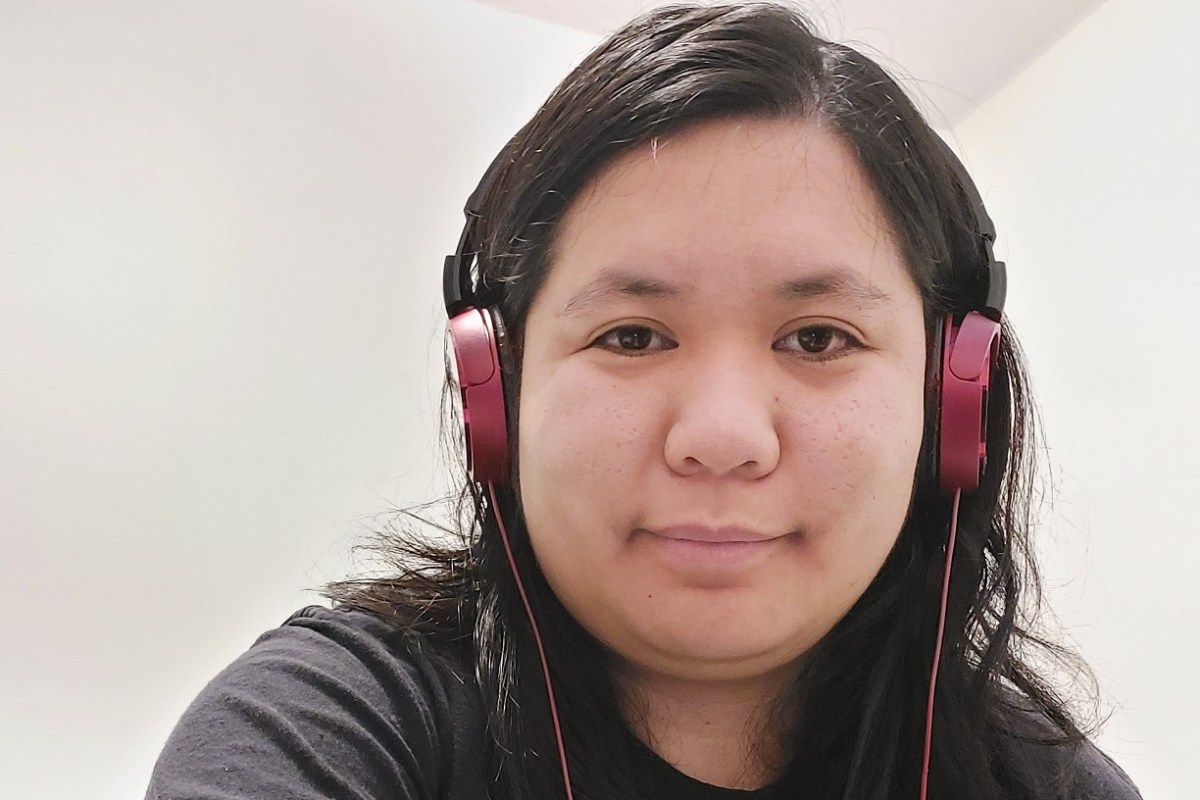
Giselle wearing a black T shirt and red headphones

By: Giselle General

Therapy, the mental health kind, is something that I have been doing on and off since 2017. It’s remarkable how much time has passed since I first experienced going to a centre with a business-and-clinic vibe waiting room, and sitting in a cozy office with a couch-like chair and chatting with a professional with a clipboard.

Due to the pandemic, I had my first opportunity to do a few virtual therapy sessions with someone I’ve met in person a few times. It worked out well because I’ve met her in-person many times before, so there is a rapport and a baseline of trust.

Now, I’ve been having appointments on a regular basis with my latest therapist for the past two and a half years now. This doctor, I’ve never met in person at all! The primary format of their mental health service is telephone appointments, so video meetings were not even an option. When I asked my family doctor’s clinic to be referred to this service though, I know I needed regular and ongoing mental health support without worrying about whether I’ll ran out of appointments.

Here’s an overview of my top three tips on how to make telephone therapy appointments as successful as possible.

First: Mindset and Expectations

Telephone therapy appointments, in terms of actual logistics, is different in many ways compared to virtual or in-person therapy.

The lack of opportunity to see facial expressions or nonverbal cues is a disadvantage. They will have a difficult or impossible time telling whether you are lying or withholding information. So in my opinion, this is most suitable for someone willing and able to be more forthcoming with their struggles. I think that telephone therapy can help a lot with issues that are not an escalated crisis.

For those that might have trouble being too vulnerable in a closed off space like an office, or might even have trouble with being honest when someone is watching their face, then telephone appointments can be advantageous. It can help someone be more up front because they don’t have to be afraid of seeing their doctor’s facial reactions immediately upon hearing their comments or stories.

Second: Preparation

It’s best to establish a physical space where you would speak to the therapist in private. Tidying or re-organizing the space, whether it is the desk and chair, a bed, living room, dining room can help you focus on the important and vulnerable conversations that is coming up.

Charge your phone and ensure it is 100% and ensure your headphones, if you’re using one, are nearby. I personally prefer having headphones because it keeps my hands free to do other tasks.

Now here’s where telephone appointments have advantages. If you think you would need to fidget, you can do so – just have your fidget items right next to you. I tend to write notes and the doctor’s advice during the appointment, something I haven’t done in in-person appointments since it just feels so awkward to me. You can have a drink of choice instead of just water if you want, like tea of coffee or smoothie. Although for myself, water has always worked.

I highly suggest preparing the topics you would like to talk about. During the initial appointment, when the therapist asks the awkward and important question “what brings you in today?” be prepared to say the difficulty you are having and a short summary of the backstory. So for me, for one of the things I need help with I said “I am running for elected office next year and will be starting a lot of work in a few months, so I am asking for help on an ongoing basis to deal with stress during this period of time and managing my real fears from being an immigrant, minority woman who might be attacked and hurt”.

If it is a follow-up appointment, the first two will likely be follow-ups or updates on previously discussed issues, and if there are any, one to two new things you’d like to talk about. I usually write this on a notepad, with space in between the points I wanted to talk about, to write any insights, advice or next steps most relevant to the topic.

Third: Appointment Day

It’s appointment day! Your supplies are ready, phone is charged and you are on your way to the private quiet space you picked for the phone call. I treat it as seriously as going out to an actual appointment, so I feed myself a good meal, wear ‘going out’ clothes but more comfortable versions (like a nice swater and slacks) but I skip the shoes.

I also give myself a small window of time to be the commute or the waiting room time, just about five minutes. My husband has been understanding about this, so he leaves our bedroom, I lock the door and he goes way to the other end of the house, like the living room, to be out of earshot.

Another benefit of telephone appointments is because no one will see you, you can be as visually expressive as you need to be. You can flail your hands while explaining something that’s upsetting. You can roll your eyes when the doctor says something that makes you react “duh, why didn’t I think of it that ways before?!” You can switch what your hands are doing between fidgeting, typing notes, or wiping tears and snot off your face. I typically write down a few bullet points for each of my concern that I can categorize as follows: insights, counter-points, action items.

One thing I strongly advice against is multi-tasking. No social media or emails or chores during the appointment. Since it is likely that the impact of a telephone appointment is slightly diminished from not interacting face to face, multi-tasking and getting distracted makes it worse.

Finally, after the appointment, give yourself at least five minutes to take a breath and process. Those few minutes right after an in-person appointment, when you walk out of the lobby out of the office to start traveling home, are helpful for a reason. Especially if it is an emotionally heavy conversation, it helps your mind settle a bit before you resume with the rest of your day.

A woman with a short haircut and brown and white sweater, on a phone call with her cellphone and writing on a notepad on her desk.

After each appointment, same principles apply to in-person or virtual appointments. If there is homework or readings or activities that were asked of you to do before your next appointment, do them as diligently as if they told you in person.

Just like any other way of getting support for one’s struggles, therapy will likely not be enough to help solve one’s trauma and past hurts, so I suggest thinking of the methods of therapy the same way. It’s okay to patiently put up with the realities of telephone therapy and then switch to your preferred methods at the first opportunity. But who knows, maybe the conveniences of telephone therapy can help you access it on a more frequent basis so that it can help with your self-improvement goals.

“Sprinting While Connecting” The Captive Transit User Series Part 9

A stylish professonal woman by a sidewalk during the day waving for a bus.

By: Giselle General

This is part of an ongoing series of posts discussion issues I personally encounter while taking public transit in Edmonton. Links to other posts will be added on an ongoing basis:

What is a Captive Transit User? I learned about the term for the first time from the City of Edmontonโ€™s website. The easy definition is: someone who takes public transit because itโ€™s the best (or only available) option for them to travel around. The part about feeling โ€˜captiveโ€™ comes from the restriction that sometimes comes up, perhaps because one is too poor to own and maintain a vehicle, one does not know how to drive, or for medical reasons, cannot operate a vehicle. In many ways, I relate to this a lot. Though Iโ€™m pretty fortunate to afford the occasional taxi ride, and with my husband having a car.


This particular write-up combines two of the issues I am passionate about as a person who is unable to drive: public transit and snow clearing.

I think it is a right of passage for any Edmontonian to channel their inner cheetah, or kangaroo, or Usain Bolt, to get off the bus and train they are currently in, see the connecting bus or train for the next part of their journey, and run to catch it like your life depends on it. It may be an exaggeration to say that your life is over if you miss your connecting bus or train, but it can be quite inconvenient, a great cause of stress and a waste of money and time when you do.

During my early university years, for my morning classes I would hop off the #119 Bus at the West Edmonton Mall Transit Centre, and then sprint to catch the #4 or #106 to go to the University of Alberta to make it on time for my 8 AM class. Going home is the worst part though, particularly after 9 PM. if I missed the #136 bus, I’d have to wait another half hour (or during the years before 2010, it is an hour-long wait) to get home, and my tired self just feels that is too much. So I’d take a taxi, spend $25 to get to my home in the Hamptons neighbourhood on the west side of the Henday. At the time, it’s so far west, that when I say the street address, taxi drivers get confused and say “What? That’s a street number beyond the 200! Where is that?”

When transit facilities expanded and the Lewis Farms Transit Centre opened in 2011, I had more travel options and it was nice! I can take the express morning bus straight to South Campus LRT, and upon disembarking, I’d sprint to catch the train heading to the University of Alberta North Campus. Now that I think about it, even through the winter months, not a single time did I slip on ice or slush, fall and hurt myself while sprinting to catch the train. Sure, sometimes I miss the but or train I meant to catch, but the mantra I tell myself while still trying to sprint is “better late than injured”.

I know that many people find transit unreliable because of the issues with connections. It’s tricky because on one hand, I understand the expectations of promptness. If the app or the map says that the bus is arriving at a certain time, it better arrive that time, right?

A street intersection during winter with a transit bus passing by.

But at the same time, road conditions certainly affect the speed of the bus from one stop to the other, and from one transit station to the other. Many things can cause micro-delays that add up, from a passenger with a wheelchair boarding or disembarking, letting a mother duck and her ducklings cross the street, or a bus driver deciding to help an elderly person take their groceries home. Perhaps the LRT is delayed because of people trying really hard to squeeze in, or holding the door open for that poor fellow running to catch the LRT. There’s so many factors.

This last winter, when the roads were so dangerously icy due to the freeze-and-thaw conditions, Edmonton transit told all buses pull over and stop operating for an hour until it is less icy. I imagine that derailed many people’s commutes, but I also understand that driver safety is important. Better be late than the city spending hours of time and lots of money rescuing buses that crashed.

The mobile app of the the city 311, also has a new feature now where people can report whether a bus is late. I hope this is something that people use more often. The social media account for transit is not as responsive as the one in Calgary so venting about it on social media is not as effective.

Going back to the panicked moments when catching my connecting bus or train, I’m so relieved that I’ve never slipped and smashed my face onto the concrete. Particularly for the South Campus LRT station which I used almost daily for a while, whenever there’s a heavy snowfall I see the city staff using all tools and equipment to clear snow on the go, from manual shovels, a bobcat, to what I nicknamed as the “motrorized rolling snow brush thingies”. I’m grateful for the quality of their work and I hope they continue to be able to do this.

Now that I moved to a new neighbourhood where transit is much more frequent (on peak hours I have a bus that comes every 10 minutes or less, and in the evenings, every 15 minutes or less). So I will likely not need to sprint and chase the bus to go to my usual destinations. It’s about time, as my knees and my feet are not in the best shape. This is what I wish for people all over the city, to have transit coverage so boring you don’t worry about when the next one is coming.

My “Turning Red” Story: When I Got My First Period

Scene from Disney Pixar Movie "Turning Red". Mei, as a red panda, looks at her reflection in her home's bathroom mirror.

In honour of the soon-to-end International Women’s Month, and in appreciation of the recent Disney Pixar movie Turning Red, I’d like to share the memorable and also a bit scary experience I had when I got my first period.

By the way, I got mine when I was in Grade 5, at 10 years old. So for those who argue that getting periods is not a topic for children, this is something that kids experience all the time!

As a storekeeper of a sari-sari store, I’m familiar with menstrual projects, which we nickname “napkins” in the Philippines. I noticed though that when kids come to our store to buy them, they always asked that it be wrapped in newspaper, or in an opaque plastic bag that conceals what is inside. When I ran out of newspaper, I’d use the cardboard from a 10-pack of cigarettes, or a bag from a wholesale pack of candy or bubble gum – those things are thick and brightly colored. During the movie, when Mei’s mother was putting different types of pads on the bathroom counter while describing them “regular, overnight, scented, wings…” it make me chuckle.

Just like most of my weekends, I was left alone watching over our little store in the mining village where I used to live at the time. Grandma (Lola Aleg) left for the day, to go to the city to get products for the store. Or is it for a while weekend or week? She’s gone so often I can’t keep track.

It was early in the weekend, when my mischievous self was tempted to sneak a chip bag from the store inventory as a snack for myself. It was 10 AM so the electricity for the whole village was shut off for a few hours already, an austerity measure that the mining company introduced a year ago. If I needed to go to the bathroom which is in the basement of our little store, I have to very carefully head down the ladder and do my business in a tiny room that is almost pitch black.

I went to the bathroom and in the faint light coming from the window, I saw something very wrong in my panties. I thought to myself, OMG! I can’t believed I pooped my pants without even knowing! This is what I get from sneaking too many snacks from the store display. It was sticky and brown, but surprisingly not as smelly as poop normally would. I hurriedly changed into clean underwear, fumbling in the dark where my underwear bag would be, worried that a customer would be calling from the storefront upstairs.

Then 4 PM comes around and electricity is back in the village. I went to the bathroom again to checked if there’s anything unusual in my underwear. This time around, there’s no mistaking it. It’s liquid, it’s sticky, it’s red – it’s a period! I hurried to try to wash both panties with water and bath soap, as I didn’t know how to clean blood off of fabric then. We learned that later in the school year.

I honestly can’t remember whether I told my grandma that weekend or sometime later. It wasn’t until six months later that I had my second menstrual cycle. This I wasn’t surprised about, as we learned about this in health class earlier in the school year. We also had a school assembly shortly before my first period, from one of the multinational companies that sell household items, including menstrual products.

What I do remember thought is that once I started having acne, lola told me many times on how I missed out on one of the most effective ways to combat acne. She said, I could have used the underwear when I had my first period, lightly wash off the blood but not completely clean if off with laundry soap, and with the part of the panty that had some light menstruation blood residue, to dab it off my face where pimples are popping up. The things was, she said, is that it needed to be from my first menstrual cycle. Looking back now, it sounds kinda nasty, but I understand that she grew up in a rural area in the 1930’s – 50’s. My brother and I weren’t spared from other old-fashioned methods to address various illnesses growing up.

Thinking back now, there were so many things that I wish I learned about how menstruation works. Dealing with cramps every month was a common experience, but I learned later on about how it can be debilitating for other people – as in blacking out or being nauseated in pain. I wished I learned earlier on how having sexual intercourse works during someone’s menstrual cycle. Turns out, it is messy, but doable and pretty satisfying – as long as you and your partner have prepared to clean up afterwards. I wished I got adequate information when I was exploring birth control methods, so I can better differentiate what is “expected spotting”, “usual menstrual cycle discharge” or “excessive bleeding” when I adjusted to having an IUD implanted in my uterus. It took one year for my frequent bleeding to stop and I’ve had an IUD in me for 11 years, that I might have a learning curve on how to put on pads again. Maybe I’ll just skip those altogether and go with a Diva Cup or those fancy new period panties.

Compared to years past, I think that available information about puberty life and other life milestones is getting better now, thanks to access to online information, being referenced in mainstream media, and professional content creators. I hope that for kids, teens and their families, that such experiences are something that is anticipated and informed about ahead of time.

Book Review and Thank You Letter: Coming to Canada, the Ultimate Guide, by Chidi Iwuchukwu

Cover of book โ€œComing to Canada, The Ultimate Success Guide for New Immigrants and Travelersโ€

The remarkable thing about volunteering in the community and pursuing community-focused endeavours is the gift of meeting amazing people right in the city. This is how I felt when during my election campaign for Edmonton City Council, I met Chidi Iwuchukwu. He volunteered a few times helping with door-knocking during the last month of my campaign, and he was delightful in my telephone and email conversations with him.

Right around election month which was October 2021, he was finalizing the publication of this book that aims to help newcomers in the country, to ensure that the vital first days of arriving in Canada is as smooth and productive as possible. This is a thank you letter and a review of his book Coming to Canada, The Ultimate Success Guide for New Immigrants and Travelers


Hi Chidi,

Thank you for sharing to me about the book you were working on last summer. I bought a copy as soon as I got the online link from you and eagerly waited for the shipment to arrive. Here are my key takeaway after reading the book.

Immigrants from different cultures and backgrounds should read guides and information from people outside their communities. It helps with finding common struggles and identify tips and strategies that we might not necessarily think about, likely because of biases from our own cultural perspectives.

The language is pragmatic and straightforward with an easy to follow timeline, particularly the chapter of the first seven days. You can pretty much use this as a checklist. If I could, I’ll hand this over to people and have them go through it page by page, and check off the items as it gets completed. Page 15, getting your SIN – check! Page 18, getting your cellphone – check! Page 24, Connecting with Settlement Agencies, check!

Then this logical flow continues. Page 31-33, finances and credit card – check! Page 62 – learning about workplace etiquette- check!

Do not assume, communicate, read everything thoroughly, these seem like obvious things to do, but with the overwhelming and overstimulating environment brought about by being in a new country, these can slip one’s mind.

I really appreciate the discussion about mental health and social relationships with spouses and children.

I like that it is framed more as list of very important things to be aware of and adhere to, while also acknowledging the potential differences in people’s situations. As far as the topics, this is the most comprehensive list that I have ever seen, and it included chapters that didn’t even occur to me but are very helpful, such as the potential impact of coming to Canada on one’s marriage, if your societal values are different back home. It is not heavy handed in the sense that it dictates who should behave in a particular way, but it helps spark awareness to encourage people to have these deep conversations about these topics.

From a political and systemic view, it was sad to be reminded, yet again, about the social issues that you noted and. I felt compelled to do my part to minimize this, or to try to resolve in my own way. For instance, transit is portrayed as a potentially difficult way to get around, because unfortunately, it is 100% true. It reminded me of why I volunteer for the Edmonton Transit Advisory Board. You encourage newcomers to volunteer for their community leagues because every neighbourhood has one, but not the new neighbourhoods that are still being built so one hasn’t been established yet. Since I volunteer for the organization that supports community leagues, I raised this as an important issue. My dream is that every newcomer to Edmonton who is trying to get settled, will find their neighbourhood group in just a few months, where they can attend events, participate in activities and learn about Edmonton just a few steps away from their home.

I also wrote a more comprehensive review for the February 2022 edition of our community’s ethnic paper in Edmonton, the Alberta Filipino Journal. I hope that through my article, it helped spread awareness of this resource that you worked so hard to develop.

Overall, I’d say, well done! And if you decide to expand on this project, you know where to find me for ideas and content.

Cheating to Survive by Evading Transit Fare: The Captive Transit User Series: Part 8

Closeup of a hand holding a Canadian two-dollar coin.

This is part of an ongoing series of posts discussion issues I personally encounter while taking public transit in Edmonton. Links to other posts will be added on an ongoing basis:

What is a Captive Transit User? I learned about the term for the first time from the City of Edmontonโ€™s website. The easy definition is: someone who takes public transit because itโ€™s the best (or only available) option for them to travel around. The part about feeling โ€˜captiveโ€™ comes from the restriction that sometimes comes up, perhaps because one is too poor to own and maintain a vehicle, one does not know how to drive, or for medical reasons, cannot operate a vehicle. In many ways, I relate to this a lot. Though Iโ€™m pretty fortunate to afford the occasional taxi ride, and with my husband having a car.


In the volunteer-based citizen advisory board on transit I’ve been involved with for the past three years, we had a recent discussion about cash fares, how much they are supposed to be, and the impact of increasing it to $4. During this exchange of emails, I sent this as a response.

I’m gonna get a bit personal here: during my first year in Canada, the first “it’s not right but I gotta do it to survive” life hack I learned is how to evade paying the full amount when taking the public bus. I was in a living situation where I didn’t get adequate financial support even for small things such as taking the bus to go to a classmate’s house for a school project. Most days during winter there in St. Catharines, Ontario, I can handle walking up to one hour one way to my destination but that is not always feasible. One day I was worried because I was short 25 cents to pay for fare and when I placed all my coins in the cash box, I didn’t get reprimanded for being short. So I did that, a few times. It felt horrible. But I was a 16-year-old newcomer to Canada still adjusting to school and didn’t have a job yet, and I had to fend for myself and be resourceful. And sometimes, the coins in the key jar by my cousin’s house wasn’t enough for bus fare. 

The times when I short-changed the public transit system were back in 2008 and I still think about it to this day. 2007, the year just before that, was a particularly difficult year for me even before coming to Canada. In early 2007 I’ve done several things that are considered theft (of large amounts of money), which I would have been arrested for if I was caught. Only those who have lived in desperate times would understand the pressure to be “resourceful” in order to survive.

Thankfully, after moving to Edmonton, I was able to gain employment and improve my life. For many years, I’ve benefited from various transit-related arrangements that helped make taking transit more manageable. There was the U-Pass, a sticker placed on my university ID card, that allowed me to take unlimited transit trips throughout the entire semester. There was the monthly bus pass where, for a fixed amount (latest is $100) I can take as many trips on the bus and LRT. And during the pandemic, I’m lucky enough to be able to afford a 10-pack of bus tickets, that are approximately $25 each. There is certainly a time and a place for incentives and discounts for frequent users of our transit system.

However, the needs of transit users using it for a few trips also needs to be considered. Some can be like me, a newcomer with limited cash, still working on getting established while needing to travel around to do so. It can be the tourist who is trying to follow Google Maps’ suggestion to take a short transit trip to a destination and might only need to take the transit system less than five times over a few days. And yes, it can also be the person who is homeless, who managed to get some coins from begging, and really wanted to be fair and pay the proper transit fare. Raising the cash fare for one-time users is detrimental to these types of passengers.

I’m relieved that in the end, Edmonton City Council voted down the proposal from the City Administration to raise the cash fare. I’m also looking forward to be a member of the public who will be pilot testing the electronic card fare payment system which they named the ARC card. I’ve heard from many fellow Edmontonians that taking transit and paying upon entering the bus or LRT station should be as easy as tapping your debit or credit card, of which I agree.

The Mindset of ‘Understanding, not Agreement’

A couple sitting on a yellow couch while arguing.

By: Giselle General

There’s no need for a rocket scientist to tell me, or anyone else, that people seem to be more divided than ever. There’s enough commentary around lamenting the increasing ‘us versus them’ mindset, amplified by social media, people speaking out against injustices they have suffered from for so long, and people feeling anxious about all social, economic, and political changes happening around them.

“This is a hill I’m willing to die on” is one of those euphemisms that I, as a English as Second Language speaker, try to wrap my mind around.

In a government advisory board I volunteer for, a long-time board member suggested the concept of ‘understanding, not agreement’.

I think this means, making an attempt to follow the thought process of someone’s argument or reasoning, without necessarily agreeing with this person’s position. It is something I haven’t heard before and it stuck with me ever since. I think that there is value to what he said, something I am discovering more and I expand the ways I volunteer in the community.

It gets tricky of course when the person’s perspective is inherently harmful or invalidating the suffering of others. I don’t have an answer right now on how to navigate this. I think that would be the necessary next stage as I try to get more involved in the community.

In one of my recent appointments with my therapist, we talked about getting backlash and criticisms and how to react to them. One piece of advice she gave was ‘find the nugget of truth’. I think there is something to that. Even if a racist person keeps on spewing out problematic commentary, if you dig just a little bit, there is something else beneath the hostility. It can be ignorance, it can be fear, it can be lack of belonging, or a little bit of each.

Someone who keeps on mentioning economic impact when it comes to policy decisions might not necessarily be a callous jerk who cares only about jobs. Perhaps their train of thought is that financial stability is a valuable foundation of a person’s wellbeing, and if that is not considered, it can be tough to convince people to do certain actions.

Someone who keeps on mentioning the number of people dying when it comes to policy decisions might not necessarily be a delusional person who thinks the government has unlimited money. Perhaps their train of thought is that every single life has value, and believes that if a person is dead because of government policy failing them, that is completely unacceptable.

Back in university, I remember reading an article about how conservative and liberal minded people can convince the other camp of their perspectives. The essence of the advice was to use the logic and mindset of the other party to frame the arguments towards the topic of discussion. For instance, it can be valuable to say that increased environmental protections through policy can help preserve and maintain the God-given nature, a precious resource and blessing that deserves care.

Given that COVID19 is still an issue, after almost two years, in an attempt to protect my mental health, to protect people around me from being subjected to my anger, and to keep my faith in humanity, I’m trying a bit harder to tell myself these days “understand what led a person to believe that way, even if in my own mind, it is completely nonsensical”. A book I read during a trip, Predictably Irrational: The Hidden Forces That Shape Our Decisions by Dan Ariely, also reminded me of the natural and human flaws of decision-making and belief.

As I browse through the different definitions of the word understand, I’m trying to learn how people behave and communicate, even if I am not convinced of their mentality.

to perceive the meaning of; grasp the idea of; comprehend

to perceive what is meant; grasp the information conveyed

to be thoroughly familiar with; apprehend clearly the character, nature, or subtleties of

to accept tolerantly or sympathetically

to assign a meaning to; interpret

to grasp the significance, implications, or importance of

And in the process, I can see more clearly why some people have views that are discriminatory or ignorant. Many beliefs and behaviours are harmful even towards oneself, but from the perspective of trauma or being in survival more, a clear path emerges.

How about confronting and addressing these mindsets that are problematic? That is a whole different conversation altogether.

Book Review and Thank You Letter: Motherless Daughters, The Legacy Of Loss: by Hope Edelman

By: Giselle General

In an attempt to fill the gaps in support and knowledge from my ongoing therapy, I was seeking out additional resources to help with dealing with the pain and loss of being an orphan. While my therapist wasn’t able to point me to an local support group, I found an adequate starting point.

I just finished reading the book Motherless Daughters, The Legacy Of Loss: by Hope Edelman. This is a Thank You Letter and a book review for the person who recommended this book, a remarkable woman in Edmonton named Mimi.


November 29 2021,

Dear Mimi,

Thank you for your lovely invitation to go out for lunch a few weeks after the outcome of the Edmonton Municipal Election last October 18. It was wonderful to chat with someone who experienced many of the things I have as a first-time elections candidate, as someone who is a person of color, and a woman. You shared many stories and insights that will help me as I go through my emotional recovery after not winning this election.

On top of the political commentary and stories, you kindly asked important questions about one challenging reality I have, as someone who doesn’t have a mother figure in my current life, and as someone who hasn’t had such a person for a very long time.

If my memory served me right, you actually haven’t read the book yourself, but you shared to me that Motherless Daughters was a book recommended to you a while back. I believe you said that you’re not the self-help-book-type. I was overjoyed though, since self-help is a book category I read on regular basis. Thank goodness an E-book version was available through the Edmonton Public Library, and I started reading in on nights and weekends when I have spare time.

The book was written and researched by a woman whose mother died when she was young, a teenager, and it involved numerous interviews and questionnaires from other “motherless daughters“. I liked how the book chapters outlined concepts bases on topic, such as navigating womanhood, romance, family, motivation and self-worth as a motherless daughter.

My favourite was how the book outlined key differences in terms of impact, depending on the child’s age when the mother passed away. I was eight when my mother died, together with my father and sister. Old enough to remember who they are and to know that life will never be the same after the deaths. Too young to do basic household management functions on my own. Too ill-equipped to grieve but not immune to the need of it.

It was a tough read, where every paragraph hitting me hard, shedding a light in very dark corners of my scarred soul, revealing wounds that never really completely healed. Especially in the first five chapters, it felt like every third paragraph made me cry, the vision of a child in her brokenness that was never acknowledged, and was just hidden away for so long. The stories of the other women and the commentary from doctors and the referenced resources, are both haunting and illuminating.

While distressing and unfortunate, I learned that it is actually normal for people to freak out when they reach the age of death of their same-gender parent. I thought that being fatalistic, catastrophising is a unique issue I am having due to election stress. Seriously, for the last six months before the election day my mind was telling me relentlessly “If I lose in this election, I have three years left to prove my worth. If I am not able to accomplish something profound and remarkable, my mother’s sacrifice was worthless. I don’t deserve to outlive her, and ending my life then is the right course of action.” I cannot rationalize it then, but yes, I was measuring my life and worth based on a very specific number, 33 years of age.

Now, there is huge comfort from realizing that this is a common occurrence. That subconsciously, people can be neglectful about their lives, or in the case of those whose mothers died of suicide or addictions, the adult “motherless daughter” ends up replicating those behaviours. It comes from wanting to grasp any way to find a connection with the mother that died too soon. So this is something I have to seriously watch for between now and 2024, that I don’t harm or kill myself, either by suicide or self-sabotaging my wellbeing.

Chapters of the book outlined how motherless daughters like me are stunted in our development, pushed to maturity and independence too early in some ways. But we are also stuck in childlike tendencies and yearnings in other ways. Instead of feeling inferior, I felt liberated by this. This paved another path of acceptance, and also pride, that my childlike mindset has not affected my adult life in debilitating ways.

For me, knowledge is power. I imagine it comes from my need for control from needing to look after myself (and my brother) at such a young age. I cannot describe how relived I am in realizing a few things:

  • That I will likely grieve again, in cycles and waves, for the rest of my life. When I reach womanly milestones, I would then yearn for a mother’s presence and guidance. Like during my first period, potential pregnancy and childbirth, menopause, even being a widow, financial and career changes, and many more.
  • A few time and age-related stages will be particularly difficult, such as reaching the age my mother died (which for me is in three years), giving birth, and when my child/ren reaches my age when my mother died, which is eight years old.

This is a huge blessing that came at a perfect time. Did you know that just a few weeks ago, during my therapy session right after the election, that I told the doctor that I need a very specific support group for people like me? He was sympathetic and understanding but the referrals provided were too broad for what I am seeking. This is the next closest thing to a support group and it worked really well as a starting point. I’m super grateful for the recommendation, as this has officially marked another journey of my healing from trauma, unpacking the fallout of being an orphan.

End of the Journey of a First-Time Councillor Candidate: Repost from the Alberta Filipino Journal

Giselle outdoors in a neighbourhood holding her election flyer

By: Giselle General

Introduction: This is a re-posting of the articles I have written about my journey as an candidate for the 2021 Edmonton Municipal Elections. Politics and political participation in Edmonton will be a topic I would like to discuss on an ongoing basis, now that I had this experience. But since at this point, it has only been a month Election Day where I only got second place, I am still processing my emotions, compiling documents, and reflecting on everything I have observed and learned.

This was the third article, submitted on November 2021, but was written just two weeks after the election day. You can get a free copy of the paper, published monthly, from many Filipino-owned businesses in Edmonton. You can also everything digitally at: https://www.albertafilipinojournal.com/


The election is over for the municipal elections and I wasnโ€™t successful in my campaign to be city councillor for the city. I came second place. Here is my preliminary reflection of the end of this journey.

Relief in safety and campaign principles

I was determined to run the campaign by following very important principles. These are: positivity, transparency, inclusiveness, collaboration, and care for community. As a result, some of the tasks in the campaign took extra time, such as properly preparing maps for volunteers, calculating fundraising numbers for the weekly social media posts, or adding subtitles to all videos for the benefit of people who are deaf. With that said, both during and after the elections, people have messaged me expressing their appreciation for my thoughtfulness. My actions made the election informative for the average person, and people from the disabled community appreciated that I went above and beyond to ensure they can access the digital content that I published.

Another key component in my campaign is safety, given the reality of COVID19 and additional risk due to Anti-Asian Racism. Many times, I played it safe by avoiding entering  homes with tall gates, not door-knocking alone, and being careful when walking through uneven landscaping and front steps. While other campaigns were door-knocking as early as March, but I waited and observed closely the COVID numbers and the impact of changes in the rules. Sure, it meant I didnโ€™t go to as many homes, but Iโ€™m glad that throughout the campaign, I didnโ€™t get seriously ill or injured.

Anguish at missing the goal and systemic hurdles

Just like most people in the world who are ambitious and competitive, not winning definitely hurts for me. On top of that, I felt the weight and pressure of my endeavour, as the only Filipino candidate in the entire city for any municipal seat, after the other candidate withdrew. I definitely would have been great if I achieved this important milestone for the community. My heartbreak at not winning is not just for me, itโ€™s for the entire community.

The optimistic side of me dismissed the idea that money plays a huge role in campaigns, but seeing it firsthand gave me a wake-up call. While Iโ€™m confident that I did everything I could to have a well-run campaign, it came to a point where certain gaps can only be filled by additional funds or additional people helping. With this realization in mind, I know what I will advocate for moving forward to help those like me with passion and drive to make positive changes in government, and need just a bit more resources to be successful.

Marvel at the support, outcome, and generosity

Since I donโ€™t have in-depth experience that seasoned politically-engaged people have, I donโ€™t have context of the election outcome. All I know is I didnโ€™t get enough votes and I lost. The cool thing is that many days after the election I received messages of kind words and

As it turns out, getting 5000+ votes is a remarkable accomplishment for a first time candidate, and for a budget that I have it is impressive. I am very grateful to those who have supported the campaign, from the donations, those who made time to volunteer consistently, those who gave advice.

Drive moving forward

One thing I want to make clear is that this is the end of the journey of being a first-time candidate, and not the end of the community involvement journey, and likely not the end of the political journey. If you think about it, if I run for public office, I will be a second-time candidate, with a better understanding of processes, and the unspoken rules of the political world. In the meantime, my focus is to resume all my community service activities that I am already doing to make our city better for everyone.

Update on the Journey of a First-Time Councillor Candidate – Repost from the Alberta Filipino Journal

Giselle wearing a blue top and white blazer outside in a park in Edmonton

By: Giselle General

Introduction: This is a re-posting of the articles I have written about my journey as an candidate for the 2021 Edmonton Municipal Elections. Politics and political participation in Edmonton will be a topic I would like to discuss on an ongoing basis, now that I had this experience. But since at this point, it has only been a month Election Day where I only got second place, I am still processing my emotions, compiling documents, and reflecting on everything I have observed and learned.

This was the second article, submitted on September 2021. You can get a free copy of the paper, published monthly, from many Filipino-owned businesses in Edmonton. You can also everything digitally at: https://www.albertafilipinojournal.com/


My journey of being a first-time candidate for Edmonton City Council is coming to an end on October 18, Election Day! Here my reflection of the journey of being right in the front lines of a campaign.

It is much harder than anticipated. When I first told my brother that I am running, he was scared for my safety! It made sense, given how dangerous it is to run for public office in the Philippines. I reassured him that I likely wonโ€™t get murdered here, win or lose. But that doesnโ€™t mean that there are no dangers. As a visibly Asian woman, the risk of racists attacking me is a possibility, given the rise of Anti-Asian Hate due to COVID. There are even practical dangers, as well; many peopleโ€™s stairs, entryways and landscaping are not always stable, so a slip and fall is a risk when going to thousands of homes.

The harsh reality that it takes money and connections to run for public office became evident. Expenses line up really quickly. I am running against the current councillor, who spent $84,000 in her campaign in 2017. I wondered, how can I even match that? Advertising in bus shelters are at least $1,000, billboards start at $1,500. I spent $2,500 earlier this year for flyers and $3,500 on lawn signs, as name recognition is paramount to being successful.

I see many candidates who get a lot of help, in terms of time, money, and connections, from their parents, and my heart breaks into a thousand pieces every time. Itโ€™s a painful reminder of losing my parents too soon. I tearfully wondered every time, in what way would they have helped if they are still alive? Would my parents be proud? Think their daughter is crazy for being this ambitious?

COVID is a mixed blessing when it comes to attending events and activities. Typically, in an election campaign, there is a lot of traveling involved for meetings and gatherings, and it would have taken so much time while taking public transit, or I would need to spend a lot of money taking taxis, or a lot of stress arranging rides from other people. The switch to digital for many meetings and tasks proved to be helpful.

This campaign journey is also quite incredible in many ways that continue to uplift me. As of writing this, I got $17,000 worth of donations, money sent through e-transfers and online payments as well as in-kind donations, itโ€™s just remarkable. For many weekends in the spring and summer, people joined me in delivering flyers to neighbourhoods so I donโ€™t have to spend money on postage. Professionals shared their skills voluntarily, from websites design, graphic design, translating my flyers, mapping routes, strategy, and more!

Another remarkable thing is connecting with people who are not within my immediate network, those who, after researching all the candidates, discovered that I have what it takes to be their next Edmonton City Councillor.

This experience opened my eyes to the simple and complex reasons why our political system is the way it is right now. I really wish that for immigrants, women, and working-class people, that running for politics is not this cumbersome. After the election this is something that I want to address, by finding a way to share all the lessons learned from this campaign journey.

This election candidacy is a journey five years in the making. I hope that by October 18, that history can be made for the sake of the Filipino community in Edmonton and in Alberta, that I can be the first Filipina-Canadian councillor that Edmonton would have.

The Journey of a First-Time Elections Candidate – Repost from Alberta Filipino Journal

Woman in business suit standing in front of the entrance of Edmonton City Hall Council Chambers.

By: Giselle General

Introduction: This is a re-posting of the articles I have written about my journey as an candidate for the 2021 Edmonton Municipal Elections. Politics and political participation in Edmonton will be a topic I would like to discuss on an ongoing basis, now that I had this experience. But since at this point, it has only been a month Election Day where I only got second place, I am still processing my emotions, compiling documents, and reflecting on everything I have observed and learned.

This is the first article, submitted on April 2021. You can get a free copy of the paper, published monthly, from many Filipino-owned businesses in Edmonton. You can also everything digitally at: https://www.albertafilipinojournal.com/


This election candidacy is a journey five years in the making.  Here is a reflection on my experiences as of this date as someone running for the first time.

A main challenge is informing people on different topics. There are many issues that affect our daily lives, and it can be difficult to remember which level of government is responsible. On top of that, there are issues that are a shared responsibility between the municipal, provincial and federal government. So it is important for me, my campaign team, and other candidates to be informed and patient when discussing with others/   

The electoral district boundaries not only changed in composition, but also the names have changed. They are changed from numbers to Indigenous names. I think the names are beautiful and meaningful, but many are frustrated and unwilling to learn. I can personally attest that all it takes is practice, just like learning Asian geography back in high school. After a few rounds of practice, I can confidently say without missing a beat that โ€œI am running for city councillor for West Edmonton, the ward of sipiwiyiniwak!โ€ Those in ward Dene and O-dayโ€™min will have an easier time, while those in ward Ipiihkoohkanipiaohtsi would need to practice a few more times.  

I found out that apartments and condo buildings are usually ignored by campaign teams. I found this shocking and unacceptable! Because most apartment buildings are rentals, this means that many people who are not homeowners and from lower economic background are not given the same opportunity by election candidates to share their thoughts about political matters. No wonder the voter turnout in municipal elections is only 30%. Like a spark that ignited in me, I felt a fierce sense of determination to go against the tide and find ways to connect with people living in higher-density places. I hope that landlords and building managers would cooperate with my campaign team so we can engage with residents effectively and safely.  

A harsh and true advice I received was โ€œyou need a lot of moneyโ€. And I donโ€™t have a lot. I feel motivated to find creative ways to compensate for the shortage of money, and fun ways to raise money and support. From virtual dance-a-thons as a fundraiser, using social media for marketing instead of spending money on billboards, and asking volunteers to drop off brochures instead of paying Canada post thousands of dollars, the ideas seem to be endless. Necessity is the mother of invention as they say, and Iโ€™m excited to find innovative ways to connect with potential voters and supporters. I hope that I get hundreds of volunteers from all walks of life, and that even those who cannot vote yet, the newcomers and under 18 years old, feel inclined to join the campaign team as well.  

The election day is in October, and given how time feels like itโ€™s slipping through our fingers, it will be here before we even realize it. All the spare time I have, between breakfast and starting work, between dinner and bedtime, between laundry and cooking on the weekends, are occupied by the seemingly endless tasks to gain more resources, to recruiting volunteers, to ensuring we consult with people with different perspective. Door-knocking officially starts in May and Iโ€™m eagerly looking at the calendar counting down the time.  

I am excited to be transformed by this experience. I suppose, turning 30 years old this year also highlights the significance of this adventure. Iโ€™d love to win of course, but itโ€™s more that that. My hope is that I am just one of the many people from under-represented backgrounds, of the women, the young adults, the migrants and the Filipinos who would take the leap and throw their name in an election race. I hope that my experience can serve as inspiration and a resource guide in navigating an election candidacy that appropriately considers the complications that arise from our lived experiences. If I donโ€™t end up being that trailblazer, I hope that someone else does not too long after I run.