Memoir Writing Reflections 7: The Boss of My Book

By: Giselle General

I can hardly believe it but the time has come. It is manuscript feedback and editing time – first round, that is. Just around the last week of September I finally received the Editorial Letter from the Developmental Editor. I received a 19-page document and I couldn’t help but chuckle. It was more like a report than a letter, maybe even a little book.

My goodness is it a lot! In a good way. The letter organized the feedback in categories, and under each, there were several examples from the manuscript where these problems have come up repeatedly. In addition, in the actual copy of the manuscript she added some recommended edits (through the Tracked Changes feature) as well as comments on actual paragraphs. There were many of these throughout the 150-page, 85,000-word document.

With this, I learned that the timeline I submitted for the editing process might not be as realistic as I would have liked. Perhaps, if all I’m doing is creative work full time with volunteering at nights and weekends, maybe it would be achievable. But it’s different now. I have a separate full time day job that involved writing, coordinating and some creative work. Then all the volunteer commitments involve communicating, coordinating and some creative work. As much as I wish I have unlimited energy, alas I am only human. Working on the manuscript is set aside for the weekends.

When I first read the document and the email, I was anxious on what I was supposed to do with the feedback. There was one question in my mind that worried me the most. And I wanted to share that part of the email exchange here:

Hi Justine,

I have a follow-up question regarding the potential next steps after a writer receives the feedback on a developmental edit. I guess I’m struggling a bit with the Filipino tendency to be “always obedient” and “follow everything that is told by a person of authority and expertise”, combined a tendency to be a people-pleaser. 

If feels kind of silly to ask but I’d appreciate some clarity. I know that in your email and letter it says that your comments are “recommendations”. But as far as me as a writer, what happens next? Is this kind of a like a thesis document where I send you additional versions and that you look at it again until you approve the version and are satisfied with the edits? Or do I basically have free reign as far as which suggestions to apply or reject? If for instance I make significant edits to the manuscript and would like another comprehensive review, that is a separate and independent agreement for another developmental edits, is that correct? 

Hi Giselle,

I just opened up editor access on that line edit of your manuscript. Let me know if you’re still having issues opening it up and I’ll try and turn it into a Word doc.

Now for your question – not silly at all!  You have free reign at this point to apply or reject any/all my recommendations. It’s completely up to you as a writer! I don’t need to “approve” your manuscript for you to move on – that’s for you to decide 🙂 

Email exchange between Giselle and Justine from Living Hyphen, October 2023

Reading the email response was a huge sigh of relief.

When I mentioned this to my husband, he told me with such conviction, “You are boss of your own book.” The words on your book will be written the way that works best for you.”

This way of thinking is so new to me. I’ve always have the mindset that experts or authority figures have greater knowledge and expertise than me, so I must follow all their advice. But as I go through the recommended edits of not just the memoir, but for the other creative projects I’m doing, there had been times when I read the comments and think “that suggestion doesn’t make complete sense, but I can see why they suggested it. I don’t think I’ll do it 100% but will do something else that will resolve the issue that was flagged.”

For the Developmental Editor feedback, I actually had to review my draft manuscript backwards, from the last chapter to the first.

Writing and then editing a book is such a long process. From the various writing groups I joined, some people take weeks, months, or even multiple years to write and edit their draft. The last thing I wanted is for this project to get lost in the fast pace shuffle of life. Since I’m the type of person who needs a target end goal to stay motivated, I’ve set mid-December as my deadline to work on the developmental edits. That’s three months of incrementally working over the weekends, a few chapters at a time.

If all goes well, my Christmas gift to myself is the peace of mind from sending off the updated draft to the next person who will review it, the Line Editor. A line editor works line-by-line, tightening up sentence structure so the language is sharp and clear. I’m excited and nervous about this. I hope that I caught all the comma splice statements that seem to be a bad habit of mine. But if there are a few more, that the Line Editor can make them better.

Report it on the App: The Captive Transit User Series Part 12

By: Giselle General

This is part of an ongoing series of posts discussion issues I personally encounter while taking public transit in Edmonton. Links to other posts will be added on an ongoing basis:

What is a Captive Transit User? I learned about the term for the first time from the City of Edmonton’s website. The easy definition is: someone who takes public transit because it’s the best (or only available) option for them to travel around. The part about feeling ‘captive’ comes from the restriction that sometimes comes up, perhaps because one is too poor to own and maintain a vehicle, one does not know how to drive, or for medical reasons, cannot operate a vehicle. In many ways, I relate to this a lot. Though I’m pretty fortunate to afford the occasional taxi ride, and with my husband having a car.


Whenever I take the bus or LRT, regardless of whether I’m alone or traveling with my husband, I try to pay attention to my environment. Sure, at some point I end up getting slightly bored and browse on my phone, but I don’t do that until a few minutes after getting on the bus. It’s also why I don’t wear headphones while taking transit.

Frankly speaking, the reason I feel inclined to stay alert is not related to safety. Sure, that is important, but thankfully I personally haven’t experiences direct and aggressive treatment on the bus which is a relief. I have a different motivation, that is to observe whether something is going wrong with the bus, train, bus stop or transit station that needs to be fixed. The moment I spot it, I report right away on the 311 app.

The City of Edmonton has an app called the 311 app, that enables people to report different things that the city can resolve. It includes a feature to take a photo (although it is not mandatory which is good), text boxes to add a summary of the issue, automated geo-location, and a check box to indicate whether the issue causes accessibility concerns.

As far as transit, the categories are:

Late Bus: For this section there are questions such as the location, bus stop and route number, and whether the delay is due to weather conditions. I personally don’t make a report when a bus is 15 minutes late and if the travel apps like Google or Transit had actually indicated it. It means that it is a real-time update. But if it is winter and the bus is 20 or more minutes later, then definitely I would report.

Transit Feedback: I am guessing that this category is for other types of feedback that are not related to buses being late, or not related to broken and dirty things in transit facilities. In the past, the third category is specifically related to vandalism and cleanliness, so I have used this category to report something that is simply not working, like a digital sign. I also haven’t used this option in a while.

Transit Maintenance: This is the option I use most often. What I typically report falls under two categories: items related to cleanliness or vandalism, and items related to functionality of electronic items in the bus. The vandalism I’ve reported vary, from scribbles on the seat in front of me written with pen or paint, broken wayfinding signage in downtown right beside a bus stop, a few bus shelters where the glass walls had completely shattered, and the one I know should be addressed quickly – colorful and sticky stains on the bus seats, especially the fabric ones.

As far as functionality of electronic items in the bus, there are two main ones. First is the ARC Card machines where people are supposed to tap on their way in or out. The sounds from the machine are quite distinct whenever it doesn’t function. When after 10 minutes on the bus, I can still hear the particular beep that indicates it’s not working, then I make a report. If the display screen is not working, I do the same. The most frequent report I do though is whenever the device that is supposed to announce the next stop is not working. as indicated in this post, I’ve learned to appreciate the value of hearing and also reading the information of the next stop, especially when it’s hard to see over the window. The best part about the app is whenever I report issues, there’s a check box that asks whether it is a disability issue. Whenever it does, I check if off every single time. I truly hope that the issue gets escalated.

It’s truly unfortunate that I cannot see whether the issue is fully resolved or not. The odds of me taking the same bus with dirty seats right after I made a report is unlikely. The only update is seeing the ticket being closed or “redirected to other business area.”. However, in our data-driven society, I know that every report gets added in the statistics. In fact, there are public databases available on all the 311 reports made to the city, for those who want to do analysis on a certain issue and want to use the number of complaints filed as supporting evidence.

If there’s one change I’d like to see on the app, is to know for sure whether the issue is fully resolved or not. A photo to show the issue is fixed or cleaned would be so nice. A once-sentence update that says the broken speaker or digital sign is fixed on a certain date would be so reassuring. Even a statement saying that the issue is considered and can be addressed by future policy gives an indication that it is a long-term problem. Maybe this can help prompt people to use these reporting methods more and trust them.
For now, I still use the app. It’s more productive that venting on social media.

Memoir Writing Reflections #6: The Bucket Analogy

by: Giselle General

Through social media posts, blogs on this site, and a few local media interviews, I’ve been sharing my journey in writing this memoir. The more experiences and milestones get documented, the more reassured about doing it in the first place. Not only does it help me have a point-in-time memory captured of the experience, sharing it seem to reach out those who are thinking of doing some kind of creative work as well.

I’m feeling a bit antsy since the developmental editor is working on the manuscript and I have about two more months to go before I get to see the feedback and dive in to make changes. A few times actually, I noticed some comments pop up on the Google doc and I immediately archived those email notifications, not wanting to see them too early.

Just recently, a friend who also lives here in Edmonton reached out to me to ask for advice on writing the memoir. This person is quite active on social media sharing her takes on social issues and sharing some of her personal life. If she wanted to, she has a lot to tell that would be a good fit for a memoir. I got the request through a private message on Twitter, then I set up an invite to do an online meeting.

I told her that the cliché advice of having an outline made sense to me, but instead of making a spreadsheet, a document or to-do list, I treated one chapter as one blank word document. The file name of the document is the rough idea of what the chapter would be about. The file name had a number in the beginning so when I click the button to sort the files, they will be chronological. When I then feel inspired to write about that chapter or topic, I have a space ready to go and write.

This enabled me to bounce around the timeline of my book. When I’m in the mood to write something really heavy and intense, like the events in March or May 2007, I can do that. When I’m emotionally drained and wanted to write about a more lighthearted chapter of events sometime in summer 2003, I can work on that too.

The analogy I used was buckets. I got a bunch of buckets, labelled them, and eventually these empty buckets got filled little by little until I was done.

But then I realized that her situation is not the same as me when I started. She is not starting from scratch, but rather, she already has a draft of 30,000 words. It’s milestone I personally reached a month after I started writing. I’m glad she’s has a good sized manuscript, and she shared about being overwhelmed of the documents. That makes sense.

Using the same analogy of the buckets, I told her “You have a big bucket of words already! Splitting the content into small buckets, where a few paragraphs focus on one experience story, theme, can be a way to manage it.”

My chapters varied in length. On average they are two pages long, with the 12 point font, single space format. Some are slightly shorter, I have about five that are outliers, that are 5 pages or more.

When I gave the advice to this friend, I suggested to read through from the top for a few pages. Once there seemed to be a natural pause, whether a small story ended or any reflections concluded for that particular topic, take that entire section and separate it as its own chapter. Then there’s Chapter 1. Move on and take a few paragraphs or pages, there’s Chapter 2. A small bucket of content being scooped out of the big hulking container of words.

Funny enough, when I submitted the manuscript to the developmental editor I actually have to combine all 43 chapters into a single document. The opposite process, pouring them all into one big bucket. It was easier and more efficient than I realize. As I copied and pasted each chapter in order, I made sure that the table of contents are set up properly and link to the right chapters. Scrolling a big document and having to begin from the top would be quite annoying I can imagine.

It was a good way to be a bit more productive while trying to wait paitently for the edits. Just over a month left!

The Unusual Birthday Gift I Gave Myself Last Year

By: Giselle General

Last year on my birthday at the end of May, I did something that I considered an unusual, but valuable, gift to myself. I officially handed my letter of resignation to the job I had for eight years.

Materially, my life is overall comfortable. Also I find shopping for items like clothes, cosmetics, gadgets pretty dreadful. Having to think of gift items for people to get me is the opposite of fun. Thinking of what to buy myself as a treat that need to be bought at a specific time of year is also pretty restrictive.

As my wages grew over the years, both from my employment and the honourariums for some of my volunteering and writing work, I try to be very mindful of lifestyle inflation. I didn’t want to fall into the trap of buying something just because I could. In the occasions where I do splurge, those purchases were made intentionally and with no guilt.

A big theme I’ve seen in how I approach my birthday is about giving myself something special of great non-tangible value. The trip I took in New York City in 2019 is my first overseas solo trip, granting myself the new experience of independence and rare unrestricted indulgence. The boudoir photoshoot I also booked a day before my birthday is to grant myself a new way of reclaiming my body and sense of self, a valuable thing for sexual abuse survivors like me. In 2020, I hired a freelance artist to recreate a piece of artwork I drew in 2013, granting myself a way to preserve precious memories and the enjoyment of collaborating with an artist. The drawing in particular was the memento I made from my first trip to the Philippines after immigrating, taking my Canadian (white) boyfriend in tow. In 2021, my self-gift was as simple as granting myself rest and family time as I started to ramp up my election campaign running for city councillor. Something truly in short supply and so precious for that period of time.

For my birthday last year, the plans to celebrate were straightforward and already confirmed. My brother worked night shift so meeting him separately worked better since typically dinner times happen when he is already on his way to work. The husband’s family will be coming over for a separate dinner in the home we just moved in to a few months prior. They planned to bring black forest cake. Perfect.

The only thing missing is the precious thing for me.

I talked to my husband about the idea throughout the month of May. This was not something taken lightly. The job search process over the past few months were not going so well, and I knew it is because I was not giving it the right energy and focus. Also, in the past, I was unemployed when I applied for that job I truly enjoyed for eight years. It seemed like I can only do one of these two things at a time: work full time or job hunt full time.

On top of this, I realized that I never had a full two-month summer break since before my parents died, which was the summer of 1999. Since 2000, my summer breaks consisted of working for most of it, either working in the store in the mining village in the Philippines, working in retail or placements during my university years, and then as a full-time working professional. As a child, since my birthday was the end of May, just right before the schoolyear begins in the Philippines, my birthday always marks the end of a notable period of time and the beginning of another.

I looked at my bank account repeatedly. I inspected the information in the budgeting software I used since 2017. If I were not to do anything extravagant or ridiculous, I can afford to pay my bills and save for retirement with no interruption, for quite some time.

This is the perfect timing for this reset.

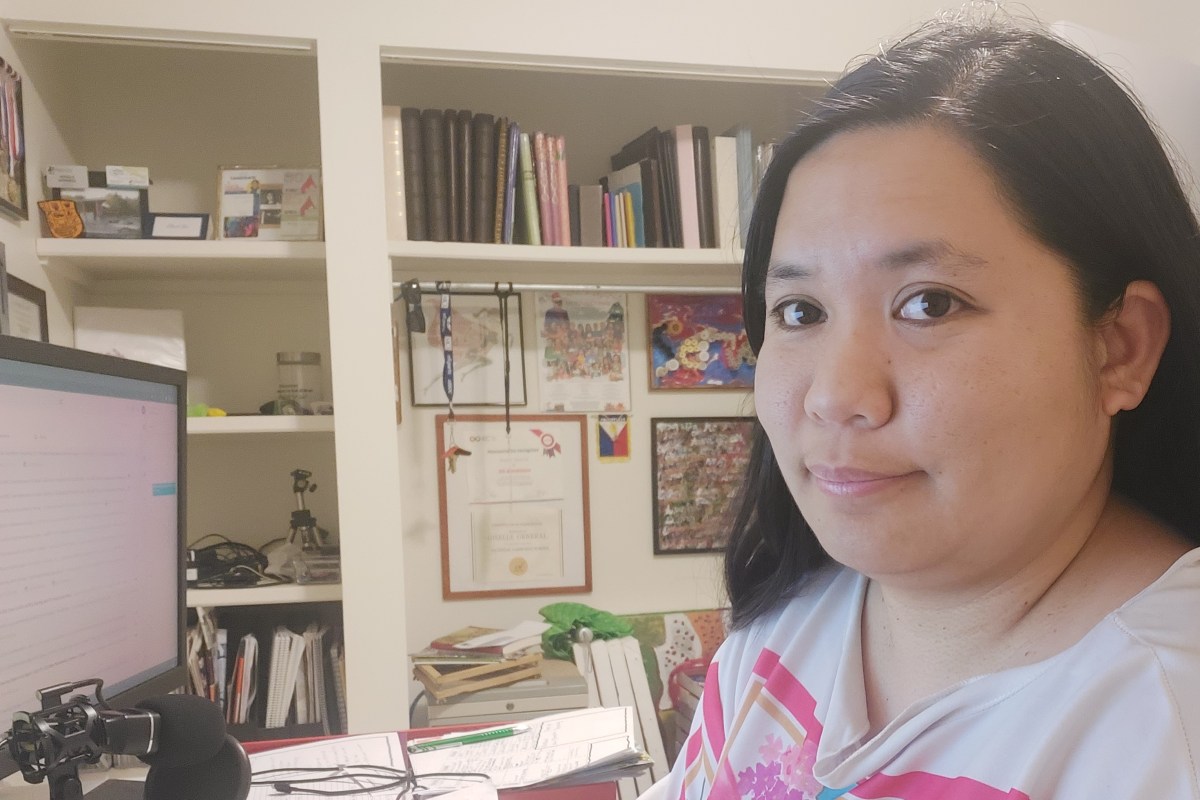
When I woke up on my actual birthday which was a Tuesday, I was a bundle of nerves and certainty. I was working from home that day, in my home office where to my left was a wall of frames, including the employee recognition certificate I received for my years of service. The draft email was already in my inbox. And then I clicked send.

Just a few minutes after, I got a message through our internal chat software. It looked like it came as a surprise. Then emails and video calls took took place, with strategies and decisions to make the most of the one-month resignation notice.

Since we had a hybrid work arrangement still, my office was not as decorated as it was. Packing up any remaining personal items was easy. The last month of work flew by, as I eagerly waited for my last day of work, just right before Canada Day long weekend.

After the long weekend, my relaxed summer break began. Nothing changed in my evenings as I kept all my volunteer commitments. I also wanted to spend the same amount of time with my husband so I kept my sleeping schedule the same. But the time period that is labelled as the typical weekday work hours from 8 AM – 5 PM, were all free and flexible. It felt eerie but not as slow as I expected. Boring and lazy and unstructured was exactly what I’m looking for and what I got. It was quite remarkable.

In the middle and end of the month, when I paid my bills, rent or the automated deduction for my retirement savings got taken out of my bank account, I relished in the feeling that I didn’t have to work during that current week to pay for it. My past self (and of course my husband) helped make this comfortable period of time happen.

When September long weekend arrived as well as back to school for students, I knew this free time was up. It is time to be a responsible adult again and actively work towards finding my next job. I knew it will take months from applications, to interviews, to the offer and a starting date. As fall came and went, the pressure crept up a bit more. Thankfully my husband consistently and patiently put my panicked thoughts into perspective.

In some career-oriented articles, I’ve heard of people talking about the benefit of taking a break, sometimes they call it a sabbatical. The type of break for a working professional where they won’t have to worry about financials, but are able to not work full time to rest or try something different. I didn’t name it that way back in May 2022, but it looks like a two-month sabbatical and life reset is what I have gifted myself. One can argue that it was quite expensive, if not the most expensive gift I have given to myself. My living expenses were $3,500 a month and I didn’t find employment until six months later.

It was wonderful and definitely worth it though. Something that is hard to give or get for someone like me with extreme workaholic tendencies. The gift of rest, of reset, of leisure, of personal flexibility. I hope that I can do it again just a few more times during my prime career working decades.

Event Review: Writers Guild of Alberta “Origins” Conference

By: Giselle General

This past weekend, from June 2 – 4, 2023 I had the great fortune of attending the weekend-long annual conference organized by the Writers Guild of Alberta. They titled their conference this year “Origins: A Return to Networking, Publishing, Genre and Craft.” It’s a hybrid conference, with the in-person location at Fort Calgary and the keynotes and focus workshops available to attend online.

Frankly when I first heard of the conference through the e-newsletter from Writers Guild of Alberta, I was already checking my budget. I started a new job recently so my bank account is not draining anymore and I had full intention of finding a way to pay for it. Then, good news came. As I was a mentee of the Horizon Writers Circle this year, the conference was covered for free. There was even a travel allowance! This prompted a conversation among my fellow mentees to travel together from Edmonton to Calgary.

I agonized for a while on how to attend for two main reasons. I’m learning to be more kind to myself and be more conscious of my precious and limited energy for socializing. I haven’t attended a multi-day conference since November 2018 and I found it exhausting. If I wanted to focus on learning, I need to protect my capacity.

I’ve also felt reluctant to probe and ask questions related to COVID precautions and limiting viral transmission. I don’t feel comfortable attending large gatherings that can be a superspreader event. What’s the point of learning about improving my writing craft, if I die or get permanently debilitated by long COVID?

After some deliberation I decided to join the event virtually. As I read the details in the registration I felt hopeful that the virtual components were planned and executed seamlessly. As the conference day approached, I received the instructions on travel, accommodations, and online links. I was amazed by how the online component felt naturally included, and not something that was thrown together last minute. This gave the impression that the organizers have full intention for the event to be inclusive, compassionate, flexible, accommodating, which is what I believe the artistic and literary world is supposed to be.

How was Friday?

I rushed to finish dinner and run the dishwasher before plugging my headphones and connecting online. I then discovered that the opening keynote speaker is sick, and at the last minute, is joining online from their home in Edmonton. So technically speaking, I’m geographically closer to her. Her manner of describing how humans use language as a means to make change was just so awe-inspiring to me.

I knew that those who attended in-person had an opening networking event and a casual get-together after the keynote. As my online meeting linked closed, I happily went on to do chores to ensure my weekend is as cleared as possible.

How was Saturday?

Turns out, the morning keynote speaker had a travel-related hiccup and didn’t make it to Calgary. I’m super duper grateful to the power of the internet, giving him a way to do a virtual presentation. It was a compelling keynote that reminded me to continue learning about Canadian history that was not taught in my newcomer orientation and citizenship booklets, to find them in literature that is being produced these days. For Indigenous writers, it is a way to control the narrative of their lives and experiences withing the wider Canadian society and story. For recent immigrant and settlers like me, there’s many ways to learn and enrich our understanding of this place where we live.

It was my first time participating in a panel workshop with writing exercises for both attendees in-person and virtual. The last time I attended a writing workshop with writing prompts (as in, you get five minutes to write answering the question the facilitator gave) was at Pinoys on Parliament conference last year, but all of us are attending virtually so there’s lesser technical hiccups. This is also my first interactive workshop related to memoir.

“Do what’s right for you, for this project, at this time.” I appreciate the compassion, the permission, and flexibility when it comes to processes and decisions. The reminder of the fundamentals that are sometimes forgotten was very valuable. As always, there’s the “good problem” of having too many good choices of panels to attend. When I was choosing which to attend, I read all the details to my husband who does not do artistic of literary work. His perspective helped me narrow it down to the one that makes most practical sense. The fact that we can watch the recordings afterwards is also very reassuring.

I’ve organized events and conferences myself, so I have full appreciation of what happens behind the scenes. It was incredible to see the resources adjustments to mitigate the tech issues. Really incredible and appreciated.

How was Sunday?

Our keynote for Sunday joined us virtually from overseas, all the way from Greece. It was such a delightful and insightful Q and A about their approach across different projects and genres. There’s great comfort in hearing a successful writer acknowledging that certain processes related to writing are still difficult. For an outdoor hotel in Europe and only with one single internet interruption, I’m overjoyed that the setup of the conference allowed her to share her time with all of us.

As someone who belongs to many nonprofit boards, I appreciate the value of the seemingly boring but very important activity during an Annual General Meeting. I’d say it’s the most engaging one I’ve attended in a long time, particularly on the elections part. I’m glad that the Writers Guild of Alberta will have a full board of directors for the upcoming year, and that they are working on ensuring their committees are able to help with particular goals, such as membership engagement, diversity and inclusion, and youth supports.

The afternoon panel I would say is the most practical and helpful for me in my personal writer’s journey. The Q and A between publishers and agents addressed many questions from the in-person and virtual audience with tangible examples whenever they could, and saying frankly “I don’t know” and “it depends” at other times. My notebook is filled with notes on what I can work on in the next few months as I set up my schedule with editors and publishing one day.

Takeways

I’ve helped organized many events and conferences in the past, and have attended many events and conferences before COVID and in recent years. I am very aware of the additional time, coordination, cost, and sometimes, stress that comes from organizing events in a hybrid fashion. I’m immensely grateful that they did so. It meant that three of the major speakers were still able to share their wisdom despite unexpected cancellations or other plans that resulted in scheduling conflicts. It helped me focus on my primary objective for this conference, which is to learn and preserve my energy accordingly – and also preserve my limited vacation time and money. Alberta is a massive province and it’s difficult to expect rural Albertans writers to be able to travel all the way to a major city, or from one major city to another. It’s a truly tangible way to showcase the commitment to diversity and inclusion.

My two final takeways with my ongoing literary journey that I hope are action-oriented are these:

First, joining a literary-oriented organization and paying the nominal membership fee is very much worth it. Just starting with one is enough. In my case it was through the Writers Guild of Alberta. This one membership is what helped me pace myself in gradually expanding my literary community, where I eventually felt convinced that despite the seemingly grandiose image that come up with the word “guild”, that perhaps I belong here too.

Second, especially for people like me who don’t have a career in literature, to carve some time for a literary or artistic program or event. There’s no need to pressure one’s self to spend a lot of money or fill every single evening or weekend. A small local event once a month, one multiple-month flexible program per year, once conference in the spring and one in the fall. All these add up after a while.

This event has been such a gift. It’s a comment that came up in the comments during the virtual meetings. Simple and the most accurate way to describe it. Huge huge thank you to the organizers, sponsors, staff and volunteers for making it a success.

Memoir Writing Reflections #5: Marinating Time is Over

By: Giselle General

After I finished the first round of drafting, I made the deliberate choice to not do revisions on my memoir manuscript since mid-January. Aside from reading the chapters for the reading event in March and organizing sample chapters for funding applications, I haven’t seen all of the other ones.

I don’t know why I chose a food-related analogy, but I thought letting the documents “marinate” for a few months is a good idea. My mentor author agreed. It seems like many other writers have done the same.

In those months I read two memoirs that have drastically different formats, which is equal parts refreshing and confusing. I suppose there is no truly one-size-fits-all approach.

I did my best to ensure my creative mind is not stagnant. I continue to write for the Alberta Filipino Journal, and some of my recent assignments were actually more challenging as they are more like articles or event summaries. Now that the weather is nicer I’ve also done some artwork again. And I try to write for this blog once a month. Heck, I even made a couple of submissions for a literary magazine. I got rejections both times.

Since I like scheduling and organizing, I’ve blocked a few hours on Sundays to start doing this again and actually booked it in my calendar like an event or appointment. I hope that the time I allocated is well-paced enough for the next two months, until I hear back from the different arts foundations where I submitted funding applications. I’m so very much looking forward to those. I’m excited to have professional editors look at the manuscript so they can chip away at all the awkward and ineffective bits and forge the final piece.

I organized my folders somehow like a factory production, where I have different containers (digital folders) to store various versions until it reaches the final version.

A computer screen showing several folders for a draft book. Each folder is for a different version of the draft.

What happened over the first four Sundays the self-revision time is scheduled in my calendar? I ignored them.

For the first two times, I don’t have any good excuse other than procrastination. Given I volunteer a lot in the city and I’m getting a lot of social media inspiration to deep clean my house, I have lots of alternative activities to do instead of reading through my files.

The third Sunday I have an actual legitimate excuse. My grandmother died and I had to focus on making sure I can communicate with everyone in the Philippines given that their time zone is 14 hours ahead. I have a lot of thoughts and feelings I’m still trying to unpack. On top of that, this particular grandmother, my mother’s mother, is an integral part of my childhood years covered in the memoir.

Now it’s the fourth Sunday of my so-called new Sunday routine to self-revise. I have so many volunteer tasks that I’m falling behind and I’m likely going to prioritize that.

In terms of the actual content I will likely not change anything since it is from the perspective of my childhood self. But my present-day self though, I’m just getting hit with more realizations and recently discovered family history that puts people’s behaviors into context. More nuance, less answers.

I even have other stories I wanted to incorporate somehow. Thankfully through the resources and advice I received I know I have a lot of options. I can write a whole chapter focusing on a experience. But it can also be as powerful as a paragraph, a sentence, or a phrase. It can be outlined as a story as it unfolds and experienced in real time, as an internal monologue, or a recent fleeting memory that can still be from the perspective of the child. This particular story I believe is very important and would enrich the reader’s experience of witnessing this orphaned girl trying to navigate a new reality.

This week I also submitted my report to the arts foundation that gave me the money, the grant, late last year. I’m supposed to report and show how I achieved my goals that I set out in that particular funding application. That was easy for me since the proof is very clear.

Now that grandma is buried and it’s my birthday month I really have to push forward with the self-revisions. That is, if my own existential crisis or health issues don’t get in the way.

Memoir Writing Reflections #4: Beta Reading is Remarkable

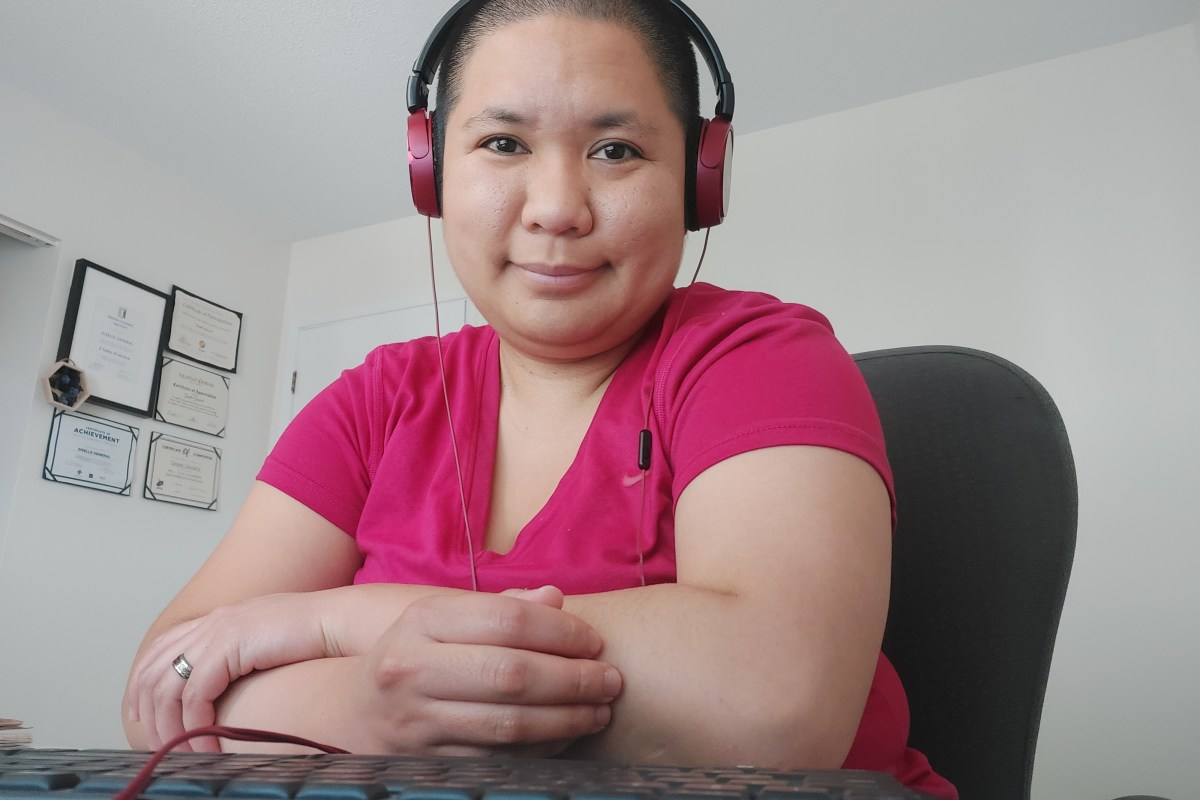
Giselle in her home office sitting by her computer desk.

By: Giselle General

“Writing is a solitary activity, and it is so important to build your community.”

I understand that this is a reason why there are many activities, events and gatherings of various forms that are organized to give artists and writers a chance to get together. From workshops that help people learn specific skills, networking, showcasing one’s work, or even a working-buddy setup to prevent procrastination, there’s immense value in having a living, breathing, human being beside you.

The tricky part is that I personally need to limit my in-person community activities for two reasons. The first reason is I’m an introvert so these activities are meaningful but draining at the same time. The second reason is I am still more COVID-cautious compared to the average person. I had it once and would do everything I can to not get it again or spread it to someone else. Sadly, in most gatherings, hardly anyone wears masks anymore.

To mitigate these risks but also widen my writing community, I did a simple Facebook group search for writers and memoirists and joined three of them. Not too many though, so my feed won’t get dominated by posts from these groups. A lot of the time, I see people asking for advice on a wide range of topics: from grammar, editing, publishing, finding motivation, and many others. Reading these posts were so helpful. Also, I know that by commenting to give advice, or event choosing an emoji to express congratulations on someone’s success, that I’m contributing positively in a small way.

Several posts came to my attention about people asking for a beta reader, whether on how to get one, or asking people to be one.

In simple terms, a beta reader is someone who reads an unpublished work as a test. The writer, or someone else who is organizing the process, will give copies of the manuscript and ask broad questions about the beta reader’s experience reading. I wasn’t asked to analyze the chapters, check for grammar or tone or anything like that. If I boil down the questions I got after reading the book it comes down to “do I like reading it?”

Back in January, I saw a post from a writer asking for volunteer beta readers for their memoir. I just finished the entire first draft of my own manuscript and I decided to leave it alone for a few months. With the extra time I have, I agreed to be a beta reader for a person I’ve never met from the US. We messaged each other a bit on Facebook messenger, exchanged emails and that’s where it began.

I received the first third of the manuscript. I decided to make the experience as close to reading a book as possible. While I decided not to print, I changed the preview mode on Microsoft Word so it looks like a two-paged book or an e-book. I went through the chapters and answered her questions.

Since the questions are focused on impressions and enjoyment, I tried to find a balance between keeping my answers simple and giving some details on what I find vague or confusing that can impact a reader’s experience.

I offered to also be a beta reader for the rest of her manuscript when it is ready. She was happy to have someone who is from a different demographic from her (a younger adult woman from a different country).

Two months after, I got two files, the second and last third of her manuscript. She sent the same questions to gauge my impressions on the content as a reader. For some of the questions I had the same answer; for others, I provided more information and said that my answers from reading the first section apply.

I really enjoyed the experience. It’s an opportunity to see another person’s work in progress and their style in narrating a deeply personal part of their lives. I admire her for making the request on that writer’s group, as I imagine it can be daunting to show something vulnerable and not yet a fully published written work.

Will I do it again? Yes, absolutely! Even if it is a new way of procrastinating, it’s still a more productive way than most.

Construction Zone Bus Stops: The Captive Transit User Series Part 11

A street in Edmonton with a temporary bus stop made with cement barricade, wooden platform, and 2 x 4 for the fencing.

By: Giselle General

This is part of an ongoing series of posts discussion issues I personally encounter while taking public transit in Edmonton. Links to other posts will be added on an ongoing basis:

What is a Captive Transit User? I learned about the term for the first time from the City of Edmonton’s website. The easy definition is: someone who takes public transit because it’s the best (or only available) option for them to travel around. The part about feeling ‘captive’ comes from the restriction that sometimes comes up, perhaps because one is too poor to own and maintain a vehicle, one does not know how to drive, or for medical reasons, cannot operate a vehicle. In many ways, I relate to this a lot. Though I’m pretty fortunate to afford the occasional taxi ride, and with my husband having a car.


I jokingly refer to my current place of residence as the “West End Construction Pandemonium Zone.” Although that is true, I cannot monopolize the title. All the different areas along the LRT construction route, whether the east one from Mill Woods to Downtown or the west one, really fall under this category. When I tell exactly where I live, though, people agree and do the small cringe that shows sympathy.

Funny enough, my commute taking the bus to and from our neighbourhood is overally pretty smooth. The issues I encounter are not any more different than my previous homes or workplaces. The new experience for me over the past year is the slight changes in the bus stops. Whether the east bound or west bound ones, every few months or so, the bus stop gets moved a block or two away. This is so the construction company has full access to the stretch of road where they are doing underground or above ground work. 

As a result, I had to pay attention to my surroundings and check the navigation apps. and I had to calculate extra walking time, and it’s best not to be surprised. The worst feeling is having to run to go to the nearest bus stop and see the bus zip past you. Learned that the hard way a few times. 

I learned that for drivers, there’s a bit of a learning curve as well. Sometimes, their digital screen doesn’t immediately update and so they will not be allowed to stop and let passengers disembark. 

The temporary bus stops would have the usual sign used in regular bus stops, but that’s where the similarities end. Since the stops sometimes have to be positioned in the middle of the road or right beside a sidewalk, there were these wood structures with platform and railings set up. There are no seats or roofs either. Depending on the location the ramp for wheelchair users are set up different ways. I suppose, portability is a factor in these structures so they can be moved wherever they are needed.

Snow clearing was something I worried about since construction zones are left untouched. This winter has been very, very good, perhaps even safer than the sidewalk near the houses. I suppose sparing a bucket of gravel to deal with an icy patch is barely noticeable given the amount of construction materials they have to use. I hope that this continues for however many more winters to come.

Being sneaky with jaywalking (oops) is something many of us bus riders do, because taking the very very longer way to cross the street and catch the bus is a pain in the butt. I am careful and know my basic safety principles when crossing the street so fingers crossed I don’t get hit by a car. Besides,  as a result of the construction there are fewer lanes on this major road, basically cut in half. So crossing the street the jaywalking way is like crossing a residential street that feels like an unmarked crosswalk. Let me be clear I’m not actively endorsing this – do at your own risk.

And there are times when the bus stop comes a lot closer to my house and it’s really nice. This is the case for the west bound bus stop where I disembark on my way home.

It takes diligence and responsibility of not only the city, but the construction company to ensure that residents and users of the road have a manageable experience, especially for a project that will take years – maybe even close to a decade, to be completed. 

My husband and I also walk by the construction area (of course just by the periphery and we stay outside the barricades), and observe the process. We can’t help but trade jokes about the pillars being constructed, given what happened in the summer of 2022. I’d take photos of the construction areas and sent them to my family group chat. My brother-in-law teases me that I’m overly generous and optimistic about when the construction will be completed. Well, I’d love to take his son, my nephew, on a cool train ride before he enters first grade so I can gain some ‘cool auntie’ points. 

The only other thing I hope that temporary bus stops have is better shelter from the heat and cold. Given that many of the regular bus shelters and stops don’t have it, perhaps it is a pipe dream. But, it never hurts to dream, right? It would also help in the summer construction months, to shield my eyes from the dust cloud right after a bus pulls over.

Memoir Writing Reflections #3: A Mic and A Stage

By:Giselle General

The largest, most intimidating, and important activity of the six-month mentorship is showcasing a sample of the work produced during that time. Since I had a very specific goal, a first draft of the manuscript for the memoir, showing a sample of this is not going to be a problem.

Speaking in front of a crowd is also not an issue for me. I had my elementary school teachers in Philex Mines, Philippines, to thank for that. Also, since 2017, I have spoken in front of crowds about vulnerable aspects of my life because of all the opportunities during the Canada 150 celebrations. 

In February, I was frantically getting organized for a potential new job which started after Family Day long weekend. At that point, I felt that I finished the last wholesale revision of all the 48 book chapters. I was also preoccupied with another important task that I didn’t envision as a part of my writing journey – funding applications. Sure, I did it in September but I was a bit more relaxed and wasn’t taking it too seriously. But after I actually got funding and I realized the implications of having money to help with artistic projects, I took it a bit more seriously. Doing three comprehensive funding applications asking for a larger sum of money and offering a detailed budget was more administratively taxing than I realized. And another person had an artistic idea and wanted to apply together. So, there are a lot of numbers, deadlines, and persuasive language telling strangers why they should give money for our project. Clicking the Submit button and getting the automated notification that the application was submitted gave me a huge sigh of relief.

In mid-February, I had my final one-on-one meeting with my mentor author. A few weeks before, she shortlisted three chapters that she edited for me to read in front of an audience. I timed all of them and was so happy to find one chapter that fits exactly within the six-minute limit. She gave additional tips that I didn’t even consider, such as taking a couple of seconds to self-promote afterward, and giving an introduction with enough context since I am not reading Chapter 1. 

During the week before the event, I actually spent more time thinking of a meaningful way to show my gratitude to Wendy for all the help and mentorship she did over the past six months. I’m a terrible shopper and even a worse gift-giver since I tend to be anti-consumerist and simple. Then the perfect idea came. Since there is a nearby Filipino convenience store, I thought it would be great for her to experience my story in a deeper way. I purchased several products that I used to sell in the store that I managed as a child, placed them in a paper gift bag, and wrote a note. 

When I arrived, it was one of those instances where I was happy to be wrong. I thought that it would be a quiet, intimate setting with just us mentors and mentees, a dozen people around a slightly larger table sharing our literary work. Turns out, it’s a whole performance, with a mic in front of a stage and a dozen rows of chairs. My quick mental math estimated about 80 people. There were writers and artists I’ve seen in the past who attended. When I told this, my husband had the same assumption and was impressed that my fellow mentees managed to present a piece of our writing in front of a larger crowd. On top of that, it is a very distinguished crowd too, people of the actual literary and artistic community in Edmonton. It’s not just a random group of people from the general public. They have a deeper understanding and appreciation of the artist and writer experience. 

For the lineup of mentees, I was first, where I shared a chapter close to the end, right before I immigrated to Canada. People smiled, giggled, and shared a collective “oh!” and “aw” after I read some of the lines in the chapter. I felt they understood the rollercoaster of emotions that my younger self experienced in the stories and internal thoughts in the chapter. After my piece, I talked about the Edmonton Arts Council and the feature they did about my work, where I heavily mentioned the Horizon Writers Circle program.

Then my fellow mentees read their pieces. Essays, poems, prose, and story chapters that captivated and entertained the audience. After the formal event program concluded, so many people in the audience took the time to speak to us individually and congratulate us for being part of the program and for the work we have shared. The conversations went on for so long, the appetizers ran out by the time I finished chatting with people. 

As a treat, I went to a nearby sushi restaurant and indulged. Being alone at a restaurant table was also the perfect way to wind down after being in such a cozy and crowded room – classic introvert of me. 

It’s remarkable, partially unbelievable, that the six months flew by just like that. At this point, I need to wait patiently to get the funding application results so I can hire professional editors to polish the manuscript. I’m also purposefully not looking at any of the files. I figured that letting it sit for at least three months will give me a fresh perspective when I start my self-revisions again. 

For now, learning a completely different kind of writing is at the forefront. Political news release writing and speechwriting will give me new skills that I think will help me improve my skill set moving forward. 

Memoir Writing Reflections #2: A Thousand Words A Day

By: Giselle General

Word counts and number of pages heavily influence my approach in writing. From Grade 4 onwards, in multiple classes from Language (English) class and Filipino class, we were required to fill pages upon pages of lined paper with paragraphs on certain topics. Some of them were comically dull, such as “what I did last summer” since for me, 70% of the time I was watching the store. I can cover that in just one paragraph. Since these essay worksheets have a defined number of pages and we students have learned that being suspiciously short lowers your grade, we learned to stretch and beat around the bush. Adding flowery words, extra couple of sentences, and extending simple statements with independent and dependent clauses are skills I’ve mastered well.

The page limit means just that – that there will be a point when I won’t be able to write any further. In my earlier years before I had access to a computer on a regular basis, this can be an agonizing experience. When I feel that I’m gaining momentum with the middle paragraphs of backstory and supporting points and then all of a sudden, I have less than half a page left, needing to hastily switch and make a concluding paragraph. It feels like walking into a hallway and getting smacked in the face with a glass door. It’s painfully abrupt. So, I’ve learned to “budget” the paper space ahead of time. As a university student here in Canada over a decade ago, I’m immensely grateful for Google Docs and Microsoft Word for this very reason. If I went overboard, I could trim the excess before submitting the final version.

For this memoir project, dealing with word counts and spitting out words is a whole new challenge. These days I rarely have limits on how long my write-ups should be, unless I have to submit them externally. As a volunteer columnist for the Alberta Filipino Journal for the past six years my word limit is simple, 650 – 700 words. Pretty easy to follow. When I wrote the historical essays for Edmonton Heritage Council’s historical initiative called Edmonton City As Museum Project, they had a maximum word limit, but writers get paid by the word. I tried my best to ensure I don’t unnecessarily inflate the piece while giving myself the flexibility to expand if needed. In both articles I had about 50 – 100 words left. With the CBC articles, there was also a word limit but the payment is a flat rate. It helped the editor with expanding a little bit more because they want to keep a well-written statement. Only the second piece went over the 600 word count.

Now that I had 40+ chapters to write about. I did some research on the average word count of a chapter for full-length books such as novels. I agonized on how many words I need to pump out in a day. With personal blogs such as the ones over here, there were many moments when I finished a post in a single sitting – usually about 1000 words. For some time, I wondered whether that’s a fluke or normal. This process of writing a lot – a whole lot more than usual – is an experiment on how many sentences I can spit out that are somehow coherent.

One of my husband’s favourite creative celebrities is J. Michael Straczynski, a filmaker who released their memoir/how-to book, Becoming Superman. What a remarkable and heartbreaking story of hardship in his younger years! It was also amazing to see how his artistic career blossomed. His is the first book where I read practical tips on advancing one’s journey as a writer. “Write all the crap out and write all the time, and make sure that you submit before the deadline, because it’s amazing how many assholes don’t” is the essence of his friendly and utilitarian advice. I like it. It resonated with me and boosted my confidence. I’ve always completed my written work on time, sometimes early, so that the editor can have the time and breathing room to look it over before getting bombarded by everyone else’s on-time or almost late submissions.

This time around, I am the rule-maker. And the rules, the constraints, are actually helpful in getting focused. So with each chapter I gave myself a semi-flexible limit: minimum 1000 words that clearly narrate at least three scenes, threads of thought, ideally both. This resulted into chapters that are between two to five pages. When I see a chapter going beyond that, I find a natural spot to split the narrative, which prevented me from feeling guilty that one area looked too long. Instead, by giving myself permission to split the chapters, I managed to add a couple more paragraphs to help make that mini story feel complete.

My author mentor lent me a stack of books to help me learn various techniques about writing. She enthusiastically said over and over that numerous principles used in writing fiction are just as useful in writing creative nonfiction. This was especially useful and motivational for me since I am narrating a story – the story of my childhood as my younger self experienced it. One of the books is On Writing, by novelist Stephen King. Similar to Becoming Superman, it’s a memoir/how-to combination which I liked. Him sharing his schedule with numbers is the most striking piece of advice for me. He said he would write a thousand words a day in the morning, stay consistent, and complete a first draft of a novel in three months as a result. Well, guess who completed a memoir draft in three months – this lady! I was overjoyed when I read this. Will my works be as brilliant as his, who knows? It also didn’t matter too much – he had a lot of freedom and flexibility since he wrote fiction. I know I shouldn’t trap myself into stringent formulas, but a roadmap helps prevent the feeling of spiraling out of control. I also don’t write a thousand words every single day. But if a thousand words in 50 days in under three months is a workable formula for me, I’ll take it!