When Community Service and Self Care Goals Conflict

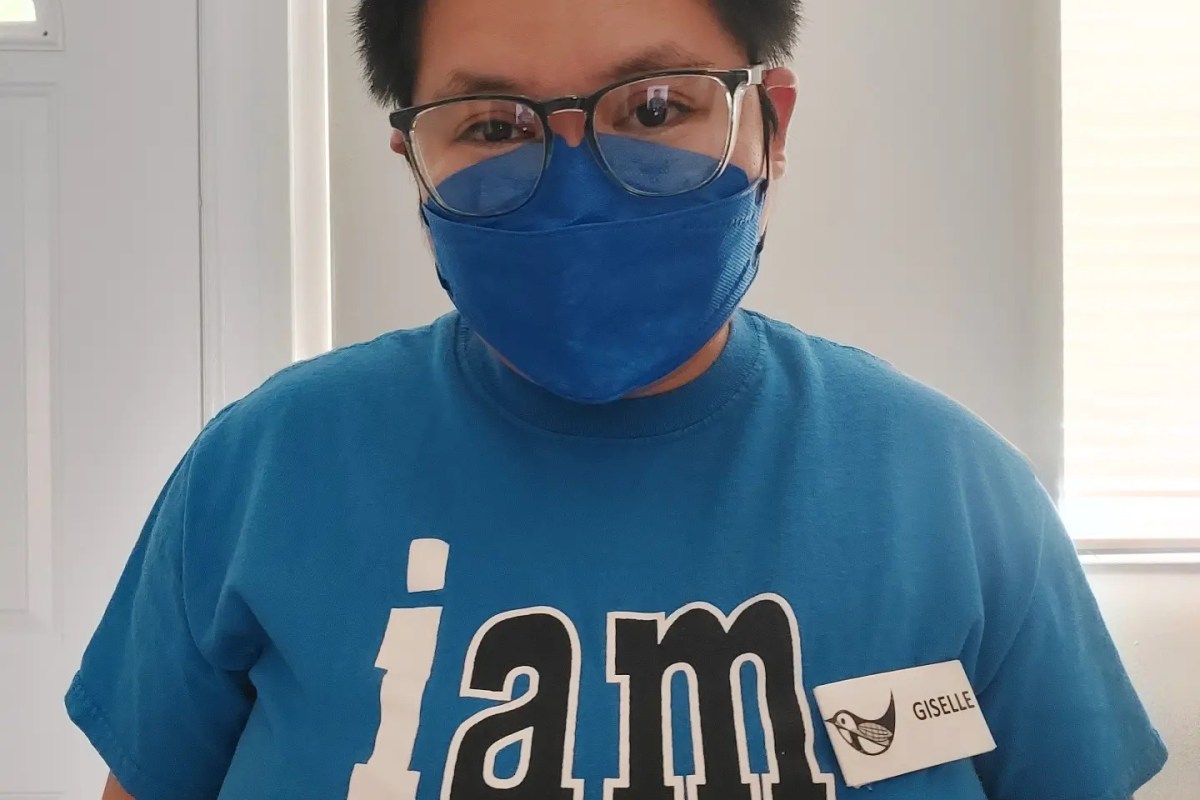
Giselle wearing a stylish safety glasses, KN95 mask and a volunteer Tshirt

By: Giselle General

Last fall, I had an an eye-opening moment as I went about doing my volunteer activities. During the third weekend of September 2023, I had two activities back-to-back, both outdoors. From morning until early afternoon, I was in my neighbourhood park helping with an annual gathering that includes serving lunch, having activities for kids and families to enjoy, and for residents to apply for their membership with our organization. Shortly after, I went to an Philippine arts event at an outdoor park in downtown Edmonton.

When the day began, I checked the air quality index and it is a 4. Not yet a concern which is great. But as we approached the lunch hour, my eyes started to feel irritated so I wore my glasses. It’s not the type that corrects your vision, but a cuter version of safety glasses I got a few years ago. Turns out, my eyes get irritated by the wildfire smoke, more easily that the average person.

It was 3 PM when I rushed to the arts event, where I kept my glasses but didn’t wear an N95 mask. That was my mistake. Although I must say that communicating and connecting with my fellow writers in our booth was so much more efficient without the mask. Also, since we were outdoors, I figured the COVID risk would be minimal.

Unfortunately on my bus ride home, as I sat on my seat resting my legs from walking and standing all day, that’s where it hit me. When taking transit I still wear a mask because I definitely don’t want to catch any of the respiratory viruses spreading around. As I sat patiently waiting for the bus to reach the west side of the city, I checked the air quality index app again. It went up to 8 – high risk! No wonder my eyes were irritated for the afternoon. As soon as I arrived home, I plopped on the couch while struggling to answer my husband’s question about what we plan to have for dinner. After dinner, my chest started to hurt, and I have to make an effort to breath in for the rest of the night.

I had plans to attend other neighbourhood events the next day, but when I looked out the window and saw the familiar orange haze in the sky I knew it’s a bust. The air quality index app showed a rating of 8 in the morning which went up to 10+ in the afternoon. I have to stay in.

This is just frustrating. I very much hate the fact that my own body seems to now get in the way of my volunteer activities. I also know that since COVID precautions are virtually nonexistent in public spaces, the burden on individuals to protect themselves is just more significant. The worst part is, event individual precautions are less effective especially if let’s say, you are one one of the 100+ people in an indoor hall during a community engagement event. While on one hand, I know that my assistance and contributions will be very helpful during the said event or activity, none of the organizers, fellow volunteers, or attendees would step in to help me if I get permanent harm from attending.

Perhaps that is part of the reason why that even more so the past few months, I make sure that majority of my volunteer activities can be done from home. Writing two informative articles for the monthly ethnic paper for the Filipino community in Edmonton continue to be rewarding. Over winter and until now, I started to do volunteer sewing tasks, upcycling old merchandise from my husband’s running group and turning them into personalized outfits. The documentary and book projects are also tasks that hopefully will make a positive impact in the future and can be done without risk of being exposed to smoke, fumes, viruses, hostile weather or all of the above.

There’s really no solid takeaway message I can pin down. During my election campaign a few years ago, I made decisions that I know prioritize my wellbeing and my life over potentially winning over votes. “My goal is to come home alive” and “if I’m sick, severely injured, or dead, then I won’t be able to help” are my personal constant reminders when I feel guilty about missing community events or volunteering opportunities.

In the new year, I tried to nudge more of my free time towards improving my personal health. Weekends offer what seems to be an unlimited opportunities to get involved and volunteer, whether it is events, workshops, rallies, and more. However, given that my husband goes out for a run with his running group in the afternoons (in the winter), I discovered that it is best to try a fitness related activity that I can try to stick to on a weekly basis. So for that past three months, that has been swimming for about 45 minutes at the local YMCA.

Giselle wearing a swimsuit getting ready for a swim.

This weekly swim routine has paid off really well in just a few weeks. It’s hugely help reduce my shoulder, neck, and back pain from doing office work full time. Swimming laps and treading water is definitely good cardio without aggressively hurting my joints. And slowly, as I gain confidence in learning how to tread in deep water, I also manage my fear while celebrating my incremental improvements.

This tradeoff has been worth it for now. My community service time and activities are sprinkled over week nights, lunch breaks and weekends, so I figured carving out a premium time for my self is the right call for now. I do dread the upcoming summer though with the greater likelihood of forest fires and smoke risk. Maybe volunteering for public and indoor activities is the approach moving forward.

A Month of Cool Transit Milestones: The Captive Transit User Series Part 13

Giselle posing beside a table with a sheet cake. The design on the cake says "Train, Choo! Choo!"

By: Giselle General

This is part of an ongoing series of posts discussion issues I personally encounter while taking public transit in Edmonton. Links to other posts will be added on an ongoing basis:

What is a Captive Transit User? I learned about the term for the first time from the City of Edmontonโ€™s website. The easy definition is: someone who takes public transit because itโ€™s the best (or only available) option for them to travel around. The part about feeling โ€˜captiveโ€™ comes from the restriction that sometimes comes up, perhaps because one is too poor to own and maintain a vehicle, one does not know how to drive, or for medical reasons, cannot operate a vehicle. In many ways, I relate to this a lot. Though Iโ€™m pretty fortunate to afford the occasional taxi ride, and with my husband having a car.


November 2023 was such an incredible month for all things transit in Edmonton. On a typical day, it is understandable that many everyday people, the media, and those politically engaged have many frustrations about our transit system and are quite vocal about it. But November was a bit special as there were precious opportunities of celebration and showcase.

Valley Line Southeast LRT Line Opening

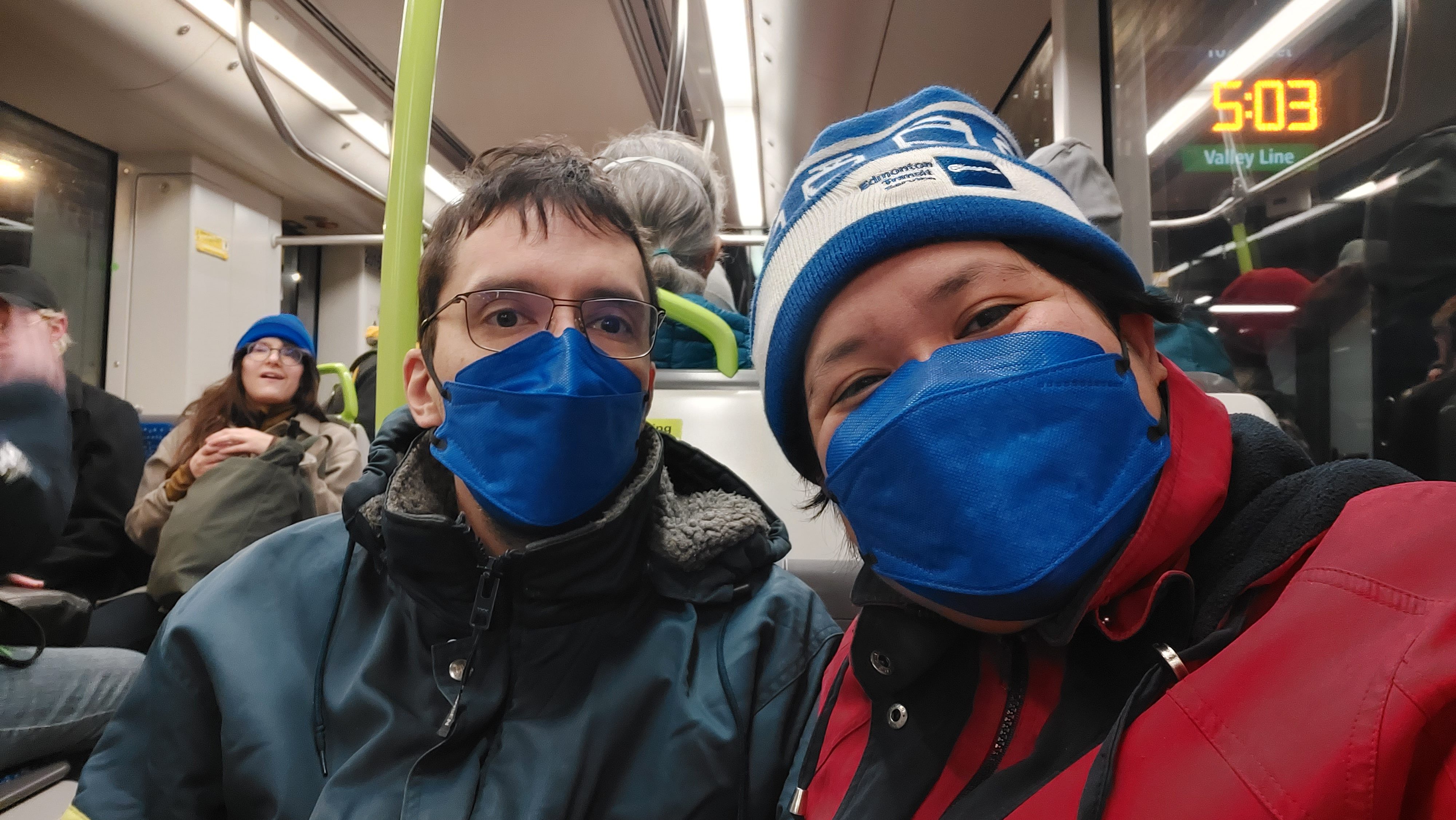
On November 5, the long-awaited LRT line from downtown to Southeast Edmonton finally opened. While there wasn’t an official event organized by the city, it felt really festive right at 5 AM throughout the LRT stations along the line. This is thanks to enough people in the city who organized, shared enthusiasm and as a result, filled up the LRT vehicles during their first trip from downtown to Mill Woods and back. I described those wee hours of dawn as ‘festive in a nerdy way.’ There was cake, coffee, an opportunity for everyone to take turns to cut a ribbon with large ceremonial scissors, and run into other people in the city who are keen on municipal politics, love trains or active transportation, or both.

I am super grateful to my husband (who is not a big politics or transit nerd like me) who convinced me to go to this ‘opportunity of a lifetime’ event and offered to come along with me, since there are no buses available at 4 AM from our place to downtown.

Here are some of the media articles that captured the enthusiasm of the opening day. It was pretty fun trying to spot my husband and I in the photos and video snippets.

At 5:03 AM, after the passengers did a countdown, the LRT departed from the 102 Street station on the way to Mill Woods. My husband and I were lucky to find seats.

Edmonton Hosted the annual Canadian Urban Transit Association Conference

In mid-November, Edmonton hosted several transit-related conferences, the Youth Transit Summit and the regular Canadian Urban Transit Association convention. The CUTA conference happens twice a year, a smaller spring convention and the main fall convention, in various locations across Canada. Back in 2018, during my first year as a board member of the city’s transit advisory board, I was able to attend the CUTA conference in Toronto. So it was very exciting to have my home city host it. I got sick in the middle of that week, but the fact that multiple members of our board were able to attend was wonderful.

The fact that the new LRT line opened just in time for the conference, so that it can be showcased to all the conference participants who signed up for technical tours, was a bonus. The technical tour I was able join, the recently re-opened Stadium Station, was informative and enjoyable. The best part for me is that not only was the tour focused on the station itself, but the changes in the residential areas nearby. The new cluster of tall residential towers is the first time I’ve witnessed a real-life example of TOR (Transit Oriented Development).

Edmonton Transit Service staff shared information and answered questions of the crowd during the technical tour of the station. One surprising fact I learned is that the undergound station is still functioning and was renovated into a service room.

Thinking back to my last vacation in Manila, Philippines, I chose to rent a condo that was walking distance to an LRT station and a mall. It made travel very convenient as it was an effective way to beat the horrible road traffic during the holiday season. My current home here in Edmonton will have the same convenient access as well. My husband and I walk to the mall and business plazas nearby. We are walking distance from a hospital, gas station, convenience store and a car wash. When the LRT finally gets opened in a few years, it would make getting around even more flexible. I’m curious to see what will happen now to the areas within blocks off every transit station.

Showcasing the Transit System to a City Councillor

Then in late November, I did something for the first time, something I have casually offered on social media to the politicians of the city but no one took it up until that day. On Sunday November 26, I spent the morning with one of our city councillors and their staffer on multiple ETS transit trips across the city, experiencing various methods including the bus, LRT, replacement service, on-demand bus, and walking to a destination as opposed to taking a bus. I admit I was nervous, worried that I may sound irritating with too many complaints and concerns I was pointing out all throughout the trips. But they were both receptive and the blog that was published afterwards is insightful.

I showed Councillor Cartmell the various ways temporary bus stops are designed. I pointed to him that this one along 102 Avenue and 133 Street has good platforms for the front and back doors.

Transit, safety in public spaces, homelessness, and ‘value for taxpayer money’ arguments take up a lot of discussions on city politics lately. I’m curious to see what additional decisions that are made politically and the changes that city administration would make to work on these issues.

Report it on the App: The Captive Transit User Series Part 12

By: Giselle General

This is part of an ongoing series of posts discussion issues I personally encounter while taking public transit in Edmonton. Links to other posts will be added on an ongoing basis:

What is a Captive Transit User? I learned about the term for the first time from the City of Edmontonโ€™s website. The easy definition is: someone who takes public transit because itโ€™s the best (or only available) option for them to travel around. The part about feeling โ€˜captiveโ€™ comes from the restriction that sometimes comes up, perhaps because one is too poor to own and maintain a vehicle, one does not know how to drive, or for medical reasons, cannot operate a vehicle. In many ways, I relate to this a lot. Though Iโ€™m pretty fortunate to afford the occasional taxi ride, and with my husband having a car.


Whenever I take the bus or LRT, regardless of whether I’m alone or traveling with my husband, I try to pay attention to my environment. Sure, at some point I end up getting slightly bored and browse on my phone, but I don’t do that until a few minutes after getting on the bus. It’s also why I don’t wear headphones while taking transit.

Frankly speaking, the reason I feel inclined to stay alert is not related to safety. Sure, that is important, but thankfully I personally haven’t experiences direct and aggressive treatment on the bus which is a relief. I have a different motivation, that is to observe whether something is going wrong with the bus, train, bus stop or transit station that needs to be fixed. The moment I spot it, I report right away on the 311 app.

The City of Edmonton has an app called the 311 app, that enables people to report different things that the city can resolve. It includes a feature to take a photo (although it is not mandatory which is good), text boxes to add a summary of the issue, automated geo-location, and a check box to indicate whether the issue causes accessibility concerns.

As far as transit, the categories are:

Late Bus: For this section there are questions such as the location, bus stop and route number, and whether the delay is due to weather conditions. I personally don’t make a report when a bus is 15 minutes late and if the travel apps like Google or Transit had actually indicated it. It means that it is a real-time update. But if it is winter and the bus is 20 or more minutes later, then definitely I would report.

Transit Feedback: I am guessing that this category is for other types of feedback that are not related to buses being late, or not related to broken and dirty things in transit facilities. In the past, the third category is specifically related to vandalism and cleanliness, so I have used this category to report something that is simply not working, like a digital sign. I also haven’t used this option in a while.

Transit Maintenance: This is the option I use most often. What I typically report falls under two categories: items related to cleanliness or vandalism, and items related to functionality of electronic items in the bus. The vandalism I’ve reported vary, from scribbles on the seat in front of me written with pen or paint, broken wayfinding signage in downtown right beside a bus stop, a few bus shelters where the glass walls had completely shattered, and the one I know should be addressed quickly – colorful and sticky stains on the bus seats, especially the fabric ones.

As far as functionality of electronic items in the bus, there are two main ones. First is the ARC Card machines where people are supposed to tap on their way in or out. The sounds from the machine are quite distinct whenever it doesn’t function. When after 10 minutes on the bus, I can still hear the particular beep that indicates it’s not working, then I make a report. If the display screen is not working, I do the same. The most frequent report I do though is whenever the device that is supposed to announce the next stop is not working. as indicated in this post, I’ve learned to appreciate the value of hearing and also reading the information of the next stop, especially when it’s hard to see over the window. The best part about the app is whenever I report issues, there’s a check box that asks whether it is a disability issue. Whenever it does, I check if off every single time. I truly hope that the issue gets escalated.

It’s truly unfortunate that I cannot see whether the issue is fully resolved or not. The odds of me taking the same bus with dirty seats right after I made a report is unlikely. The only update is seeing the ticket being closed or “redirected to other business area.”. However, in our data-driven society, I know that every report gets added in the statistics. In fact, there are public databases available on all the 311 reports made to the city, for those who want to do analysis on a certain issue and want to use the number of complaints filed as supporting evidence.

If there’s one change I’d like to see on the app, is to know for sure whether the issue is fully resolved or not. A photo to show the issue is fixed or cleaned would be so nice. A once-sentence update that says the broken speaker or digital sign is fixed on a certain date would be so reassuring. Even a statement saying that the issue is considered and can be addressed by future policy gives an indication that it is a long-term problem. Maybe this can help prompt people to use these reporting methods more and trust them.
For now, I still use the app. It’s more productive that venting on social media.

Construction Zone Bus Stops: The Captive Transit User Series Part 11

A street in Edmonton with a temporary bus stop made with cement barricade, wooden platform, and 2 x 4 for the fencing.

By: Giselle General

This is part of an ongoing series of posts discussion issues I personally encounter while taking public transit in Edmonton. Links to other posts will be added on an ongoing basis:

What is a Captive Transit User? I learned about the term for the first time from the City of Edmontonโ€™s website. The easy definition is: someone who takes public transit because itโ€™s the best (or only available) option for them to travel around. The part about feeling โ€˜captiveโ€™ comes from the restriction that sometimes comes up, perhaps because one is too poor to own and maintain a vehicle, one does not know how to drive, or for medical reasons, cannot operate a vehicle. In many ways, I relate to this a lot. Though Iโ€™m pretty fortunate to afford the occasional taxi ride, and with my husband having a car.


I jokingly refer to my current place of residence as the “West End Construction Pandemonium Zone.” Although that is true, I cannot monopolize the title. All the different areas along the LRT construction route, whether the east one from Mill Woods to Downtown or the west one, really fall under this category. When I tell exactly where I live, though, people agree and do the small cringe that shows sympathy.

Funny enough, my commute taking the bus to and from our neighbourhood is overally pretty smooth. The issues I encounter are not any more different than my previous homes or workplaces. The new experience for me over the past year is the slight changes in the bus stops. Whether the east bound or west bound ones, every few months or so, the bus stop gets moved a block or two away. This is so the construction company has full access to the stretch of road where they are doing underground or above ground work. 

As a result, I had to pay attention to my surroundings and check the navigation apps. and I had to calculate extra walking time, and it’s best not to be surprised. The worst feeling is having to run to go to the nearest bus stop and see the bus zip past you. Learned that the hard way a few times. 

I learned that for drivers, there’s a bit of a learning curve as well. Sometimes, their digital screen doesn’t immediately update and so they will not be allowed to stop and let passengers disembark. 

The temporary bus stops would have the usual sign used in regular bus stops, but that’s where the similarities end. Since the stops sometimes have to be positioned in the middle of the road or right beside a sidewalk, there were these wood structures with platform and railings set up. There are no seats or roofs either. Depending on the location the ramp for wheelchair users are set up different ways. I suppose, portability is a factor in these structures so they can be moved wherever they are needed.

Snow clearing was something I worried about since construction zones are left untouched. This winter has been very, very good, perhaps even safer than the sidewalk near the houses. I suppose sparing a bucket of gravel to deal with an icy patch is barely noticeable given the amount of construction materials they have to use. I hope that this continues for however many more winters to come.

Being sneaky with jaywalking (oops) is something many of us bus riders do, because taking the very very longer way to cross the street and catch the bus is a pain in the butt. I am careful and know my basic safety principles when crossing the street so fingers crossed I don’t get hit by a car. Besides,  as a result of the construction there are fewer lanes on this major road, basically cut in half. So crossing the street the jaywalking way is like crossing a residential street that feels like an unmarked crosswalk. Let me be clear I’m not actively endorsing this – do at your own risk.

And there are times when the bus stop comes a lot closer to my house and it’s really nice. This is the case for the west bound bus stop where I disembark on my way home.

It takes diligence and responsibility of not only the city, but the construction company to ensure that residents and users of the road have a manageable experience, especially for a project that will take years – maybe even close to a decade, to be completed. 

My husband and I also walk by the construction area (of course just by the periphery and we stay outside the barricades), and observe the process. We can’t help but trade jokes about the pillars being constructed, given what happened in the summer of 2022. I’d take photos of the construction areas and sent them to my family group chat. My brother-in-law teases me that I’m overly generous and optimistic about when the construction will be completed. Well, I’d love to take his son, my nephew, on a cool train ride before he enters first grade so I can gain some ‘cool auntie’ points. 

The only other thing I hope that temporary bus stops have is better shelter from the heat and cold. Given that many of the regular bus shelters and stops don’t have it, perhaps it is a pipe dream. But, it never hurts to dream, right? It would also help in the summer construction months, to shield my eyes from the dust cloud right after a bus pulls over.

Two Small and Impactful Gestures of Two (Former) City Councillors

This time around I am going to publicly name two politicians for what they have done! What a timely post shortly after one year since the most recent municipal elections here in Edmonton.

Cue scary noises!

Actually, I’m just joking, really!

I think it helps that they are both former former city councilors, but either way, I am actually actually not naming them and shaming them. I’m naming them because yes, I think they probably won’t even remember doing these two things at all. These seem to be very small gestures but had really impacted the way I look at things here in the city where I live, and had shifted my life in a very noticeable way. It is a positive impact – no shaming will be happening here.

First is former City Councillor Scott McKeen, who represented Ward 6, downtown Edmonton. He was pretty active in his social media accounts, and I followed his Twitter account to stay up to date with city politics. One day, he re-tweeted about a Repair-a-thon event a few days before it was about to happen. I like sewing, fixing things up and making them usable again. This event is an opportunity for people to get everyday items and clothing repaired, and people can volunteer their skills to help get these stuff fixed up. Because of a scheduling conflict and the fact I just found out about it a few days before the weekend, I cannot make it and I was pretty upset. I could have helped patch up clothes, sew back buttons and fix hems on shirts and bottoms. At the time, I already figured that Home Economics is not a a typical part of the curriculum for children here, so many don’t have the skills to do simple repairs with clothing, household objects or electronics.

From seeing this event being promoted, I also discovered a Twitter account called Boomerang Bags Edmonton. It is very much related to sewing and upcycling. The goals is to get volunteers to sew fabric shopping bags that can be re-used as opposed to single-use plastic bags, and donate them to local stores so they can encourage customers to use them instead of buying bags. It’s a win-win and I loved the concept. So I got involved, signed up to volunteer and made a lot of bags. If I tally them up it probably will go up to the hundreds at this point.

It’s interesting because the preferred terminology that is gender-neutral is “sewist”. But it’s difficult to use since as someone who is ESL, whenever I hear the term I think of someone who is doing something related to plumbing, like sewage. Because of this I still use seamstress especially when talking to people who might not be as familiar with the community.

Anyways, because of being a volunteer seamstress with Boomerang Bags, working with fabric become a larger part of my hobby time. I’ve already been quilting for years and I’ve made enough quilts, throw blankets, pilllowcases for my home. And during the pandemic, our community’s talents had an opportunity to shine in a major way. Hundreds of crafters, seamstresses (or sewists), quilters worked together for months to help with two major fabric-related goals: to make fabric masks for those who cannot afford them, and to make fabric laundry bags for healthcare workers to store their contaminated scrubs after work that they can just toss into the laundry.

A dining chair with a dozen fabric bags draped by the backrest.
These were the first batch of bags I’ve sewn in March 2020, as part of the province-wide effort to make fabric bags for healthcare workers who need a place to store their dirty uniforms. Just a year beforehand, I discovered Boomerang Bags Edmonton through social media posts of a city councilor.

I wonder if the former councillor realized that from this very small act, it opened me to Edmonton and Alberta’s community of creatives sewing.

Second is former City Councillor John Dziadyk, who represented Ward 3 on the north side. He caught my attention during his election campaign in 2017 because his marketing strategy was frequent, consistent, and his viewpoints were phrased in a way that resonated with a lot of people frustrated with how things are done in city government. After he got elected, his social media, particularly Facebook, continue to be very active in sharing information about community matters.

He published a short video during spring time 2018, encouraging people to help with the snow melting and puddles in drains by chipping off the ice of a blocked drain when they see one. It’s clear that the video was a simple one, likely just him and another person holding his phone. He used an ice chipper, a common tool used in the winter, tried to strike a puddle a few times and then the muddy water started to drain. He said, doing this helps prevent flooding and from stagnant ice water to collect. This can be dangerous if the puddle freezes again which tends to happen in March and April.

It blew my mind that it is something that an everyday person can do. I definitely have seen these slushy puddles on sidewalks and intersections all the time. As someone who frequently walks, I’ve been splashed by them a few times. I thought there’s nothing anyone can do other than hope for warmer weather so all the water evaporates.

As a result, I started to observe sidewalk drains whenever I walk around. While I don’t always have the time or I forget sometimes, whenever I could, I would also remove pieces of garbage or leaves that would block the drain. That way, when it rains or there’s a large amount of snow and ice melting, all the water have somewhere to go. It’s one of those seemingly invisible things that if someone looks at proactively, it can save people from inconvenience, potential accidents, and soggy footwear.

A sidewalk in the spring time, with snow and slush piled up.

What’s most interesting about these two experiences is that these actions are not even closely related to their actual roles, which is advocating and addressing political issues under the municipal government. A few times, I’ve heard people say that being a politician for a city or municipality, is the toughest one compared to being a provincial or federal politician. Either way, I’m thankful that something as simple as browsing social media platforms and finding these information from their posts had made a positive impact on me. A re-tweet, and a simple video, who would have thought! Well, I hope these two former politicians are doing well these days after moving on from political life.

Transit Routes Made us Move! The Captive Transit User Series: Part 10

A snowy sidewalk with a sign saying "ETS Bus Stop" learning against a teelphone pole.

By: Giselle General

This is part of an ongoing series of posts discussion issues I personally encounter while taking public transit in Edmonton. Links to other posts will be added on an ongoing basis:

What is a Captive Transit User? I learned about the term for the first time from the City of Edmontonโ€™s website. The easy definition is: someone who takes public transit because itโ€™s the best (or only available) option for them to travel around. The part about feeling โ€˜captiveโ€™ comes from the restriction that sometimes comes up, perhaps because one is too poor to own and maintain a vehicle, one does not know how to drive, or for medical reasons, cannot operate a vehicle. In many ways, I relate to this a lot. Though Iโ€™m pretty fortunate to afford the occasional taxi ride, and with my husband having a car


It finally happened! Well, technically the decision was last December which is already half a hear ago. Putting up with the huge change in transit routes in my former neighbourhood, in addition to re-evaluating my life after losing in the the municipal elections, prompted me and my husband to sell our home.

This time around, I didn’t need to grab a paper map of all the city-wide bus routes. Google Maps is much more handy this time around. So it is much easier to assess the bus routes to and from downtown and other parts of the city, at various times of the day.

In addition to the very desirable financial aspect of being mortgage free, having access to bus routes similar to the former number 4 route, or better, is a key criteria. And that is absolutely what we achieved in the townhouse we bought near the Misericordia Hospital on the west end. We officially moved in Spring 2022.

I used to want roommates. Now I want affordable. And always, I need the bus…

https://www.cbc.ca/news/canada/edmonton/first-person-henday-project-giselle-general-1.6441221

This time around, the routes I have access to is many times better than my former neighbourhood. In my former home, I was already happy with that one bus route since it is so frequent and available from early morning and late night. Now, since I am along the major road which is 87 avenue, I have access to two of these frequent bus routes, in addition to several 3-digit community routes and 2-digit cross-city routes. And many times, when I have to do errands, walking is a very feasible option. Walking under 20 minutes, I have access to many five business plazas, including West Edmonton Mall!

Living in a place with convenient transit and walking routes meant I haven’t had a taxi or rideshare trip since May, and as of writing this it is already July! In the past, when I am running a bit late going home from work, I’d take a taxi or rideshare. My monthly budget for this is about $150 a month. Looks like I will be way in the green at the end of the year.

Even the construction happening right next to me isn’t a bother at all. The construction company seems to diligently make efforts to provide proper signage for detours for cars and pedestrians, and adequate notification if construction needed to be a bit noisy at night. Sure it might be about a decade or so, but it would be even more remarkable when we have an LRT station just a stone’s throw away.

This is the ultimate goal, what I hope everyone can have – to have “transit so boring you don’t even check the schedule”. This is my experience now, and in my opinion, that is what it takes for people to trust and choose transit as a serious mode of transportation living in this city.

“Sprinting While Connecting” The Captive Transit User Series Part 9

A stylish professonal woman by a sidewalk during the day waving for a bus.

By: Giselle General

This is part of an ongoing series of posts discussion issues I personally encounter while taking public transit in Edmonton. Links to other posts will be added on an ongoing basis:

What is a Captive Transit User? I learned about the term for the first time from the City of Edmontonโ€™s website. The easy definition is: someone who takes public transit because itโ€™s the best (or only available) option for them to travel around. The part about feeling โ€˜captiveโ€™ comes from the restriction that sometimes comes up, perhaps because one is too poor to own and maintain a vehicle, one does not know how to drive, or for medical reasons, cannot operate a vehicle. In many ways, I relate to this a lot. Though Iโ€™m pretty fortunate to afford the occasional taxi ride, and with my husband having a car.


This particular write-up combines two of the issues I am passionate about as a person who is unable to drive: public transit and snow clearing.

I think it is a right of passage for any Edmontonian to channel their inner cheetah, or kangaroo, or Usain Bolt, to get off the bus and train they are currently in, see the connecting bus or train for the next part of their journey, and run to catch it like your life depends on it. It may be an exaggeration to say that your life is over if you miss your connecting bus or train, but it can be quite inconvenient, a great cause of stress and a waste of money and time when you do.

During my early university years, for my morning classes I would hop off the #119 Bus at the West Edmonton Mall Transit Centre, and then sprint to catch the #4 or #106 to go to the University of Alberta to make it on time for my 8 AM class. Going home is the worst part though, particularly after 9 PM. if I missed the #136 bus, I’d have to wait another half hour (or during the years before 2010, it is an hour-long wait) to get home, and my tired self just feels that is too much. So I’d take a taxi, spend $25 to get to my home in the Hamptons neighbourhood on the west side of the Henday. At the time, it’s so far west, that when I say the street address, taxi drivers get confused and say “What? That’s a street number beyond the 200! Where is that?”

When transit facilities expanded and the Lewis Farms Transit Centre opened in 2011, I had more travel options and it was nice! I can take the express morning bus straight to South Campus LRT, and upon disembarking, I’d sprint to catch the train heading to the University of Alberta North Campus. Now that I think about it, even through the winter months, not a single time did I slip on ice or slush, fall and hurt myself while sprinting to catch the train. Sure, sometimes I miss the but or train I meant to catch, but the mantra I tell myself while still trying to sprint is “better late than injured”.

I know that many people find transit unreliable because of the issues with connections. It’s tricky because on one hand, I understand the expectations of promptness. If the app or the map says that the bus is arriving at a certain time, it better arrive that time, right?

A street intersection during winter with a transit bus passing by.

But at the same time, road conditions certainly affect the speed of the bus from one stop to the other, and from one transit station to the other. Many things can cause micro-delays that add up, from a passenger with a wheelchair boarding or disembarking, letting a mother duck and her ducklings cross the street, or a bus driver deciding to help an elderly person take their groceries home. Perhaps the LRT is delayed because of people trying really hard to squeeze in, or holding the door open for that poor fellow running to catch the LRT. There’s so many factors.

This last winter, when the roads were so dangerously icy due to the freeze-and-thaw conditions, Edmonton transit told all buses pull over and stop operating for an hour until it is less icy. I imagine that derailed many people’s commutes, but I also understand that driver safety is important. Better be late than the city spending hours of time and lots of money rescuing buses that crashed.

The mobile app of the the city 311, also has a new feature now where people can report whether a bus is late. I hope this is something that people use more often. The social media account for transit is not as responsive as the one in Calgary so venting about it on social media is not as effective.

Going back to the panicked moments when catching my connecting bus or train, I’m so relieved that I’ve never slipped and smashed my face onto the concrete. Particularly for the South Campus LRT station which I used almost daily for a while, whenever there’s a heavy snowfall I see the city staff using all tools and equipment to clear snow on the go, from manual shovels, a bobcat, to what I nicknamed as the “motrorized rolling snow brush thingies”. I’m grateful for the quality of their work and I hope they continue to be able to do this.

Now that I moved to a new neighbourhood where transit is much more frequent (on peak hours I have a bus that comes every 10 minutes or less, and in the evenings, every 15 minutes or less). So I will likely not need to sprint and chase the bus to go to my usual destinations. It’s about time, as my knees and my feet are not in the best shape. This is what I wish for people all over the city, to have transit coverage so boring you don’t worry about when the next one is coming.

Pecha Kucha Speech Transcript: I made it out alive! My first attempt running for Edmonton Municipal Election during COVID

Giselle delivering a speech at the stage of Metro Cinema in Edmonton

After a long hiatus no thanks to the pandemic, it seemed fitting that my first in-person speech activity was with the same event where I did my last in-person speech from 2019. It’s with Edmonton Next Gen for their Pecha Kucha night! This is the transcript of my speech titled “I made it out alive! My first attempt running for Edmonton Municipal Election during COVID”

  1. That was nothing to sneeze at! Itโ€™s a phrase I never heard before, until after the election day. 5180 votes, Second place against an incumbent, with limited funds and during a pandemic, was apparently noteworthy.
  2. You should feel proud, I was told. How do I feel? Not that. I felt gratitude, inspiration, motivation and energy. Most of all, huge relief that I made it out alive, uninjured, not severely traumatized.
  3. There are many โ€œtypicalโ€ things you need to prepare for when running as a candidate, your platform, who to ask to volunteer or donate, the GOTV plan, short for Get Out The Vote, print and online communications and more.
  4. In 2016, I attended my first elections 101 program, hosted by the city for women who want to be involved in municipal politics. A current city councillor (born & raised Canadian white guy) did his energizing pitch that we, women, should run.
  5. In the Q and A I raised my and asked, ummmm sir, councillor may I ask, is it safe to run for politics in Edmonton, in Canada? Do I need to worry about getting killed and my dead body floating in the River Valley?
  6. He was shocked and reassured me it IS safe to run here. A fellow workshop participant told me, wow, I was worried about social media trolls, I didnโ€™t even think about actual threats to my life. For me that was top of mind. ย 
  7. From then on, in the other workshops and campaign toolkits I accessed, I realized it gives some fundamentals, but wonโ€™t be sufficient to help me run a campaign that aligns with my values and will keep me safe, healthy and uninjures.
  8. Immigrants and visible minorities have a steep learning curve about the political culture here. Itโ€™s even worse when you came from a country where politicians, journalists and activists do get murdered on a regular basis.
  9. When a candidate knocks on your door, what comments do you make? I got โ€œDo you have kids?โ€ โ€œWhatโ€™s your background?โ€ โ€œAre you Native?โ€ โ€œI love the Filipino caregivers!โ€ ย Do male or white candidates get these also, I wondered.
  10. I know that all it takes is one violent incident to cause permanent injury and harm. I had to constantly think, I can protect and defend, administer first aid,ย  call 911 quickly when things go very wrong for me?ย 
  11. I have a very difficult time asking for help and this stems from a lot of personal trauma as an immigrant and an orphan. Itโ€™s a huge challenge to overcome and that was important, since the area for ward sipiwiyiniwak, where I was running, is massive!
  12. Campaigning during COVID added more concerns, on because of the increased prevalence of Anti-Asian racism. I canโ€™t change how I look. Iโ€™m someone who looks visibly Asian, wears a mask, and also gets misidentified as Indigenous.
  13. The volunteers who were my fellow immigrants had additional fears that was tough to overcome. The big one, dropping off flyers in mailboxes. Despite my reassurances that itโ€™s permitted. They skipped the ones that says โ€œno flyers or no solicitingโ€
  14. Theyโ€™re worried about getting yelled at as ignorant, rule breakers, theyโ€™re afraid of harassment. Theyโ€™re worried about my reputation too. The tradeoff, better for people to not know me, than being angry at me after seeing an flyer they didnโ€™t want.
  15. As someone who canโ€™t drive and with a weak leg, I carried heavy supplies and went to neighbourhoods on foot, car and bus. Which shocked bus and uber drivers, seeing a candidate whoโ€™s literally living like an average person.
  16. With that said, many people donated and shared their time and talents. People doorknocked and flyer dropped with me in hot summer days and rainy afternoons, dealing with hazards on streets. Sidewalks and front lawns, across older and developing neighbourhoods.
  17. People Iโ€™ve never met until the campaign reached out through email and social media, who helped remotely and positively talked about my candidacy to others. Trolls were very few, but supportive people, thank goodness, itโ€™s abundant.
  18. The next day, after the election I got a message on Twitter from a competitor Iโ€™m on good terms with. Like me, he didnโ€™t win. His message said โ€œwell that was a waste of timeโ€. And thatโ€™s one huge thing I disagree with.
  19. For me this is just part of community service and being an adult. Withinย  a week, I resumed my volunteer duties with my neighbourhood, ethnic community, and the city. I went back to my nonprofit job, booked a massage, and an appointment with my therapist. ย 
  20. Iโ€™m alive, uninjured and not severely traumatized. I plan to share my insights, and campaign templates to anyone who wants it. And if Iโ€™m fortunate enough, I might be healthy enough, wiser and equipped for a future candidacy. TY.

This post will be updated once the video of the presentation is available. Thank you to Edmontonโ€™s Next Gen, the organizers of Pecha Kucha Night that takes place three times a year, for the opportunity to present, especially for something as significant as your first in-person event since COVID started. For more information such as previous presentations how to support or participate, visit https://edmontonnextgen.ca/pkn.

Cheating to Survive by Evading Transit Fare: The Captive Transit User Series: Part 8

Closeup of a hand holding a Canadian two-dollar coin.

This is part of an ongoing series of posts discussion issues I personally encounter while taking public transit in Edmonton. Links to other posts will be added on an ongoing basis:

What is a Captive Transit User? I learned about the term for the first time from the City of Edmontonโ€™s website. The easy definition is: someone who takes public transit because itโ€™s the best (or only available) option for them to travel around. The part about feeling โ€˜captiveโ€™ comes from the restriction that sometimes comes up, perhaps because one is too poor to own and maintain a vehicle, one does not know how to drive, or for medical reasons, cannot operate a vehicle. In many ways, I relate to this a lot. Though Iโ€™m pretty fortunate to afford the occasional taxi ride, and with my husband having a car.


In the volunteer-based citizen advisory board on transit I’ve been involved with for the past three years, we had a recent discussion about cash fares, how much they are supposed to be, and the impact of increasing it to $4. During this exchange of emails, I sent this as a response.

I’m gonna get a bit personal here: during my first year in Canada, the first “it’s not right but I gotta do it to survive” life hack I learned is how to evade paying the full amount when taking the public bus. I was in a living situation where I didn’t get adequate financial support even for small things such as taking the bus to go to a classmate’s house for a school project. Most days during winter there in St. Catharines, Ontario, I can handle walking up to one hour one way to my destination but that is not always feasible. One day I was worried because I was short 25 cents to pay for fare and when I placed all my coins in the cash box, I didn’t get reprimanded for being short. So I did that, a few times. It felt horrible. But I was a 16-year-old newcomer to Canada still adjusting to school and didn’t have a job yet, and I had to fend for myself and be resourceful. And sometimes, the coins in the key jar by my cousin’s house wasn’t enough for bus fare. 

The times when I short-changed the public transit system were back in 2008 and I still think about it to this day. 2007, the year just before that, was a particularly difficult year for me even before coming to Canada. In early 2007 I’ve done several things that are considered theft (of large amounts of money), which I would have been arrested for if I was caught. Only those who have lived in desperate times would understand the pressure to be “resourceful” in order to survive.

Thankfully, after moving to Edmonton, I was able to gain employment and improve my life. For many years, I’ve benefited from various transit-related arrangements that helped make taking transit more manageable. There was the U-Pass, a sticker placed on my university ID card, that allowed me to take unlimited transit trips throughout the entire semester. There was the monthly bus pass where, for a fixed amount (latest is $100) I can take as many trips on the bus and LRT. And during the pandemic, I’m lucky enough to be able to afford a 10-pack of bus tickets, that are approximately $25 each. There is certainly a time and a place for incentives and discounts for frequent users of our transit system.

However, the needs of transit users using it for a few trips also needs to be considered. Some can be like me, a newcomer with limited cash, still working on getting established while needing to travel around to do so. It can be the tourist who is trying to follow Google Maps’ suggestion to take a short transit trip to a destination and might only need to take the transit system less than five times over a few days. And yes, it can also be the person who is homeless, who managed to get some coins from begging, and really wanted to be fair and pay the proper transit fare. Raising the cash fare for one-time users is detrimental to these types of passengers.

I’m relieved that in the end, Edmonton City Council voted down the proposal from the City Administration to raise the cash fare. I’m also looking forward to be a member of the public who will be pilot testing the electronic card fare payment system which they named the ARC card. I’ve heard from many fellow Edmontonians that taking transit and paying upon entering the bus or LRT station should be as easy as tapping your debit or credit card, of which I agree.

The Mindset of ‘Understanding, not Agreement’

A couple sitting on a yellow couch while arguing.

By: Giselle General

There’s no need for a rocket scientist to tell me, or anyone else, that people seem to be more divided than ever. There’s enough commentary around lamenting the increasing ‘us versus them’ mindset, amplified by social media, people speaking out against injustices they have suffered from for so long, and people feeling anxious about all social, economic, and political changes happening around them.

“This is a hill I’m willing to die on” is one of those euphemisms that I, as a English as Second Language speaker, try to wrap my mind around.

In a government advisory board I volunteer for, a long-time board member suggested the concept of ‘understanding, not agreement’.

I think this means, making an attempt to follow the thought process of someone’s argument or reasoning, without necessarily agreeing with this person’s position. It is something I haven’t heard before and it stuck with me ever since. I think that there is value to what he said, something I am discovering more and I expand the ways I volunteer in the community.

It gets tricky of course when the person’s perspective is inherently harmful or invalidating the suffering of others. I don’t have an answer right now on how to navigate this. I think that would be the necessary next stage as I try to get more involved in the community.

In one of my recent appointments with my therapist, we talked about getting backlash and criticisms and how to react to them. One piece of advice she gave was ‘find the nugget of truth’. I think there is something to that. Even if a racist person keeps on spewing out problematic commentary, if you dig just a little bit, there is something else beneath the hostility. It can be ignorance, it can be fear, it can be lack of belonging, or a little bit of each.

Someone who keeps on mentioning economic impact when it comes to policy decisions might not necessarily be a callous jerk who cares only about jobs. Perhaps their train of thought is that financial stability is a valuable foundation of a person’s wellbeing, and if that is not considered, it can be tough to convince people to do certain actions.

Someone who keeps on mentioning the number of people dying when it comes to policy decisions might not necessarily be a delusional person who thinks the government has unlimited money. Perhaps their train of thought is that every single life has value, and believes that if a person is dead because of government policy failing them, that is completely unacceptable.

Back in university, I remember reading an article about how conservative and liberal minded people can convince the other camp of their perspectives. The essence of the advice was to use the logic and mindset of the other party to frame the arguments towards the topic of discussion. For instance, it can be valuable to say that increased environmental protections through policy can help preserve and maintain the God-given nature, a precious resource and blessing that deserves care.

Given that COVID19 is still an issue, after almost two years, in an attempt to protect my mental health, to protect people around me from being subjected to my anger, and to keep my faith in humanity, I’m trying a bit harder to tell myself these days “understand what led a person to believe that way, even if in my own mind, it is completely nonsensical”. A book I read during a trip, Predictably Irrational: The Hidden Forces That Shape Our Decisions by Dan Ariely, also reminded me of the natural and human flaws of decision-making and belief.

As I browse through the different definitions of the word understand, I’m trying to learn how people behave and communicate, even if I am not convinced of their mentality.

to perceive the meaning of; grasp the idea of; comprehend

to perceive what is meant; grasp the information conveyed

to be thoroughly familiar with; apprehend clearly the character, nature, or subtleties of

to accept tolerantly or sympathetically

to assign a meaning to; interpret

to grasp the significance, implications, or importance of

And in the process, I can see more clearly why some people have views that are discriminatory or ignorant. Many beliefs and behaviours are harmful even towards oneself, but from the perspective of trauma or being in survival more, a clear path emerges.

How about confronting and addressing these mindsets that are problematic? That is a whole different conversation altogether.