Memoir Writing Reflections #8: Retreats and Panels

By: Giselle General

Frankly, I’ve always felt a bit reluctant to “connect more with the writing community”. Perhaps it’s the introvert in me. Perhaps it stems from my younger self who didn’t really learn the proper life skills to build and maintain a lot of friendships. But over the past few months, I had a chance to make some effort on this goal in incremental ways.

I applied to attend the Pandemic University Nonfiction Writing Retreat which happened in May. I must say, the idea of a writing retreat felt foreign and out of reach for the longest time, as they typically involve going into some faraway touristy area or an isolated cabin in the woods, hours or even days of uninterrupted writing in solitude or small groups, and being completely disconnected from my home base and everyday life. That’s a bit much for me, I didn’t think I’ll have the time or even money for such as retreat.
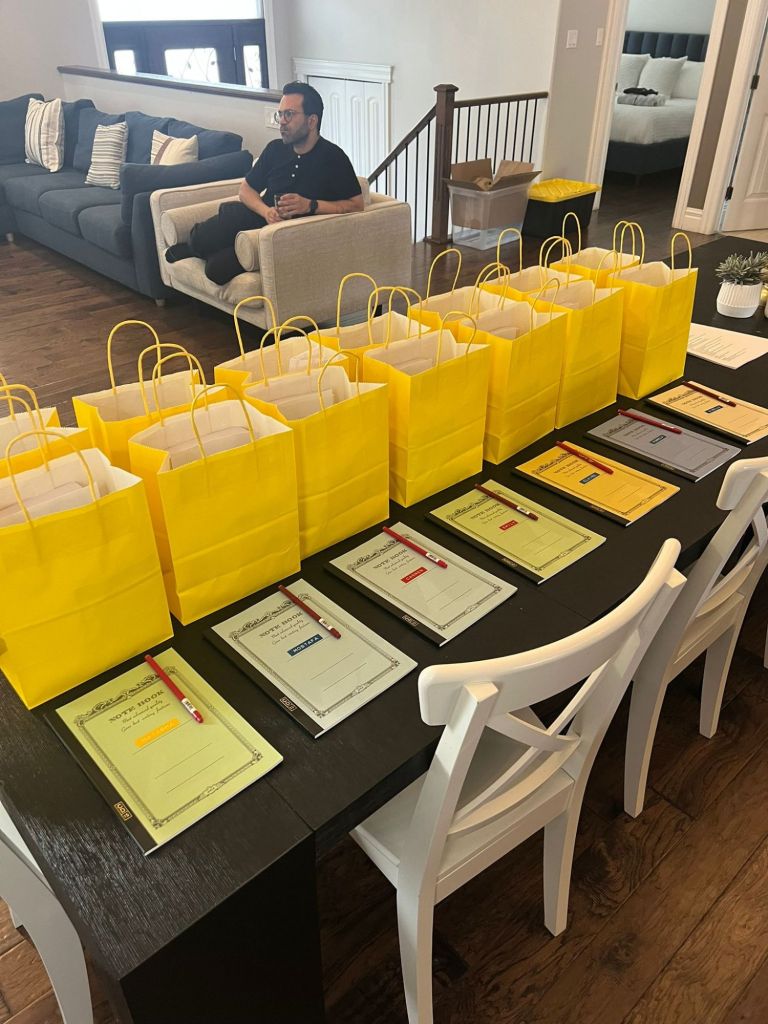
A table of gift bags and notebooks set up during the first night of the Nonfiction Writing Retreat.

So when this opportunity came up that gives me the choice to stay in my home city, be taken care of for majority of the day, and come to my home and husband in the evenings to recharge in familiar surroundings, I thought it was perfect. I’ve been wanting to attend Pandemic University courses for a long time but wasn’t able to find the opportunity to register. Also, the retreat being in Edmonton meant that it was more affordable for me.

When I went on the first night straight from work on the Friday evening, I was relieved that wasn’t too crowded, a total of 20 people if adding all the organizers and attendees. It is so much smaller and intimate which is exactly what I needed for my first-ever retreat ever. There were three presentations on various topics related to creative nonfiction that I recall were being offered as standalone courses, and then a Q and A with the organizers. Turns out, listening while sitting on a couch or dining chair with over a dozen creative people is so invigorating and cozy.

I remember feeling super self-conscious during the part where attendees like me were placed in smaller groups to do activities, review each others’ written drafts, and even during the one-on-one meeting to talk about my specific projects. It was very helpful though! I managed to ask questions and get advice on the two artistic projects I’m working on, the memoir and the documentary.

The wide range of backgrounds and topics that the attendees wrote about is just remarkable to see. Many of us have written, or are currently writing about really heavy topics and there’s something just so profound about being in the presence of people who managed to express their stories and insights through carefully crafted words. Whether it is the death of loved ones, torturous hardship, sparks of insight from unique experiences, or wanting to talk about someone they knew who is doing incredible things, everyone seemed to have the belief that this is worth sharing to the world.

The two delightfully surprising things about the retreat for me is how much I appreciated having my basic needs (my meals) prepared for me for two and half days, and how much I enjoyed talking about writing experiences in a homey setting. Turns out, it’s actually wonderful to have a block of time in between workshops for some independent working, which I used to start applying the advice I received earlier that day.

If time, resources and opportunity allows it, I definitely would do this again. We now have a group chat as well where people continue to share updates, advice from each other. Not bad for an ongoing community moving forward.

The back wall of the restaurant Otto, where the participants and organizers of the Nonfiction Writing Retreat and a few guests are assembled for a group photo.
Digital poster of the Writers Guild of Alberta conference  "No Place Like Home". The panel is "Memoir: Telling the Truth is Hard".

Then in June, I had the honour of being a panelist for the Writers Guild of Alberta conference which took place this year in Edmonton. Last year it was in Calgary and I joined the panels and events remotely, of which the organizers did a fantastic job. So when I was asked to participate in an online panel, I knew the logistics would go smoothly.

When I got the invitation though, I just to double check with them if they truly wanted me in it when I don’t have a published memoir. It looks like that is THE reason they asked me to be a panelist. It was fun, and I hope that it was helpful for those who listened to my rambles.

I was trying hard to not squeal and fangirl too much when I found out who our moderator was, and I think I managed to keep it together during the panel. People seemed to be equal parts amused and confused that I had a spreadsheet to keep track of the different chapters I wrote and the different live events I wanted to be mentioned in the story. I knew that being organized helped me with getting the draft done, and I shared many times how much the Writers Guild of Alberta’s programs and services, most especially the Horizon Writers Circle program where I was matched with Wendy McGrath, helped with making the first draft of the manuscript into reality.

We the panelists answered some of the questions in drastically different ways, which I hope can serve as a reassurance to the audience that they are multiple approaches to doing things – from the writing, the drafting, choosing which stories to tell and how much, and finishing the work.
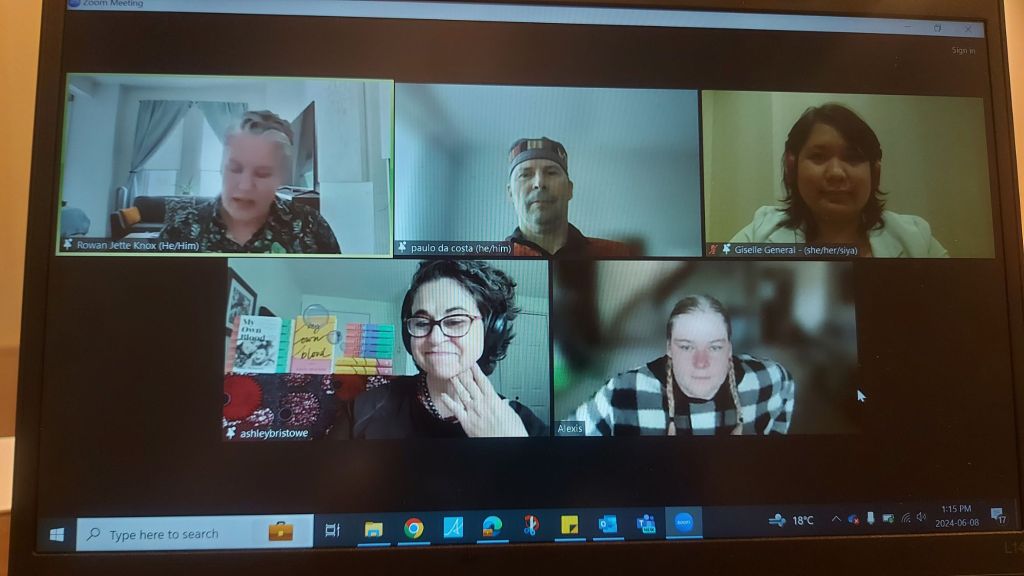
Screen of the Zoom meeting during the panel "Memoir: Writing the Truth is Hard where Alexis, Giselle, Ashley, paulo and Rowan are joining the meeting.

I do admit it feels really nice to hear people say “I look forward to seeing your book published”…”I look forward to reading it.”

I also appreciate that the conference is not as large and overwhelming compared to, let’s say, the transit conference I attended last November. At the larger gatherings, during the meals and the keynotes, there is about 150 people or less, enough to see everyone across the end of the banquet hall. The panels and keynotes I attended were very informative and insightful, and I loved witnessing for the first time how a literary awards ceremony looks like.

I managed to meet a few of my fellow Filipino creative people in the conference and hung out with some of them during the breaks. I ran into my editor, which I also mentioned during my panel.

Chances are that next year the WGA conference will be outside Edmonton, but I’m positive that I can join again either virtually or a short drive away. Maybe it will be in Red Deer! That would actually give me a reason to finally see the city.

The Filipinos I met at the conference were truly motivated to continue building our own community to support each other as well. Just a few weeks after the conference and after other artistic events for Filipinos in Edmonton took place, I got looped into a Facebook group chat for Filipino-Edmontonian artists.

The timing of these weekend multi-day activities worked perfectly in the whole project management of the memoir, as I was then working on the final set of professional edits. I’m hoping that I can find time and energy to nurture my growing community, support them in their ongoing work, and for them to celebrate my own accomplishments when it’s time.

And the journey to making this book a reality continues….

The Construction Neighbours: The Captive Transit User Series Part 14

By: Giselle General

This is part of an ongoing series of posts discussion issues I personally encounter while taking public transit in Edmonton. Links to other posts will be added on an ongoing basis:

What is a Captive Transit User? I learned about the term for the first time from the City of Edmonton’s website. The easy definition is: someone who takes public transit because it’s the best (or only available) option for them to travel around. The part about feeling ‘captive’ comes from the restriction that sometimes comes up, perhaps because one is too poor to own and maintain a vehicle, one does not know how to drive, or for medical reasons, cannot operate a vehicle. In many ways, I relate to this a lot. Though I’m pretty fortunate to afford the occasional taxi ride, and with my husband having a car.


When people choose a place to live, they consider many important things in choosing the neigbhourhood. We knew when we picked the neighbourhood we live in now that since the LRT will literally pass through the main road nearby, that we will be inundated with the impacts of the construction for many years until the line officially opens. But what is something that many residents complain about, became something that piqued my curiosity over the years.

I’m basically like a “Marites”, the nosy neighbour looking into the latest “tea” of what is happening next door, but for an LRT construction. This transit nerd is delighted with integrating such a Filipino reference, hehe. Every time I leave my home to commute to work, it’s neat to see the changes.

Between my husband and me, our no-cost-but-super-fun date idea has been to go for a half-hour work along the construction site, observe the different holes and poles, the cranes and trucks, the cement and the metal pieces, and the people around the site. I bet my husband is truly enjoying being married to a transit nerd – no need to go far or spend a lot of money for romantic quality time, haha!

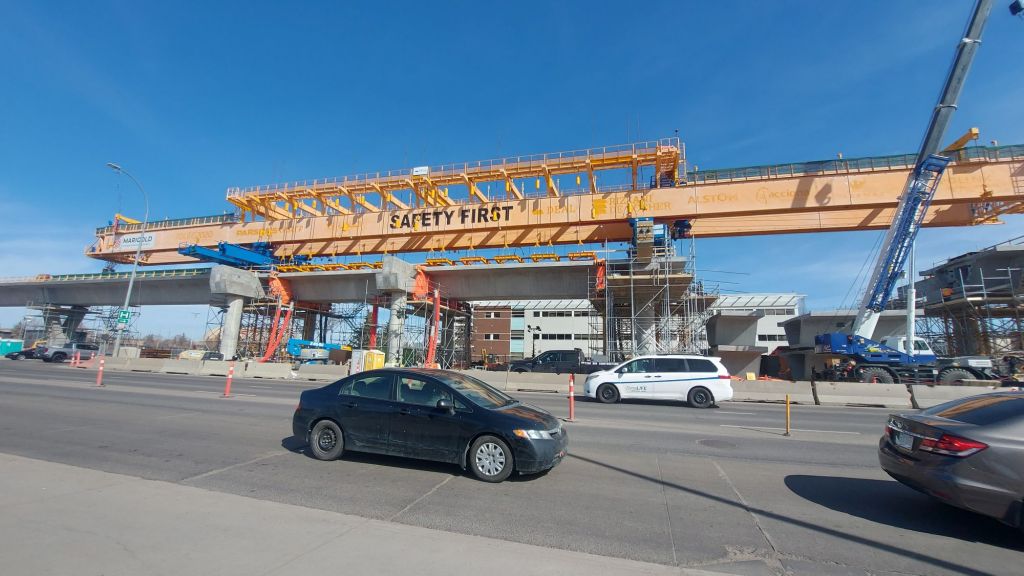
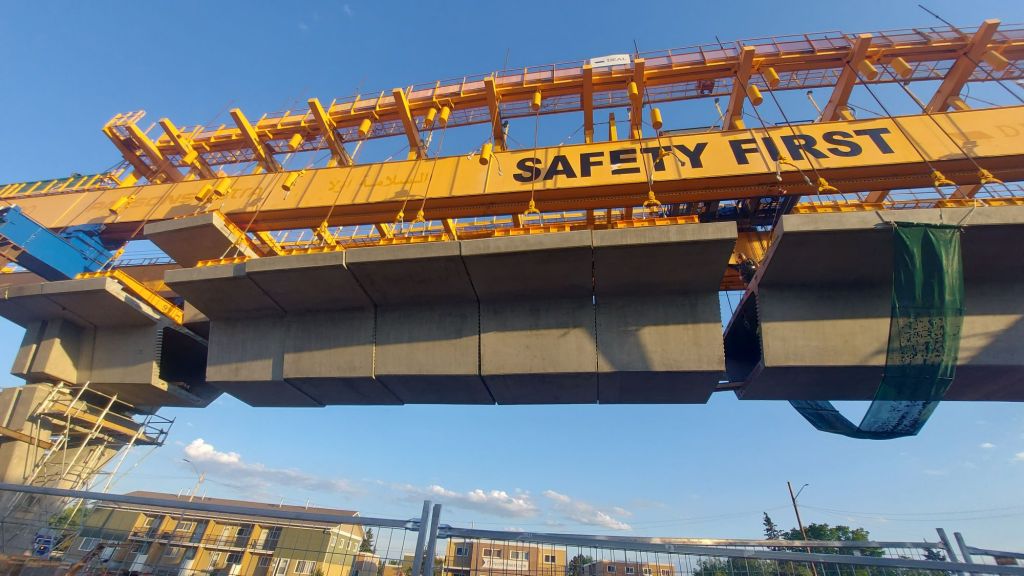
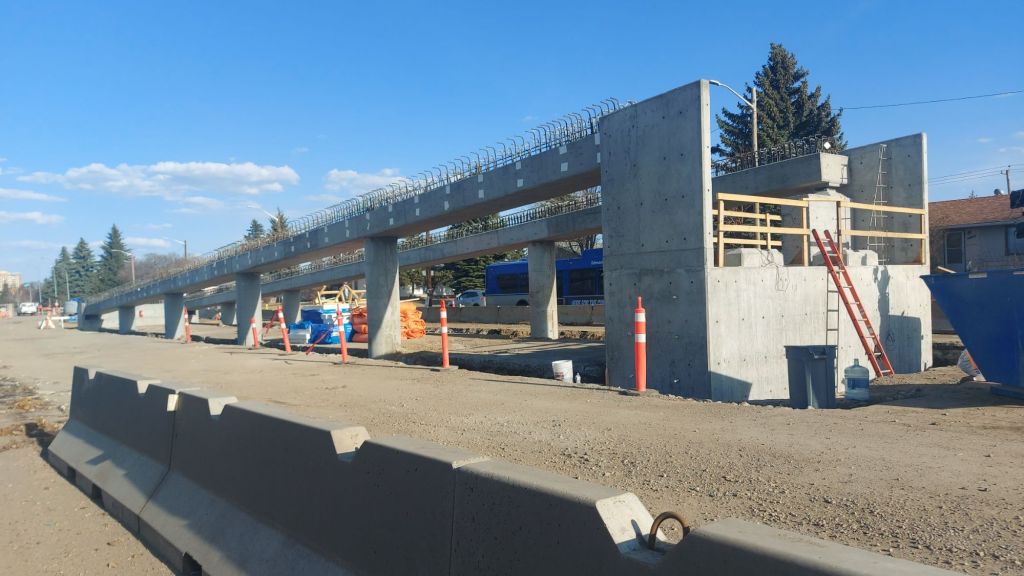
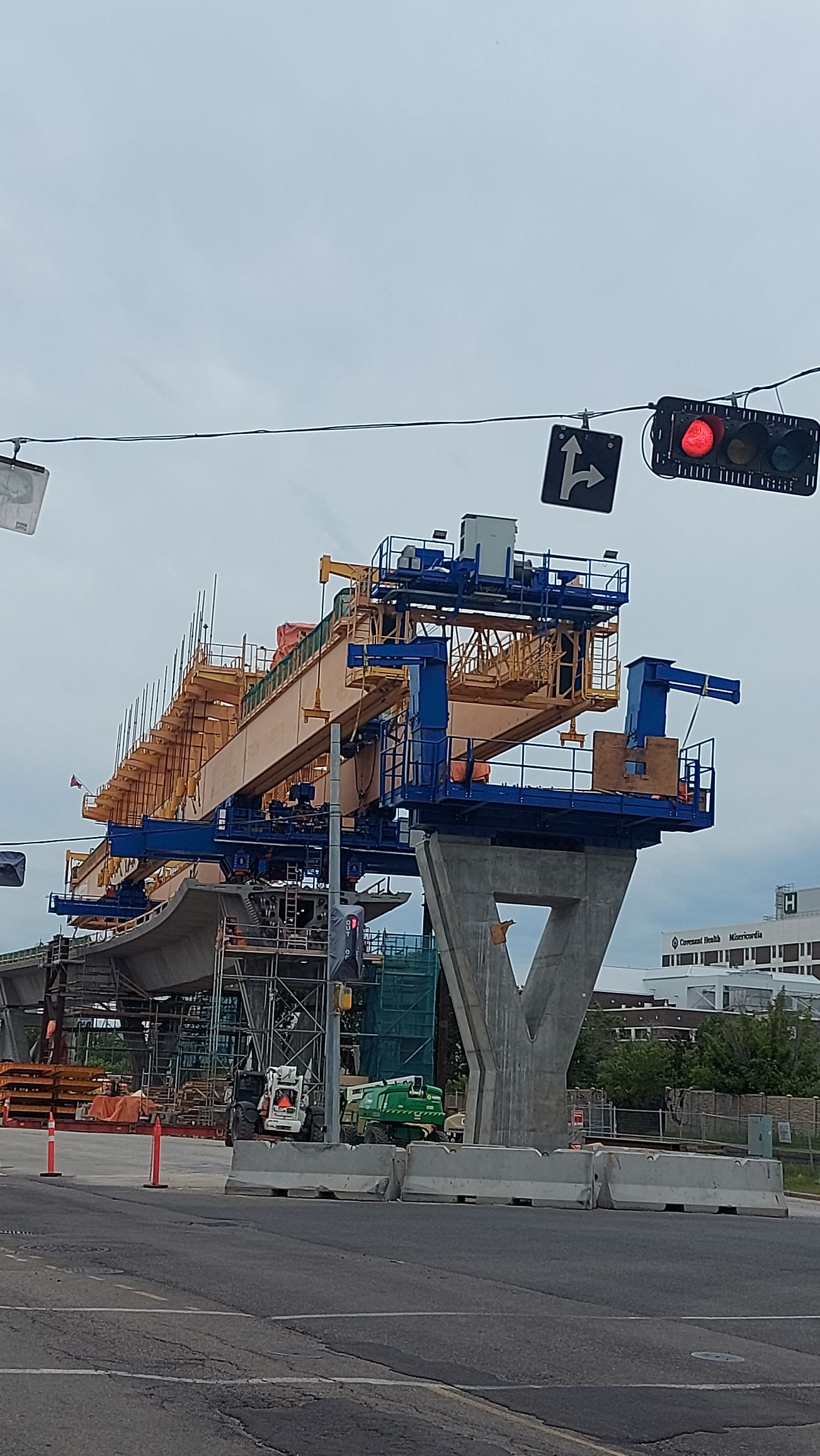
As the cliche goes, a photo says a thousand words. So here is a photo dump of the photos of the LRT construction progress because because it’s fun and nerdy

The construction zone for the West Edmonton LRT along 87 Ave.  It is winder and there's block of ice and snow along the road and construction site.
The construction zone for the West Edmonton LRT along 87 Ave. The two traffic lanes are backed up, and four pillars are almost finished construction.
The construction zone for the West Edmonton LRT along 87 Ave. The specialized above-ground crane is lifting platforms for the above-ground Misericordia station.
The construction zone for the West Edmonton LRT along 87 Ave.  The view is from underneath the specialize crane. 6 platforms were lifted and still have gaps in between each other.
The construction zone for the West Edmonton LRT along 87 Ave. The ramp to take the tracks to street level is partially done, with lots of metal rebar sticking out.
The construction zone for the West Edmonton LRT along 87 Ave. The specialized crane is approaching the traffic light on 165 Street.
The construction zone for the West Edmonton LRT along 87 Ave. A crane is parked in the middle of the site.

Frankly at this point, for very short trips, it is much better to walk – to the mall, the library, the pharmacy. But as long as the locations are literally long the main road, I can also be lazy and take the bus in one direction.

I heard many times that the construction impact north of my neighbourhood, along Stony Plain Road, is much worse for the businesses there. In fact, the City launched a campaign called “Rally for the Road” to encourage people to continue to patronize the businesses along the road, where construction makes it difficult and unappealing to park to get to these businesses. I know of a business owned by a fellow Filipino that sells Filipiniana inspired attire. I hope to visit the business someday when it is easier to travel to get there, either by car of perhaps, the newly opened LRT line!

The construction zone for the West Edmonton LRT along 87 Ave and by the business plaza on 159 Street. A sign by the fence says "Businesses Are Open During Construction"

In the middle of May, during the Annual General Meeting for our community league, we also held a town hall where staff from the city and the LRT construction company co-presented and answered questions from the neighbourhood. I really appreciated them doing this. The maps and slideshows were informative in giving both the big picture progress of the whole project, timelines for summer 2024 and what to anticipate as far as changes in access to lanes and intersections. We were given the reassurance that any concerns can be shared to them anytime, and that they have what sounds like daily meetings with the staff at the hospital to ensure access is not blocked unintentionally.

On top of that, our community league president seems to have established a good relationship with relevant staff. He managed to make a few phone calls to sort out the traffic lights nearby to help traffic flow better.

The construction zone for the West Edmonton LRT along 87 Ave and 165 Street, the intersection that will be closed for two weeks as the specialized crane finished lifting platforms for the track.

And just a few weeks after this neighbourhood meeting, my husband and I can see the large crane off our second-floor bedroom window.

We were told that our section will be finished by fall this year, then the section off the other side of 178 Street will be worked on. I will definitely miss the unique crane when it moves. And I hope that the residents who live in that area, that have been affected by construction for just as long as we are, have a manageable experience for the next few years.

When Community Service and Self Care Goals Conflict

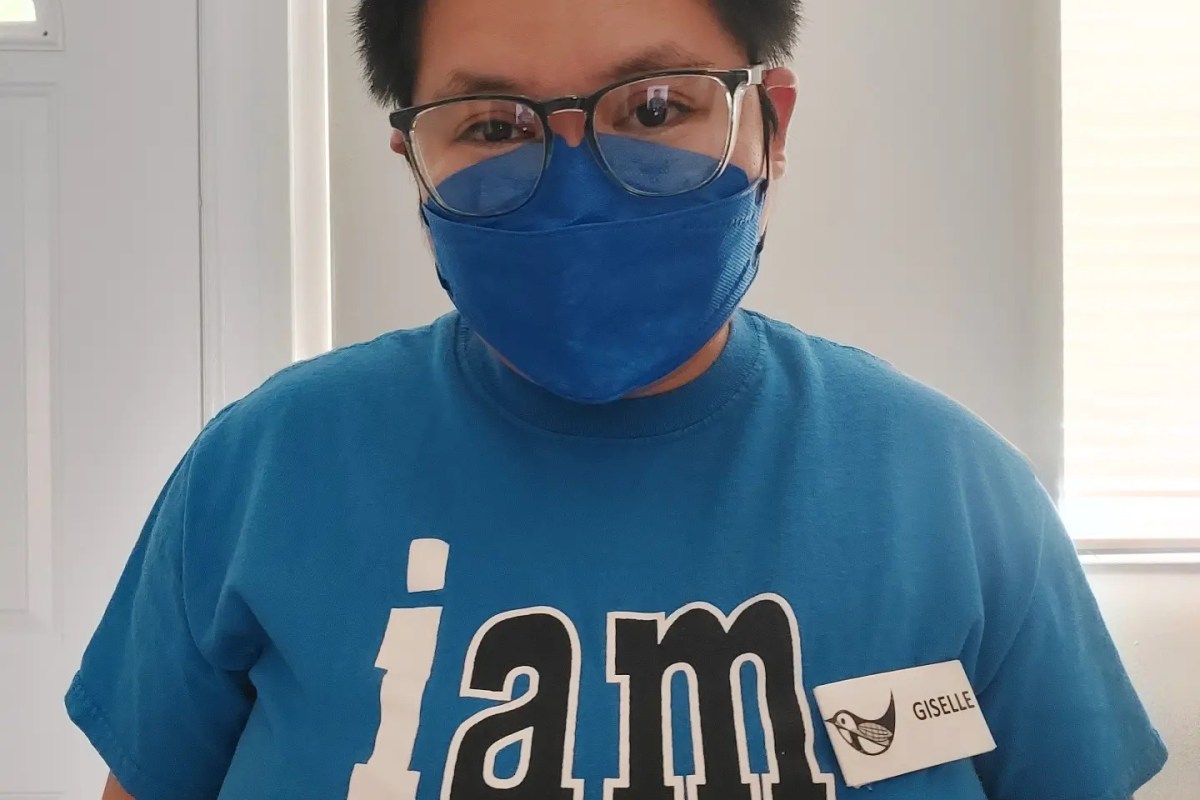
Giselle wearing a stylish safety glasses, KN95 mask and a volunteer Tshirt

By: Giselle General

Last fall, I had an an eye-opening moment as I went about doing my volunteer activities. During the third weekend of September 2023, I had two activities back-to-back, both outdoors. From morning until early afternoon, I was in my neighbourhood park helping with an annual gathering that includes serving lunch, having activities for kids and families to enjoy, and for residents to apply for their membership with our organization. Shortly after, I went to an Philippine arts event at an outdoor park in downtown Edmonton.

When the day began, I checked the air quality index and it is a 4. Not yet a concern which is great. But as we approached the lunch hour, my eyes started to feel irritated so I wore my glasses. It’s not the type that corrects your vision, but a cuter version of safety glasses I got a few years ago. Turns out, my eyes get irritated by the wildfire smoke, more easily that the average person.

It was 3 PM when I rushed to the arts event, where I kept my glasses but didn’t wear an N95 mask. That was my mistake. Although I must say that communicating and connecting with my fellow writers in our booth was so much more efficient without the mask. Also, since we were outdoors, I figured the COVID risk would be minimal.

Unfortunately on my bus ride home, as I sat on my seat resting my legs from walking and standing all day, that’s where it hit me. When taking transit I still wear a mask because I definitely don’t want to catch any of the respiratory viruses spreading around. As I sat patiently waiting for the bus to reach the west side of the city, I checked the air quality index app again. It went up to 8 – high risk! No wonder my eyes were irritated for the afternoon. As soon as I arrived home, I plopped on the couch while struggling to answer my husband’s question about what we plan to have for dinner. After dinner, my chest started to hurt, and I have to make an effort to breath in for the rest of the night.

I had plans to attend other neighbourhood events the next day, but when I looked out the window and saw the familiar orange haze in the sky I knew it’s a bust. The air quality index app showed a rating of 8 in the morning which went up to 10+ in the afternoon. I have to stay in.

This is just frustrating. I very much hate the fact that my own body seems to now get in the way of my volunteer activities. I also know that since COVID precautions are virtually nonexistent in public spaces, the burden on individuals to protect themselves is just more significant. The worst part is, event individual precautions are less effective especially if let’s say, you are one one of the 100+ people in an indoor hall during a community engagement event. While on one hand, I know that my assistance and contributions will be very helpful during the said event or activity, none of the organizers, fellow volunteers, or attendees would step in to help me if I get permanent harm from attending.

Perhaps that is part of the reason why that even more so the past few months, I make sure that majority of my volunteer activities can be done from home. Writing two informative articles for the monthly ethnic paper for the Filipino community in Edmonton continue to be rewarding. Over winter and until now, I started to do volunteer sewing tasks, upcycling old merchandise from my husband’s running group and turning them into personalized outfits. The documentary and book projects are also tasks that hopefully will make a positive impact in the future and can be done without risk of being exposed to smoke, fumes, viruses, hostile weather or all of the above.

There’s really no solid takeaway message I can pin down. During my election campaign a few years ago, I made decisions that I know prioritize my wellbeing and my life over potentially winning over votes. “My goal is to come home alive” and “if I’m sick, severely injured, or dead, then I won’t be able to help” are my personal constant reminders when I feel guilty about missing community events or volunteering opportunities.

In the new year, I tried to nudge more of my free time towards improving my personal health. Weekends offer what seems to be an unlimited opportunities to get involved and volunteer, whether it is events, workshops, rallies, and more. However, given that my husband goes out for a run with his running group in the afternoons (in the winter), I discovered that it is best to try a fitness related activity that I can try to stick to on a weekly basis. So for that past three months, that has been swimming for about 45 minutes at the local YMCA.

Giselle wearing a swimsuit getting ready for a swim.

This weekly swim routine has paid off really well in just a few weeks. It’s hugely help reduce my shoulder, neck, and back pain from doing office work full time. Swimming laps and treading water is definitely good cardio without aggressively hurting my joints. And slowly, as I gain confidence in learning how to tread in deep water, I also manage my fear while celebrating my incremental improvements.

This tradeoff has been worth it for now. My community service time and activities are sprinkled over week nights, lunch breaks and weekends, so I figured carving out a premium time for my self is the right call for now. I do dread the upcoming summer though with the greater likelihood of forest fires and smoke risk. Maybe volunteering for public and indoor activities is the approach moving forward.

A Month of Cool Transit Milestones: The Captive Transit User Series Part 13

Giselle posing beside a table with a sheet cake. The design on the cake says "Train, Choo! Choo!"

By: Giselle General

This is part of an ongoing series of posts discussion issues I personally encounter while taking public transit in Edmonton. Links to other posts will be added on an ongoing basis:

What is a Captive Transit User? I learned about the term for the first time from the City of Edmonton’s website. The easy definition is: someone who takes public transit because it’s the best (or only available) option for them to travel around. The part about feeling ‘captive’ comes from the restriction that sometimes comes up, perhaps because one is too poor to own and maintain a vehicle, one does not know how to drive, or for medical reasons, cannot operate a vehicle. In many ways, I relate to this a lot. Though I’m pretty fortunate to afford the occasional taxi ride, and with my husband having a car.


November 2023 was such an incredible month for all things transit in Edmonton. On a typical day, it is understandable that many everyday people, the media, and those politically engaged have many frustrations about our transit system and are quite vocal about it. But November was a bit special as there were precious opportunities of celebration and showcase.

Valley Line Southeast LRT Line Opening

On November 5, the long-awaited LRT line from downtown to Southeast Edmonton finally opened. While there wasn’t an official event organized by the city, it felt really festive right at 5 AM throughout the LRT stations along the line. This is thanks to enough people in the city who organized, shared enthusiasm and as a result, filled up the LRT vehicles during their first trip from downtown to Mill Woods and back. I described those wee hours of dawn as ‘festive in a nerdy way.’ There was cake, coffee, an opportunity for everyone to take turns to cut a ribbon with large ceremonial scissors, and run into other people in the city who are keen on municipal politics, love trains or active transportation, or both.

I am super grateful to my husband (who is not a big politics or transit nerd like me) who convinced me to go to this ‘opportunity of a lifetime’ event and offered to come along with me, since there are no buses available at 4 AM from our place to downtown.

Here are some of the media articles that captured the enthusiasm of the opening day. It was pretty fun trying to spot my husband and I in the photos and video snippets.

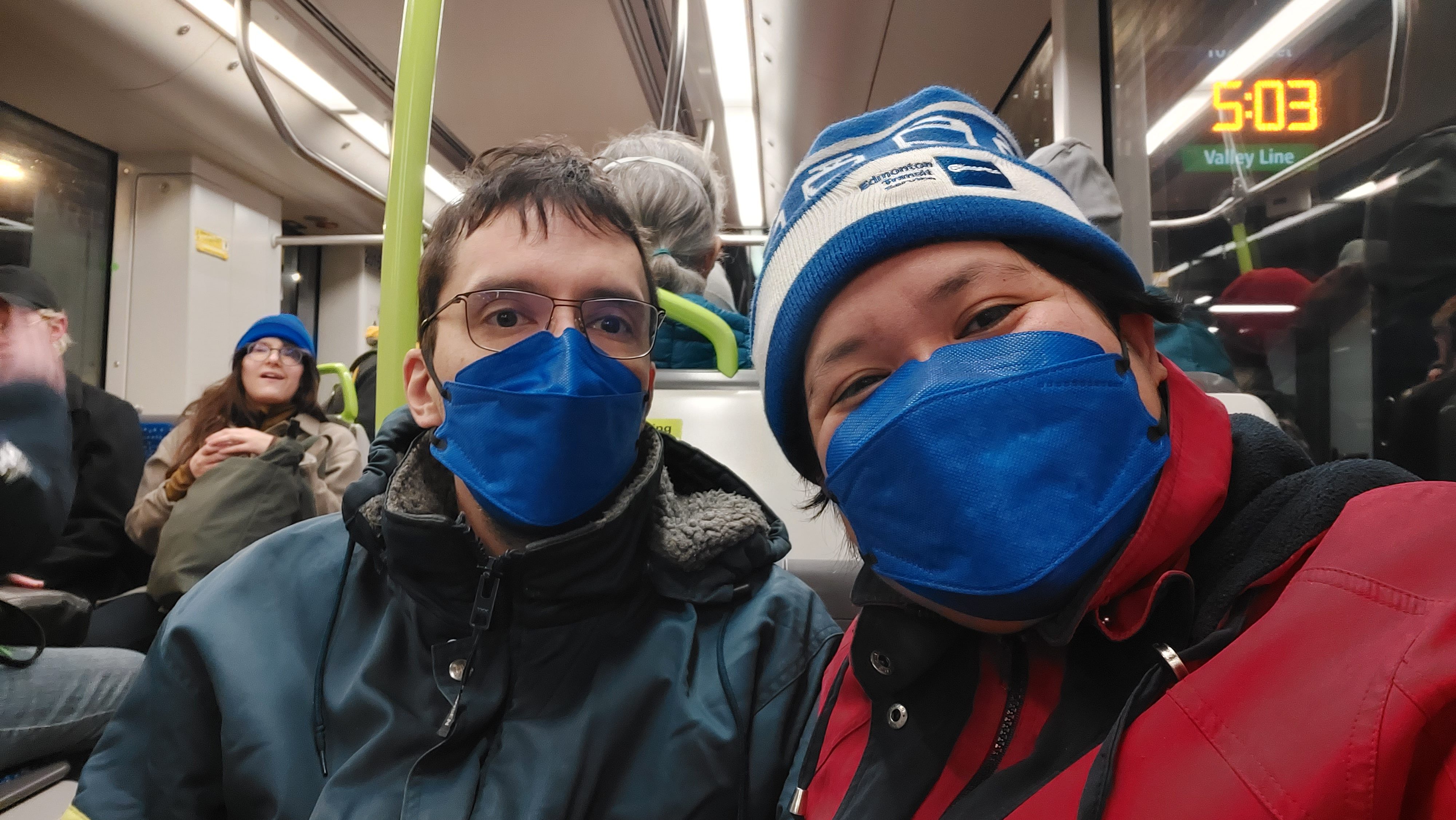
At 5:03 AM, after the passengers did a countdown, the LRT departed from the 102 Street station on the way to Mill Woods. My husband and I were lucky to find seats.

Edmonton Hosted the annual Canadian Urban Transit Association Conference

In mid-November, Edmonton hosted several transit-related conferences, the Youth Transit Summit and the regular Canadian Urban Transit Association convention. The CUTA conference happens twice a year, a smaller spring convention and the main fall convention, in various locations across Canada. Back in 2018, during my first year as a board member of the city’s transit advisory board, I was able to attend the CUTA conference in Toronto. So it was very exciting to have my home city host it. I got sick in the middle of that week, but the fact that multiple members of our board were able to attend was wonderful.

The fact that the new LRT line opened just in time for the conference, so that it can be showcased to all the conference participants who signed up for technical tours, was a bonus. The technical tour I was able join, the recently re-opened Stadium Station, was informative and enjoyable. The best part for me is that not only was the tour focused on the station itself, but the changes in the residential areas nearby. The new cluster of tall residential towers is the first time I’ve witnessed a real-life example of TOR (Transit Oriented Development).

Edmonton Transit Service staff shared information and answered questions of the crowd during the technical tour of the station. One surprising fact I learned is that the undergound station is still functioning and was renovated into a service room.

Thinking back to my last vacation in Manila, Philippines, I chose to rent a condo that was walking distance to an LRT station and a mall. It made travel very convenient as it was an effective way to beat the horrible road traffic during the holiday season. My current home here in Edmonton will have the same convenient access as well. My husband and I walk to the mall and business plazas nearby. We are walking distance from a hospital, gas station, convenience store and a car wash. When the LRT finally gets opened in a few years, it would make getting around even more flexible. I’m curious to see what will happen now to the areas within blocks off every transit station.

Showcasing the Transit System to a City Councillor

Then in late November, I did something for the first time, something I have casually offered on social media to the politicians of the city but no one took it up until that day. On Sunday November 26, I spent the morning with one of our city councillors and their staffer on multiple ETS transit trips across the city, experiencing various methods including the bus, LRT, replacement service, on-demand bus, and walking to a destination as opposed to taking a bus. I admit I was nervous, worried that I may sound irritating with too many complaints and concerns I was pointing out all throughout the trips. But they were both receptive and the blog that was published afterwards is insightful.

I showed Councillor Cartmell the various ways temporary bus stops are designed. I pointed to him that this one along 102 Avenue and 133 Street has good platforms for the front and back doors.

Transit, safety in public spaces, homelessness, and ‘value for taxpayer money’ arguments take up a lot of discussions on city politics lately. I’m curious to see what additional decisions that are made politically and the changes that city administration would make to work on these issues.

Report it on the App: The Captive Transit User Series Part 12

By: Giselle General

This is part of an ongoing series of posts discussion issues I personally encounter while taking public transit in Edmonton. Links to other posts will be added on an ongoing basis:

What is a Captive Transit User? I learned about the term for the first time from the City of Edmonton’s website. The easy definition is: someone who takes public transit because it’s the best (or only available) option for them to travel around. The part about feeling ‘captive’ comes from the restriction that sometimes comes up, perhaps because one is too poor to own and maintain a vehicle, one does not know how to drive, or for medical reasons, cannot operate a vehicle. In many ways, I relate to this a lot. Though I’m pretty fortunate to afford the occasional taxi ride, and with my husband having a car.


Whenever I take the bus or LRT, regardless of whether I’m alone or traveling with my husband, I try to pay attention to my environment. Sure, at some point I end up getting slightly bored and browse on my phone, but I don’t do that until a few minutes after getting on the bus. It’s also why I don’t wear headphones while taking transit.

Frankly speaking, the reason I feel inclined to stay alert is not related to safety. Sure, that is important, but thankfully I personally haven’t experiences direct and aggressive treatment on the bus which is a relief. I have a different motivation, that is to observe whether something is going wrong with the bus, train, bus stop or transit station that needs to be fixed. The moment I spot it, I report right away on the 311 app.

The City of Edmonton has an app called the 311 app, that enables people to report different things that the city can resolve. It includes a feature to take a photo (although it is not mandatory which is good), text boxes to add a summary of the issue, automated geo-location, and a check box to indicate whether the issue causes accessibility concerns.

As far as transit, the categories are:

Late Bus: For this section there are questions such as the location, bus stop and route number, and whether the delay is due to weather conditions. I personally don’t make a report when a bus is 15 minutes late and if the travel apps like Google or Transit had actually indicated it. It means that it is a real-time update. But if it is winter and the bus is 20 or more minutes later, then definitely I would report.

Transit Feedback: I am guessing that this category is for other types of feedback that are not related to buses being late, or not related to broken and dirty things in transit facilities. In the past, the third category is specifically related to vandalism and cleanliness, so I have used this category to report something that is simply not working, like a digital sign. I also haven’t used this option in a while.

Transit Maintenance: This is the option I use most often. What I typically report falls under two categories: items related to cleanliness or vandalism, and items related to functionality of electronic items in the bus. The vandalism I’ve reported vary, from scribbles on the seat in front of me written with pen or paint, broken wayfinding signage in downtown right beside a bus stop, a few bus shelters where the glass walls had completely shattered, and the one I know should be addressed quickly – colorful and sticky stains on the bus seats, especially the fabric ones.

As far as functionality of electronic items in the bus, there are two main ones. First is the ARC Card machines where people are supposed to tap on their way in or out. The sounds from the machine are quite distinct whenever it doesn’t function. When after 10 minutes on the bus, I can still hear the particular beep that indicates it’s not working, then I make a report. If the display screen is not working, I do the same. The most frequent report I do though is whenever the device that is supposed to announce the next stop is not working. as indicated in this post, I’ve learned to appreciate the value of hearing and also reading the information of the next stop, especially when it’s hard to see over the window. The best part about the app is whenever I report issues, there’s a check box that asks whether it is a disability issue. Whenever it does, I check if off every single time. I truly hope that the issue gets escalated.

It’s truly unfortunate that I cannot see whether the issue is fully resolved or not. The odds of me taking the same bus with dirty seats right after I made a report is unlikely. The only update is seeing the ticket being closed or “redirected to other business area.”. However, in our data-driven society, I know that every report gets added in the statistics. In fact, there are public databases available on all the 311 reports made to the city, for those who want to do analysis on a certain issue and want to use the number of complaints filed as supporting evidence.

If there’s one change I’d like to see on the app, is to know for sure whether the issue is fully resolved or not. A photo to show the issue is fixed or cleaned would be so nice. A once-sentence update that says the broken speaker or digital sign is fixed on a certain date would be so reassuring. Even a statement saying that the issue is considered and can be addressed by future policy gives an indication that it is a long-term problem. Maybe this can help prompt people to use these reporting methods more and trust them.
For now, I still use the app. It’s more productive that venting on social media.

Construction Zone Bus Stops: The Captive Transit User Series Part 11

A street in Edmonton with a temporary bus stop made with cement barricade, wooden platform, and 2 x 4 for the fencing.

By: Giselle General

This is part of an ongoing series of posts discussion issues I personally encounter while taking public transit in Edmonton. Links to other posts will be added on an ongoing basis:

What is a Captive Transit User? I learned about the term for the first time from the City of Edmonton’s website. The easy definition is: someone who takes public transit because it’s the best (or only available) option for them to travel around. The part about feeling ‘captive’ comes from the restriction that sometimes comes up, perhaps because one is too poor to own and maintain a vehicle, one does not know how to drive, or for medical reasons, cannot operate a vehicle. In many ways, I relate to this a lot. Though I’m pretty fortunate to afford the occasional taxi ride, and with my husband having a car.


I jokingly refer to my current place of residence as the “West End Construction Pandemonium Zone.” Although that is true, I cannot monopolize the title. All the different areas along the LRT construction route, whether the east one from Mill Woods to Downtown or the west one, really fall under this category. When I tell exactly where I live, though, people agree and do the small cringe that shows sympathy.

Funny enough, my commute taking the bus to and from our neighbourhood is overally pretty smooth. The issues I encounter are not any more different than my previous homes or workplaces. The new experience for me over the past year is the slight changes in the bus stops. Whether the east bound or west bound ones, every few months or so, the bus stop gets moved a block or two away. This is so the construction company has full access to the stretch of road where they are doing underground or above ground work. 

As a result, I had to pay attention to my surroundings and check the navigation apps. and I had to calculate extra walking time, and it’s best not to be surprised. The worst feeling is having to run to go to the nearest bus stop and see the bus zip past you. Learned that the hard way a few times. 

I learned that for drivers, there’s a bit of a learning curve as well. Sometimes, their digital screen doesn’t immediately update and so they will not be allowed to stop and let passengers disembark. 

The temporary bus stops would have the usual sign used in regular bus stops, but that’s where the similarities end. Since the stops sometimes have to be positioned in the middle of the road or right beside a sidewalk, there were these wood structures with platform and railings set up. There are no seats or roofs either. Depending on the location the ramp for wheelchair users are set up different ways. I suppose, portability is a factor in these structures so they can be moved wherever they are needed.

Snow clearing was something I worried about since construction zones are left untouched. This winter has been very, very good, perhaps even safer than the sidewalk near the houses. I suppose sparing a bucket of gravel to deal with an icy patch is barely noticeable given the amount of construction materials they have to use. I hope that this continues for however many more winters to come.

Being sneaky with jaywalking (oops) is something many of us bus riders do, because taking the very very longer way to cross the street and catch the bus is a pain in the butt. I am careful and know my basic safety principles when crossing the street so fingers crossed I don’t get hit by a car. Besides,  as a result of the construction there are fewer lanes on this major road, basically cut in half. So crossing the street the jaywalking way is like crossing a residential street that feels like an unmarked crosswalk. Let me be clear I’m not actively endorsing this – do at your own risk.

And there are times when the bus stop comes a lot closer to my house and it’s really nice. This is the case for the west bound bus stop where I disembark on my way home.

It takes diligence and responsibility of not only the city, but the construction company to ensure that residents and users of the road have a manageable experience, especially for a project that will take years – maybe even close to a decade, to be completed. 

My husband and I also walk by the construction area (of course just by the periphery and we stay outside the barricades), and observe the process. We can’t help but trade jokes about the pillars being constructed, given what happened in the summer of 2022. I’d take photos of the construction areas and sent them to my family group chat. My brother-in-law teases me that I’m overly generous and optimistic about when the construction will be completed. Well, I’d love to take his son, my nephew, on a cool train ride before he enters first grade so I can gain some ‘cool auntie’ points. 

The only other thing I hope that temporary bus stops have is better shelter from the heat and cold. Given that many of the regular bus shelters and stops don’t have it, perhaps it is a pipe dream. But, it never hurts to dream, right? It would also help in the summer construction months, to shield my eyes from the dust cloud right after a bus pulls over.

Memoir Writing Reflections #3: A Mic and A Stage

By:Giselle General

The largest, most intimidating, and important activity of the six-month mentorship is showcasing a sample of the work produced during that time. Since I had a very specific goal, a first draft of the manuscript for the memoir, showing a sample of this is not going to be a problem.

Speaking in front of a crowd is also not an issue for me. I had my elementary school teachers in Philex Mines, Philippines, to thank for that. Also, since 2017, I have spoken in front of crowds about vulnerable aspects of my life because of all the opportunities during the Canada 150 celebrations. 

In February, I was frantically getting organized for a potential new job which started after Family Day long weekend. At that point, I felt that I finished the last wholesale revision of all the 48 book chapters. I was also preoccupied with another important task that I didn’t envision as a part of my writing journey – funding applications. Sure, I did it in September but I was a bit more relaxed and wasn’t taking it too seriously. But after I actually got funding and I realized the implications of having money to help with artistic projects, I took it a bit more seriously. Doing three comprehensive funding applications asking for a larger sum of money and offering a detailed budget was more administratively taxing than I realized. And another person had an artistic idea and wanted to apply together. So, there are a lot of numbers, deadlines, and persuasive language telling strangers why they should give money for our project. Clicking the Submit button and getting the automated notification that the application was submitted gave me a huge sigh of relief.

In mid-February, I had my final one-on-one meeting with my mentor author. A few weeks before, she shortlisted three chapters that she edited for me to read in front of an audience. I timed all of them and was so happy to find one chapter that fits exactly within the six-minute limit. She gave additional tips that I didn’t even consider, such as taking a couple of seconds to self-promote afterward, and giving an introduction with enough context since I am not reading Chapter 1. 

During the week before the event, I actually spent more time thinking of a meaningful way to show my gratitude to Wendy for all the help and mentorship she did over the past six months. I’m a terrible shopper and even a worse gift-giver since I tend to be anti-consumerist and simple. Then the perfect idea came. Since there is a nearby Filipino convenience store, I thought it would be great for her to experience my story in a deeper way. I purchased several products that I used to sell in the store that I managed as a child, placed them in a paper gift bag, and wrote a note. 

When I arrived, it was one of those instances where I was happy to be wrong. I thought that it would be a quiet, intimate setting with just us mentors and mentees, a dozen people around a slightly larger table sharing our literary work. Turns out, it’s a whole performance, with a mic in front of a stage and a dozen rows of chairs. My quick mental math estimated about 80 people. There were writers and artists I’ve seen in the past who attended. When I told this, my husband had the same assumption and was impressed that my fellow mentees managed to present a piece of our writing in front of a larger crowd. On top of that, it is a very distinguished crowd too, people of the actual literary and artistic community in Edmonton. It’s not just a random group of people from the general public. They have a deeper understanding and appreciation of the artist and writer experience. 

For the lineup of mentees, I was first, where I shared a chapter close to the end, right before I immigrated to Canada. People smiled, giggled, and shared a collective “oh!” and “aw” after I read some of the lines in the chapter. I felt they understood the rollercoaster of emotions that my younger self experienced in the stories and internal thoughts in the chapter. After my piece, I talked about the Edmonton Arts Council and the feature they did about my work, where I heavily mentioned the Horizon Writers Circle program.

Then my fellow mentees read their pieces. Essays, poems, prose, and story chapters that captivated and entertained the audience. After the formal event program concluded, so many people in the audience took the time to speak to us individually and congratulate us for being part of the program and for the work we have shared. The conversations went on for so long, the appetizers ran out by the time I finished chatting with people. 

As a treat, I went to a nearby sushi restaurant and indulged. Being alone at a restaurant table was also the perfect way to wind down after being in such a cozy and crowded room – classic introvert of me. 

It’s remarkable, partially unbelievable, that the six months flew by just like that. At this point, I need to wait patiently to get the funding application results so I can hire professional editors to polish the manuscript. I’m also purposefully not looking at any of the files. I figured that letting it sit for at least three months will give me a fresh perspective when I start my self-revisions again. 

For now, learning a completely different kind of writing is at the forefront. Political news release writing and speechwriting will give me new skills that I think will help me improve my skill set moving forward. 

Memoir Writing Reflections #1: The Brain is a Marvel

by: Giselle General

This year, on top of everything else my husband and I drastically changed, I added one more to the list. I finally started working of my first memoir, my first full-length written work. The initial plan was to publish something right around my 30th birthday last year. That got derailed by two major things: COVID and running for public office during a pandemic.

This is to account my initial reflections on this journey and observing my mind, both how it works when it comes to motivation and getting organized, and from a mental health standpoint as far as memories and triggers.

I had to check my email history and digital calendar to confirm the timeline. When you don’t have a full time job, the pace of time feels so strangely elastic and oddly compact, depending on the time of day. In early September, I took a chance and applied for the Horizon’s Writing Circle, a writer mentorship program. I recall being so nervous outlining my bio as an artist, feeling like a fraud. I suppose I had a few essays and got paid for it. I’ve been blogging for a decade and been an ethnic paper columnist for five years. But will it be enough to deserve undivided attention from someone who actually published multiple books?

I applied for the program in early September and in early October I got the confirmation that I got in the program. How exciting! I arranged a meeting with the author mentor in mid-October. Just like the other mentorship programs I participated in, I had a very clear goal in mind and I needed their advice to make it successful. When I outlined my goal, the summary of the memoir and the tangible deliverable, my mentor was excited. But it didn’t hit home for me until I hear her utter the words “Yes, I’m very positive that by the end of our mentorship period, you will have a first manuscript.” That felt so real, so tangible. It’s remarkable.

This is a precious time and opportunity, I have to everything I can to make the most of it.

This sparked a flurry of motivation in my mind and my heart. I made an outline of all the different chapters and themes of my life using blank MS Word documents. In a few minutes I had 40 blank chapters. Whenever inspiration strikes as the cliche goes, I would open a file and either type the entire story right there, or write short phrases of the smaller stories to write about. As of right now, I’ve been doing this for just two months, and I’m halfway through, over 20 chapters that looked decent enough to be scrutinized. Done is better than perfect, I tell myself over and over. It frankly didn’t feel like much, but when I say to people out loud, their reactions remind me that 20 chapters in less than 60 days is noteworthy.

Some days when I write, my brain somehow forgets to tell my body to breathe. After the keyboard clatters for a few minutes as I tell a heartbreaking experience, I’d suddenly gasp for air. Only then do I clearly look at the words on the screen, and tears would roll down my face. I thought that being triggered would be more melodramatic and fiery than this. I guess I was wrong.

In early December I had a dream that I wasn’t happy about. In my dream, somehow my father became alive in my current life as an adult for just one day. I was frantically giving him a tour around my home and around Edmonton, filling him in on what he missed for the past 23 years. The day doesn’t end, I don’t know what rudely woke me up into reality. I laid in bed, my eyes angrily boring holes in the ceiling as the tears silently fell. I know that this is from my consciously digging up memories and putting them on paper, or in this case, the computer screen.

Damn it, brain! Why do you have to do this to me? This wore me out mentally more than the other times I got emotional while writing. I spent the next week not writing anything new, just updating the grammar of the earlier chapters I wrote.

While dedicating time and energy to write, I had to juggle other priorities as well. There’s truth to the saying looking for a job is a full-time job. Taking the time to diligently search for opportunities that fit my experience level and salary range and writing a thoughtful application, that takes effort and a mental toll. I try to switch it up during weekdays, a few hours on job searching, an hour or two on writing, then some time for chores and volunteering.

This is how I remind myself that being unemployed doesn’t mean I’m useless. That I’m still improving my skills, using the ones I have, and making a positive impact around me in different ways. Sometimes it looks like the homecooked meal I made and a clean kitchen sink. It can look like being present at a board meeting and being efficient in all the items we discussed. It can look like a piece of artwork I finished for the home and two memoir chapters done in a single day.

Activities not related to writing or career help me stay grounded and balanced. My husband actively finds video games that a very beginner-level person like me can handle, and he is very kind and diligent when we do levels together where he had to do about 70% of the work. It’s pretty sweet of him. Whenever he plays video games that he streams to his audience online, I hear him talk about me and share fun updates about ‘the wife’. I sometimes chime in on conversations and his audience seem to enjoy it. Our group of friends have organized a weekly movie night, just like what they did regularly a decade ago. My friend asked for my help with pet-sitting and it’s quite fun being a dog and cat auntie. It’s actually nice having a cat on your lap being cozy while reading one of the books my mentor author lent me about writing techniques.

My suicidal ideation has never left my mind, but I am able to keep it at bay for the most part. It’s not by feeling more optimistic about the world – there’s too much obvious evidence that people and systems are harmful and selfish and problematic. It’s by keeping a little bit of hope that what I do matters to a small extent and it affects people positively, whether it’s just myself, my immediate love ones, or those who gets affected by any of my community service work. And that’s enough for now.

Two Small and Impactful Gestures of Two (Former) City Councillors

This time around I am going to publicly name two politicians for what they have done! What a timely post shortly after one year since the most recent municipal elections here in Edmonton.

Cue scary noises!

Actually, I’m just joking, really!

I think it helps that they are both former former city councilors, but either way, I am actually actually not naming them and shaming them. I’m naming them because yes, I think they probably won’t even remember doing these two things at all. These seem to be very small gestures but had really impacted the way I look at things here in the city where I live, and had shifted my life in a very noticeable way. It is a positive impact – no shaming will be happening here.

First is former City Councillor Scott McKeen, who represented Ward 6, downtown Edmonton. He was pretty active in his social media accounts, and I followed his Twitter account to stay up to date with city politics. One day, he re-tweeted about a Repair-a-thon event a few days before it was about to happen. I like sewing, fixing things up and making them usable again. This event is an opportunity for people to get everyday items and clothing repaired, and people can volunteer their skills to help get these stuff fixed up. Because of a scheduling conflict and the fact I just found out about it a few days before the weekend, I cannot make it and I was pretty upset. I could have helped patch up clothes, sew back buttons and fix hems on shirts and bottoms. At the time, I already figured that Home Economics is not a a typical part of the curriculum for children here, so many don’t have the skills to do simple repairs with clothing, household objects or electronics.

From seeing this event being promoted, I also discovered a Twitter account called Boomerang Bags Edmonton. It is very much related to sewing and upcycling. The goals is to get volunteers to sew fabric shopping bags that can be re-used as opposed to single-use plastic bags, and donate them to local stores so they can encourage customers to use them instead of buying bags. It’s a win-win and I loved the concept. So I got involved, signed up to volunteer and made a lot of bags. If I tally them up it probably will go up to the hundreds at this point.

It’s interesting because the preferred terminology that is gender-neutral is “sewist”. But it’s difficult to use since as someone who is ESL, whenever I hear the term I think of someone who is doing something related to plumbing, like sewage. Because of this I still use seamstress especially when talking to people who might not be as familiar with the community.

Anyways, because of being a volunteer seamstress with Boomerang Bags, working with fabric become a larger part of my hobby time. I’ve already been quilting for years and I’ve made enough quilts, throw blankets, pilllowcases for my home. And during the pandemic, our community’s talents had an opportunity to shine in a major way. Hundreds of crafters, seamstresses (or sewists), quilters worked together for months to help with two major fabric-related goals: to make fabric masks for those who cannot afford them, and to make fabric laundry bags for healthcare workers to store their contaminated scrubs after work that they can just toss into the laundry.

A dining chair with a dozen fabric bags draped by the backrest.
These were the first batch of bags I’ve sewn in March 2020, as part of the province-wide effort to make fabric bags for healthcare workers who need a place to store their dirty uniforms. Just a year beforehand, I discovered Boomerang Bags Edmonton through social media posts of a city councilor.

I wonder if the former councillor realized that from this very small act, it opened me to Edmonton and Alberta’s community of creatives sewing.

Second is former City Councillor John Dziadyk, who represented Ward 3 on the north side. He caught my attention during his election campaign in 2017 because his marketing strategy was frequent, consistent, and his viewpoints were phrased in a way that resonated with a lot of people frustrated with how things are done in city government. After he got elected, his social media, particularly Facebook, continue to be very active in sharing information about community matters.

He published a short video during spring time 2018, encouraging people to help with the snow melting and puddles in drains by chipping off the ice of a blocked drain when they see one. It’s clear that the video was a simple one, likely just him and another person holding his phone. He used an ice chipper, a common tool used in the winter, tried to strike a puddle a few times and then the muddy water started to drain. He said, doing this helps prevent flooding and from stagnant ice water to collect. This can be dangerous if the puddle freezes again which tends to happen in March and April.

It blew my mind that it is something that an everyday person can do. I definitely have seen these slushy puddles on sidewalks and intersections all the time. As someone who frequently walks, I’ve been splashed by them a few times. I thought there’s nothing anyone can do other than hope for warmer weather so all the water evaporates.

As a result, I started to observe sidewalk drains whenever I walk around. While I don’t always have the time or I forget sometimes, whenever I could, I would also remove pieces of garbage or leaves that would block the drain. That way, when it rains or there’s a large amount of snow and ice melting, all the water have somewhere to go. It’s one of those seemingly invisible things that if someone looks at proactively, it can save people from inconvenience, potential accidents, and soggy footwear.

A sidewalk in the spring time, with snow and slush piled up.

What’s most interesting about these two experiences is that these actions are not even closely related to their actual roles, which is advocating and addressing political issues under the municipal government. A few times, I’ve heard people say that being a politician for a city or municipality, is the toughest one compared to being a provincial or federal politician. Either way, I’m thankful that something as simple as browsing social media platforms and finding these information from their posts had made a positive impact on me. A re-tweet, and a simple video, who would have thought! Well, I hope these two former politicians are doing well these days after moving on from political life.

Like Father, Like Daughter: We Both Have Metal Dentures!

As an attempt to convince his kids to take dental health seriously, I remembered my father, when I was a kid, basically telling us “don’t be like me!” He had metal dentures for the top of his teeth, and he during one of these conversations, he would take them out of his mouth and show them for us to have a closer look. I don’t recall any other details about what happened to his teeth that he ended up losing a few of his adult teeth and him needing to have dentures. He was too focused driving down his stern advice: don’t eat too much sweets and brush your teeth every night, or else you’ll lose your permanent teeth and that would be bad.

I knew he meant well, but back then there’s an issue as far as people’s perception of dental care in the Philippines. Since dental care is something you pay out of pocket, when you don’t have the means, so-called preventative care and checkups are out of the question. You would go only when there’s a toothache that is so unbearable pain or only to pull out rotting teeth.

In 1999, shortly before my family got into the fatal vehicle accident, I vaguely remember my sister telling me that she went to the community dentist on her own for the first time. That she was nervous and also proud that she went. At the time, both she and I are starting to see many of our adult teeth forming.

And when the accident happened, well, medical check-ups of any kind went out the window. Asking for permission, and for money, for medical and health related reasons was tough. My grandma would mock me and scornfully ask “did your father’s side relatives make you ask? If they want so badly to do things like dentist checkups form you, maybe you and your brother should move and live with them instead!”

2007 was a chaotic year for many reasons but January was pretty rough. After coming back from New Year’s vacation from the father’s side relatives, I asked the mother’s side relatives, who I live with, if some of the suvivor’s pension money can go towards a dental checkup. This infuriated my uncle and grandmother and my brother and I got punished severely. That’s all I have to say about that for now.

It was soon very obvious that two of my froth teeth were really rotting. Since dental care is cheaper in the Philippines, they were extracted and I got my new dentures less than a month before my flight to Canada on August 2007.

During university I managed to get a few check ups and fillings done for my teeth because I managed to stack my benefits. I learned that my benefits from working retail at Future Shop which covered 50% of basic procedures, plus the 50% covered from being a university student, completely took care of the cost. Perfect for a broke university student!

When I visited the Philippines in 2013 with my then-boyfriend, since I knew dental work is still cheaper and I was unemployed, I got a replacement for my dentures. I was sold to the fact that the one with a metal plating will be more sturdy than the plastic one. I was pretty irritable for a good chunk of the trip for other reasons so it was a stressful experience. The metal base had to be adjusted a few times so it stops cutting through my gums, but it was all good ever since.

After I got used to my metal plated dentures, that’s when I remembered that my father had a metal plated one as well! I whispered a little prayer then, apologizing that unfortunately I didn’t manage to keep all my adult teeth. From then on, my dental care routine has improved dramatically. I told myself, I’m the adult now and I can take the reins moving forward and take care of the teeth I have left.

When we moved to the neighbourhood my husband grew up in, he convinced me to go to his dental clinic so that we have the same dentist. Remarkably, my husband only had one dentist for his entire life, since he was a child! When Dr. Chin retires, I bet it will be quite an adjustment for him. Maybe my husband can reach 40 years old first before that happens?

The first major dental surgery I had was 2015, when I had ALL my four wisdow teeth pulled out at the same time. The bottom two are impacted, meaning they are not coming out properly and are kinda stuck, causing pain, risk of mis-aligning the rest of my teeth, and potential infection from hard to reach areas that I’m not able to clean properly. Again, huge thanks for work benefits covering the cost of all that.

These days, I go to the dentist at least once a year for a full checkup and cleaning. Even after we moved from my husband’s neighbourhood to a different location, we continue to go to the clinic of his childhood dentist. It’s funny that I seem to be more diligent with booking my appointment that he was. When I sit on the patient’s chair and the dental hygenist gets started with their work, I have to remind myself to ask “oh! I have dentures, should I take them out now?”. Then they would put it away neatly wrapped in tissue and inside a paper cup.

Every appointment I would ask my dentist to check on my dentures. At this point, I would have this metal one for almost a decade now. Whenever I ask, how are they looking? Are they falling apart? Should I get them changed? So far, the dentist keeps saying that the dentures are still in good shape and for as long as they are comfortable I can keep using them.

Maybe in the future, when I am in a position to have a positive impression on a child, let’s say being an aunt or grandma, maybe I can do the same technique as my father did. Maybe I can pull out the dentures, grin widely to show the missing teeth, and say “this is what happens when you don’t take care of your teeth. Do you best to care for them and brush them always!” While I wasn’t able to fully follow my father’s advice, those were due to childhood circumstances outside of my control. Maybe when I give the strict cautionary tale, with the support of the adults in their lives, the kids these days will be able to follow through.