Memoir Writing Reflections #4: Beta Reading is Remarkable

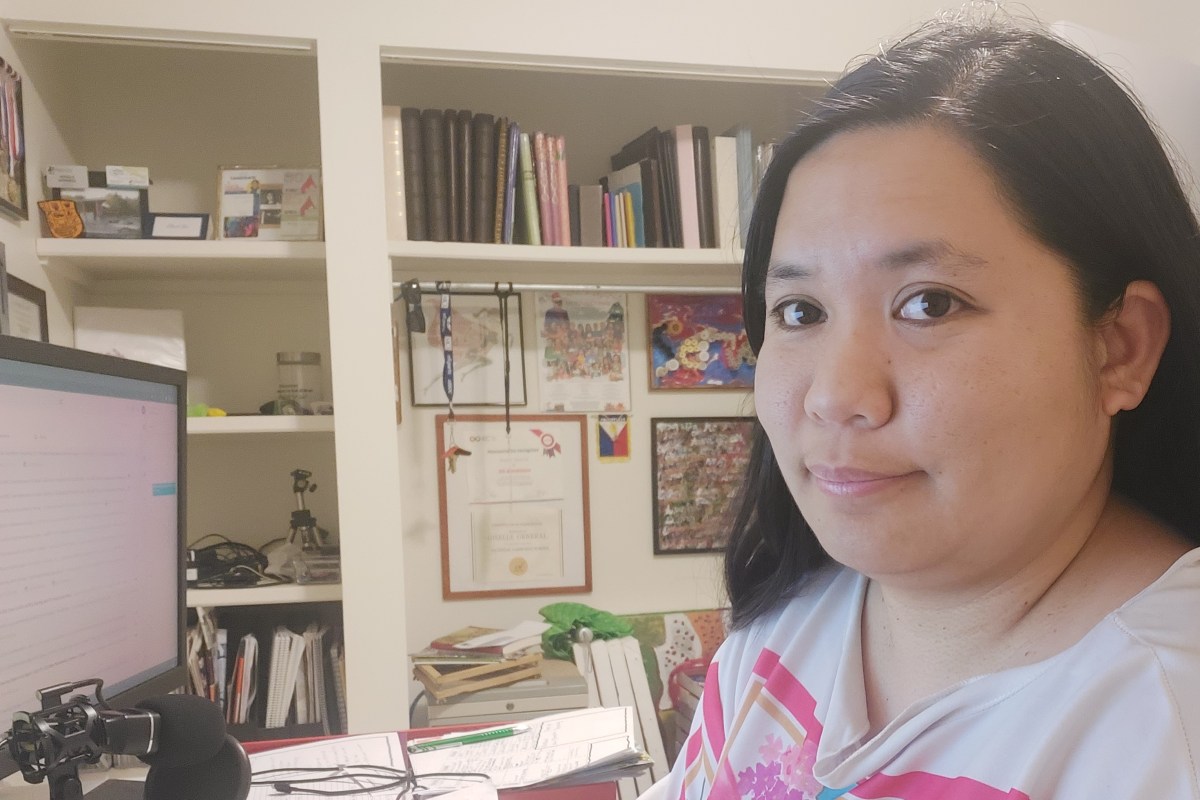
Giselle in her home office sitting by her computer desk.

By: Giselle General

“Writing is a solitary activity, and it is so important to build your community.”

I understand that this is a reason why there are many activities, events and gatherings of various forms that are organized to give artists and writers a chance to get together. From workshops that help people learn specific skills, networking, showcasing one’s work, or even a working-buddy setup to prevent procrastination, there’s immense value in having a living, breathing, human being beside you.

The tricky part is that I personally need to limit my in-person community activities for two reasons. The first reason is I’m an introvert so these activities are meaningful but draining at the same time. The second reason is I am still more COVID-cautious compared to the average person. I had it once and would do everything I can to not get it again or spread it to someone else. Sadly, in most gatherings, hardly anyone wears masks anymore.

To mitigate these risks but also widen my writing community, I did a simple Facebook group search for writers and memoirists and joined three of them. Not too many though, so my feed won’t get dominated by posts from these groups. A lot of the time, I see people asking for advice on a wide range of topics: from grammar, editing, publishing, finding motivation, and many others. Reading these posts were so helpful. Also, I know that by commenting to give advice, or event choosing an emoji to express congratulations on someone’s success, that I’m contributing positively in a small way.

Several posts came to my attention about people asking for a beta reader, whether on how to get one, or asking people to be one.

In simple terms, a beta reader is someone who reads an unpublished work as a test. The writer, or someone else who is organizing the process, will give copies of the manuscript and ask broad questions about the beta reader’s experience reading. I wasn’t asked to analyze the chapters, check for grammar or tone or anything like that. If I boil down the questions I got after reading the book it comes down to “do I like reading it?”

Back in January, I saw a post from a writer asking for volunteer beta readers for their memoir. I just finished the entire first draft of my own manuscript and I decided to leave it alone for a few months. With the extra time I have, I agreed to be a beta reader for a person I’ve never met from the US. We messaged each other a bit on Facebook messenger, exchanged emails and that’s where it began.

I received the first third of the manuscript. I decided to make the experience as close to reading a book as possible. While I decided not to print, I changed the preview mode on Microsoft Word so it looks like a two-paged book or an e-book. I went through the chapters and answered her questions.

Since the questions are focused on impressions and enjoyment, I tried to find a balance between keeping my answers simple and giving some details on what I find vague or confusing that can impact a reader’s experience.

I offered to also be a beta reader for the rest of her manuscript when it is ready. She was happy to have someone who is from a different demographic from her (a younger adult woman from a different country).

Two months after, I got two files, the second and last third of her manuscript. She sent the same questions to gauge my impressions on the content as a reader. For some of the questions I had the same answer; for others, I provided more information and said that my answers from reading the first section apply.

I really enjoyed the experience. It’s an opportunity to see another person’s work in progress and their style in narrating a deeply personal part of their lives. I admire her for making the request on that writer’s group, as I imagine it can be daunting to show something vulnerable and not yet a fully published written work.

Will I do it again? Yes, absolutely! Even if it is a new way of procrastinating, it’s still a more productive way than most.

Construction Zone Bus Stops: The Captive Transit User Series Part 11

A street in Edmonton with a temporary bus stop made with cement barricade, wooden platform, and 2 x 4 for the fencing.

By: Giselle General

This is part of an ongoing series of posts discussion issues I personally encounter while taking public transit in Edmonton. Links to other posts will be added on an ongoing basis:

What is a Captive Transit User? I learned about the term for the first time from the City of Edmonton’s website. The easy definition is: someone who takes public transit because it’s the best (or only available) option for them to travel around. The part about feeling ‘captive’ comes from the restriction that sometimes comes up, perhaps because one is too poor to own and maintain a vehicle, one does not know how to drive, or for medical reasons, cannot operate a vehicle. In many ways, I relate to this a lot. Though I’m pretty fortunate to afford the occasional taxi ride, and with my husband having a car.


I jokingly refer to my current place of residence as the “West End Construction Pandemonium Zone.” Although that is true, I cannot monopolize the title. All the different areas along the LRT construction route, whether the east one from Mill Woods to Downtown or the west one, really fall under this category. When I tell exactly where I live, though, people agree and do the small cringe that shows sympathy.

Funny enough, my commute taking the bus to and from our neighbourhood is overally pretty smooth. The issues I encounter are not any more different than my previous homes or workplaces. The new experience for me over the past year is the slight changes in the bus stops. Whether the east bound or west bound ones, every few months or so, the bus stop gets moved a block or two away. This is so the construction company has full access to the stretch of road where they are doing underground or above ground work. 

As a result, I had to pay attention to my surroundings and check the navigation apps. and I had to calculate extra walking time, and it’s best not to be surprised. The worst feeling is having to run to go to the nearest bus stop and see the bus zip past you. Learned that the hard way a few times. 

I learned that for drivers, there’s a bit of a learning curve as well. Sometimes, their digital screen doesn’t immediately update and so they will not be allowed to stop and let passengers disembark. 

The temporary bus stops would have the usual sign used in regular bus stops, but that’s where the similarities end. Since the stops sometimes have to be positioned in the middle of the road or right beside a sidewalk, there were these wood structures with platform and railings set up. There are no seats or roofs either. Depending on the location the ramp for wheelchair users are set up different ways. I suppose, portability is a factor in these structures so they can be moved wherever they are needed.

Snow clearing was something I worried about since construction zones are left untouched. This winter has been very, very good, perhaps even safer than the sidewalk near the houses. I suppose sparing a bucket of gravel to deal with an icy patch is barely noticeable given the amount of construction materials they have to use. I hope that this continues for however many more winters to come.

Being sneaky with jaywalking (oops) is something many of us bus riders do, because taking the very very longer way to cross the street and catch the bus is a pain in the butt. I am careful and know my basic safety principles when crossing the street so fingers crossed I don’t get hit by a car. Besides,  as a result of the construction there are fewer lanes on this major road, basically cut in half. So crossing the street the jaywalking way is like crossing a residential street that feels like an unmarked crosswalk. Let me be clear I’m not actively endorsing this – do at your own risk.

And there are times when the bus stop comes a lot closer to my house and it’s really nice. This is the case for the west bound bus stop where I disembark on my way home.

It takes diligence and responsibility of not only the city, but the construction company to ensure that residents and users of the road have a manageable experience, especially for a project that will take years – maybe even close to a decade, to be completed. 

My husband and I also walk by the construction area (of course just by the periphery and we stay outside the barricades), and observe the process. We can’t help but trade jokes about the pillars being constructed, given what happened in the summer of 2022. I’d take photos of the construction areas and sent them to my family group chat. My brother-in-law teases me that I’m overly generous and optimistic about when the construction will be completed. Well, I’d love to take his son, my nephew, on a cool train ride before he enters first grade so I can gain some ‘cool auntie’ points. 

The only other thing I hope that temporary bus stops have is better shelter from the heat and cold. Given that many of the regular bus shelters and stops don’t have it, perhaps it is a pipe dream. But, it never hurts to dream, right? It would also help in the summer construction months, to shield my eyes from the dust cloud right after a bus pulls over.