Recovering Political Candidate: Steep Cost and Sacrifices

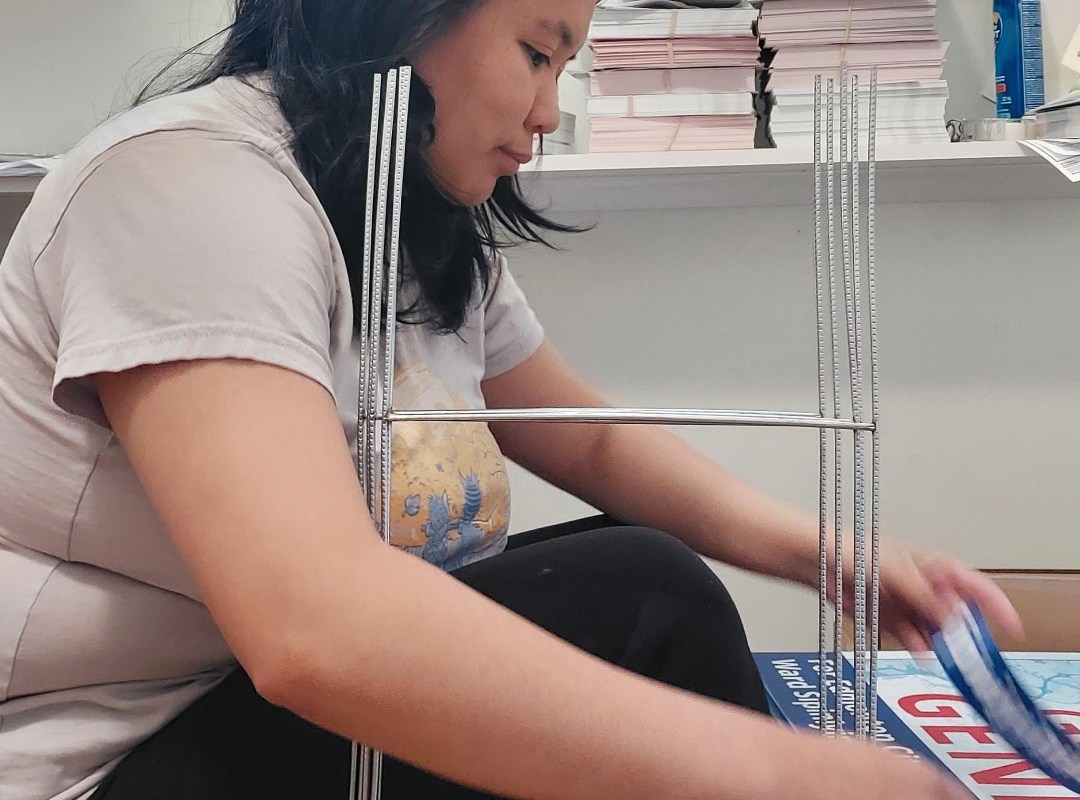
Giselle assembling lawn signs for the 2021 election campaign.

By: Giselle General

I suppose it’s kind of strange that I’m continuing the name of these series as “Recovering Political Candidate” given that I am running again. There’s already two posts I made as part of this series:

Then again, it feels like while I’m embarking on one, I’m still recovering from the previous one, unpacking all the things I’ve experienced and observed. Time gives perspective as they say, and going through the same experience again, I suppose this time for me, with four years of maturity, sheds things in a different light.

When people think about running for office, they often imagine debates, door-knocking, and campaign signs. But what most don’t see—and what few openly talk about—are the financial, professional, and emotional costs of stepping into the political arena. For those of us who come from working-class, immigrant, or marginalized communities, these costs aren’t just inconvenient. They’re systemic barriers.

As someone who immigrated to Canada as a child and became the first in my family to graduate from a Canadian university, I’ve experienced the unspoken challenges of trying to “break in” to political spaces while navigating real-life survival. I didn’t grow up around people who ran for office. My relatives didn’t work white-collar jobs or attend Chamber of Commerce lunches. Like many others, I was figuring it out as I went—sometimes fumbling, sometimes scraping by, always learning.

When I ran for City Council in 2021, I had to keep working full-time in the spring and summer with two months off full-time campaigning.

A time-tracking table. Each half-hour  for every day of the week is represented by one cell on the table. Times are color-coded as follows: Sleep, Personal Care, Meals, Chores, Commute to Work. Work. Family/ Friends social time. About 30 hours is not color-coded, representing the maximum hours that can be spent theoretically, on the election campaign.
I wondered what the true difference between a candidate who is campaigning full time compared to someone who is doing it after work. And it’s all the green blocks here, about extra 30 – 40 hours every week. That’s why I can’t help but wonder, even I’m technically adding more, would three months of full-time campaigning be enough?

I banked my vacation days and carefully budgeted unpaid leave. Not because I had the luxury to, but because I couldn’t afford to stop earning income. I later learned that many candidates take months off entirely, living off savings or family support. I didn’t have that option then.

In this second run, I’ve come to see just how many “norms” in local politics are built around people with financial privilege, professional networks, or flexible lifestyles. Here are just a few examples of the hidden costs:

Visibility Comes with a Price Tag

Being “present” at the right events such as fundraisers, business luncheons, galas, is often seen as a sign of seriousness. But tickets can cost $50 to $200 or more. Even free events often expect donations. Most happen during the workday, which means using time off or risking your job. And for women, racialized folks, and those with specific appearance pressures, just showing up polished and prepared costs time and money.

Running While Working Can Break You

There’s a quiet expectation that serious candidates go on leave to campaign full-time. But unpaid leave means lost income, and not everyone can afford that. Some of us push through by working during the day and campaigning at night, leading to exhaustion, burnout, or even injury. This is a real and unsustainable cost.

In 2021, my husband and I decided that I will never compromise on my sleep (so no all-nighters) that he will not be deeply involved in the campaign so we have a semblance of a healthy home life, and that the financial cost of taking a bit more time off work is worth it. We are hoping it will help prevent permanent injuries or trauma.

Starting Up A Campaign Isn’t Free

Even a modest campaign needs branding, a website, photos, flyers, signs. Unless you’re fundraising from day one or have wealthy donors ready to go, those expenses fall on you. There’s also pressure to appear “professional” which means a slick logo, high-quality materials, a polished online presence. That’s because anything less may be judged as unprepared or unserious.

While I’m re-using many supplies form 2021, I know if I don’t freshen up my style, it will be outdated and out of touch. There are many more cool apps and tools that help make things more efficient, and many are subscription based that can stack up if not kept in check.

Who You Know Matters – Much More Than Anticipated

I’ve spent years volunteering, organizing, and serving on boards, but I’ve also learned that social capital doesn’t always translate into campaign capital. Recognition and legitimacy are often reserved for those already plugged into elite circles or political dynasties. Meanwhile, working-class and immigrant leaders are often asked to “prove” themselves for years—often invisibly—before being seen as viable.

As a simple example, through my community service I knew of about 5 executive directors or CEO-level people from nonprofits. If many of them decline to publicly endorse me because of repercussions at their job, the list runs out pretty quickly. While someone with deeper networks and connections, whether it is because they had parents who are still alive and able, or who were also are politically connected, had a profession that already has a certain prestige assigned to it, or had lived in the area for much longer, the odds are definitely in their favour.

Where Campaign Schools Fit In

One thing that has been incredibly valuable to me has been participating in campaign schools—local and national programs designed to help women learn the basics of running for office. I’ve attended several, and I always leave feeling inspired and energized. They offer toolkits, checklists, and often a sense of solidarity that’s hard to find elsewhere. Being in a room full of women determined to lead and make a difference is powerful.

But for those just starting out, what’s offered in these programs is maybe 5% of what’s truly needed to launch a viable, well-resourced campaign. Turning that initial spark into a full campaign with traction, momentum, and infrastructure is a whole other challenge—especially if you don’t already have access to wealth, political connections, or campaign professionals.

That’s why these programs must not just continue—they need to grow. Campaign schools and women-in-politics initiatives should be more robust, more practical, and more deeply connected to the realities that many of us face: holding down full-time jobs, navigating care responsibilities, or entering spaces where people don’t expect someone like you to lead. We need to move from inspiration to implementation, and that takes sustained, tangible support.

What now?

This isn’t just my story. It’s a structural pattern. Politics in Canada, even at the local level, often functions as a gated space. Those gates aren’t always locked, but they are weighed down by money, time, and access. And the reality is, people from communities like mine often pay the price just to stand in the same room.

But here’s what I’ve learned: knowing these barriers doesn’t make me cynical—it makes me even more committed to change. Because if we want a city that’s truly inclusive, we need a political system that supports everyday people stepping into leadership.

That means:

  • Talking openly about the financial and emotional costs of candidacy.
  • Supporting candidates not just with votes, but with practical help—rides, printing, graphic design, donations, and more.
  • Reimagining what political legitimacy looks like, so it’s not based on your job title, who you golf with, or shared tables at a fancy gala, but your service to your community.

I’m still learning, healing, and unlearning as I go—just like many others. The journey of immigration, trauma, and over-responsibility doesn’t disappear when you run for office. But neither does the strength and wisdom that comes from living through it.

So if you’re thinking of running someday, or if you’re supporting someone who is: know that it’s okay to ask for help. To name the barriers. To build slowly and strategically, even if you don’t have all the traditional tools.

The more of us who show up authentically, the more we change what “leadership” looks like in this city.

I’m still willing to spill the tea!

And I’ve offered this before and I will emphasize it again. If you are interested in running for politics and wanted to know how it really looks like for someone who was described as marginalized, underdog, non-conventional candidate, who is an everyday worker and attempted to do this in 2021, I’m willing to tell it all. While scheduling might be trickier because I have to hustle even more to make up for what I’m lacking, I’m willing to share the numbers, the details of the years of planning, the financial and family decisions, the spreadsheets and timelines I aimed for, I reached and I missed. Talk to me, and I will share the real deal of my experiences. Not to scare people off, but to be more equipped.
Life in the (Slow) Swimming Lane: Conquering the Deep End of the Pool

By: Giselle General

In December 2023, so about a year ago, I decided to finally work on something that eluded me since I was a kid. The ability to actually finally stay afloat and tread on the deep end of the swimming pool. I figured that there’s no better place to do this than the place where I used a swimming facility for the first time over a decade ago, the YMCA on the west end.

I grew up in a mountain village in rural Philippines, where swimming pools are nonexistent. The hot spring resorts in the nearby mountains are not the optimal place to learn how to swim properly as they are designed for large groups that go there to socialize and splash around on waist (or chest) deep water. When I moved to the city, the school I attended didn’t have a pool despite it being a private school – only the more expensive ones had them.

When I moved to Canada at 16, I never heard any invitations to check the pool at my high school, so whether our school even had a swimming team or the related facilities will forever be a mystery to me.

Back in 2011 at age 20 out of my own initiative I finally went to the YMCA on the west end. I forked up the monthly fee despite being a part time student with seemingly endless expenses from my schooling, home expenses, my brother’s upcoming immigration to Canada and shopping for all the supplies he needed, and things that a young adult would like to get every now and then.

It was awkward at first. I observed other people who used the floating belt and how they swam on the pool within the confines of the plastic ropes. My hands, feet or shoulders kept hitting the plastic rope, I can hardly breathe, and I gasped loudly in relief once I reached the end of the lane. I tried to go twice a week in the summer before my shift at work started at 1 PM. But that summer flew by fast. As soon as my teen brother arrived in Canada that fall and I got admitted to to co-op placement program for my business degree in university, the swimming routine went adrift.

Fast forward to the next attempt at the pool in 2014, when I got an office job in downtown Edmonton. The downtown YMCA was only two blocks from my office and I managed to stick to my gym membership for about six months before I fell out of habit again. The workout rooms and the group exercise classes gave me a strange dilemma, and only after a few tries in the pool, I opted to do exercises that don’t require me to smell like chlorine even after taking a shower.

I haven’t thought of swimming again for many years until 2023. I noticed that my back and shoulders were hurting more often, and going for a massage once a month didn’t seem to be enough. I also found out that my new job then didn’t cover the cost of massage therapy. I needed a cheaper way to get the movement that my shoulders and back needed that stretching, dancing and pilates fail to help.

It occurred to me that my Saturday afternoons were free while the husband was away with the drinking and running group. I figured, might as well work on a fitness goal for myself too!

Since it’s been such a long time since I was last in a pool, I booked one private lesson to assess my skill level – or should I say, lack of skill. I just need to know whether I can be on the deep end while wearing a flotation belt without panicking or feeling ashamed. That was the best $45 and half-hour session I’ve spent for myself that year. The lifeguard instructor confirmed I can rotate my arms and flip my feet just fine and watched closely my awkward attempt to do the “egg-beater technique” to tread water on the deep end. “Now, all you need is practice”, he said. That I sure can do.

That became my routine. Saturday afternoons, as soon as the husband drives off, I got ready to take the bus to the YMCA. Two walls of the swimming room had clocks. I eyed on the clock’s hand rotating as I swam back and forth with the floater belt acting like an armour of courage. On my third visit, I waited until the open space with the deep end was free of the lane-swimmers, take off the floater belt and twirl my arms, legs and feet. When the water reached my chin, I’d grab onto the edge of the pool for a moment, and then let go for another try.

With more visits in the pool, I gained more seconds treading water on the deep end. 15 seconds, then 25, then 30, then 45, and then a full minute before needing to grab onto the pool’s edge. Then a minute, and then a minute an a half. The hands of the clock making a full rotation acted like my cheerleaders, beckoning me push just a little harder. The day came when I went onto the swimming lane with no floater belt, from the shallow to the deep end for a minute and swam back, and did that over and over for a half hour. By March, I finally reached the milestone of being a mildly-functional swimmer.

There was actually a swimming facility closer to my home. I eagerly watched the city’s webpage on recreational facilities for the pool’s re-opening. I got annoyed when the opening got delayed three times. I admit I was also losing motivation to take the 25 minute bus ride to the other pool and back. When the neighbourhood pool finally did open, it was exactly the next level of learning I needed. It’s only a fifteen-minute walk to my house and because of that I can shower at home afterwards. Literally no excuses this time.

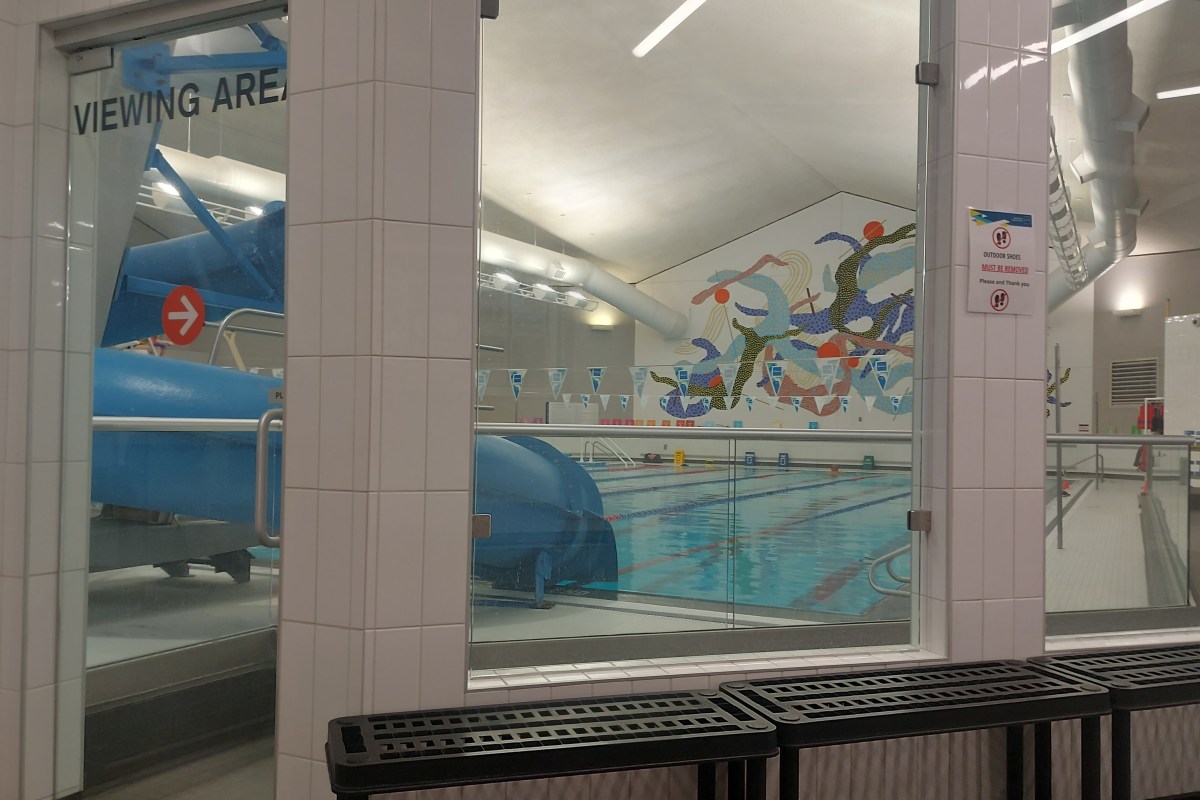
The smell and feel of the poolwater was somehow different. A bit gentler and I loved it. The change rooms and locker spaces were much bigger too. When the entire pool is configured for lane swimming only, there are six lanes that has room for one swimmer going in both directions so it is effectively 12 lanes. On the days when I go and it is open swim time, the pool is divided into the shallow, middle and deep sections. It was another great way for me to hang out in the deep end for as long as I need to, as long as I get out of the way of those using the water slide, diving board, and rope.

Whenever I go to the pool, I make sure that I stay in the lanes clearly labelled as “slow”, so I stay out of the way from those who were zipping through the lanes at what looks like to be five times my speed. I still bump the plastic floating dividers sometimes. But at least I don’t panic and need to be pulled out by the lifeguards. As I watch other swimmers with the floating belt swimming on the lane next to me, I try to subtly beam positive vibes and prayers to them, hoping that they too will reach the milestone of feeling more skilled in the water.

Just like any habit that is supposed to be healthy, around late summer I started to fall out of habit again. This time around, my body tells me when I really needed it – no excuses. After only a half-hour swim, my shoulders and back feel much more relaxed and nimble. And at $8 per trip to the pool, it’s definitely much cheaper than massage therapy. It’s not just exercise – it’s therapy, it’s pain management. For the drop-in rate, I got a discount because of the family membership fee I purchased for the neighbourhood’s community league, which is surely a bonus.

Also since the summer I joined my husband a bit more regularly when he goes to our very unique running-and-drinking group. A 45-minute brisk walk is a good addition to my fitness routine, if I choose to ignore the snacks and alcohol that we consume at the end of route. And as always, for doing errands that are close by, I walk for up to 30 minutes one way instead of taking the bus or waiting for a car ride. The true definition of a 15 minute neighborhood that makes certain fitness activities more achievable for me.

My goal is to one day to be a more public space to test how I deal with the deep waters then. I’m thinking the WaterPark that is pretty close. Or if I get invited to a social event in someone’s backyard pool or a lake that works for me too. I’m just thrilled that I won’t need to piggyback off my husband like when we were at the hot springs in Iceland in 2018 or at the local WaterPark in 2019. To be able to carry my own weight, or at least, my body afloat in the deep end, is an empowering feeling I didn’t realized I needed until I achieved it.

Recovering Political Candidate: What I wish I Knew

By: Giselle General

Sometime in December 2023, I was contacted by a researcher who is working on a paper asking for the financial barriers faced by women running for public office. Did she ever find the right person willing to talk and vent about this very topic! I was connected to her through a national organization that aims to encourage women to run for public office.

I shared what I knew and gave so much more information that the questions she outlined in her 3-page questionnaire. I truly hoped I didn’t sound too grouchy when I explained all the potential barriers, both ones I experienced personally and broader patterns I’ve observed.

Despite the fact that my candidacy was coming up to three years ago, I remember many things that I wished were more clear during the campaign workshops and campaign toolkits that I accessed between 2017 – 2021.

So here is a short list of what I wish I knew.

  • About the “social etiquette” in Canada, Alberta, and Edmonton when it comes to door-knocking. I didn’t feel confident enough to reassure volunteers on how to handle different types of situations such as homes having no mailboxes, the “no soliciting” signs, entering gates and how long to wait at the doors.
  • How to handle conversations with one’s employer on handling things such as time off, salary and using vacation days and reputation management for the workplace. I think I handled it okay, but if I had more information I would have been less terrified.
  • The range of options on how to handle the election campaign with family members.
  • Exercise routines to help manage pain and soreness from walking, standing a long time, using mobility aids (like my walking cane) for a long time, hand care (from knocking on all the doors), and more.
  • Personal finance budgeting once the motivation to run is there. This includes saving for money for taking time off from work to do campaigning full time, money to initially fund election expenses, budgeting some extras that may be needed such as replacement shoes, therapy appointments, pens, umbrellas, or takeout food.
  • Options for campaign finances, as in ideas of what a low-budget, medium-budget, and a high-budget campaign can potentially look like, as it took me too long to decide whether I should get one digital billboard or one bus bench.
  • Tips and tricks to coordinate with landlords to connect with apartment residents, as this process also took a lot of time coordinating while being afraid I might be somehow breaking some election rule that I was never aware of.

I will likely talk about this more in future posts. In the meantime, I eagerly look forward to the research publication talking about this topic.

Everyday people that wanted to participate in the political discourse in this very important way should feel confident in their ability to do a decent job. They should not feel demoralized by obstacles that seem systemic in nature.

To conclude, here’s the copy of the post I wrote for the Alberta Filipino Journal back in 2021 during the beginning of the actual campaign.

General Point of View: Trailblazing and Smashing Ceilings – The Journey of a First-Time Elections Candidate

By: Giselle General, April 2021

This election candidacy is a journey five years in the making.  Here is a reflection on my experiences as of this date as someone running for the first time.

A main challenge is informing people on different topics. There are many issues that affect our daily lives, and it can be difficult to remember which level of government is responsible. On top of that, there are issues that are a shared responsibility between the municipal, provincial and federal government. So it is important for me, my campaign team, and other candidates to be informed and patient when discussing with others.

The electoral district boundaries not only changed in composition, but also the names have changed. They are changed from numbers to Indigenous names. I think the names are beautiful and meaningful, but many are frustrated and unwilling to learn. I can personally attest that all it takes is practice, just like learning Asian geography back in high school. After a few rounds of practice, I can confidently say without missing a beat that “I am running for city councillor for West Edmonton, the ward of sipiwiyiniwak!” Those in ward Dene and O-day’min will have an easier time, while those in ward Ipiihkoohkanipiaohtsi would need to practice a few more times.  

I found out that apartments and condo buildings are usually ignored by campaign teams. I found this shocking and unacceptable! Because most apartment buildings are rentals, this means that many people who are not homeowners and from lower economic background are not given the same opportunity by election candidates to share their thoughts about political matters. No wonder the voter turnout in municipal elections is only 30%. Like a spark that ignited in me, I felt a fierce sense of determination to go against the tide and find ways to connect with people living in higher-density places. I hope that landlords and building managers would cooperate with my campaign team so we can engage with residents effectively and safely.  

A harsh and true advice I received was “you need a lot of money”. And I don’t have a lot. I feel motivated to find creative ways to compensate for the shortage of money, and fun ways to raise money and support. From virtual dance-a-thons as a fundraiser, using social media for marketing instead of spending money on billboards, and asking volunteers to drop off brochures instead of paying Canada post thousands of dollars, the ideas seem to be endless. Necessity is the mother of invention as they say, and I’m excited to find innovative ways to connect with potential voters and supporters. I hope that I get hundreds of volunteers from all walks of life, and that even those who cannot vote yet, the newcomers and under 18 years old, feel inclined to join the campaign team as well.  

The election day is in October, and given how time feels like it’s slipping through our fingers, it will be here before we even realize it. All the spare time I have, between breakfast and starting work, between dinner and bedtime, between laundry and cooking on the weekends, are occupied by the seemingly endless tasks to gain more resources, to recruiting volunteers, to ensuring we consult with people with different perspective. Door-knocking officially starts in May and I’m eagerly looking at the calendar counting down the time.  

I am excited to be transformed by this experience. I suppose, turning 30 years old this year also highlights the significance of this adventure. I’d love to win of course, but it’s more that that. My hope is that I am just one of the many people from under-represented backgrounds, of the women, the young adults, the migrants and the Filipinos who would take the leap and throw their name in an election race. I hope that my experience can serve as inspiration and a resource guide in navigating an election candidacy that appropriately considers the complications that arise from our lived experiences. If I don’t end up being that trailblazer, I hope that someone else does not too long after I run.  

When Community Service and Self Care Goals Conflict

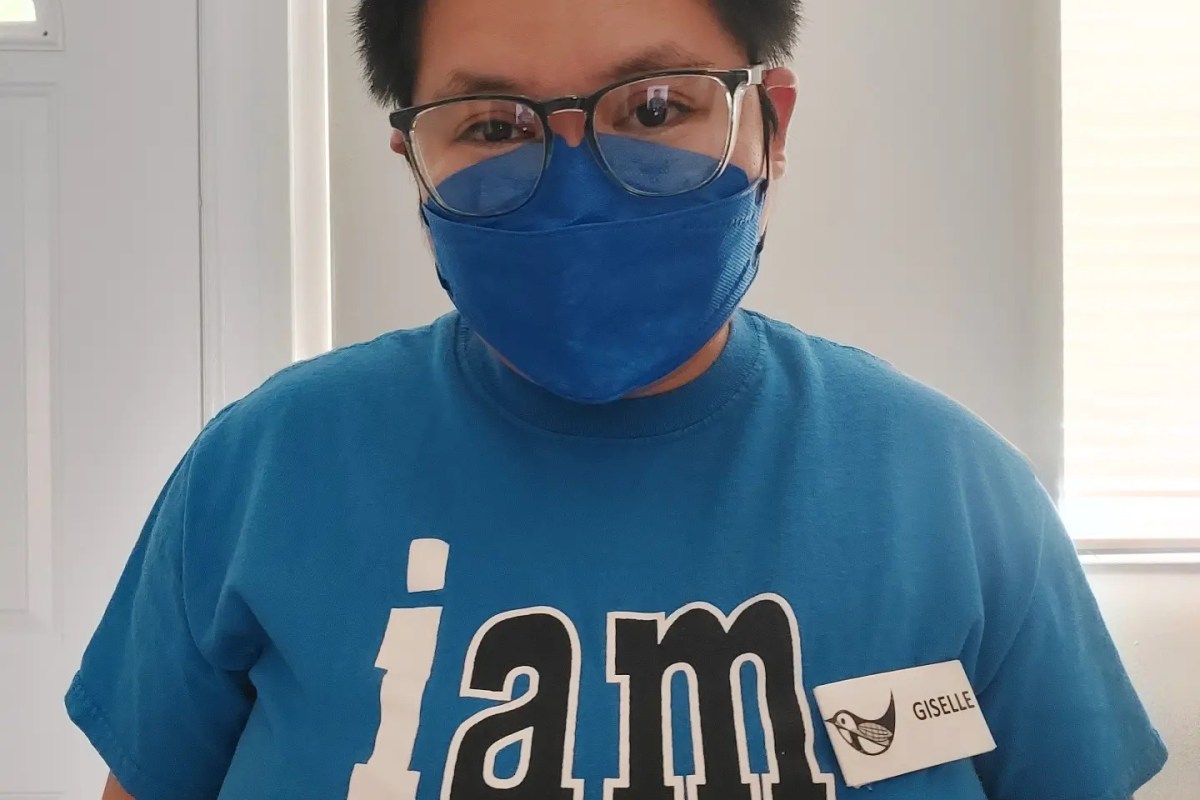
Giselle wearing a stylish safety glasses, KN95 mask and a volunteer Tshirt

By: Giselle General

Last fall, I had an an eye-opening moment as I went about doing my volunteer activities. During the third weekend of September 2023, I had two activities back-to-back, both outdoors. From morning until early afternoon, I was in my neighbourhood park helping with an annual gathering that includes serving lunch, having activities for kids and families to enjoy, and for residents to apply for their membership with our organization. Shortly after, I went to an Philippine arts event at an outdoor park in downtown Edmonton.

When the day began, I checked the air quality index and it is a 4. Not yet a concern which is great. But as we approached the lunch hour, my eyes started to feel irritated so I wore my glasses. It’s not the type that corrects your vision, but a cuter version of safety glasses I got a few years ago. Turns out, my eyes get irritated by the wildfire smoke, more easily that the average person.

It was 3 PM when I rushed to the arts event, where I kept my glasses but didn’t wear an N95 mask. That was my mistake. Although I must say that communicating and connecting with my fellow writers in our booth was so much more efficient without the mask. Also, since we were outdoors, I figured the COVID risk would be minimal.

Unfortunately on my bus ride home, as I sat on my seat resting my legs from walking and standing all day, that’s where it hit me. When taking transit I still wear a mask because I definitely don’t want to catch any of the respiratory viruses spreading around. As I sat patiently waiting for the bus to reach the west side of the city, I checked the air quality index app again. It went up to 8 – high risk! No wonder my eyes were irritated for the afternoon. As soon as I arrived home, I plopped on the couch while struggling to answer my husband’s question about what we plan to have for dinner. After dinner, my chest started to hurt, and I have to make an effort to breath in for the rest of the night.

I had plans to attend other neighbourhood events the next day, but when I looked out the window and saw the familiar orange haze in the sky I knew it’s a bust. The air quality index app showed a rating of 8 in the morning which went up to 10+ in the afternoon. I have to stay in.

This is just frustrating. I very much hate the fact that my own body seems to now get in the way of my volunteer activities. I also know that since COVID precautions are virtually nonexistent in public spaces, the burden on individuals to protect themselves is just more significant. The worst part is, event individual precautions are less effective especially if let’s say, you are one one of the 100+ people in an indoor hall during a community engagement event. While on one hand, I know that my assistance and contributions will be very helpful during the said event or activity, none of the organizers, fellow volunteers, or attendees would step in to help me if I get permanent harm from attending.

Perhaps that is part of the reason why that even more so the past few months, I make sure that majority of my volunteer activities can be done from home. Writing two informative articles for the monthly ethnic paper for the Filipino community in Edmonton continue to be rewarding. Over winter and until now, I started to do volunteer sewing tasks, upcycling old merchandise from my husband’s running group and turning them into personalized outfits. The documentary and book projects are also tasks that hopefully will make a positive impact in the future and can be done without risk of being exposed to smoke, fumes, viruses, hostile weather or all of the above.

There’s really no solid takeaway message I can pin down. During my election campaign a few years ago, I made decisions that I know prioritize my wellbeing and my life over potentially winning over votes. “My goal is to come home alive” and “if I’m sick, severely injured, or dead, then I won’t be able to help” are my personal constant reminders when I feel guilty about missing community events or volunteering opportunities.

In the new year, I tried to nudge more of my free time towards improving my personal health. Weekends offer what seems to be an unlimited opportunities to get involved and volunteer, whether it is events, workshops, rallies, and more. However, given that my husband goes out for a run with his running group in the afternoons (in the winter), I discovered that it is best to try a fitness related activity that I can try to stick to on a weekly basis. So for that past three months, that has been swimming for about 45 minutes at the local YMCA.

Giselle wearing a swimsuit getting ready for a swim.

This weekly swim routine has paid off really well in just a few weeks. It’s hugely help reduce my shoulder, neck, and back pain from doing office work full time. Swimming laps and treading water is definitely good cardio without aggressively hurting my joints. And slowly, as I gain confidence in learning how to tread in deep water, I also manage my fear while celebrating my incremental improvements.

This tradeoff has been worth it for now. My community service time and activities are sprinkled over week nights, lunch breaks and weekends, so I figured carving out a premium time for my self is the right call for now. I do dread the upcoming summer though with the greater likelihood of forest fires and smoke risk. Maybe volunteering for public and indoor activities is the approach moving forward.

The Unusual Birthday Gift I Gave Myself Last Year

By: Giselle General

Last year on my birthday at the end of May, I did something that I considered an unusual, but valuable, gift to myself. I officially handed my letter of resignation to the job I had for eight years.

Materially, my life is overall comfortable. Also I find shopping for items like clothes, cosmetics, gadgets pretty dreadful. Having to think of gift items for people to get me is the opposite of fun. Thinking of what to buy myself as a treat that need to be bought at a specific time of year is also pretty restrictive.

As my wages grew over the years, both from my employment and the honourariums for some of my volunteering and writing work, I try to be very mindful of lifestyle inflation. I didn’t want to fall into the trap of buying something just because I could. In the occasions where I do splurge, those purchases were made intentionally and with no guilt.

A big theme I’ve seen in how I approach my birthday is about giving myself something special of great non-tangible value. The trip I took in New York City in 2019 is my first overseas solo trip, granting myself the new experience of independence and rare unrestricted indulgence. The boudoir photoshoot I also booked a day before my birthday is to grant myself a new way of reclaiming my body and sense of self, a valuable thing for sexual abuse survivors like me. In 2020, I hired a freelance artist to recreate a piece of artwork I drew in 2013, granting myself a way to preserve precious memories and the enjoyment of collaborating with an artist. The drawing in particular was the memento I made from my first trip to the Philippines after immigrating, taking my Canadian (white) boyfriend in tow. In 2021, my self-gift was as simple as granting myself rest and family time as I started to ramp up my election campaign running for city councillor. Something truly in short supply and so precious for that period of time.

For my birthday last year, the plans to celebrate were straightforward and already confirmed. My brother worked night shift so meeting him separately worked better since typically dinner times happen when he is already on his way to work. The husband’s family will be coming over for a separate dinner in the home we just moved in to a few months prior. They planned to bring black forest cake. Perfect.

The only thing missing is the precious thing for me.

I talked to my husband about the idea throughout the month of May. This was not something taken lightly. The job search process over the past few months were not going so well, and I knew it is because I was not giving it the right energy and focus. Also, in the past, I was unemployed when I applied for that job I truly enjoyed for eight years. It seemed like I can only do one of these two things at a time: work full time or job hunt full time.

On top of this, I realized that I never had a full two-month summer break since before my parents died, which was the summer of 1999. Since 2000, my summer breaks consisted of working for most of it, either working in the store in the mining village in the Philippines, working in retail or placements during my university years, and then as a full-time working professional. As a child, since my birthday was the end of May, just right before the schoolyear begins in the Philippines, my birthday always marks the end of a notable period of time and the beginning of another.

I looked at my bank account repeatedly. I inspected the information in the budgeting software I used since 2017. If I were not to do anything extravagant or ridiculous, I can afford to pay my bills and save for retirement with no interruption, for quite some time.

This is the perfect timing for this reset.

When I woke up on my actual birthday which was a Tuesday, I was a bundle of nerves and certainty. I was working from home that day, in my home office where to my left was a wall of frames, including the employee recognition certificate I received for my years of service. The draft email was already in my inbox. And then I clicked send.

Just a few minutes after, I got a message through our internal chat software. It looked like it came as a surprise. Then emails and video calls took took place, with strategies and decisions to make the most of the one-month resignation notice.

Since we had a hybrid work arrangement still, my office was not as decorated as it was. Packing up any remaining personal items was easy. The last month of work flew by, as I eagerly waited for my last day of work, just right before Canada Day long weekend.

After the long weekend, my relaxed summer break began. Nothing changed in my evenings as I kept all my volunteer commitments. I also wanted to spend the same amount of time with my husband so I kept my sleeping schedule the same. But the time period that is labelled as the typical weekday work hours from 8 AM – 5 PM, were all free and flexible. It felt eerie but not as slow as I expected. Boring and lazy and unstructured was exactly what I’m looking for and what I got. It was quite remarkable.

In the middle and end of the month, when I paid my bills, rent or the automated deduction for my retirement savings got taken out of my bank account, I relished in the feeling that I didn’t have to work during that current week to pay for it. My past self (and of course my husband) helped make this comfortable period of time happen.

When September long weekend arrived as well as back to school for students, I knew this free time was up. It is time to be a responsible adult again and actively work towards finding my next job. I knew it will take months from applications, to interviews, to the offer and a starting date. As fall came and went, the pressure crept up a bit more. Thankfully my husband consistently and patiently put my panicked thoughts into perspective.

In some career-oriented articles, I’ve heard of people talking about the benefit of taking a break, sometimes they call it a sabbatical. The type of break for a working professional where they won’t have to worry about financials, but are able to not work full time to rest or try something different. I didn’t name it that way back in May 2022, but it looks like a two-month sabbatical and life reset is what I have gifted myself. One can argue that it was quite expensive, if not the most expensive gift I have given to myself. My living expenses were $3,500 a month and I didn’t find employment until six months later.

It was wonderful and definitely worth it though. Something that is hard to give or get for someone like me with extreme workaholic tendencies. The gift of rest, of reset, of leisure, of personal flexibility. I hope that I can do it again just a few more times during my prime career working decades.

Book Review and Thank You Letter “The First Phone Call from Heaven” by Mitch Albom

By: Giselle General

It may sound silly but yes, I am writing a thank you letter to an object, which is the Little Free Library in a neighbourhood that was a 20 minute walk from my home. These are my thoughts after reading a book I got from it, “The First Phone Call From Heaven” by Mitch Albom.


August 15, 2022

Dear little Free Library. I think you’re pretty new, I haven’t seen you before the moment I saw this particular book that caught my attention. Overall, I’m a fan of this particular author, thinking back when I first saw a book written by him titles The Five People You Meet in Heaven.

I have also read another book by him titled Tuesdays with Morrie. So, I have an idea of what to expect in his books. There will be an overall theme of wholeheartedness and inspiration. There will be undertones of religion and spirituality. There will be themes about love and loss and death. And upon reading this book, I was not disappointed. That’s exactly what’s in it.

The premise of this book is about a pilot who is grieving the death of his wife, and missing opportunities to support his family since he was in prison due to criminal charges put forward from a plane crash. He returned to the small town where he grew up where a seemingly mysterious series of events started to occur. Several people in the small town started to receive what they claim were phone calls from dead loved ones claiming that they are from heaven. Alongside the struggles of this pilot, there was a journalist from out of town assigned to cover this story. As word of this seemingly miraculous and extraordinary event spread across the world, the town was whipped into a frenzy.

I will try not to give out too many spoilers, but all I can say is that answers were discovered behind how the phone calls were happening, and for many of the people affected, it resulted into profound effects that changed their outlook in life and family. It talks about how people’s lives are interconnected in numerous, often unexpected ways, and sometimes, people’s actions affect us in ways that we might never know, for better or worse.

For me personally, what affected me most about the book is not about the moral or the plot or the writing. I mean, it is pretty good, and I enjoyed reading it.

What I found moving and striking is an experience that is first for me, to have a character with my name in a fiction book. On top of that, for the character, Giselle, to be the dead wife that the protagonist is still grieving about! There’s no need to imagine or daydream this time in order to relate to a character – the book’s writing made it very direct, very explicit.

I am married to a man I love very much. I also struggle with suicidal ideation. While I haven’t actively done things to end my life in recent years, my heart continues to feel heavy with what is described as survivor’s guilt. Many a time I have daydreamed about what would happen when my life ends, if it ends soon. The fact that in just a few years, I’m reaching my mother’s age when she died, when she died saving me, is not helping matters.

But in this book, I was confronted with an experience I haven’t had before. Seeing the words of a grieving husband, who continued to say how much he loves and misses his wife, Giselle. The anger and pain of someone who missed her funeral because he was in prison, with undertones of helplessness and despair as he adjusts to the life of being a single parent for their little boy. This time around, there’s no need for me to wonder, ‘what would my own husband say or think, in the days, weeks or months just after my death?’ In many ways, words and thoughts could very much be his.

How has this affected my suicidal ideation? Words cannot express, but there is something that fundamentally shifted there.

After reading the book, I saw on the inside of the back cover, that there’s a sticker, one of those customized labels with people’s name and address so they can easily put it in outgoing mail. This book, at one point, was owned by a woman named Marilyn. The address is in Edmonton, but it is not in the Patricia Heights neighbourhood. Still on the west end, but a few neighbourhoods north.

Little Free Library by the end row of houses in the Patricia Heights neighbourhood: you have presented me with a unique experience and a profound gift. I’m still processing it, frankly speaking.

For now, all I can say is “thank you” and “wow”. The collection of Little Free Libraries for the neighbourhood is still growing, as well as all over the city. I wish that you continue to house and share books, knowledge and joy for years to come.

“Matanim ay ‘di Biro!” On Indoor Plant Care

By: Giselle General

Magtanim ay di biro, Maghapong nakayuko, Di naman makatayo, Di naman makaupo! (Planting is not a joke, as you need to bend over all afternoon, you cannot stand, you cannot sit!)

This is a folk song I remember learning as a child, about the hard work that is required to plant rice in farming fields. While I personally haven’t experienced that as a child since I grew up in a mountainous region in the Philippines before coming to Canada, it got instilled in my mind that care for plants is a serious and important thing.

Potted plants were a common thing in the homes where I lived in both countries. They came in different forms: an outdoor plant box, milk cans or clay pots for indoor plants, or just a raised garden bed right by the stairs leading up to the house. But plant care in Canada was a whole different ball game since the drastically changing seasons dictate what, when and how plants need to be care for.

I started paying more attention to indoor plants in the places I lived in, when I moved in with my then boyfriend, now husband. In his condo, he had one potted plant that he got from his mom as a housewarming gift. It’s one of those generic types of plants seen in many people’s homes. He had a nickname for it that stuck, Mr. Plant. We found the perfect spot for it, right beside the narrow living room window, perched by the edge of the TV stand. It was relatively low maintenance, watering it once a week and not putting any fertilizer was enough for it to survive long enough for us to take it to the house we moved in to in 2015.

That house came with one plant that was hanging by the stairwell ceiling, so we nicknamed it H. Plant, and yes H stands for “hanging”. We watered it regularly but didn’t put fertilizer as we never got into the habit of it. When there were a few leaves that were dying, I’d cut them off and put it in the pot, hoping to myself that it can be somehow a fertilizer substitute. I thought, it’s organic material, right? We also inherited an Aloe Vera plant from our friend, after their then newly-acquired cat kept on attacking it, which we aptly nicknamed A.V. Plant. It’s quite obvious that we name things in a practical, not creative way. We got a few other small pots of plants that didn’t survive as long, such as the one I got as a wedding gift, and one free pot I got from work for Earth Day.

A plate of spaghetti with homemade pesto sauce.

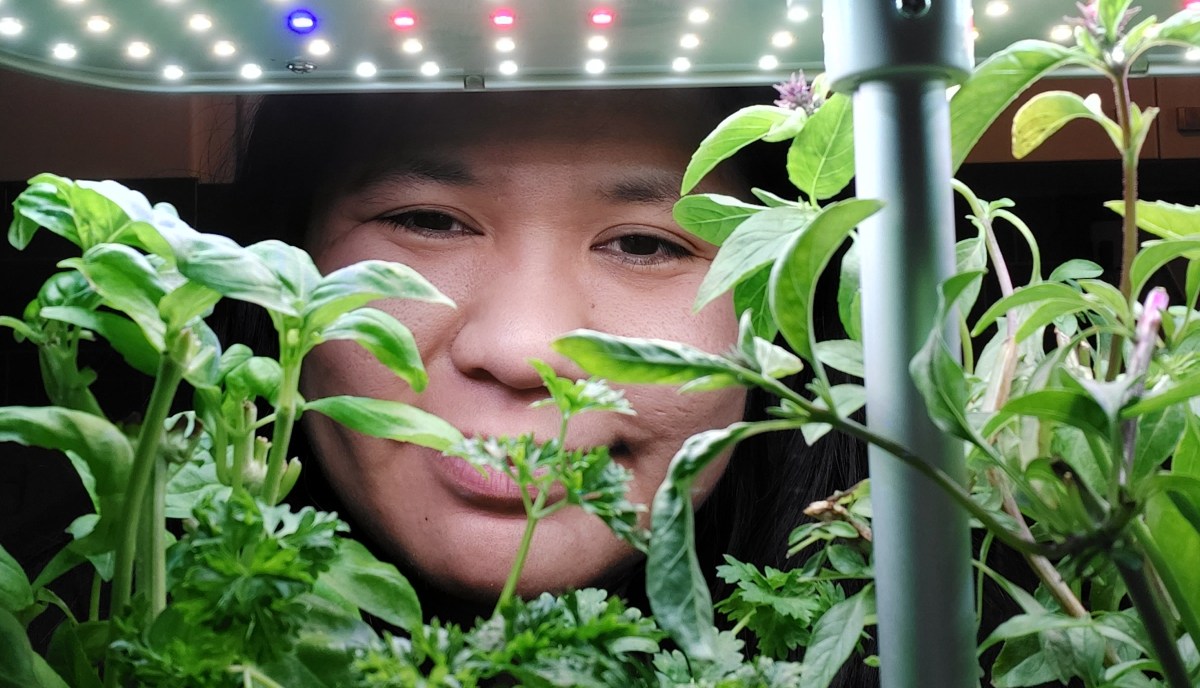
Sometime later in the year 2021, when we were shopping at Costco, my husband decided to take an impulse purchase, which is very rare. He decided to get tabletop Aerogarden, which is a techy pot for plants that uses water, fertilizer, with buttons and a digital screen to remind you to add water, change water, put fertilizer, and more. This was set up for planting herbs. I was at first skeptical of it, but the husband seems eager to try it, and promised to be on top of the maintenance. And it worked! Some of the plants grew early and quickly, and I had to keep up with trimming and harvesting the herbs and integrate them in our meals. That has been pretty fun, and delicious! The best part for me is being able to make homemade pesto with the very healthy basis plants (both Genove Basil and Thai basil) that is tasty and nut free. The dill has died and we tried to put a root of a spring onion and it also worked!

As a couple, we’ve never really been the type to pick plants for our house because they are pretty. We were so low maintenance and unmotivated to put plants in our front lawn and backyard in the bigger house we had! But the Aerogarden sparked a new interest to plant things that are more of a win-win for us, healthy because of better air quality inside the house, and healthy because they are edible. In Edmonton, there’s also additional conversations about edible gardens in outdoor settings. More people are setting up fruit and vegetable garden beds and pots in their front yard, more neighbourhood groups are setting up community gardens (including my own), and the city is helping those who want to put edible food plants in trails and neighbourhood ponds.

In addition to increased conversations about planing for sustenance, there’s also more encouragement towards planting outdoors with a goal towards naturalization. As in, planting pants, shrubs, bushes that are native plant species in the area, and in a way where mowing won’t be necessary. I thought that there’s merit to the idea, and I’m eager to see more people take up on it. Now that we moved to a townhouse with a very small patch of dirt under our property lines, I don’t think we’ll be able to contribute much to this idea. Overall, it’s pretty neat to see what captures people’s interest in plant care in their homes and immediate surroundings!

Love Language Reflections: Learning About Love Maps

a man and a woman walking on a farm on a date

The consequence of not having solid role models of what a loving, caring, mutually equitable marriage looks like, is that I had absolutely no clue where to start. While I am lucky enough to have some memories of my parents until they died when I was eight years old, that is not enough time to learn, remember and apply it in my own relationships. One thing did stand out, and that is they treated each other well, so at least I know that this is a valuable principle that I want to have, and want to make happen, in my own marriage.

Luckily for me, I was book smart as a child and have retained some of the positive aspects of being one. That is, being resourceful and not feeling ashamed to do research, whether it is print or online resources, on how to do things. It’s something I’ve done for many years, including the awkward topics that I felt are just as important, such as learning about sex positions!

A YouTube channel I’ve started watching recently and really loved is Cinema Therapy. It’s an amazing Youtube channel that analyzes movies from a mental health standpoint, from a filmmaking standpoint, and hosted by two men (a registered psychologist and a film director) who are very open about their emotions while reviewing the movies. One of their videos talks about the 1990’s version of the Addams Family movie and how the main characters, Morticia and Gomez, showcase several key principles of a good marriage. In this video, the new concept I learned which I really like is the one of Love Maps.

A Love Map is the “part of your brain where you store all the relevant information about your partner’s life” as referenced in the book mentioned in the YouTube video, the Seven Principles of Making Marriage Work.

This is gonna sound cheesy again, but my husband, bless the man, has already been doing this without knowing the technical term for it. Many times in the past, when he learns something new that caused a strong reaction in me, both positive or negative, he makes an actual effort to remember them.

I’ve talked about the concept of Love Language before. I realized that the concepts of Love Language and Love Map go hand in hand, and I think it’s remarkable! Love Language focuses on categories that are very practical and tangible, while Love Maps can help find and apply specific observations or preferences.

So, using my husband as an example, the love languages he likes to receive are acts of service, quality time, and touch. Integrating the principle of the Love Map here means the following examples:

  • He appreciates food being prepared for him whenever I am at home. It doesn’t matter at all whether it is 100% homemade, takeout, or simple processed food like a frozen meal or a can of soup. Having a plate or bowl of warm food and a drink placed in front of him is something he really loves.
  • He appreciates that I know how to repair clothes and re-purpose non-wearable clothes into other functional household items. The most recent one is the pair of pants I repaired so many times, and when it’s no longer salvageable, I turned it into a pillow. He describes them as “gift made with love”.
  • Spending time doing different things while in the same room is quality time.
  • He loves cuddles and hugs throughout the day, and bed cuddles during daytime hours can only last up to 30 minutes max, then he gets restless.

In my case, the love languages I really cherish are acts of service, touch, and words of affirmation. Integrating the principles of the Love Map here means the following examples:

  • While I like all various types of affirming words, my outward reactions to them vary. Hearing “you’ve my love” and “I love you” will have the most immediate and reciprocating response with me saying “I love you too!”. Compliments about my skills “you’re such a smart baby!” would make me feel nice inside, but my reaction is more muted, likely because I’m raised to be modest about my skills. Compliments about my appearance “you’re a sexy lady!” are also lovely for my self-esteem, and I need to work on responding to them still. It is nice to be reminded at least one person thinks my butt is cute!
  • Acts of service for me includes self-organization and self-care, not just actions done directly for me. So, paying the bills on time or emptying the dishwasher are amazing, as well as him taking a break from chores and playing video games so he can de-stress. There’s no need for him to iron my clothes or buy my preferred snacks from the Filipino convenience store.
  • I love all forms of touch! We hold hands in the car all the time. When we “bump” into each other in our home’s hallways there’s always a little kiss or butt grab! And cuddles for at least 15 minutes at bedtime before sleeping is an integral part of our bedtime routine.

Combining this with other things I’m trying to do for my own individual wellbeing, such as therapy and learning about mental health, I hope that we are able to continue to be there for each other. This upcoming year is a year of a lot of change, and I hope that we will be able to ride out all what is to come and have our relationship in one piece.

Book Review and Thank You Letter: Motherless Daughters, The Legacy Of Loss: by Hope Edelman

By: Giselle General

In an attempt to fill the gaps in support and knowledge from my ongoing therapy, I was seeking out additional resources to help with dealing with the pain and loss of being an orphan. While my therapist wasn’t able to point me to an local support group, I found an adequate starting point.

I just finished reading the book Motherless Daughters, The Legacy Of Loss: by Hope Edelman. This is a Thank You Letter and a book review for the person who recommended this book, a remarkable woman in Edmonton named Mimi.


November 29 2021,

Dear Mimi,

Thank you for your lovely invitation to go out for lunch a few weeks after the outcome of the Edmonton Municipal Election last October 18. It was wonderful to chat with someone who experienced many of the things I have as a first-time elections candidate, as someone who is a person of color, and a woman. You shared many stories and insights that will help me as I go through my emotional recovery after not winning this election.

On top of the political commentary and stories, you kindly asked important questions about one challenging reality I have, as someone who doesn’t have a mother figure in my current life, and as someone who hasn’t had such a person for a very long time.

If my memory served me right, you actually haven’t read the book yourself, but you shared to me that Motherless Daughters was a book recommended to you a while back. I believe you said that you’re not the self-help-book-type. I was overjoyed though, since self-help is a book category I read on regular basis. Thank goodness an E-book version was available through the Edmonton Public Library, and I started reading in on nights and weekends when I have spare time.

The book was written and researched by a woman whose mother died when she was young, a teenager, and it involved numerous interviews and questionnaires from other “motherless daughters“. I liked how the book chapters outlined concepts bases on topic, such as navigating womanhood, romance, family, motivation and self-worth as a motherless daughter.

My favourite was how the book outlined key differences in terms of impact, depending on the child’s age when the mother passed away. I was eight when my mother died, together with my father and sister. Old enough to remember who they are and to know that life will never be the same after the deaths. Too young to do basic household management functions on my own. Too ill-equipped to grieve but not immune to the need of it.

It was a tough read, where every paragraph hitting me hard, shedding a light in very dark corners of my scarred soul, revealing wounds that never really completely healed. Especially in the first five chapters, it felt like every third paragraph made me cry, the vision of a child in her brokenness that was never acknowledged, and was just hidden away for so long. The stories of the other women and the commentary from doctors and the referenced resources, are both haunting and illuminating.

While distressing and unfortunate, I learned that it is actually normal for people to freak out when they reach the age of death of their same-gender parent. I thought that being fatalistic, catastrophising is a unique issue I am having due to election stress. Seriously, for the last six months before the election day my mind was telling me relentlessly “If I lose in this election, I have three years left to prove my worth. If I am not able to accomplish something profound and remarkable, my mother’s sacrifice was worthless. I don’t deserve to outlive her, and ending my life then is the right course of action.” I cannot rationalize it then, but yes, I was measuring my life and worth based on a very specific number, 33 years of age.

Now, there is huge comfort from realizing that this is a common occurrence. That subconsciously, people can be neglectful about their lives, or in the case of those whose mothers died of suicide or addictions, the adult “motherless daughter” ends up replicating those behaviours. It comes from wanting to grasp any way to find a connection with the mother that died too soon. So this is something I have to seriously watch for between now and 2024, that I don’t harm or kill myself, either by suicide or self-sabotaging my wellbeing.

Chapters of the book outlined how motherless daughters like me are stunted in our development, pushed to maturity and independence too early in some ways. But we are also stuck in childlike tendencies and yearnings in other ways. Instead of feeling inferior, I felt liberated by this. This paved another path of acceptance, and also pride, that my childlike mindset has not affected my adult life in debilitating ways.

For me, knowledge is power. I imagine it comes from my need for control from needing to look after myself (and my brother) at such a young age. I cannot describe how relived I am in realizing a few things:

  • That I will likely grieve again, in cycles and waves, for the rest of my life. When I reach womanly milestones, I would then yearn for a mother’s presence and guidance. Like during my first period, potential pregnancy and childbirth, menopause, even being a widow, financial and career changes, and many more.
  • A few time and age-related stages will be particularly difficult, such as reaching the age my mother died (which for me is in three years), giving birth, and when my child/ren reaches my age when my mother died, which is eight years old.

This is a huge blessing that came at a perfect time. Did you know that just a few weeks ago, during my therapy session right after the election, that I told the doctor that I need a very specific support group for people like me? He was sympathetic and understanding but the referrals provided were too broad for what I am seeking. This is the next closest thing to a support group and it worked really well as a starting point. I’m super grateful for the recommendation, as this has officially marked another journey of my healing from trauma, unpacking the fallout of being an orphan.

End of the Journey of a First-Time Councillor Candidate: Repost from the Alberta Filipino Journal

Giselle outdoors in a neighbourhood holding her election flyer

By: Giselle General

Introduction: This is a re-posting of the articles I have written about my journey as an candidate for the 2021 Edmonton Municipal Elections. Politics and political participation in Edmonton will be a topic I would like to discuss on an ongoing basis, now that I had this experience. But since at this point, it has only been a month Election Day where I only got second place, I am still processing my emotions, compiling documents, and reflecting on everything I have observed and learned.

This was the third article, submitted on November 2021, but was written just two weeks after the election day. You can get a free copy of the paper, published monthly, from many Filipino-owned businesses in Edmonton. You can also everything digitally at: https://www.albertafilipinojournal.com/


The election is over for the municipal elections and I wasn’t successful in my campaign to be city councillor for the city. I came second place. Here is my preliminary reflection of the end of this journey.

Relief in safety and campaign principles

I was determined to run the campaign by following very important principles. These are: positivity, transparency, inclusiveness, collaboration, and care for community. As a result, some of the tasks in the campaign took extra time, such as properly preparing maps for volunteers, calculating fundraising numbers for the weekly social media posts, or adding subtitles to all videos for the benefit of people who are deaf. With that said, both during and after the elections, people have messaged me expressing their appreciation for my thoughtfulness. My actions made the election informative for the average person, and people from the disabled community appreciated that I went above and beyond to ensure they can access the digital content that I published.

Another key component in my campaign is safety, given the reality of COVID19 and additional risk due to Anti-Asian Racism. Many times, I played it safe by avoiding entering  homes with tall gates, not door-knocking alone, and being careful when walking through uneven landscaping and front steps. While other campaigns were door-knocking as early as March, but I waited and observed closely the COVID numbers and the impact of changes in the rules. Sure, it meant I didn’t go to as many homes, but I’m glad that throughout the campaign, I didn’t get seriously ill or injured.

Anguish at missing the goal and systemic hurdles

Just like most people in the world who are ambitious and competitive, not winning definitely hurts for me. On top of that, I felt the weight and pressure of my endeavour, as the only Filipino candidate in the entire city for any municipal seat, after the other candidate withdrew. I definitely would have been great if I achieved this important milestone for the community. My heartbreak at not winning is not just for me, it’s for the entire community.

The optimistic side of me dismissed the idea that money plays a huge role in campaigns, but seeing it firsthand gave me a wake-up call. While I’m confident that I did everything I could to have a well-run campaign, it came to a point where certain gaps can only be filled by additional funds or additional people helping. With this realization in mind, I know what I will advocate for moving forward to help those like me with passion and drive to make positive changes in government, and need just a bit more resources to be successful.

Marvel at the support, outcome, and generosity

Since I don’t have in-depth experience that seasoned politically-engaged people have, I don’t have context of the election outcome. All I know is I didn’t get enough votes and I lost. The cool thing is that many days after the election I received messages of kind words and

As it turns out, getting 5000+ votes is a remarkable accomplishment for a first time candidate, and for a budget that I have it is impressive. I am very grateful to those who have supported the campaign, from the donations, those who made time to volunteer consistently, those who gave advice.

Drive moving forward

One thing I want to make clear is that this is the end of the journey of being a first-time candidate, and not the end of the community involvement journey, and likely not the end of the political journey. If you think about it, if I run for public office, I will be a second-time candidate, with a better understanding of processes, and the unspoken rules of the political world. In the meantime, my focus is to resume all my community service activities that I am already doing to make our city better for everyone.