“I Think I’ll Walk Instead”: The Captive Transit User Series Part 5

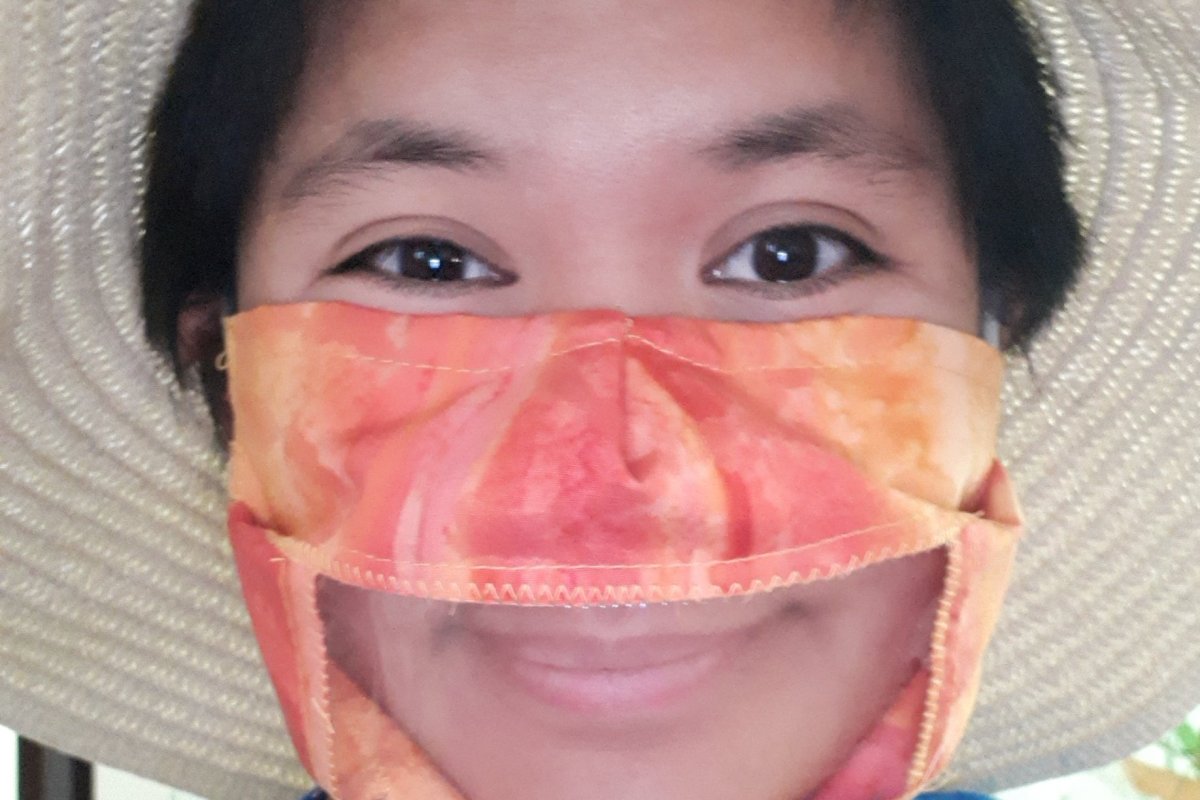
Woman wearing an orange fabric mask with plastic windown showing her smile, and wearing a straw floppy hat.

By: Giselle General

This is part of an ongoing series of posts discussion issues I personally encounter while taking public transit in Edmonton. Links to other posts will be added on an ongoing basis:

What is a Captive Transit User? I learned about the term for the first time from the City of Edmonton’s website. The easy definition is: someone who takes public transit because it’s the best (or only available) option for them to travel around. The part about feeling ‘captive’ comes from the restriction that sometimes comes up, perhaps because one is too poor to own and maintain a vehicle, one does not know how to drive, or for medical reasons, cannot operate a vehicle. In many ways, I relate to this a lot. Though I’m pretty fortunate to afford the occasional taxi ride, and with my husband having a car.

Time is money, and time is finite. At the same time, health is wealth. These are the different ideas I wrestle with whenever I think about how to travel to a location, as someone who cannot drive.

My family doctor’s clinic is located in a place that is accessible by public transit. At the same time, I’m aware of how long it takes to go there by walking. I’m very apprehensive about taking the bus right now because at this point in time, wearing masks is not mandatory, it is simply ‘highly recommended‘. I think, it is part of human nature, that if we can get away with NOT doing something, even if it is a small inconvenience, many of us tend not to do it. So what I did is walk the 45 minutes to get there and back. As the posters say, travel only when it’s essential. Might as well follow the advice.

Edmonton Transit Service Poster: COVID19 Update: Travel only if it's essentaial.

I’ve gotten so far as evaluating whether I’ll be capable or brave enough to consider biking to downtown. As I’m short and have a mediocre health levels, I always add 20% to the travel time that Google Maps recommend. If riding a bike takes 35 minutes, then for me it will be close to an hour, which is not bad. Is it worth the switch? But I think about my coworker who cycled to work who got hit by a car last December and was really badly hurt. That scares the daylights out of me. I don’t think I want another permanent dent on my skull. Falling of a mountain cliff and fracturing my skull once in my life is enough, thank you very much.

I heard perspectives that there will be frequent transit users that the system will lose due to COVID19. Unless the policy changes, I am one of them. Through my volunteering with the citizen-based volunteer government advisory board, the Edmonton Transit Service Advisory Board, I expressed my thoughts as clearly as I can. The chair of our board sent an official message to the councilors about the matter. While the outcome is not what we hoped for, there is some comfort in knowing that we made deliberate effort working with the government system in place.

White LRT vehicle on an outdoor train station platform.

In addition to the health-related aspect of wearing a mask, there is a safety component that I need to be more conscious about. As a woman, an Asian woman who visibly looks like one, I am aware of the additional hostility that Asian people are subjected to due to the pandemic. Comments such as “you bring coronavirus in Canada!” or “you’re a dumb sheep for wearing that mask”, can be hurtful, and potentially dangerous if the person saying them is being physically aggressive. That is the reality of sexism, racism and just overall xenophobia. One can argue that it is internalized victim-blaming, but there is merit in doing some preventative measures to stay safe. If I get hurt or killed by a racist, sexist person, I won’t get to continue my goals of living a positive life for myself and the people around me.

So this is where I am. Until mask wearing is more normalized, I will likely steer away from taking transit as much as I can. I might even take an Uber more frequently, given their firm policy of ‘No Mask. No Ride’. It will be interesting to see how transit policy changes in preparation for the upcoming school year.

Book Review and Thank You Letter: The Marrow Thieves

My workplace has a book club that continues to be active even while working from home most days. This is a thank you note, and a book review for one of the books we read, The Marrow Thieves by Cherie Dimaline.

Hi Coworkers,

I’m so happy that our book club is still going strong despite the current changes of having to work from home.

Also I’m sorry that I first slacked off with one of the books, this one, we were supposed to read for the book club. I’m super cheap and refused to buy any books, so I was waiting to get the e-book access from our local library and I was on hold. I’m so relieved that the book club meeting was pushed back by a few weeks. As things have aligned in my favor then. I got the book, and managed to read it just in time for the rescheduled book club meeting.

This is great book! I learned from our recent book club selections that I get emotionally intense when reading fiction books, and I have to stop reading them before bedtime. Because this is just as riveting and compelling for me.

My limited exposure to media and fiction work that has a post-apocalyptic setting, made me captivated when reading this book. It feels like the settings can be something that can happen in the foreseeable future. There are no fancy techno gadgets described in an elaborate manner, no comprehensive explanation on how the bone marrow extracted from indigenous people gets transformed into medication that enables the rest of the population to dream again, but as you read the chapters, you can feel deeply how this alleged ‘miracle cure’ has disrupted the lives of a particular group of people, and a fierce fight for survival has emerged.

In this case, one’s heritage and identity is double edged sword of something that one can be proud of, and something that you are hunted for. The precious commodity gave me an impression of analogies that can be associated similarly to elephants killed for their ivory tusks, or rhinoceroses hunted for their horns.

stack of books on a table with a person behind the stack, showing only their arms and shoulders

The hands on, gritty, on the ground, grueling experiences of survival is evident in every character, not just with Frenchie, the protagonist of the story. The reader can witness the elaborate coping mechanisms to keep a sliver of home, hope and sanity, weaving a fragmented sense of family from people you meet out of circumstance. For Frenchie, after shifting his mindset of letting go of his blood family and forming bonds with his ragtag family, it gets shaken up when one of the rarest of miracles happen, which is getting reconnected to a love one from when times were better. Frenchie getting reconnected with his father, caused friction as he felt conflicted about staying while pursuing his relationship with Rose. While Migwaans also was reconnected with his husband, since it was the last scene of the story, there wasn’t any elaboration on how this changed their lives moving forward.

I understand the reluctance of the older members of the group, when the youngest child RiRi insisted to know “Story”, the raw and horrific detail of what led them to the current situation they are in. Part of this narration os the real account of how the lands of North America were occupied by European colonizers, the impacts of the residential school system and its parallels to what is happening to the characters. Part of this narration is the environmental devastation that mankind has inflicted on the earth, a heavy hint of what our future can be in the forseeable future.

The elder Minerva is a key component to the story, a precious link to knowledge about their heritage and language. Frenchie first thought that for the girls in the group having to spend time with her is a drag because of Minerva’s quirkiness. But his opinion changed quickly after he discovered she is teaching the girls some of the words she knew. The symbolism portrayed from when she was captured and how she destroyed the medical apparatuses placed on her and the school that imprisoned her. Her death was devastating to the characters because of many things that she represents.

As someone who is a migrant to this country, my journey of learning about indigenous culture of the past and present, and this country’s history lasting impact on Indigenous peoples, is a work in progress I have to cultivate over the years. It wasn’t too long ago that through mainstream media, I’ve seen a two-spirit gay couple for the first time. So when I realized that Miggwans is in a similar relationship, I admit I was rooting for them more passionately, since there’s so few of them that I am aware of. To say I was jumping in joy at the last few paragraphs of the story, when he found his husband Isaac, is an understatement.

Shadow of two men's faces close to each other, about to kiss.

I’m gonna say it, our book club is really cool. Thanks for enriching my reading list, and I look forward to future books that we enjoy and talk about as a group.

The Process of Checking my Privilege: A Filipina-Canadian’s Perspective On COVID-19

At this rate, it would be just over three months since drastic measures have been implemented here in Edmonton to mitigate the effects of the pandemic. Given my line of work, my tendency to get involved in the community, and how I stay connected on social media, I get to witness how different people react, respond, and adapt to the current situation.

Checking My Privilege

The first time I heard this phrase thrown around, it gave me mixed feelings. Since, in many ways, I am not part of privileged groups. I constantly heard about the many ways that women are mistreated (which is true), how migrants are disadvantaged (which is also true), and how my plight as an orphan is tragic and pitiful (which, let’s face it, is also true in many ways).

But after participating in a few activities that encouraged people to check their privileges in all aspects, I had a more complex perspective and better appreciation of the idea, including things that are most certainly beneficial and not everyone has access to for no other reason that location and circumstance. Here’s a short list:

Public Transit: The fact that there is still transit service in Edmonton is a huge deal, since in places like the Philippines, many people are unable to go around since all public transportation is banned due to the lockdown. On top of that, public transit vehicles here are buses, which a nice and large vehicles and there is ample space to spread out and stagger seats for passengers. The LRT is also still operational which is wonderful! And, the icing on the cake, is that for some time paying public transit fare is suspended during this time. That’s quite incredible!

Person wearing white shirt soaping hands with white bar of soap

Access to Information: The ability to read, write and hear, particularly information written in the English language, ought to not be taken for granted during this time. Most of the government announcements and health information is in English. This came to light after a fellow Edmontonian who is involved in the community, was asking for donations of printing paper so she can print information about COVID-19 in languages like Urdu, Hindi and Punjabi. Another spotlight came from advocates for those who are deaf and hard of hearing, pushing anyone who product digital media these days to ensure that accessibility tools are the default. A volunteer in my office posted on Twitter, saying that being blind, info-graphics are useless, and photos don’t work well if there are no alt-text descriptions.

Uninterrupted Access to Utilities: I’m talking about water, internet, electricity and heat. I’ll say this over and over because it cannot be underestimated. It’s definitely more comfortable to stay in one’s home if these critical elements are in place constantly. From someone who grew up in an environment where electricity interruptions are normal, and when water is scheduled only to be available certain times a day, living in Canada where these are hardly interrupted still blows my mind. Think about this simple question: how can you wash your hands regularly when you don’t have constant access to clean water? I reflected on this on an earlier post, after visiting the Philippines and the homes I used to live in.

Government Benefits: Another term I learned a while back, that is highlighted during this time is the Social Safety Net. Applications for programs like CERB and loans for businesses, legislation to delay evictions for tenants are being passed on a faster pace than before. This is something to not take for granted and it’s always valuable to think critically on who benefits and who gets left behind. It’s incredible to witness both the praise and the criticisms of these programs. I think it’s a sign that people are being both proactive and vocal about how policies and programs affect them and those around them.

Back view woman looking at a laptop on a dining table

Having a Job, and the Ability to Work or Study from Home

Many office jobs can be done from home, and there are so many occupations that need to be done in person. The ability to smoothly switch over to working from home also depends on one’s current circumstances. There are many articles talking about inequalities based on region, internet speed available, having computers and laptop, and a privacy to join online meetings or classes with limited interruptions.

Our basement roommate just spoke to us as she was recently laid off, and given that she won’t be able to have enough money to pay rent, she is moving out by the end of the month (which is technically less than one month, as stated in our agreement). My husband and I stated that it’s not a problem at all, and we are sorry to hear about the job loss. She is moving back to her parents’ home when she won’t have to pay rent, and it is a stressful time for her. Stability through employment is something not to be taken for granted.

This is just a short list. I can go on and on. I think I’m writing this as an opportunity to express gratitude, count my blessings, and remind myself that as an individual, when these programs have gaps, there are many ways to fill them temporarily to help those facing a current crisis.