Recovering Political Candidate: Steep Cost and Sacrifices

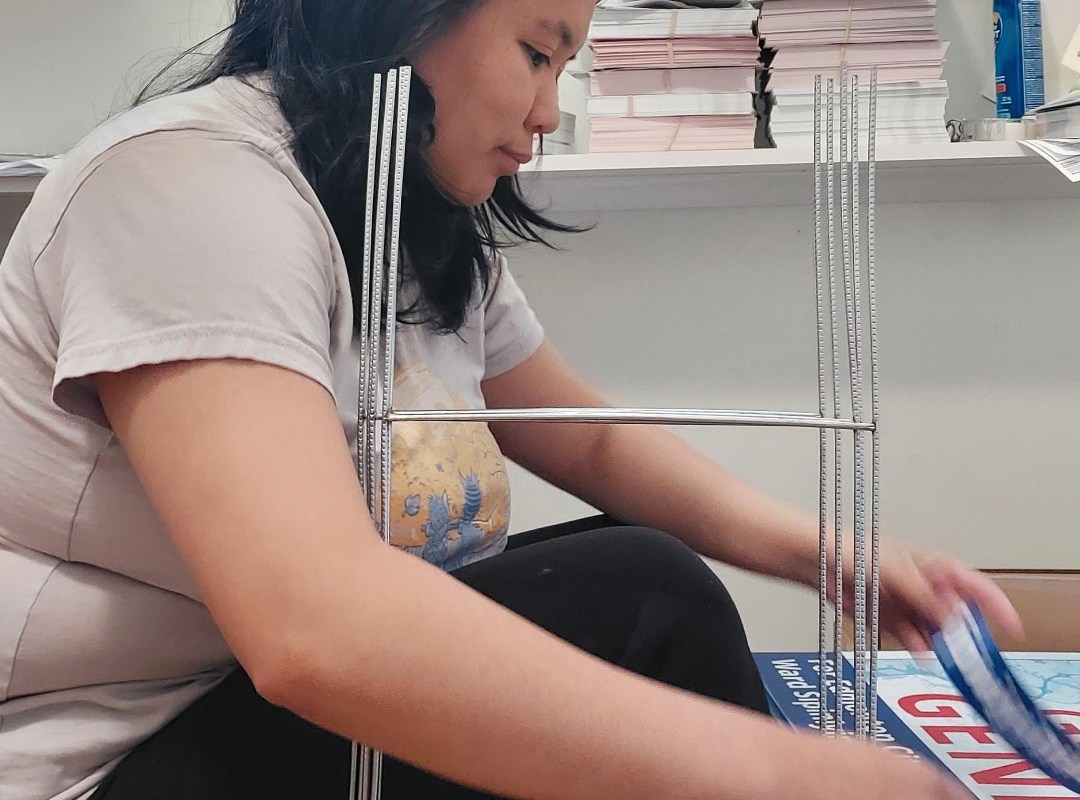
Giselle assembling lawn signs for the 2021 election campaign.

By: Giselle General

I suppose it’s kind of strange that I’m continuing the name of these series as “Recovering Political Candidate” given that I am running again. There’s already two posts I made as part of this series:

Then again, it feels like while I’m embarking on one, I’m still recovering from the previous one, unpacking all the things I’ve experienced and observed. Time gives perspective as they say, and going through the same experience again, I suppose this time for me, with four years of maturity, sheds things in a different light.

When people think about running for office, they often imagine debates, door-knocking, and campaign signs. But what most don’t see—and what few openly talk about—are the financial, professional, and emotional costs of stepping into the political arena. For those of us who come from working-class, immigrant, or marginalized communities, these costs aren’t just inconvenient. They’re systemic barriers.

As someone who immigrated to Canada as a child and became the first in my family to graduate from a Canadian university, I’ve experienced the unspoken challenges of trying to “break in” to political spaces while navigating real-life survival. I didn’t grow up around people who ran for office. My relatives didn’t work white-collar jobs or attend Chamber of Commerce lunches. Like many others, I was figuring it out as I went—sometimes fumbling, sometimes scraping by, always learning.

When I ran for City Council in 2021, I had to keep working full-time in the spring and summer with two months off full-time campaigning.

A time-tracking table. Each half-hour  for every day of the week is represented by one cell on the table. Times are color-coded as follows: Sleep, Personal Care, Meals, Chores, Commute to Work. Work. Family/ Friends social time. About 30 hours is not color-coded, representing the maximum hours that can be spent theoretically, on the election campaign.
I wondered what the true difference between a candidate who is campaigning full time compared to someone who is doing it after work. And it’s all the green blocks here, about extra 30 – 40 hours every week. That’s why I can’t help but wonder, even I’m technically adding more, would three months of full-time campaigning be enough?

I banked my vacation days and carefully budgeted unpaid leave. Not because I had the luxury to, but because I couldn’t afford to stop earning income. I later learned that many candidates take months off entirely, living off savings or family support. I didn’t have that option then.

In this second run, I’ve come to see just how many “norms” in local politics are built around people with financial privilege, professional networks, or flexible lifestyles. Here are just a few examples of the hidden costs:

Visibility Comes with a Price Tag

Being “present” at the right events such as fundraisers, business luncheons, galas, is often seen as a sign of seriousness. But tickets can cost $50 to $200 or more. Even free events often expect donations. Most happen during the workday, which means using time off or risking your job. And for women, racialized folks, and those with specific appearance pressures, just showing up polished and prepared costs time and money.

Running While Working Can Break You

There’s a quiet expectation that serious candidates go on leave to campaign full-time. But unpaid leave means lost income, and not everyone can afford that. Some of us push through by working during the day and campaigning at night, leading to exhaustion, burnout, or even injury. This is a real and unsustainable cost.

In 2021, my husband and I decided that I will never compromise on my sleep (so no all-nighters) that he will not be deeply involved in the campaign so we have a semblance of a healthy home life, and that the financial cost of taking a bit more time off work is worth it. We are hoping it will help prevent permanent injuries or trauma.

Starting Up A Campaign Isn’t Free

Even a modest campaign needs branding, a website, photos, flyers, signs. Unless you’re fundraising from day one or have wealthy donors ready to go, those expenses fall on you. There’s also pressure to appear “professional” which means a slick logo, high-quality materials, a polished online presence. That’s because anything less may be judged as unprepared or unserious.

While I’m re-using many supplies form 2021, I know if I don’t freshen up my style, it will be outdated and out of touch. There are many more cool apps and tools that help make things more efficient, and many are subscription based that can stack up if not kept in check.

Who You Know Matters – Much More Than Anticipated

I’ve spent years volunteering, organizing, and serving on boards, but I’ve also learned that social capital doesn’t always translate into campaign capital. Recognition and legitimacy are often reserved for those already plugged into elite circles or political dynasties. Meanwhile, working-class and immigrant leaders are often asked to “prove” themselves for years—often invisibly—before being seen as viable.

As a simple example, through my community service I knew of about 5 executive directors or CEO-level people from nonprofits. If many of them decline to publicly endorse me because of repercussions at their job, the list runs out pretty quickly. While someone with deeper networks and connections, whether it is because they had parents who are still alive and able, or who were also are politically connected, had a profession that already has a certain prestige assigned to it, or had lived in the area for much longer, the odds are definitely in their favour.

Where Campaign Schools Fit In

One thing that has been incredibly valuable to me has been participating in campaign schools—local and national programs designed to help women learn the basics of running for office. I’ve attended several, and I always leave feeling inspired and energized. They offer toolkits, checklists, and often a sense of solidarity that’s hard to find elsewhere. Being in a room full of women determined to lead and make a difference is powerful.

But for those just starting out, what’s offered in these programs is maybe 5% of what’s truly needed to launch a viable, well-resourced campaign. Turning that initial spark into a full campaign with traction, momentum, and infrastructure is a whole other challenge—especially if you don’t already have access to wealth, political connections, or campaign professionals.

That’s why these programs must not just continue—they need to grow. Campaign schools and women-in-politics initiatives should be more robust, more practical, and more deeply connected to the realities that many of us face: holding down full-time jobs, navigating care responsibilities, or entering spaces where people don’t expect someone like you to lead. We need to move from inspiration to implementation, and that takes sustained, tangible support.

What now?

This isn’t just my story. It’s a structural pattern. Politics in Canada, even at the local level, often functions as a gated space. Those gates aren’t always locked, but they are weighed down by money, time, and access. And the reality is, people from communities like mine often pay the price just to stand in the same room.

But here’s what I’ve learned: knowing these barriers doesn’t make me cynical—it makes me even more committed to change. Because if we want a city that’s truly inclusive, we need a political system that supports everyday people stepping into leadership.

That means:

  • Talking openly about the financial and emotional costs of candidacy.
  • Supporting candidates not just with votes, but with practical help—rides, printing, graphic design, donations, and more.
  • Reimagining what political legitimacy looks like, so it’s not based on your job title, who you golf with, or shared tables at a fancy gala, but your service to your community.

I’m still learning, healing, and unlearning as I go—just like many others. The journey of immigration, trauma, and over-responsibility doesn’t disappear when you run for office. But neither does the strength and wisdom that comes from living through it.

So if you’re thinking of running someday, or if you’re supporting someone who is: know that it’s okay to ask for help. To name the barriers. To build slowly and strategically, even if you don’t have all the traditional tools.

The more of us who show up authentically, the more we change what “leadership” looks like in this city.

I’m still willing to spill the tea!

And I’ve offered this before and I will emphasize it again. If you are interested in running for politics and wanted to know how it really looks like for someone who was described as marginalized, underdog, non-conventional candidate, who is an everyday worker and attempted to do this in 2021, I’m willing to tell it all. While scheduling might be trickier because I have to hustle even more to make up for what I’m lacking, I’m willing to share the numbers, the details of the years of planning, the financial and family decisions, the spreadsheets and timelines I aimed for, I reached and I missed. Talk to me, and I will share the real deal of my experiences. Not to scare people off, but to be more equipped.

Recovering Political Candidate: What I wish I Knew

By: Giselle General

Sometime in December 2023, I was contacted by a researcher who is working on a paper asking for the financial barriers faced by women running for public office. Did she ever find the right person willing to talk and vent about this very topic! I was connected to her through a national organization that aims to encourage women to run for public office.

I shared what I knew and gave so much more information that the questions she outlined in her 3-page questionnaire. I truly hoped I didn’t sound too grouchy when I explained all the potential barriers, both ones I experienced personally and broader patterns I’ve observed.

Despite the fact that my candidacy was coming up to three years ago, I remember many things that I wished were more clear during the campaign workshops and campaign toolkits that I accessed between 2017 – 2021.

So here is a short list of what I wish I knew.

  • About the “social etiquette” in Canada, Alberta, and Edmonton when it comes to door-knocking. I didn’t feel confident enough to reassure volunteers on how to handle different types of situations such as homes having no mailboxes, the “no soliciting” signs, entering gates and how long to wait at the doors.
  • How to handle conversations with one’s employer on handling things such as time off, salary and using vacation days and reputation management for the workplace. I think I handled it okay, but if I had more information I would have been less terrified.
  • The range of options on how to handle the election campaign with family members.
  • Exercise routines to help manage pain and soreness from walking, standing a long time, using mobility aids (like my walking cane) for a long time, hand care (from knocking on all the doors), and more.
  • Personal finance budgeting once the motivation to run is there. This includes saving for money for taking time off from work to do campaigning full time, money to initially fund election expenses, budgeting some extras that may be needed such as replacement shoes, therapy appointments, pens, umbrellas, or takeout food.
  • Options for campaign finances, as in ideas of what a low-budget, medium-budget, and a high-budget campaign can potentially look like, as it took me too long to decide whether I should get one digital billboard or one bus bench.
  • Tips and tricks to coordinate with landlords to connect with apartment residents, as this process also took a lot of time coordinating while being afraid I might be somehow breaking some election rule that I was never aware of.

I will likely talk about this more in future posts. In the meantime, I eagerly look forward to the research publication talking about this topic.

Everyday people that wanted to participate in the political discourse in this very important way should feel confident in their ability to do a decent job. They should not feel demoralized by obstacles that seem systemic in nature.

To conclude, here’s the copy of the post I wrote for the Alberta Filipino Journal back in 2021 during the beginning of the actual campaign.

General Point of View: Trailblazing and Smashing Ceilings – The Journey of a First-Time Elections Candidate

By: Giselle General, April 2021

This election candidacy is a journey five years in the making.  Here is a reflection on my experiences as of this date as someone running for the first time.

A main challenge is informing people on different topics. There are many issues that affect our daily lives, and it can be difficult to remember which level of government is responsible. On top of that, there are issues that are a shared responsibility between the municipal, provincial and federal government. So it is important for me, my campaign team, and other candidates to be informed and patient when discussing with others.

The electoral district boundaries not only changed in composition, but also the names have changed. They are changed from numbers to Indigenous names. I think the names are beautiful and meaningful, but many are frustrated and unwilling to learn. I can personally attest that all it takes is practice, just like learning Asian geography back in high school. After a few rounds of practice, I can confidently say without missing a beat that “I am running for city councillor for West Edmonton, the ward of sipiwiyiniwak!” Those in ward Dene and O-day’min will have an easier time, while those in ward Ipiihkoohkanipiaohtsi would need to practice a few more times.  

I found out that apartments and condo buildings are usually ignored by campaign teams. I found this shocking and unacceptable! Because most apartment buildings are rentals, this means that many people who are not homeowners and from lower economic background are not given the same opportunity by election candidates to share their thoughts about political matters. No wonder the voter turnout in municipal elections is only 30%. Like a spark that ignited in me, I felt a fierce sense of determination to go against the tide and find ways to connect with people living in higher-density places. I hope that landlords and building managers would cooperate with my campaign team so we can engage with residents effectively and safely.  

A harsh and true advice I received was “you need a lot of money”. And I don’t have a lot. I feel motivated to find creative ways to compensate for the shortage of money, and fun ways to raise money and support. From virtual dance-a-thons as a fundraiser, using social media for marketing instead of spending money on billboards, and asking volunteers to drop off brochures instead of paying Canada post thousands of dollars, the ideas seem to be endless. Necessity is the mother of invention as they say, and I’m excited to find innovative ways to connect with potential voters and supporters. I hope that I get hundreds of volunteers from all walks of life, and that even those who cannot vote yet, the newcomers and under 18 years old, feel inclined to join the campaign team as well.  

The election day is in October, and given how time feels like it’s slipping through our fingers, it will be here before we even realize it. All the spare time I have, between breakfast and starting work, between dinner and bedtime, between laundry and cooking on the weekends, are occupied by the seemingly endless tasks to gain more resources, to recruiting volunteers, to ensuring we consult with people with different perspective. Door-knocking officially starts in May and I’m eagerly looking at the calendar counting down the time.  

I am excited to be transformed by this experience. I suppose, turning 30 years old this year also highlights the significance of this adventure. I’d love to win of course, but it’s more that that. My hope is that I am just one of the many people from under-represented backgrounds, of the women, the young adults, the migrants and the Filipinos who would take the leap and throw their name in an election race. I hope that my experience can serve as inspiration and a resource guide in navigating an election candidacy that appropriately considers the complications that arise from our lived experiences. If I don’t end up being that trailblazer, I hope that someone else does not too long after I run.  

“I’ll Make it on Time, I Think?” The Captive Transit User Series: Part 3

By: Giselle General

This is part of an ongoing series of posts discussion issues I personally encounter while taking public transit in Edmonton. Links to other posts will be added on an ongoing basis:

What is a Captive Transit User? I learned about the term for the first time from the City of Edmonton’s website. The easy definition is: someone who takes public transit because it’s the best (or only available) option for them to travel around. The part about feeling ‘captive’ comes from the restriction that sometimes comes up, perhaps because one is too poor to own and maintain a vehicle, one does not know how to drive, or for medical reasons, cannot operate a vehicle. In many ways, I relate to this a lot. Though I’m pretty fortunate to afford the occasional taxi ride, and with my husband having a car.

Volunteering and attending events take me to many parts of the city. Whenever people I chat with ask how I got there, and I say “public transit”, there’s a short flash of sympathy on their faces, followed by a slight grimace. One of the reasons is because they know and I know, how much time it takes to get around.

Taking transit, or at least using this method to get around, should never replace a car in terms of speed. I think that’s mindset flaw that many people have, particularly those who drive.

But I am not going to deny the fact that it does take a lot of time to get around places, while being optimistic that the connections that a transit user has to take actually work. Given the realities of travel, traffic, construction, and winter conditions cause a lot of delay. Missing connections cause stress and can discourage people from using public transit, or worse, grudgingly use it day in and day out, while making plans to get out of ‘feeling trapped’ as soon as possible, which is in the form of getting a car.

Frequency and convenience are two important factors that influence the appeal of taking transit.

Honestly, this is why I have mixed feelings with the Bus Network Redesign on a personal level.

First, the very micro-thinking, self-focused, part of me laments that I will lose the frequent bus stop that’s just a few steps away from my house. It’s so close, I shovel snow off the bus shelter during the winter, haha! I mean, the bus stop will not be removed altogether, it will be replaced by a less frequent, local bus route. The frequent major route is a 13 minute walk away.

Second, the solution-focused part of me is curious on how I would adjust to a 7 minute walk eastward, or a 13-minute walk northward to one of the several new, frequent bus routes. The 13- minute walk northward is a more familiar setup for me since I have done the same route on the weekends when taking certain buses. The idea of hopping on a bus that comes every 8 minutes is quite appealing. And since I’m an office worker who sits on my bottom most of the day, I suppose that a walk is actually a healthy thing to integrate in my daily routine.

Finally. the big-picture, community-oriented side of me is hopeful that once this new set of routes and schedules are implemented, there will be some hard evidence that will encourage the city to tweak things for the benefit of Edmontonians. Because I volunteer for our citizens -based government advisory board on public transit, I learned that revamping a city’s entire public transit network is something that many North American cities are going through right now.

The busy and fast paced way we are living our lives, pushes people to do things the quickest way. Traveling is one of those tasks that people don’t always have time or patience for. This is an important consideration when planning, changing, and implementing effective transit services.

Managing Winter Without Driving Yourself Nuts

By: Giselle General

Living in Canada comes with a huge adjustment coming from one thing: winter! Even those who lived in colder regions like the Cordilleras or Tagaytay in the Philippines, are not spared from the shock, the pain, and the hassle from having to deal with temperatures that rival our refrigerators and freezers. This list is a small collection of different techniques on managing the season, especially in a place like Edmonton where winter can get cold and long.

Have a person who appreciates your city. My spouse is a born-and-raised Edmontonian so I am lucky in that regard. This has helped us do activities (both winter related and not winter related) to keep us from feeling too trapped in the house all the time. If there isn’t one, be that person!

Have a positive, or at least neutral, emotional reaction to winter-related household chores. The complaining will likely only compound the sting of frigid weather as you shovel the sidewalks, brush off the snow of the car windows, or sprinkle gravel when it is zero degrees and everything starts to get icy. Procrastinating on winter clearing tasks can actually make them more difficult or more expensive. Snow that is already packed in or stepped on is heavier and more difficult to scrape off. Ignoring the draft on a window or door that is not sealed can increase one’s heating bill. Denying that patch of ice on the sidewalk or stairs can cause an accident.

Learn about and appreciate what your government does when it comes to snow clearing. Snow clearing is the responsibility of the municipal government for roads and public places. Follow the law on what happens right after a large snowfall such as the parking ban, which means not parking your car along a road so the machinery can clear snow effectively. Another important task – and it is the law – is clearing the snow in front of your home, business or any other building you own. It may be a drag, but perhaps thinking of this as following the principle of “tapat ko, linis ko” can be a motivation. That saying translates to something like “It’s my ongoing duty to clean and maintain the space in front of me”. And if something that is supposed to be cleared by government staff was not done properly, it’s okay to send a report – they are not going to kill you! Any resident can call, email or use the 311 app to mention what needs to be fixed and its location.

Walking safely in winter. A mantra I have started to deliberately embrace is “better late than injured”. It took me three years to eventually hear about the “penguin walking technique” to minimize the likelihood of slipping when the pathways are tricky. I have yet to learn how to land safely when I inevitably slip, though I kept on hearing that it’s better to fall backwards on your butt than falling forwards on your face.

Try at least one winter activity and it doesn’t have to be an expensive one. The simplest is going for walks in our River Valley Trails. They are beautiful at all times of the year and it’s such a sight in the winter! Community leagues and churches in your neightbourhood will likely host at least one winter-related activity and our city has lots of winter festivals! Candy Cane Lane is a must-visit at least once. Our city even has a website specified for this, called Winter City Edmonton, where you can learn more information about different activities, both outdoor and indoor that you can try during the season. And if you are the charitable type, there are different fun walks/ fundraisers you can participate in that not only helps those who are most affected by winter and homelessness, but shares a valuable perspective about living during winter. There are lots of them, but two examples are the Coldest Night of The Year and Cold Hands Warm Heart.

Proper winter gear is a form of essential self care. To the Filipinos out there: during typhoon season we would want to be well equipped with an umbrella and raincoat right? It’s the same thing with winter. Find the pair of gloves that work with you and get an extra pair. There are anti-slip ice cleats that you can put on your shoes to make your walk less slippery. There are even rechargeable heated insoles for your shoes to keep your feet from freezing. There are attachments to help handling the snow shovel more easily so you won’t hurt your back. These items are worth it. Caring for your health and protecting your body is worth it.

Small talk about weather is fine, but don’t stop at the complaining. I think it’s a Canadian norm here, that at the lunch table or as a casual conversation topic in an event, the first topic is about the weather. That in itself is OK, but if it’s winter, it usually focused on complaining about how cold it is. I think this perpetuates that winter is nothing but awful, when it’s just how it is. I encourage anyone to insert something to make the conversation more positive or more interesting, perhaps talking about any topic related to the tips above. A volunteer lawyer at work was the first one who talked to me about the anti-slip ice cleats, so our conversation ended with a vibe of gratitude. A colleague during lunch talked about the Coldest Night of the Year fundraiser, and I left that conversation amazed at the community initiative. Another colleague lives in an acreage and tells all these adorable stories about the wildlife that roam around during winter.

There is beauty and adventure and excitement that can only be had during this season, and the not-so-fun stuff is actually just as manageable as mowing the lawn in the summer. I hope that some of these tips are helpful and that you can find other ones that keep you warm, safe and happy during winter!