By: Giselle General
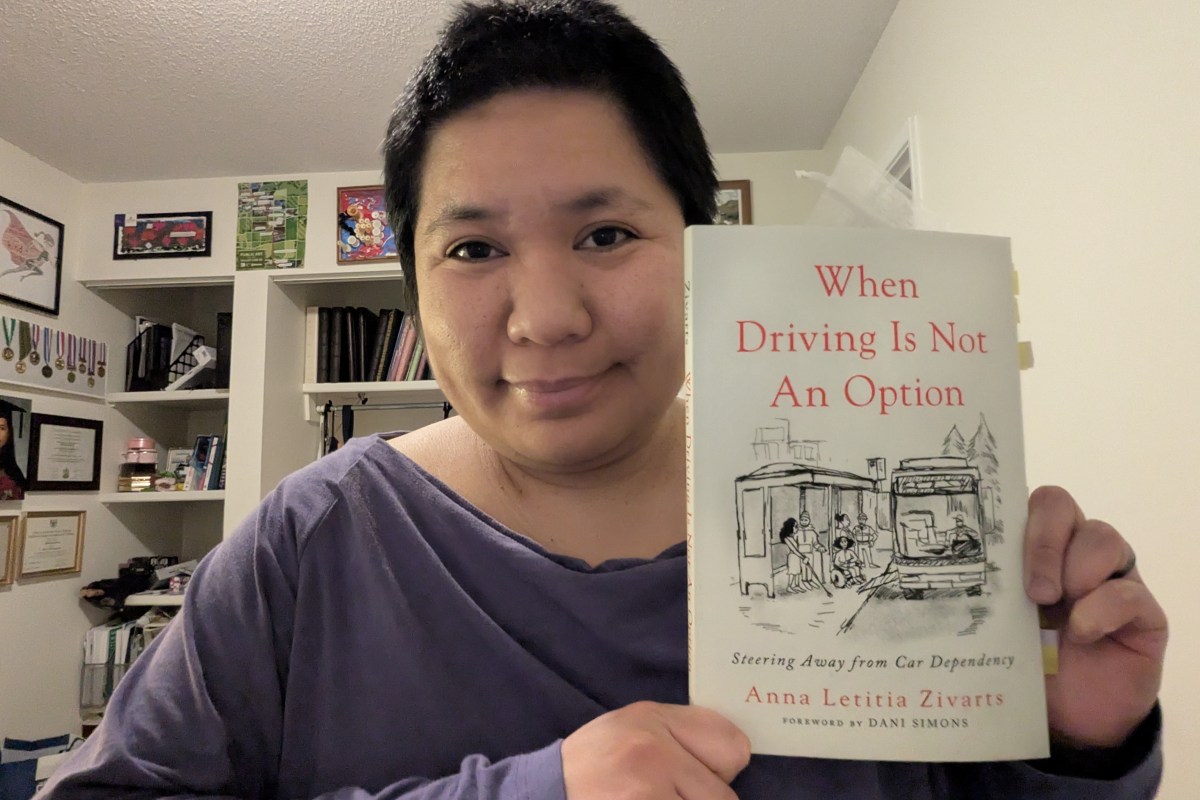
Having the opportunity to hear an expert talk about an important subject matter, and then read their book on the topic to further enrich one’s knowledge is a great experience. While it took place technically during the midst of the 2025 municipal election, it felt like a refreshing break from the typical politicking that I had to do. So this is my Thank You letter and book review of the book When Driving Is Not An Option by Anna Leticia Zivarts.
Dear Anna,
I remember being excited and curious when I received the invitation by an organization called Paths for People during the 2025 Edmonton municipal election and they are having a event which includes you coming to deliver a talk about the experiences of non-drivers. Lord knows that by then, which is late September, I’m worn out from doorknocking and all the typical political candidate activities. When I heard this event was planned specifically for candidates, I happily took the chance to attend this talk and trade a few hours of door-knocking.
I remember being particularly amused at your question to the crowd of candidates and other enthusiasts on the subject of urbanism transportation and mobility.
“Who here is a non-driver?”
Of course I had to raise my hand and enthusiastically say “me!”
The giggles from some of the audience were because they knew of my situation already and I have been vocal about it in the past. But what I found striking is that I was the only one. Even when you were encouraging the audience to participate by sharing their experiences, some have shared stories of challenges they had before shifting to driving more often, or second-hand stories of people in their lives who cannot drive.
I appreciate the conversation during the book signing and how I said I am interested in helping up further in any interviews or discussion about the experiences of people who cannot drive.
After the election, where I didn’t win, once I had the chance to clean up most of my clutter from the election supplies, I managed to find time to finally read the book as a way to both relax and learn.
I will be the first to admit, I haven’t read a lot of nonfiction books that talk about urban planning, transportation or even municipal issues. I think reading this book has set a standard on what to expect in other content I read or watch on this topic and many others that municipal or transportation nerds are likely to consume.
First off, the cover and even the title. The art on the cover really resonates with me as my almost daily experience getting around Edmonton – from the bus shelter, the range of passengers and the bus. I like the visible representation of people with a wide range of mobility needs. In drawings or stock photos I’ve seen around, usually there is only one visible representative of a person with accessibility needs, so the fact that there is someone with a cane and a wheelchair already stands out.
The breakdown of the different categories of people who cannot drive was presented in a way that I haven’t considered before and your presentation during the talk sums it up well. So when I read the book I was already prepared to dive in deeper to these group that are not always recognized when it comes to transportation options. Chapter 1 being titled “Nondrivers are Everywhere” has a clear goal of highlighting all the different ways that people are not able to drive. Financial reasons affect larger parts of the population than it seems. Medical reasons indeed are a factor, and it can either stop someone who used to be able to drive, or prevent someone from driving in the first place. I truly believe that in discussions about transportation, children and youth who are not yet able to drive are hardly recognized at all, and it’s great that this was discussed meaningfully.
I appreciated how many ways that examples are outlined, ranging from photos of different locations, direct quotes from interviews, and narrations from your conversations with our fellow non-drivers. They were presented as if they were sharing their experiences to me directly, or at least, like a participant in the talk who raised their hand to participate.
Given the length of the book, I really liked how there was so much content on items that are actionable, basically starting from Chapter 3, page 78. The epilogue is concise and potent, with a great range of actions people can take, with my favourite one being “treat the sidewalk like a highway” because I think that for people who drive, that is the most drastically different.
Another great part about this whole experience, from the talk to the book, is the opportunity to continue our conversation and hopefully, big picture advocacy in making mobility better for everyone.
When it comes to labeling myself based on how I get around the city, the term I’ve used for a long time is “captive transit user”. It’s a term I’ve used often when I volunteered for the city’s advisory board for six years. Learning the term nondriver gave me an alternative that resonated well and also is more flexible. The former implies that the person’s transportation barriers are resolved by taking transit. The latter implies that people who cannot drive resolve their transportation needs in other ways, including walking, biking, asking others to drive them, or the worse option, not going out at all.
I was thrilled to receive your email requesting an interview to delve deeper on my experiences and insights. The interview was really wonderful and I look forward to seeing the future publication that will help share the insights you collected from me and many others. At the moment, the social media algorithims still show your posts so I also manage to keep up to date that way.
My offer to host you in Edmonton to walk around and take public transit in winter is still open and I hope that you visit our city again soon. Maybe it will be when the new LRT line from downtown to the west end is officially running, but then again if you come beforehand, the experience of being a nondriver in an area with an LRT construction zone for half a decade can be a great learning opportunity too.
So thank you again for this great book, the opportunity to hear from you and I look forward to continuing to read and share your insights on ensuring that everyone can get confidently get around in their communities, regardless of method, age, ability and finances.