Book Review and Thank You Letter: When Writing is Not an Option by Anna Letitia Zivarts

By: Giselle General

Having the opportunity to hear an expert talk about an important subject matter, and then read their book on the topic to further enrich one’s knowledge is a great experience. While it took place technically during the midst of the 2025 municipal election, it felt like a refreshing break from the typical politicking that I had to do. So this is my Thank You letter and book review of the book When Driving Is Not An Option by Anna Leticia Zivarts.


Dear Anna,

I remember being excited and curious when I received the invitation by an organization called Paths for People during the 2025 Edmonton municipal election and they are having a event which includes you coming to deliver a talk about the experiences of non-drivers. Lord knows that by then, which is late September, I’m worn out from doorknocking and all the typical political candidate activities. When I heard this event was planned specifically for candidates, I happily took the chance to attend this talk and trade a few hours of door-knocking.

I remember being particularly amused at your question to the crowd of candidates and other enthusiasts on the subject of urbanism transportation and mobility.

“Who here is a non-driver?”

Of course I had to raise my hand and enthusiastically say “me!”

The giggles from some of the audience were because they knew of my situation already and I have been vocal about it in the past. But what I found striking is that I was the only one. Even when you were encouraging the audience to participate by sharing their experiences, some have shared stories of challenges they had before shifting to driving more often, or second-hand stories of people in their lives who cannot drive.

I appreciate the conversation during the book signing and how I said I am interested in helping up further in any interviews or discussion about the experiences of people who cannot drive.

After the election, where I didn’t win, once I had the chance to clean up most of my clutter from the election supplies, I managed to find time to finally read the book as a way to both relax and learn.

I will be the first to admit, I haven’t read a lot of nonfiction books that talk about urban planning, transportation or even municipal issues. I think reading this book has set a standard on what to expect in other content I read or watch on this topic and many others that municipal or transportation nerds are likely to consume.

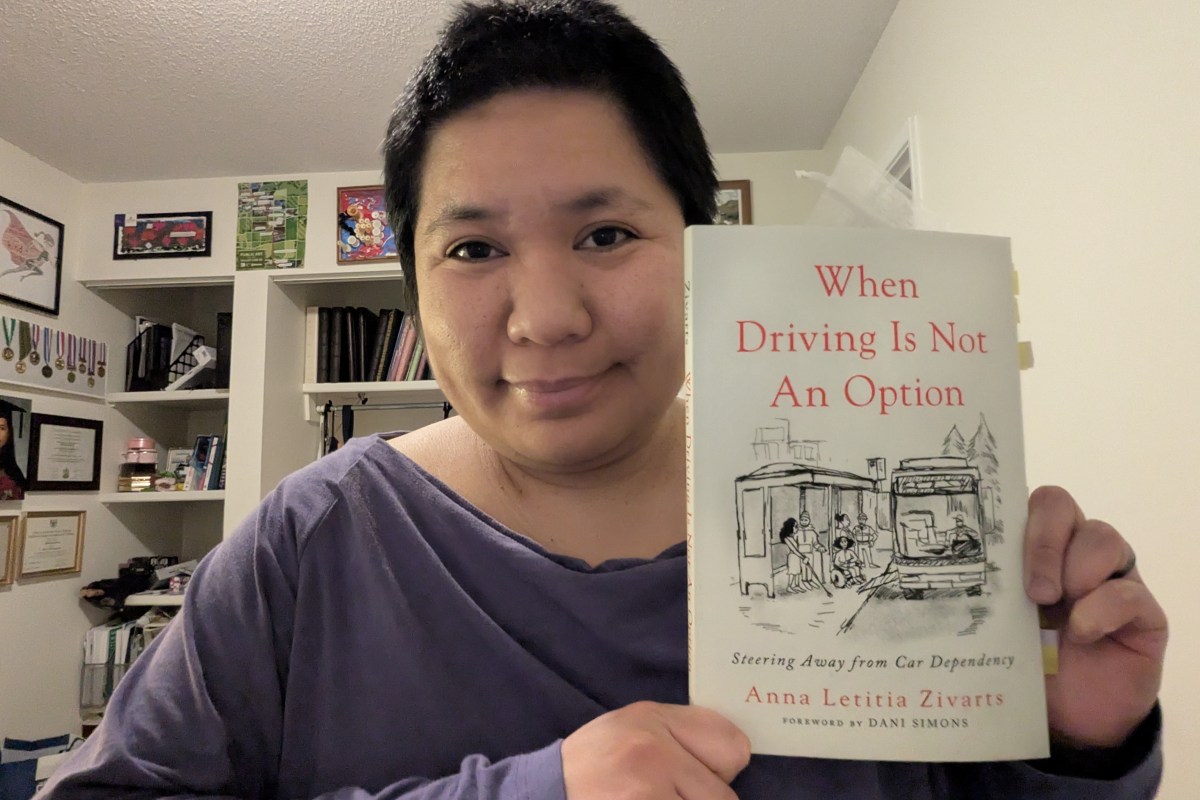
First off, the cover and even the title. The art on the cover really resonates with me as my almost daily experience getting around Edmonton – from the bus shelter, the range of passengers and the bus. I like the visible representation of people with a wide range of mobility needs. In drawings or stock photos I’ve seen around, usually there is only one visible representative of a person with accessibility needs, so the fact that there is someone with a cane and a wheelchair already stands out.

The breakdown of the different categories of people who cannot drive was presented in a way that I haven’t considered before and your presentation during the talk sums it up well. So when I read the book I was already prepared to dive in deeper to these group that are not always recognized when it comes to transportation options. Chapter 1 being titled “Nondrivers are Everywhere” has a clear goal of highlighting all the different ways that people are not able to drive. Financial reasons affect larger parts of the population than it seems. Medical reasons indeed are a factor, and it can either stop someone who used to be able to drive, or prevent someone from driving in the first place. I truly believe that in discussions about transportation, children and youth who are not yet able to drive are hardly recognized at all, and it’s great that this was discussed meaningfully.

I appreciated how many ways that examples are outlined, ranging from photos of different locations, direct quotes from interviews, and narrations from your conversations with our fellow non-drivers. They were presented as if they were sharing their experiences to me directly, or at least, like a participant in the talk who raised their hand to participate.

Given the length of the book, I really liked how there was so much content on items that are actionable, basically starting from Chapter 3, page 78. The epilogue is concise and potent, with a great range of actions people can take, with my favourite one being “treat the sidewalk like a highway” because I think that for people who drive, that is the most drastically different.

Another great part about this whole experience, from the talk to the book, is the opportunity to continue our conversation and hopefully, big picture advocacy in making mobility better for everyone.

When it comes to labeling myself based on how I get around the city, the term I’ve used for a long time is “captive transit user”. It’s a term I’ve used often when I volunteered for the city’s advisory board for six years. Learning the term nondriver gave me an alternative that resonated well and also is more flexible. The former implies that the person’s transportation barriers are resolved by taking transit. The latter implies that people who cannot drive resolve their transportation needs in other ways, including walking, biking, asking others to drive them, or the worse option, not going out at all.

I was thrilled to receive your email requesting an interview to delve deeper on my experiences and insights. The interview was really wonderful and I look forward to seeing the future publication that will help share the insights you collected from me and many others. At the moment, the social media algorithims still show your posts so I also manage to keep up to date that way.

My offer to host you in Edmonton to walk around and take public transit in winter is still open and I hope that you visit our city again soon. Maybe it will be when the new LRT line from downtown to the west end is officially running, but then again if you come beforehand, the experience of being a nondriver in an area with an LRT construction zone for half a decade can be a great learning opportunity too.

So thank you again for this great book, the opportunity to hear from you and I look forward to continuing to read and share your insights on ensuring that everyone can get confidently get around in their communities, regardless of method, age, ability and finances.

Book Review and Thank You Letter: Frostbike by Tom Babin

Giselle holding the book Frostbike. Her husband's bike is behind her.

By: Giselle General

A few weekends ago, I visited someone near my home to talk about different neighbourhood things and the upcoming election. That late morning visit was lovely and veered into a conversation about winter cycling, something my husband just started to do in 2024 when the snow hit. As a result, she enthusiastically offered to lend this book that I immensely enjoyed. So to this neighbour, who also gave me a sample pack of roibos tea from a local tea shop, this is a Thank You letter and review of the book Frostbike, the Joy, Pain and Numbness of Winter Cycling, by Tom Babin.


April 19, 2025

Hi neighbour,

That winter morning was frosty, but my hands felt better right away from how you welcomed me to your home, with a cup of tea. The great conversations about my post the day before about someone wanting to organize an English-learning initiative for newcomers in the neighbourhood was even lovelier. As we chatted about different matters, the inevitable half-complaints about winter came up. Then I shared that my husband tried biking to work once a week since the summer, with this season being his first time winter biking.

I was so delighted that you were delighted to hear about this, and shared all your experiences biking from your neighbourhood all the way to the core of downtown. I appreciated your observations on your experiences as a cyclist and how the service roads, sidewalks, shared-use paths and the dedicated bike lanes affect your ride. That you were looking forward to the warmer weather since you are quite faster on the bike then driving at times. So, when you enthusiastically offered to lend me the book Frostbike for my husband to read, I happily took in home.

The thing is, my husband is a digital book reader these days. He’s quite happy with the app from our local library and been reading books regularly. So I ended up being the one who read the book. The fact that the author in Canadian, and Albertan at that, was a particular draw to me. This is not someone who lives overseas – this is someone with relatable and relevant experience, who lives only a 4-hour drive away.

I liked the way the table of contents was outlined, and how the information and stories started growing in scope. Starting from his personal journey of biking, building and acquiring bikes to help him get cycling in winter. Then the second part is about his assessments of locations, both local and abroad and their winter cycling infrastructure. Then the final part went even broader, the collective thoughts, sentiments and culture not just about cycling, but about winter in general.

Perhaps because I haven’t had a lot of exposure to writing based in Calgary – whether it is fiction, non-fiction, or journalistic, the book gave me the very first deep explanation of the chinooks. It went in detail how that weather phenomenon affects people who live there – from huge migraines from temperature and air pressure changes, to the drastic change from ice and snowbanks to deep watery cold puddles on roads and sidewalks in just a matter of hours. I mean, I’m not a fan of being splashed by cars when I’m on the sidewalk, I can only imagine it being worse down there.

The author’s experiences with biking in the winter reflected what my husband shared to me these past few months. That compact snow is ideal. Ice is more manageable that some would assume. Studded tires make a huge difference. Soft snow and slush is the worst, even more when they are combined with bits of mud, sand and gravel. Putting salt can be described as “the devil you know”, very useful for traction, but damaging in many other ways. Biking at -20 or -30 weather is more doable than anticipated. That car drivers being impatient and hostile is one of the worst things about cycling. And yes, the way infrastructure is laid out plays a very big role in how pleasant or save the bike ride could be. I’m so grateful though that my husband got actual studded tires right away. I definitely would not let him get away with the author’s first attempt at using flat screws on a conventional bike wheel. I do a lot of DIY stuff, but that’s too far. As I always say to my husband – safety first!

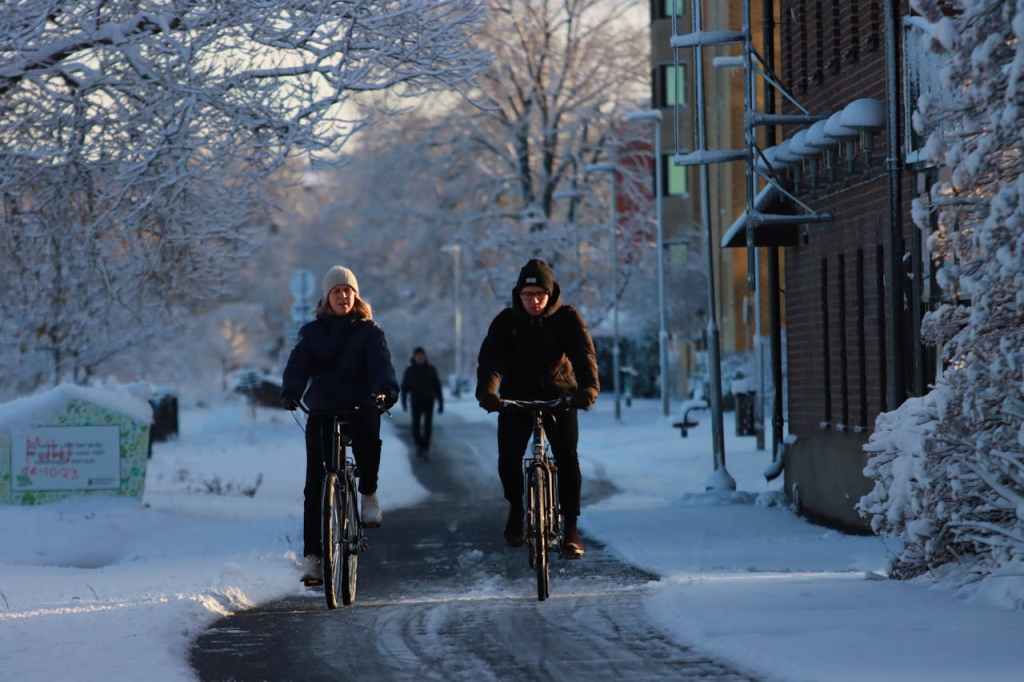
Two people biking on a bike path in winter. Everything, except for the actual bike path, is covered in snow.

The section that talked about the different cities in Europe that have enviable cycling infrastructure was fascinating to read. I empathize with the author’s struggle with not finding the perfect ‘silver bullet’ solution that can be easily copied over to North America, especially in cities that are much bigger compared to the smaller Scandinavian cities. A common pattern is those European cities is the practical normalization of biking all year long, which makes the seasonal switch to winter biking more manageable. The cities described made me realize the truth of the advocacy statement I’ve heard so many times here in Edmonton: build it and they will come.

As someone who doesn’t cycle, the chapters of the last section resonated with me the most. The author started to probe deeply on how pop culture and casual interpersonal interactions over the decades talk about winter so negatively. This I completely agree, and I find a bit frustrating. The pity that people cast towards me when I said “I walked less than half an hour to get here” is so intense. Music, media, TV, movies and songs definitely portray winter as harsh, relentless and something to escape from.

He argues that our negative impressions of winter are holding people back from something positive (or even practical) like winter cycling. I’d say that it is also holding people back from doing even just short walks in the winter! As an immigrant, I have had enough stories and warnings about how awful winter is, so this definitely tracks.

Edmonton had an initiative now for a few years called Winter City Edmonton, to encourage people to seek out interesting and exciting activities to do during winter, such as the winter festivals. And this year, the encouragement also had a different direction, to get people to do more of the typical fun activities but with a winter twist, such as going to a restaurant with a winter patio. I think that the next step should be encouraging doing everyday transportation while being prepared for winter, not wanting to escape it as quickly as possible. With heated cars (that even have heated seats and heated steering wheels), well-insulated buildings, and high-tech cozy winter wear might have contributed to people rejecting the notion of winter altogether, rather than having a practical mindset of it being a regular part of the day. This is what is needed to encourage people to have infrastructure to make walking and cycling manageable all year long. To quote the book when talking about cycling in those European countries “I found a similar practicality: winter didn’t seem to be the enemy, it just was.

I really enjoyed this opportunity to learn from a long-time winter cycling enthusiast what my husband went through, and what the passionate folks in the city are talking about. I know in a few years I would consider getting a bike again, but for now, I feel more informed in understanding where people are coming from, as far as the other transportation methods that don’t involve the car.

So thank you! I hope your biking this year, now that the snow is gone and I think we are past the second “false spring” is going well so far. Maybe my husband will see you on the trails or roads, and perhaps I also will in the future. I bet that if the Coffee Fridays YegBike community has a book club section, they would talk about this book. It’s safe to say, they probably already had.

In Pictures: Indoor Garden Maintenance in Winter

By: Giselle General

On a previous post, I mentioned about our monthly routine to take care of all our indoor hydroponics gardening that we named “Plant Maintenance Day”, which we just completed today. I thought it would be cool to show a glimpse of the process to make sure that the plants are as healthy as they can be and that the equipment lasts as long as possible.

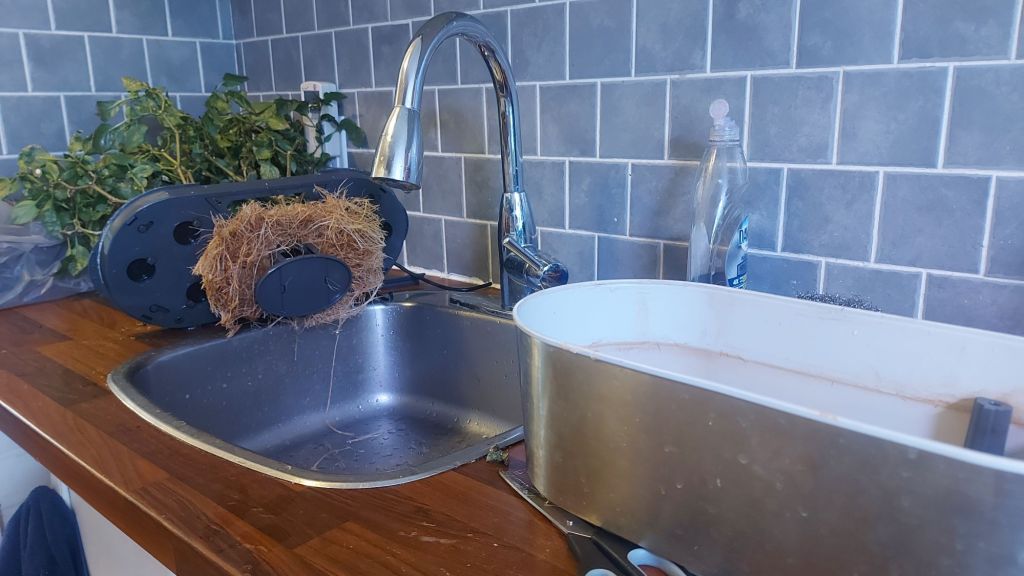
Newer models of the Aerogarden are much easier to clean, just like this oval shaped unit with no strangely shaped components inside the water basin. This basil plant looks overall healthy, although the slightly brown shade of the roots is a slight concern.
This Jalapeno plant is getting tall, and the clear roots is a sign that it’s healthy. We just harvested dozens of peppers a few weeks ago and there’s more that are developing. It is nice to see the roots while I washed the underside of the plant unit.
I’m so relieved that our sink has one of those faucets with a movable spout as it makes filling water in containers easier, including for the planters after washing them.
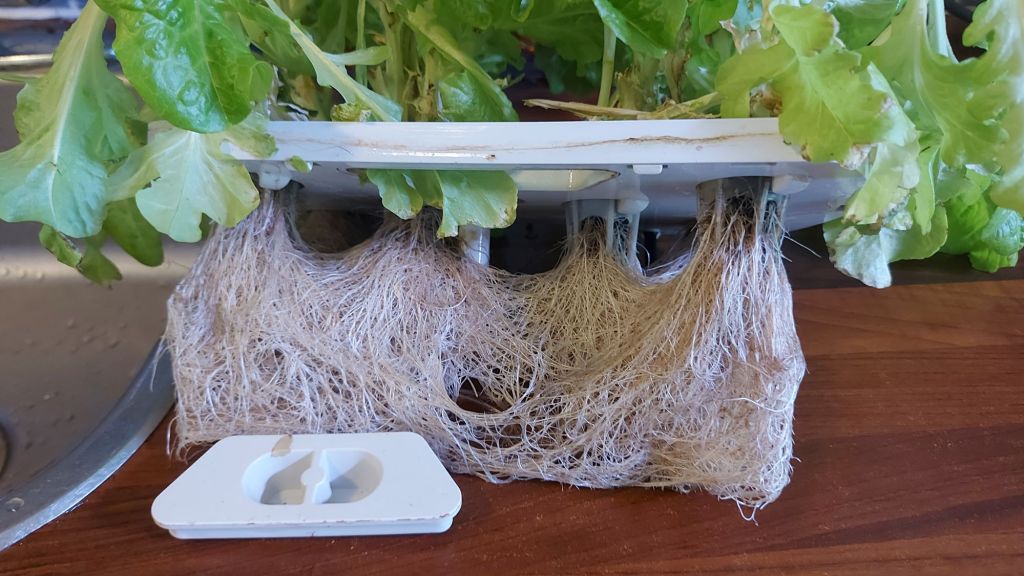
I guess there is strength in unity! This long Aerogarden unit where we planted all six pods with lettuce, had their roots intertwined with each other. I just needed to trim the bottom a little bit because if the roots fill in the container (which has happened before), the plant will start to get ill.
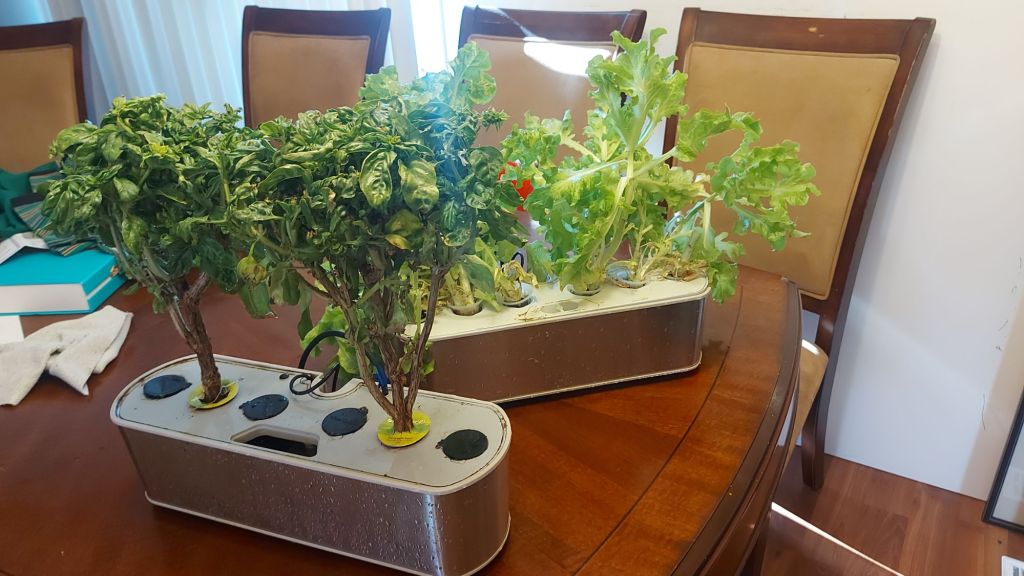
It’s a production line cleaning all the 12 Aerogarden units. After I finish cleaning them and re-filling with fresh water, I place them on the dining table, ready to be returned to our plant shelf.
These bright and white roots are a delight to see under the other Aerogarden unit we planted with lettuce. Two of the planters with lettuce is the perfect amount to make enough salads for the husband’s work lunches for the week.
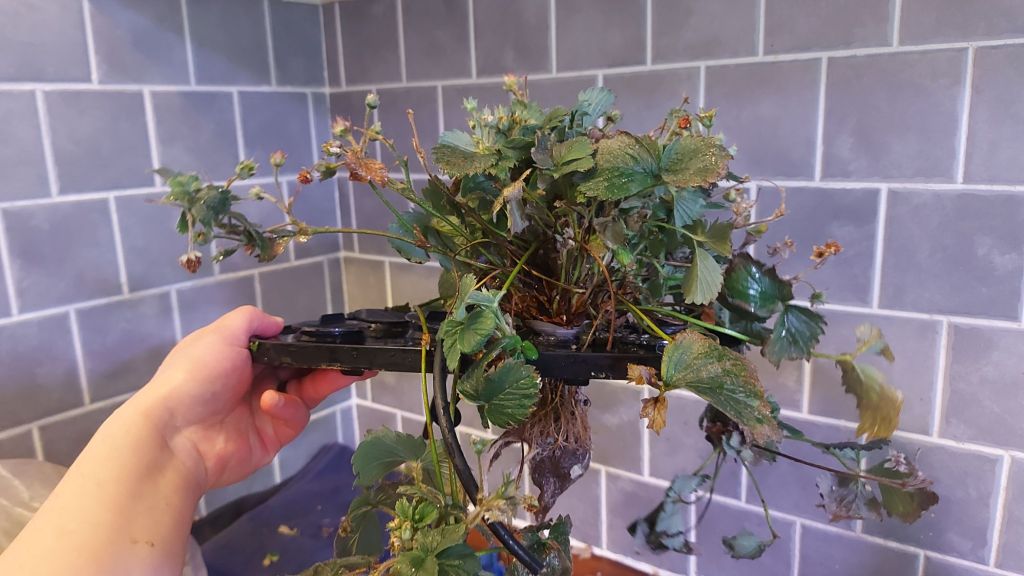
This strawberry plant is not looking well at all. It looks like strawberries are not a good fit for hydroponics gardening of this style. But we wanted to give this one more chance, so it goes the usual treatment of getting the roots washed as well as the whole planter.
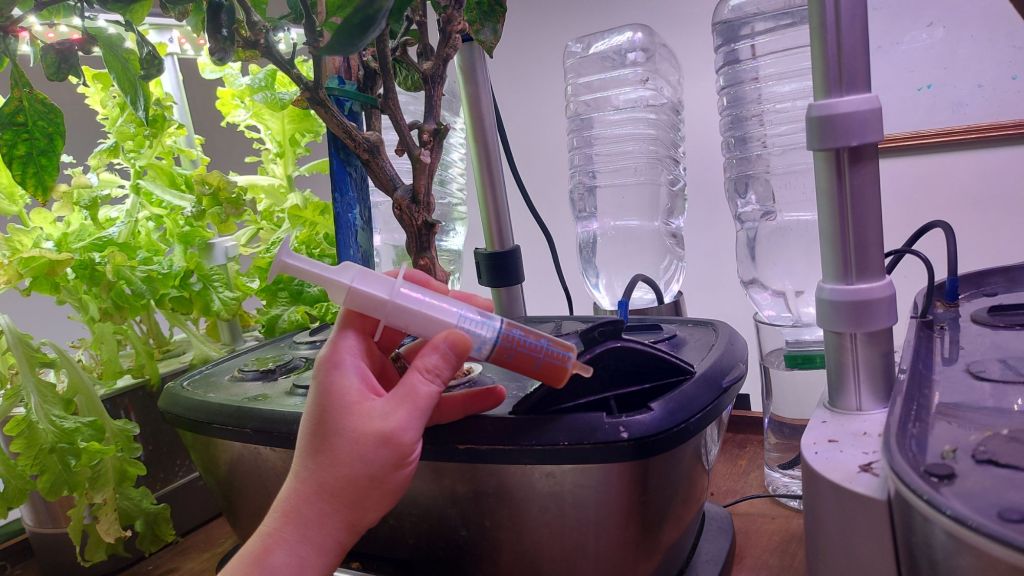
After each planter gets fresh water, they get a new dose of fertilizer as well. A syringe makes measuring and placing this liquid very easy.
This planter is the top shelf, so it’s about five and a half feet high and I had to reach with a step stool. While this is a good spot to put the fertilizer in, I just had to go with whatever hole I’m able to reach and see clearly.
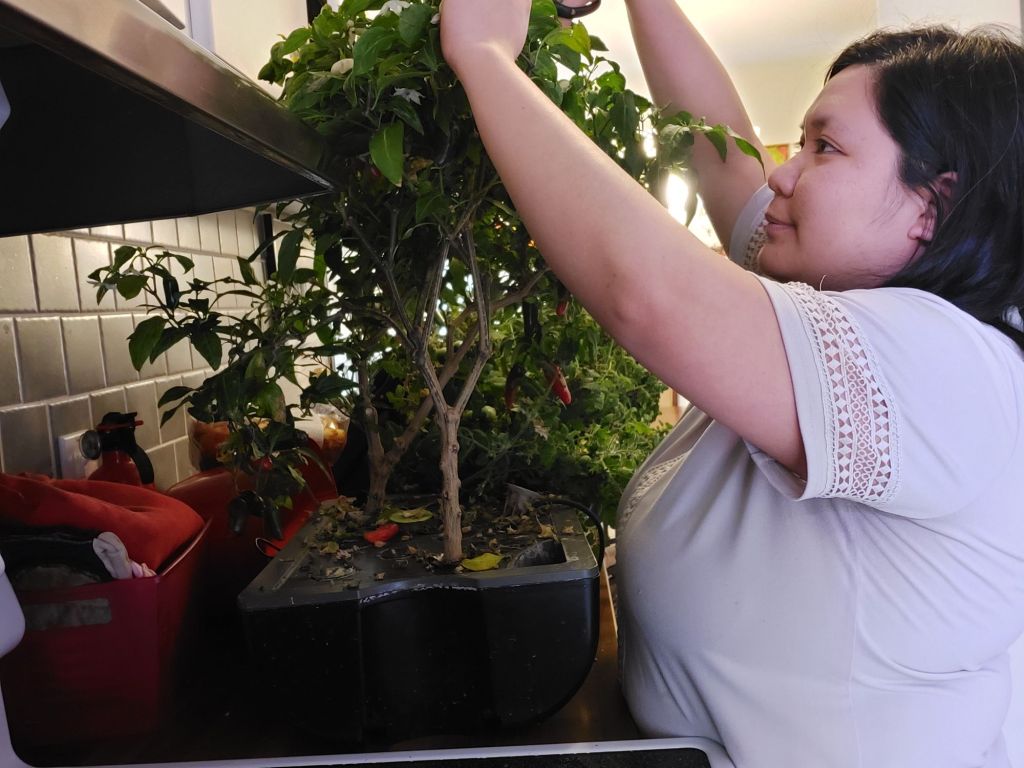
The height of all the plants need to be limited, otherwise they will hit the top panel with the lights and the bulbs get damaged. So this one got a very aggressive “haircut” from me today. Then I harvested all the peppers that were turning red.
And after cleaning off all the random plant leaves and dirt that have fallen off during the cleanup, the plants are happy for another month!

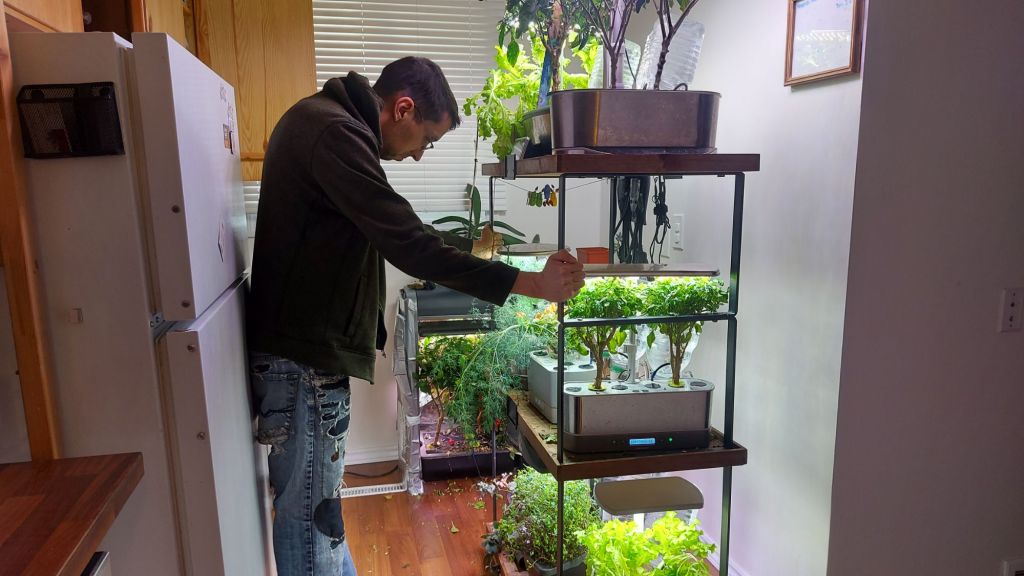
It’s remarkable how we have been doing this for almost three years now. While working side by side today, he asked me if I would consider outdoor gardening. I said not anytime soon, because I truly enjoy seeing the greenery all year long, as well as the delicious harvests that we get. As long as we have the energy to do the detailed cleanup once a month, adding water and fertilizer as needed, and harvest regularly before the fruits get overripe, we’ll keep this routine as is.