Love Language Reflections: The Annual New Year Budget Deliberation Day

By: Giselle General

Most people plan elaborate parties, find a fun public event with fireworks and a festive way to count down to midnight, some even post a long heartfelt social media posts with photos taken throughout the year, others may claim that staying at home to have a restful night is the best way to spend the day. There’s a wide array of things people do to bring in the new year.

For my husband and I, we eagerly count down to our distinct personal occasion, that we tell people about it. Do we look forward to this day with the same enthusiasm as our anniversary? It’s possible!

It’s our annual Budget Deliberation Day! It’s when we wait until the last business day of the year for our online purchases to process, add all the information in our budgeting software, assess our expenses for the past 12 months and then set our budget for the upcoming year.

When a colleague asked my husband what activities we have planned for the holiday break, he mentioned about Budget Deliberation Day. His colleague claimed “if my spouse and I do that, we will get divorced!” I can see how that can be the case for many couples and families. It’s difficult to talk about money. Having what could look like a business meeting to talk about an integral part of our personal lives, can feel coldhearted and harsh. I suppose for my husband and I, that is the point of having a dedicated day and process for this, it eliminates stress and anxiousness because it is predictable, safe, calm and with a mindset of informing and supporting each other.

We did not do this right away after we moved in together. What I do know was when he bought his own home for the first time, he also got a budgeting software. Just as boyfriend-girlfriend at that time, whenever I come over to his place, he would eagerly show the charts and graphs of his income and expenses and the sub-categories for each. During this time I was living with my relatives still, who didn’t have a system about budgeting that they taught me. So I was winging it as a young adult in my 20’s, using spreadsheets and even the free version of the Mint budgeting app at the time.

When we moved in together I still used my own system, including the built-in budgeting interface that was part of my bank’s online banking. Year after year, the boyfriend – then turned common-law partner – continued to show me the software, gently encouraging me to finally give it a try. When my bank removed the budgeting section off their online banking, I figured it is time to do it. If we are going to build a life together long term, might as well have an easier way to discuss finances. After all, we are “team communicate!”

So what happens during budget deliberation day? Not a whole lot actually. Since throughout the year, we regularly add our budget information in the software, we already have a good sense of our income and expenses. It’s not like we have no clue what is happening and have sort through 12 months of information. We check the long term information such as net worth, investments, money we can easily access and withdraw. We check our income and expenses to see how much they match up with what we have anticipated at the beginning of the year.

One very important thing to note is this is not a time to shame each other, and ourselves, if we went over budget on certain categories. Since we are not in debt and have some money in our chequing account, we know that going over budget is not going to hurt us in the long run. It could be just a sign that for next year, we just need to increase the budget in that category.

Our categories are not identical either, and that is not the point for us anyways. For me, I wanted to clearly see how much I spend on groceries compared to eating out, so those are separate categories. For the husband, eating out is combined with the rest of his “fun personal” expenses category. For the longest time it was difficult for me to set boundaries about giving financial help to relatives overseas. Setting the budget for that category and assessing it every year helped me set boundaries so I can help wholeheartedly without being resentful, and without compromising my financial goals. Besides, if I get into financial trouble, no one from the motherland can help me.

We plug our computers onto the monitor and show each other the software page, the chats and the numbers. We might have to ask to raise a budget category. The whole thing takes about two hours tops. Today we finished right before lunch, and that’s with both of us sleeping in.

The software is not the fanciest one around but that never mattered to us. The colours are straightforward enough, and the charts in different formats (line, pie, bar, doughnut, custom) are fun to read. We have this in our computers, so not an app on our phone, which I think prevents us from obsessing about budgeting in a toxic way.

He’s used the budgeting software for 15 years now, and I have for seven. I think the most fascinating realization for me is how the numbers and charts tell a story. In his net worth chart, the largest dip in the line graph was when we traveled overseas for the first time. He had to spend a lot of money and also lost wages for three months. For me, the steepest decline in my line graph was when we downsized from a single family home to a town house and I used my savings to pay for a portion of the house. It’s so worth it though – because we were mortgage free afterwards!
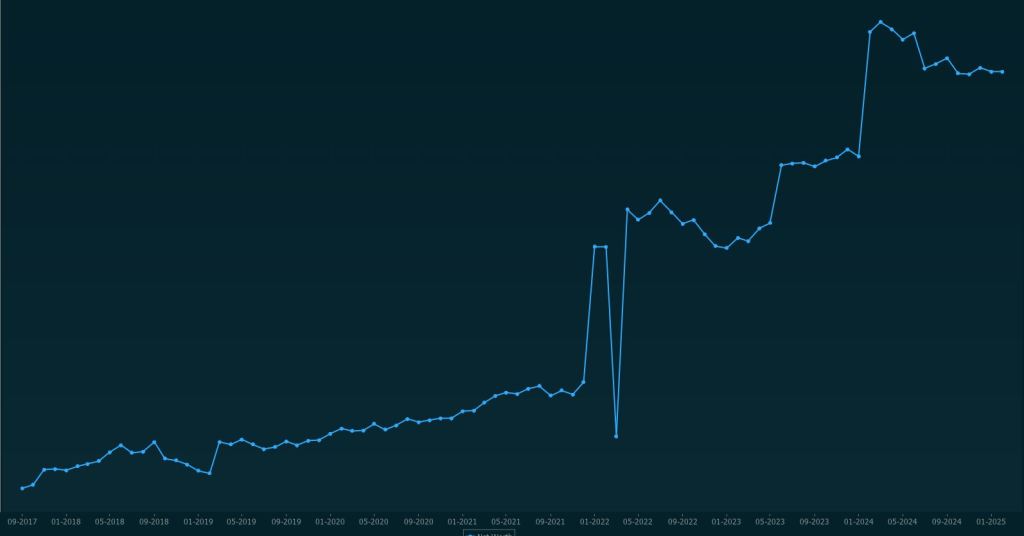
Budget Deliberation Day is also an opportunity for us to talk about potential big expenses for the upcoming year. This helped us plan for a new roof, hot water tank and furnace. This helped us plan for our big adventures, whether it is travel, changing careers while ensuring we can pay our bills while finding a new job, running for politics, or aggressively increasing our retirement savings. I personally think that unexpected financial surprises, especially the type when the other person can claim “you could have talked to me about this sooner because you knew!” is what causes conflict between couples, not the actual numbers being shown in the budget.

It’s truly a solid way to start the year, secure and confident in my ability to be financially aware, appreciate my spouse for his diligence, and look forward to our future together.

Love Language Reflections: Happy Wife about ‘Househusband Friday’

By: Giselle General

Lately, my corner of the internet is full of discussions about how couples share responsibilities in the home, how in many cases the division of tasks could get unequal, and passionate opinions on what to do when this is the case. I wanted to add my two bits into this discourse, not to side myself with a specific point of view, but to reflect and assess my situation as someone who is married for coming into five years (wow!) and sharing a home with my now-husband for coming into thirteen years.

In 2022 when my husband started to work for my father-in-law, he would go to work four days a week and then go to school remotely on Fridays. On these days he would be in the home office for most of the day, taking breaks only for lunch. Then he started to do one task which is doing laundry. It’s easy enough to do in between long study sessions since we only have two loads of laundry between us. Last year, around October 2023, he took a break from schooling on Fridays and it became what we now officially call as Househusband Friday.

How does it look like? It starts with us doing our own thing for breakfast and then once I’m ready to leave to the office for work, he would walk me to the bus stop. So we’ll have that small bit of quality time during the walk until the bus picks me up and I wave goodbye looking out the window. Maybe it looks like I’m a child being dropped off the yellow bus to school, but I don’t care. I love it. It’s sweet. It’s very kilig – Filipinos would get it!

Then when he gets home, from 8 AM to 1 PM he would nonstop work on the list of tasks. These included weekly chores like doing laundry and dishes, semi-monthly chores like vacuuming, dusting and grocery shopping, and the as-requested tasks like disposing items to the eco-station, changing the batteries of smoke detectors, deep cleaning the very top shelf of the kitchen cabinets, and more. He would then relax for a couple of hours, and then make dinner.

If there’s one thing we both love – I mean aside from each other – it’s our task lists. So it is not weird, unromantic, or offensive to have a list on our whiteboard of the things to do and even what I would like to have for our dinner. I’m pretty flexible with it actually. After a few months of this routine, it feels so nice to come home to a warm meal and a yummy drink (usually a smoothie) ready. And usually there’s leftovers enough for one or two meals on the weekend.

Then as the weekend comes, it’s my turn. I love to neatly put away our clothes, so I’m in charge of folding and hanging laundry. When the bathroom needs deep cleaning, that’s on me as well. I do prepare any other meals for the weekend, while he finds time to check his budget and pay the shared home bills. If there’s a home tasks we need to do together, we find time for them as well. If the chore is a bit creative, we like to consider it a mini date, like when we made this lawn ornament a few weeks ago.

On the living room of Giselle's home, is a lawn ornament of a donkey hitched on a wagon. It received a fresh coat of paint done both by Giselle and her husband.

The day before the start of the work week, usually Sunday or Monday of a holiday long weekend, is the busiest for me as I meal prep for the week. But it’s not all me. My husband cooks the meal we bring to his father’s place for our regular Sunday dinner, or as we call it, “Spaghetti Sunday” because we mostly make spaghetti and meatballs.

As a couple we also like having titles or official terminology on things we do. We describe ourselves as “team communicate”, we ask for a “feelings check” or start the “intensity check” process when we are stressed, so “househusband Friday” was a very welcome addition. Once a month, we also have a dedicated “plant maintenance day” for when we clean and re-organize our 12 Aerogarden units for our indoor farming set up.

During the week, we strive to cover for each other too. We load, run, and unload the dishwasher with minimal prompting. When I make one of the upcycled outfits and bits of thread and fabric are strewn over the dining table, I do a quick sweep with the walis, a plant-based soft broom imported from the Philippines. He is good at preventing messes from happening in the first place.

Truth to be told, I really appreciate that there’s more awareness and discussion about how couples divide household chores. I feel horrified at the stories I read about how apparently, husbands would deliberately and maliciously mess up a task to make their spouses upset to the point of not asking for help again. I remember being stunned at learning the term weaponized incompetence, but it fits in many cases.

The tricky and nuanced part is determining when to confront, when to educate, when to accommodate, and when to finally terminate the relationship. In online discourse where stories are condensed and context could be incomplete, it can feel excessive to see suggestions of “throw the whole man away.” But there are times when it’s valid. There can be times though when digging deeper through the root of the problem, whether it is trauma, illness, difference in cognitive abilities, lack of education but with willingness to learn, or something else, can help make a process that works for everyone involved.

I think it’s partly why I cringe when some people claim that a to-do list is too childish or offensive. And if a list is a no-go, I could imagine the haters when they find out how I write the grocery list for my husband since he started going alone during Househusband Fridays. Not only is it handwritten (gasp!), I make a new one every time instead of a standard list (gasp again!), the items are arranged based on type of item and also listed sequentially based on the layout of the store. Personally it is the ultimate example of setting someone up for success and making the tasks as quick and efficient as possible.

Giselle is holding a handwritted grocery list for a shopping trip at Costco. The items are arranged by section in order from the left to the right side of the store.

In my humble opinion, chores are most of the time not fun. Anything and everything that can be done to make it as quick, efficient, and enjoyable for the couple as they do them individually and together, is a win. I heard the argument that money is the main reason for divorce. I’d say a second close one is conflict with domestic duties as they are part of everyday life. It these issues are unresolved, it can affect someone multiple times a day, and can really wear people down over time.

Appreciation goes a long way too. Maybe it seems childish, but the occasional compliment for completing chores or admiring the outcome can help remind our spouses that the we see the effort they do. I think the most common phrase we say in my home is “thank you, baby!”

Chores and the domestics are an integral part of one’s health and keeping the relationship strong and sustainable. If there’s one thing I wish all couples have, is to reach a state of domestic delight. That the mundane aspects of maintaining their home is a source of joy, security, confidence and bonding.

During one of the househusband Fridays this summer, I had the day off. He still went through most of the tasks on the list, but I took over some of the seasonal tasks I added earlier this week. He did the weekly laundry and dishes and the vacuuming for the month. I mowed the grass, reorganized our little backyard patio, from the furniture, the barbeque and the pile of bags of refundable bottles. Afterwards he started to install a second-hand printer we got, until it got so frustrating that he smashed it just like in Office Space. He wanted that printer out of the house ASAP so we went to the eco-station to dump it off.

As we waited for our turn to enter the eco-station gate he asked, “Does this count as a date?”

Giggling I said, “Of course!”

We continued to hold hands, with his other hand on the wheel, while the car idled along a queue of cars with people doing the same mundane task of disposing their trash.

“I Don’t Want To Be Raped Again” The Captive Transit User Series: Part 2

This is part of an ongoing series of posts discussion issues I personally encounter while taking public transit in Edmonton. Links to other posts will be added on an ongoing basis:

My frame of mind for the longest time was, the most dangerous place to be is my own bedroom. This however, didn’t prevent me from associating darkness and public places with being at risk.

What is a Captive Transit User? I learned about the term for the first time from the City of Edmonton’s website. The easy definition is: someone who takes public transit because it’s the best (or only available) option for them to travel around. The part about feeling ‘captive’ comes from the restriction that sometimes comes up, perhaps because one is too poor to own and maintain a vehicle, one does not know how to drive, or for medical reasons, cannot operate a vehicle. In many ways, I relate to this a lot. Though I’m pretty fortunate to afford the occasional taxi ride and with my husband having a car.

When it comes to big picture thinking on social and political topics, this is a short list of a trauma-informed approach (the 4 R’s) that I compiled.

  1. Realizes the widespread impact of trauma and understands potential paths for recovery
  2. Recognizes the signs and symptoms of trauma in clients, families, staff, and others involved with the system
  3. Responds by fully integrating knowledge about trauma into policies, procedures, and practices
  4. Resists re-traumatization 

I sincerely hope that government officials and service providers, especially with transit, would integrate this perspective in very clear and tangible ways more often.

The way the human psyche works, all it takes is one horrific and traumatic event to discourage someone from doing something, or to have a very negative association towards something.

That makes a lot of sense. If a person gets attacked in a specific LRT station, that person will likely try to not use it ever again, or if they don’t have a choice, to be more wary, stressed and anxious every time the use it. Certain bus routes apparently have a prominent reputation for having lots of disruption, where the likelihood of being harassed is a lot higher. Imagine being in an ongoing state of high alert and anxiousness on a regular basis?

As a high school student in a city in the Philippines, I always got told to go home way before sunset, because taking public transportation after dark is dangerous. As a relatively new resident of Edmonton back in 2008, I was also told to be careful when commuting in downtown because of the “sketchy people” that are around.

This is tough, because when I was hearing these messages, many of these people don’t know of my history of sexual assault. My frame of mind for the longest time was, the most dangerous place to be is my own bedroom. This however, didn’t prevent me from associating darkness and public places with being at risk.

When I got home from my office in downtown, sometimes I say to myself with a huge sigh of relief “Today is a good day! I didn’t get raped…or stabbed, or groped. Thank goodness!” There are numerous stories of harassment that I hear from fellow residents of Edmonton about unwanted attention while waiting for a transit vehicle, or while onboard one. Many people crafted strategies to minimize the likelihood of this happening, such as wearing headphones and staring blankly when someone is trying to strike up a conversation.

Many share the feeling that they are forced to be nice to not “set him off” and to avoid being an ‘active hostile target’ of harassment. There was that story of a woman speaking out when a man on a bus started making racist remarks to an Asian-Canadian person. There is two types of hostility in this instance, the one inflicted towards the Asian-Canadian person, and then towards the woman who called out the harasser.

Commuting late at night poses a additional set of challenges. There’s that heightened sense of panic when the bus is missed or the last route has passed. There’s a recent announcement that the city’s telephone service line, 311, is unavailable in the evenings after 7PM, which is a disservice to those who are more vulnerable in the evenings.

One time, I was stuck at the U of A South Campus because when I got off the LRT, the connecting bus I was planning to take just departed, and it is another half hour for the next bus since it is after 10 PM. I realized that instead of waiting completely alone, it is better for me to take the train back to the University of Alberta station and take a taxi there to get home. This is a good back-up plan assuming there is indeed a taxi waiting in the stall by the University Transit Station every time. And based on personal experience, that is not always the case. Spending extra time to re-route one’s travel to get home because of safety reasons is a bit counterintutive since the best scenario would be just getting home quicker, but for a transit user with limited money, this is a reality. A trade off between money and time, with safety being potentially compromised along the way.

Being blamed for an attack while taking transit really riles me up. It reminds me of the blame cast at me and that I internalized, and that many others have experienced as well.

Perhaps it is a very high standard, but this is my take on achieving a safe transit system: When an Edmontonian who previously had a horrific experience taking transit, then decides to take a chance and felt comfortable, safe and satisfied in their journey from point A to point B. I have some level of hope from what seems to be the city’s effort to incorporate GBA+ Analysis framework, and the availability of ways to make an impact such as city committees like the one I volunteer for. This is the threshold that ought to be met, and I do hope we get closer to getting to this, in a way that an average person will instinctively notice it.

Sexual Assault Survivor Gets a Boudoir Photoshoot

By: Giselle General

CONTENT WARNING: Sexual Violence, Sexual Assault

Back view of woman sitting on the edge of a bed.

One’s bedroom should be a place of rest, escape, peace and comfort, after a long day of exhaustion, activities and responsibilities. The darkness of the night should be an opportunity of calm solitude, an end of a long day, a pathway to a new morning with the hope that the new day will bring about new adventures and experiences. One’s womanhood and the journey to become one can be uncertain and confusing, but should be one that is filled with discovery, curiosity, and optimism, as one transforms physically into adulthood.

Sexual assault, rape, abuse, molestation, however you want to call it, regardless of how it happened, not only defiles one’s outlook in their life and their bodies, but also taints one’s soul with an indescribable amount of fear and pain.

There were roadblocks to be had, that dragged on and weighed me down for months and years, and clouded the vision of myself, my body, my behaviours, and motivations. From having difficulty articulating how I’m feeling physically, emotionally, and sexually in my romantic life, to feeling uninformed and afraid to learn about reproductive health. From nightmares about being raped with scenarios more gruesome than what I have experienced, to daydreaming while taking transit on what I would do if I get assaulted again, but this time in public.

The journey to healing started online, thanks to the increased discussions about sexual assault. Simultaneously, my current relationship played a huge role, from being believed after I shared my story, to having a voice and being heard when talking about issues related to sexual health and sexual activities. And then a few years ago, the healing became more professional-based, when I finally went to therapy to address the mental and emotional entanglements caused by this particular traumatic event, as well as others.

But there was one thing I mulled about for a very long time, and that is addressing how I view my physical body. The conventional assumption of “she must have looked or dressed a certain way which is why she got assaulted” is one of the key messages I wanted to debunk in my mind and heart. Mind you, during the assaults, typically I was wearing pajamas and clothes of my deceased parents as my sleepwear back then. This is the biggest reason why this assumption enrages me.

Finally, after some time hemming and hawing, browsing through several photographer’s websites, and convincing myself that my budgeting skills are on track, I finally booked the appointment. I chose for the photoshoot to be done on a rented studio, with a wide variety of backdrops for various effects. Many of the backdrops depicted typical parts of a house, just more glamorous looking: the bedroom with pristine sheets, a fancy bathroom with a clawfoot tub, elegant couches and plush chairs, and brick and pastel painted walls. I purchased a few outfits to help me have a theme in the photos, I had my hair done by a hairstylist but chose to not have makeup on. Finally, I told the photograher I’m okay with being a bit of a daredevil with some surprise poses.

It was hard to articulate how enjoyable and empowering it is to feel calm while practically semi-nude in front of a stranger. It is particularly freeing given that my sense of trust was broken by someone who is definitely not a stranger. I felt a bit awkward when I was asked to do certain movements, because part of the approach is not holding still for a certain pose, but instead, to do things such as move your arms and hips in a sexy way while standing, or play with your hair while imagining that you’re feeling like a superstar on the bed right now. But soon enough, the awkwardness transformed into playfulness.

The biggest surprise of all for me, is how I looked like in the photos she captured. When I was doing a ‘movement pose’ such as walking into the door ready to ‘have some fun’, she was pressing the shutter button non-stop while saying ‘oh wow! yes that’s good!’. Fierce, confident, alluring, vixen, all womanly, and not even needing to act like a skinny model while doing so.

When I picked up the printed photobook that was part of my package, I had a bit of a chat with the photographer. I was amazed at how many of the clients the photographer had, were indeed, survivors of sexual violence. Our conversations touched on perception of women in general, the “male gaze” and how it impacts our own perception of ourselves.

In the very visual way we live our lives these days, I figured, using that to my advantage is worth it. It was pretty neat to turn something used to objectify women, professionally photographs, into an opportunity to challenge unhealthy views about one’s self. I feel inclined to do this again, perhaps in five to ten years, to celebrate any transformations in my body, while celebrating my personhood and womanhood. This is something I definitely would encourage other people to consider, particularly if their trauma affects their outlook of their physical bodies and their vision of themselves.

How to be an Ally: Edmonton-Style

By: Giselle General

When people are being asked to be an ally, based on what I have seen, it is usually in terms of these two:

  • asking men to support women in their fight for equality
  • asking straight people to support the LGBTQPIA2+ community

Being an ally resonates with me, perhaps due to my inclination to be helpful in whichever way I can.

The more I learn about the different ways that people are marginalized, the more I feel motivated to figure out how to do my part. Interestingly enough, in some ways I actually fall under some of these categories. If I would list a few, I am:

  • An immigrant
  • An orphan
  • A woman of colour

But at the same time, I fall under many categories of privilege, of being in the ‘majority’ so to speak. If I would list a few, I am:

  • Straight and cisgender (and I look the part)
  • Educated and literate
  • Able-bodied and neurotypical
  • An immigrant (because in some instances, Indigenous people have more challenges that I don’t necessarily face)

So, what does being an ally look like for me, especially here in Edmonton? Here is how I do it.

Educating Myself

It can be as simple as reading stories and news articles in my own time. I see the point in discouraging those who are already marginalized to explain themselves over and over about the hardships they face. Placing this burden on them can be quite re-traumatizing.

The Power of Social Media

I have curated my social media to help me be more informed and aware. A few recommendations I have are below. And many of these are local content which helps me understand contexts of what is going on around me.

Learning about Indigenous Issues: Institute for the Advancement of Aboriginal Women, Rise in Solidarity Edmonton, CBC Indigenous

Learning about the LGBT community: Gary the Gay, Lizzy the Lezzy, Pride Centre of Edmonton, George Takei, Assigned Male Comics

Learning about challenges of people with disabilities: Voice of Albertans with Disabilities

The Principle of Compassion

From therapy, I was encouraged to be compassionate towards myself. I think it ended up being an ongoing positive cycle. That encouraging myself to care for myself as much as I care for others, resulted into being more caring towards others, especially those whose hardships I don’t (and will never completely) understand.

The next in my to-do list in the journey is understanding and applying practically what it means to stand in solidarity. I think when it comes to making positive change happen, there will be times when I will have to ask other groups to stand in solidarity with me, and that I will stand in solidarity as other groups fight their battles. I’m sure that there will be lots of opportunities to do either, which I’m looking forward to.