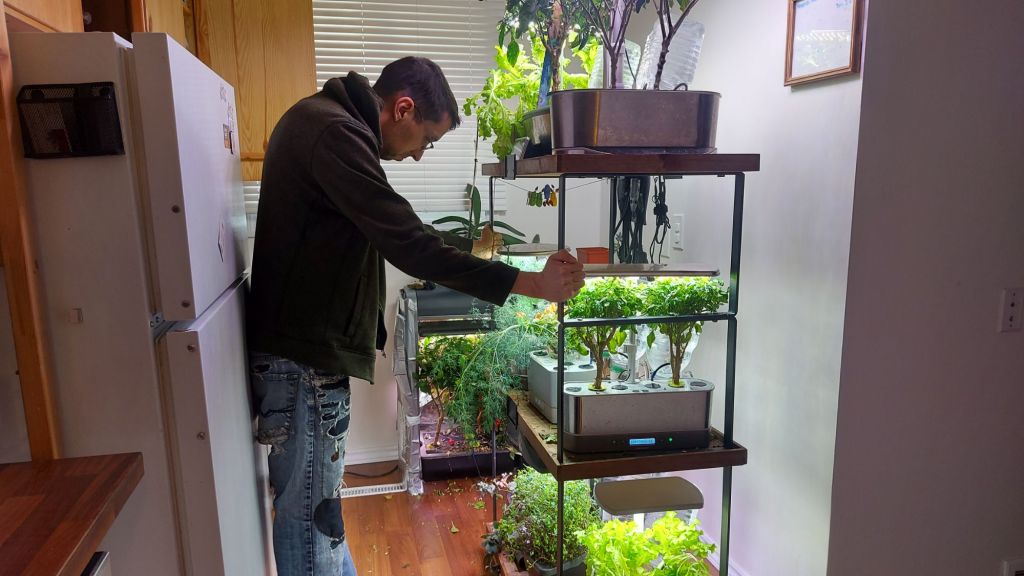
On a previous post, I mentioned about our monthly routine to take care of all our indoor hydroponics gardening that we named “Plant Maintenance Day”, which we just completed today. I thought it would be cool to show a glimpse of the process to make sure that the plants are as healthy as they can be and that the equipment lasts as long as possible.
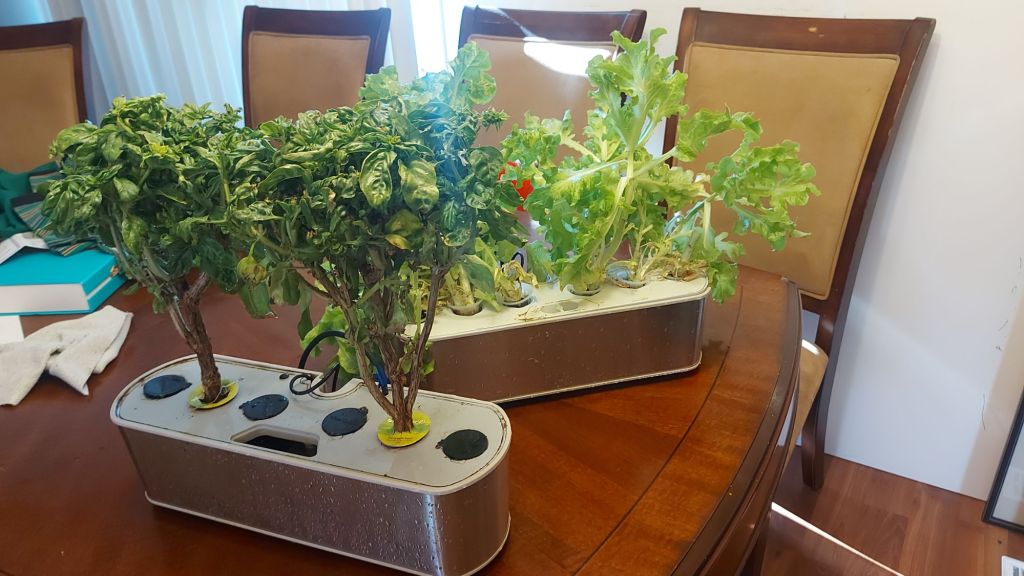
Newer models of the Aerogarden are much easier to clean, just like this oval shaped unit with no strangely shaped components inside the water basin. This basil plant looks overall healthy, although the slightly brown shade of the roots is a slight concern.
This Jalapeno plant is getting tall, and the clear roots is a sign that it’s healthy. We just harvested dozens of peppers a few weeks ago and there’s more that are developing. It is nice to see the roots while I washed the underside of the plant unit.
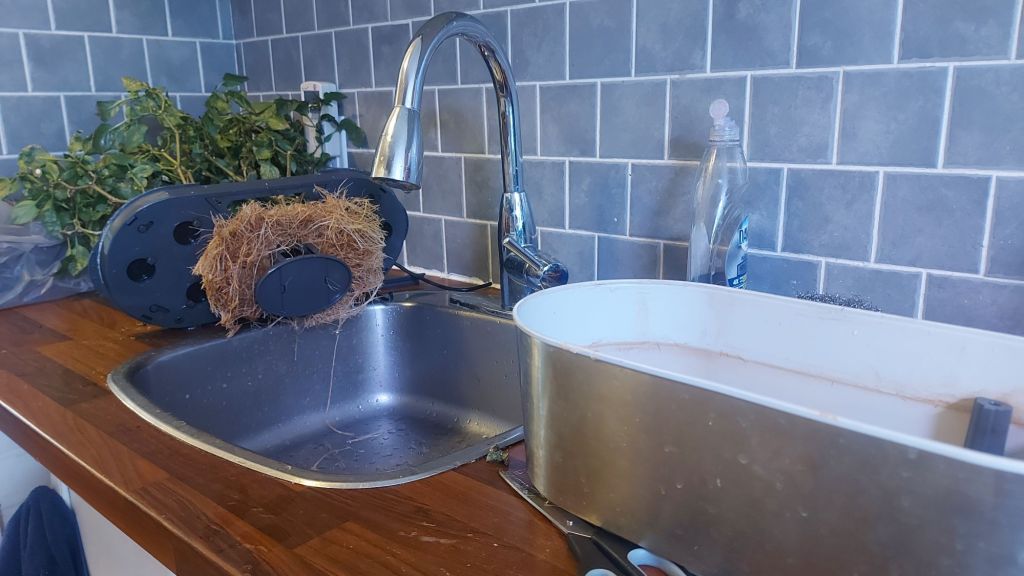
I’m so relieved that our sink has one of those faucets with a movable spout as it makes filling water in containers easier, including for the planters after washing them.
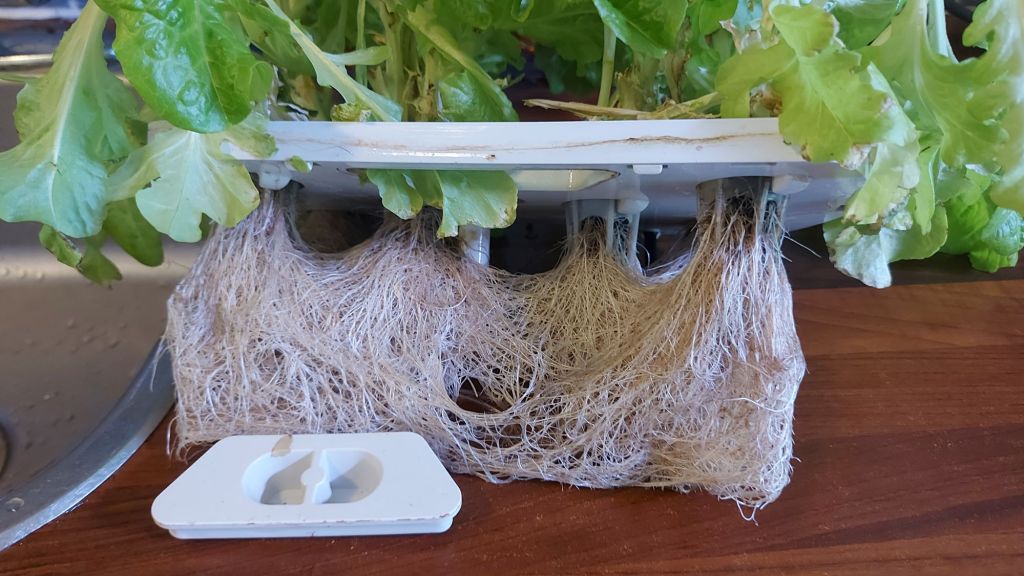
I guess there is strength in unity! This long Aerogarden unit where we planted all six pods with lettuce, had their roots intertwined with each other. I just needed to trim the bottom a little bit because if the roots fill in the container (which has happened before), the plant will start to get ill.
It’s a production line cleaning all the 12 Aerogarden units. After I finish cleaning them and re-filling with fresh water, I place them on the dining table, ready to be returned to our plant shelf.
These bright and white roots are a delight to see under the other Aerogarden unit we planted with lettuce. Two of the planters with lettuce is the perfect amount to make enough salads for the husband’s work lunches for the week.
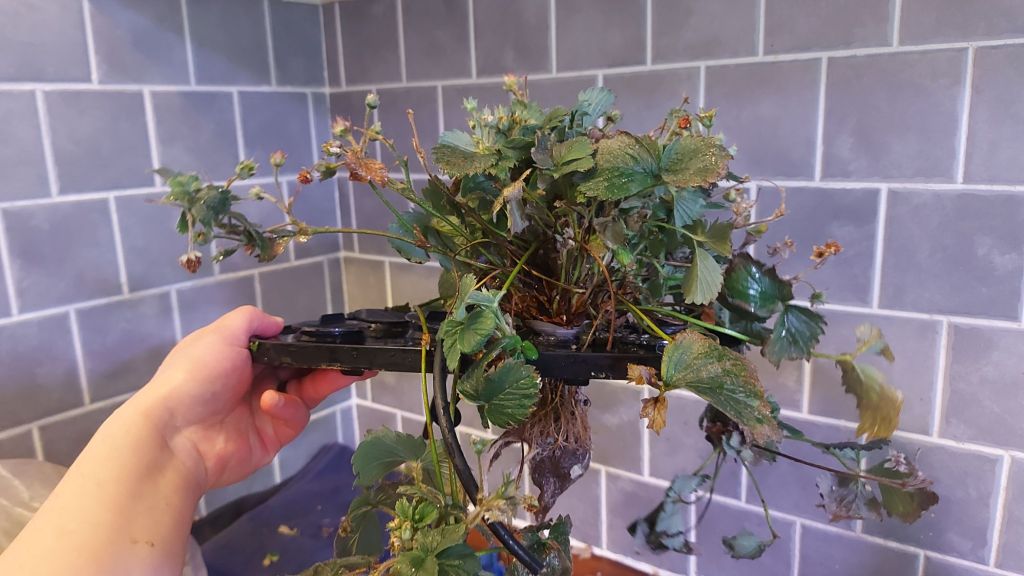
This strawberry plant is not looking well at all. It looks like strawberries are not a good fit for hydroponics gardening of this style. But we wanted to give this one more chance, so it goes the usual treatment of getting the roots washed as well as the whole planter.
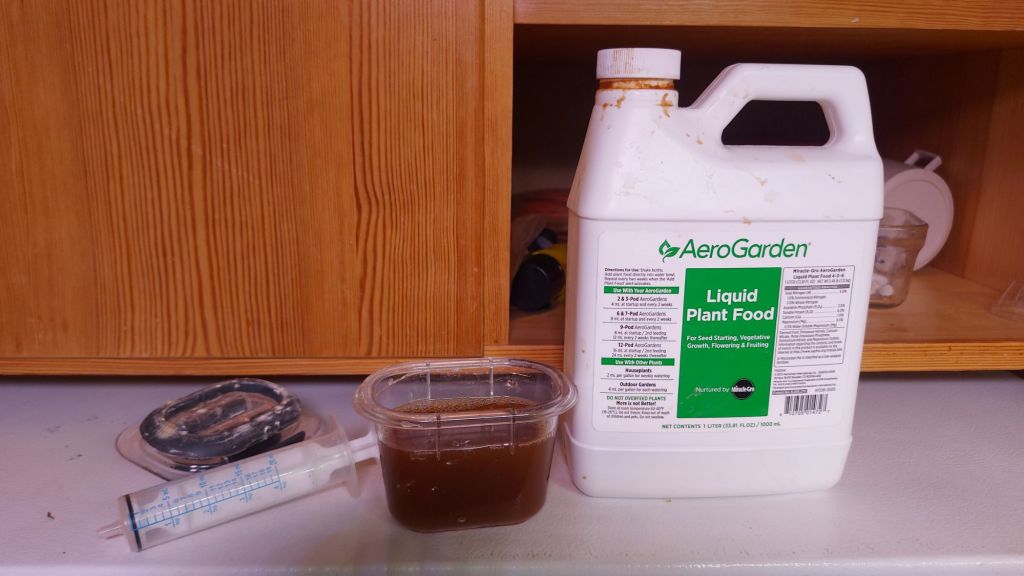
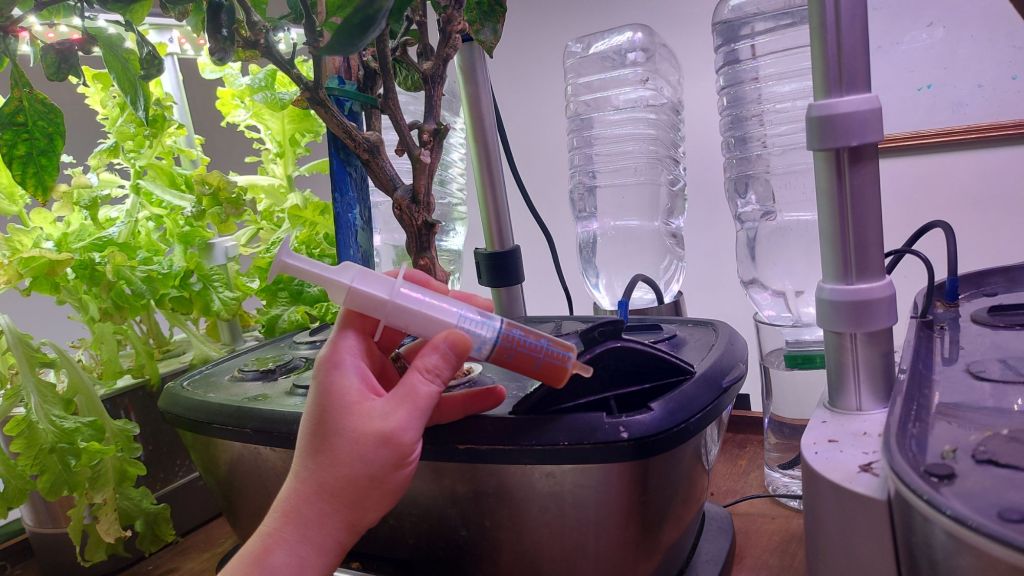
After each planter gets fresh water, they get a new dose of fertilizer as well. A syringe makes measuring and placing this liquid very easy.
This planter is the top shelf, so it’s about five and a half feet high and I had to reach with a step stool. While this is a good spot to put the fertilizer in, I just had to go with whatever hole I’m able to reach and see clearly.
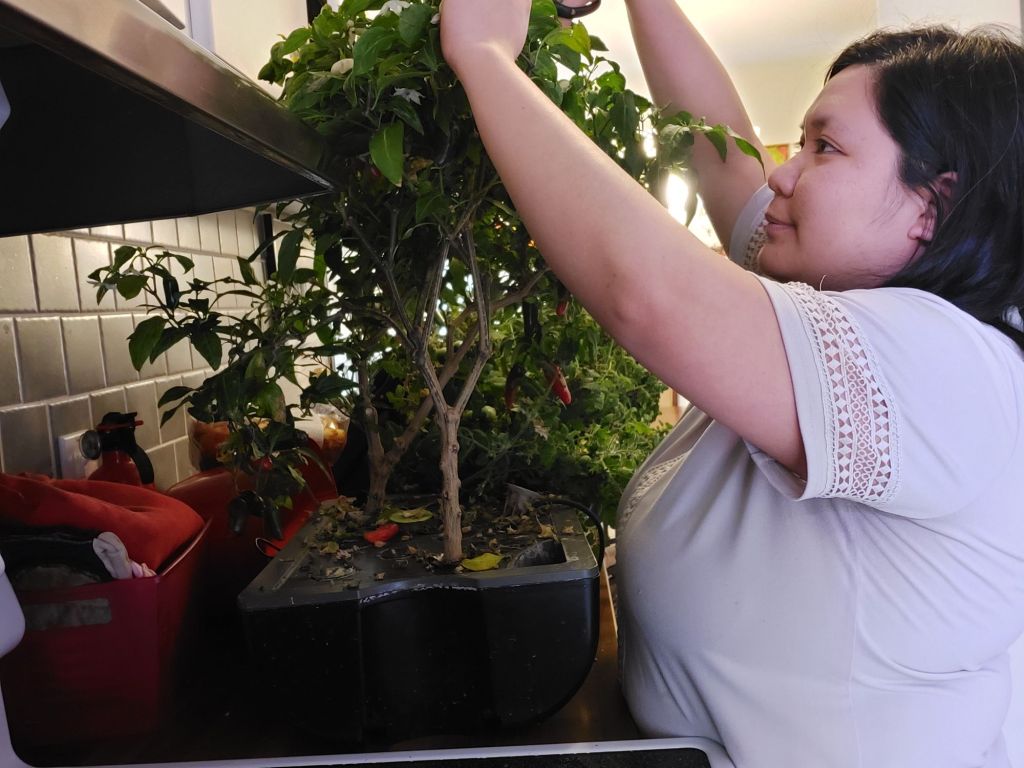
The height of all the plants need to be limited, otherwise they will hit the top panel with the lights and the bulbs get damaged. So this one got a very aggressive “haircut” from me today. Then I harvested all the peppers that were turning red.
And after cleaning off all the random plant leaves and dirt that have fallen off during the cleanup, the plants are happy for another month!
It’s remarkable how we have been doing this for almost three years now. While working side by side today, he asked me if I would consider outdoor gardening. I said not anytime soon, because I truly enjoy seeing the greenery all year long, as well as the delicious harvests that we get. As long as we have the energy to do the detailed cleanup once a month, adding water and fertilizer as needed, and harvest regularly before the fruits get overripe, we’ll keep this routine as is.
Most people plan elaborate parties, find a fun public event with fireworks and a festive way to count down to midnight, some even post a long heartfelt social media posts with photos taken throughout the year, others may claim that staying at home to have a restful night is the best way to spend the day. There’s a wide array of things people do to bring in the new year.
For my husband and I, we eagerly count down to our distinct personal occasion, that we tell people about it. Do we look forward to this day with the same enthusiasm as our anniversary? It’s possible!
It’s our annual Budget Deliberation Day! It’s when we wait until the last business day of the year for our online purchases to process, add all the information in our budgeting software, assess our expenses for the past 12 months and then set our budget for the upcoming year.
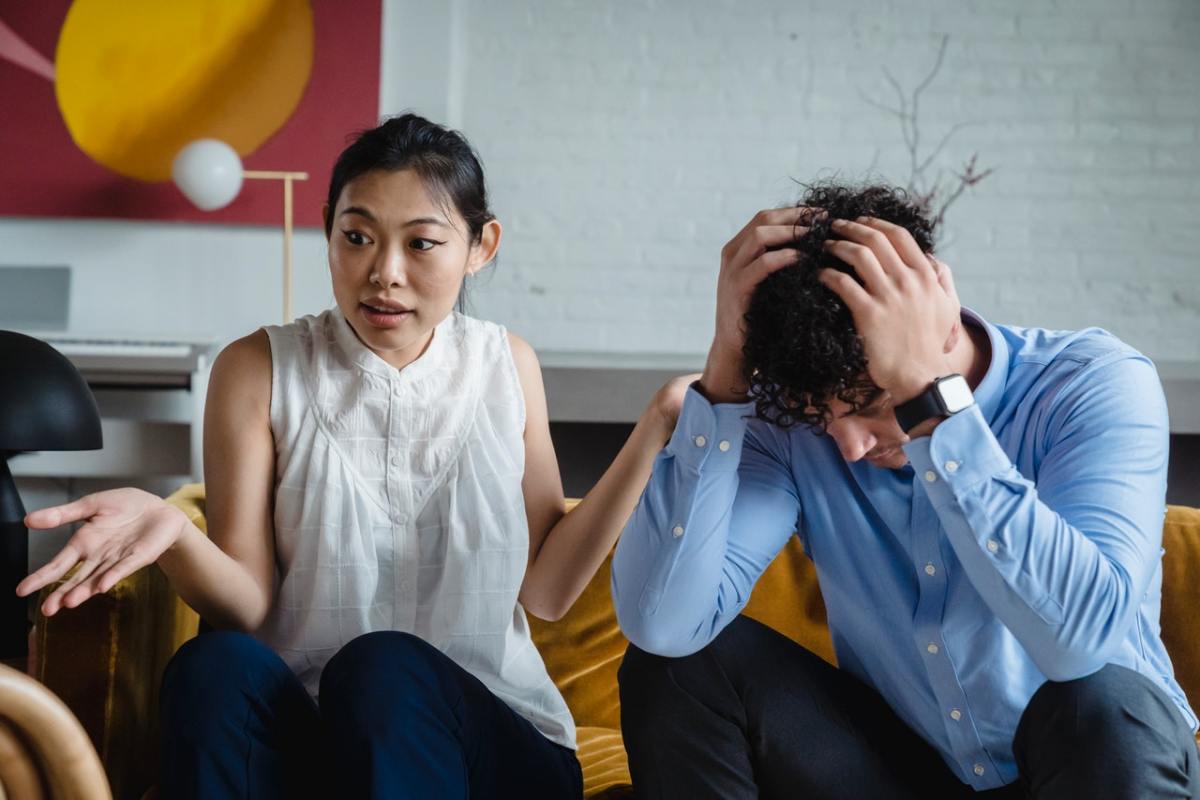
When a colleague asked my husband what activities we have planned for the holiday break, he mentioned about Budget Deliberation Day. His colleague claimed “if my spouse and I do that, we will get divorced!” I can see how that can be the case for many couples and families. It’s difficult to talk about money. Having what could look like a business meeting to talk about an integral part of our personal lives, can feel coldhearted and harsh. I suppose for my husband and I, that is the point of having a dedicated day and process for this, it eliminates stress and anxiousness because it is predictable, safe, calm and with a mindset of informing and supporting each other.
We did not do this right away after we moved in together. What I do know was when he bought his own home for the first time, he also got a budgeting software. Just as boyfriend-girlfriend at that time, whenever I come over to his place, he would eagerly show the charts and graphs of his income and expenses and the sub-categories for each. During this time I was living with my relatives still, who didn’t have a system about budgeting that they taught me. So I was winging it as a young adult in my 20’s, using spreadsheets and even the free version of the Mint budgeting app at the time.
When we moved in together I still used my own system, including the built-in budgeting interface that was part of my bank’s online banking. Year after year, the boyfriend – then turned common-law partner – continued to show me the software, gently encouraging me to finally give it a try. When my bank removed the budgeting section off their online banking, I figured it is time to do it. If we are going to build a life together long term, might as well have an easier way to discuss finances. After all, we are “team communicate!”
So what happens during budget deliberation day? Not a whole lot actually. Since throughout the year, we regularly add our budget information in the software, we already have a good sense of our income and expenses. It’s not like we have no clue what is happening and have sort through 12 months of information. We check the long term information such as net worth, investments, money we can easily access and withdraw. We check our income and expenses to see how much they match up with what we have anticipated at the beginning of the year.
One very important thing to note is this is not a time to shame each other, and ourselves, if we went over budget on certain categories. Since we are not in debt and have some money in our chequing account, we know that going over budget is not going to hurt us in the long run. It could be just a sign that for next year, we just need to increase the budget in that category.
Our categories are not identical either, and that is not the point for us anyways. For me, I wanted to clearly see how much I spend on groceries compared to eating out, so those are separate categories. For the husband, eating out is combined with the rest of his “fun personal” expenses category. For the longest time it was difficult for me to set boundaries about giving financial help to relatives overseas. Setting the budget for that category and assessing it every year helped me set boundaries so I can help wholeheartedly without being resentful, and without compromising my financial goals. Besides, if I get into financial trouble, no one from the motherland can help me.
We plug our computers onto the monitor and show each other the software page, the chats and the numbers. We might have to ask to raise a budget category. The whole thing takes about two hours tops. Today we finished right before lunch, and that’s with both of us sleeping in.
The software is not the fanciest one around but that never mattered to us. The colours are straightforward enough, and the charts in different formats (line, pie, bar, doughnut, custom) are fun to read. We have this in our computers, so not an app on our phone, which I think prevents us from obsessing about budgeting in a toxic way.
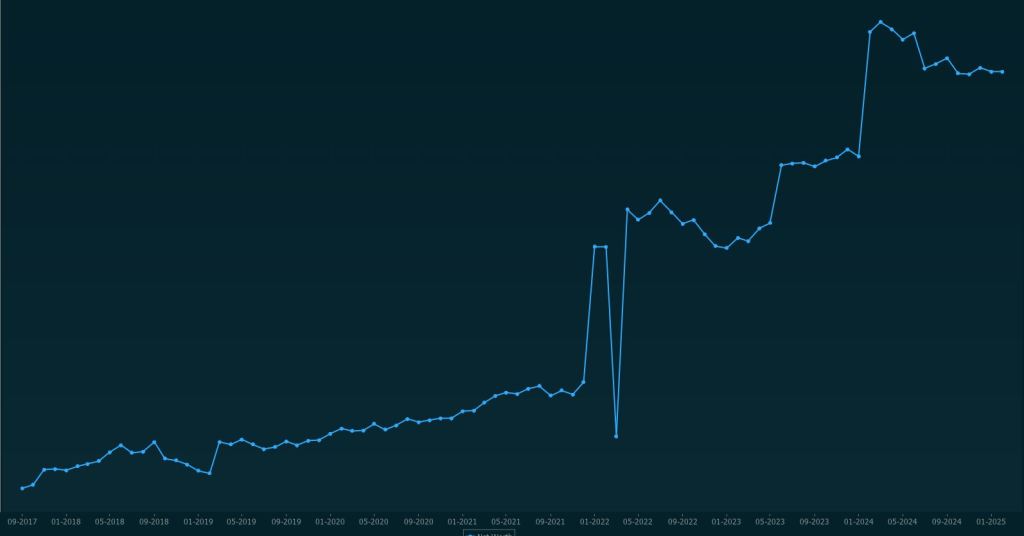
He’s used the budgeting software for 15 years now, and I have for seven. I think the most fascinating realization for me is how the numbers and charts tell a story. In his net worth chart, the largest dip in the line graph was when we traveled overseas for the first time. He had to spend a lot of money and also lost wages for three months. For me, the steepest decline in my line graph was when we downsized from a single family home to a town house and I used my savings to pay for a portion of the house. It’s so worth it though – because we were mortgage free afterwards!
Budget Deliberation Day is also an opportunity for us to talk about potential big expenses for the upcoming year. This helped us plan for a new roof, hot water tank and furnace. This helped us plan for our big adventures, whether it is travel, changing careers while ensuring we can pay our bills while finding a new job, running for politics, or aggressively increasing our retirement savings. I personally think that unexpected financial surprises, especially the type when the other person can claim “you could have talked to me about this sooner because you knew!” is what causes conflict between couples, not the actual numbers being shown in the budget.
It’s truly a solid way to start the year, secure and confident in my ability to be financially aware, appreciate my spouse for his diligence, and look forward to our future together.
Lately, my corner of the internet is full of discussions about how couples share responsibilities in the home, how in many cases the division of tasks could get unequal, and passionate opinions on what to do when this is the case. I wanted to add my two bits into this discourse, not to side myself with a specific point of view, but to reflect and assess my situation as someone who is married for coming into five years (wow!) and sharing a home with my now-husband for coming into thirteen years.
In 2022 when my husband started to work for my father-in-law, he would go to work four days a week and then go to school remotely on Fridays. On these days he would be in the home office for most of the day, taking breaks only for lunch. Then he started to do one task which is doing laundry. It’s easy enough to do in between long study sessions since we only have two loads of laundry between us. Last year, around October 2023, he took a break from schooling on Fridays and it became what we now officially call as Househusband Friday.
How does it look like? It starts with us doing our own thing for breakfast and then once I’m ready to leave to the office for work, he would walk me to the bus stop. So we’ll have that small bit of quality time during the walk until the bus picks me up and I wave goodbye looking out the window. Maybe it looks like I’m a child being dropped off the yellow bus to school, but I don’t care. I love it. It’s sweet. It’s very kilig – Filipinos would get it!
Then when he gets home, from 8 AM to 1 PM he would nonstop work on the list of tasks. These included weekly chores like doing laundry and dishes, semi-monthly chores like vacuuming, dusting and grocery shopping, and the as-requested tasks like disposing items to the eco-station, changing the batteries of smoke detectors, deep cleaning the very top shelf of the kitchen cabinets, and more. He would then relax for a couple of hours, and then make dinner.
If there’s one thing we both love – I mean aside from each other – it’s our task lists. So it is not weird, unromantic, or offensive to have a list on our whiteboard of the things to do and even what I would like to have for our dinner. I’m pretty flexible with it actually. After a few months of this routine, it feels so nice to come home to a warm meal and a yummy drink (usually a smoothie) ready. And usually there’s leftovers enough for one or two meals on the weekend.
Then as the weekend comes, it’s my turn. I love to neatly put away our clothes, so I’m in charge of folding and hanging laundry. When the bathroom needs deep cleaning, that’s on me as well. I do prepare any other meals for the weekend, while he finds time to check his budget and pay the shared home bills. If there’s a home tasks we need to do together, we find time for them as well. If the chore is a bit creative, we like to consider it a mini date, like when we made this lawn ornament a few weeks ago.
The day before the start of the work week, usually Sunday or Monday of a holiday long weekend, is the busiest for me as I meal prep for the week. But it’s not all me. My husband cooks the meal we bring to his father’s place for our regular Sunday dinner, or as we call it, “Spaghetti Sunday” because we mostly make spaghetti and meatballs.
As a couple we also like having titles or official terminology on things we do. We describe ourselves as “team communicate”, we ask for a “feelings check” or start the “intensity check” process when we are stressed, so “househusband Friday” was a very welcome addition. Once a month, we also have a dedicated “plant maintenance day” for when we clean and re-organize our 12 Aerogarden units for our indoor farming set up.
During the week, we strive to cover for each other too. We load, run, and unload the dishwasher with minimal prompting. When I make one of the upcycled outfits and bits of thread and fabric are strewn over the dining table, I do a quick sweep with the walis, a plant-based soft broom imported from the Philippines. He is good at preventing messes from happening in the first place.
Truth to be told, I really appreciate that there’s more awareness and discussion about how couples divide household chores. I feel horrified at the stories I read about how apparently, husbands would deliberately and maliciously mess up a task to make their spouses upset to the point of not asking for help again. I remember being stunned at learning the term weaponized incompetence, but it fits in many cases.
The tricky and nuanced part is determining when to confront, when to educate, when to accommodate, and when to finally terminate the relationship. In online discourse where stories are condensed and context could be incomplete, it can feel excessive to see suggestions of “throw the whole man away.” But there are times when it’s valid. There can be times though when digging deeper through the root of the problem, whether it is trauma, illness, difference in cognitive abilities, lack of education but with willingness to learn, or something else, can help make a process that works for everyone involved.
I think it’s partly why I cringe when some people claim that a to-do list is too childish or offensive. And if a list is a no-go, I could imagine the haters when they find out how I write the grocery list for my husband since he started going alone during Househusband Fridays. Not only is it handwritten (gasp!), I make a new one every time instead of a standard list (gasp again!), the items are arranged based on type of item and also listed sequentially based on the layout of the store. Personally it is the ultimate example of setting someone up for success and making the tasks as quick and efficient as possible.
In my humble opinion, chores are most of the time not fun. Anything and everything that can be done to make it as quick, efficient, and enjoyable for the couple as they do them individually and together, is a win. I heard the argument that money is the main reason for divorce. I’d say a second close one is conflict with domestic duties as they are part of everyday life. It these issues are unresolved, it can affect someone multiple times a day, and can really wear people down over time.
Appreciation goes a long way too. Maybe it seems childish, but the occasional compliment for completing chores or admiring the outcome can help remind our spouses that the we see the effort they do. I think the most common phrase we say in my home is “thank you, baby!”
Chores and the domestics are an integral part of one’s health and keeping the relationship strong and sustainable. If there’s one thing I wish all couples have, is to reach a state of domestic delight. That the mundane aspects of maintaining their home is a source of joy, security, confidence and bonding.
During one of the househusband Fridays this summer, I had the day off. He still went through most of the tasks on the list, but I took over some of the seasonal tasks I added earlier this week. He did the weekly laundry and dishes and the vacuuming for the month. I mowed the grass, reorganized our little backyard patio, from the furniture, the barbeque and the pile of bags of refundable bottles. Afterwards he started to install a second-hand printer we got, until it got so frustrating that he smashed it just like in Office Space. He wanted that printer out of the house ASAP so we went to the eco-station to dump it off.
As we waited for our turn to enter the eco-station gate he asked, “Does this count as a date?”
Giggling I said, “Of course!”
We continued to hold hands, with his other hand on the wheel, while the car idled along a queue of cars with people doing the same mundane task of disposing their trash.
Earlier this month, a high school student volunteer and I were doing some community service work for my neighborhood. It’s a requirement for her Grade 12 Religion Class. She is a Filipino teenager who is relatively new to Canada and Edmonton, being here for just a few years with her experiences limited by having to attend school remotely.
She also volunteered for my neighborhood community league last July and August for her Grade 11 Religion Class during summer school. So we’ve spent some time with each other and have gotten comfortable chatting about various things. It’s been pretty fun!
During her most recent volunteer shift, she was helping me pick up litter along the public sidewalks in my neighborhood. It was tricky as snow has fallen over the past two days, hiding the pieces of trash I know were still stuck there for the past few weeks. We’d kick and shove the freshly fallen snow, pick up pieces of cardboard, plastic and the occasional pencil with our pickup stick and shove it into the trash bag I have open.
Feeling good about being outdoors in the cold for two hours and filling a large bag of trash, we went back into our community hall to clean up and warm up. By this time we’ve talked about many things that teens are likely to talk to an older cousin or cool aunt about – school, friends, crushes, Canadian culture and etiquette and my experiences with these as a Filipino newcomer teenager 15 years ago.
We switched to the topic of music and got into the conversation of beautiful duets we enjoyed listening to. That’s when I shared to her the very first time I heard a duet sang by two women (female voices) and how it changed my outlook on music. Until then, in my childhood years, I’d always thought of duets as something sang by a man and a woman as their vocal ranges are so different from each other. Until I was proven wrong.
It was in the early 2000’s and I was a second year high school student in a mining village in the Philippines. It was time for Intramural competition, and in my school, the performing arts and athletic competitions are equally intense. On the performing arts competitions there are solo singing, duet, individual and group dances.
The duet singing competition started. I remember being curious when two female students went on stage. They performed the song “Tell Him”. I got goosebumps hearing them both sing the chorus!
Tell him Tell him that the sun and moon Rise in his eyes Reach out to him And whisper Tender words so soft and sweet I’ll hold him close to feel his heart beat Love will be the gift you give yourself
Their voices were both clearly feminine but were distinct from each other. On top of that, they were not acting like a couple singing those words to each other, which made them stand out even more than the other contestants. I remember the screams of amazement, the cheers and the standing ovation we gave as the audience right after the song. They were the clear winners for the category even before the official announcement happened a few days later in the award ceremony.
It wasn’t until years later when I thought of this performance again. I search the song online and watched the original performance by Celine Dion and Barbara Streisand. And as I listened to it, my awe and appreciation just all came back.
As I was telling this story to the student volunteer, I pull out my cellphone to show her the YouTube video of the original music video. She seemed just as astonished as I was 18 years ago that two women can sing together in such a contrasting and harmonizing way. I sang the first two lines of the chorus, both with the soprano and alto lines to show how different they sound individually, encouraging her to imagine how they sound when combined.
This song continues to be one of my absolute favourites because of how my schoolmates performed it, in the underground gymnasium of our high school. I don’t even remember the names of the students who performed, but I know that the community if people who lived in the village of Philex Mines is quite vast all over the world. If this post somehow reaches them I hope that it becomes an opportunity for lovely nostalgia of their high school years.
In some ways we are unconventional and I love it! My husband likes to tease me about the ways I have showed ‘public affection’, more specifically, broadcasting about our relationship and marriage.
I’d usually respond, “Well, what do you expect when you are married to someone so amazing?”
Public Art
Around summer 2017, because it was the 150th year anniversary of Canada being founded, there were numerous projects and community activities to participate in. In our former neighbourhood, we applied for grant funding to achieve two goals in one – a community building exercise and a combination of public art with prevention of unwanted graffiti. Over a few weekends, residents had a chance to sign up for a spot, plan their artistic idea, and go to the public sound barrier walls to paint their masterpiece.
During that weekend in June I multitasked, supporting everyone painting by making sure they have enough paint and snacks, while painting my own mural as well. As a result, I made a simple, cutesy painting of him and me, with the phrase “Did You Know You’re My Love”. It was fun and five years later, while some of the paint is fading a bit, it is still in good shape. The best part, even after we moved to a different neighbourhood here on the west end, we can still visit the location by walking. And it’s so much fun dropping by to see our mural, and the dozens of other ones painted during that summer.
Public Speeches
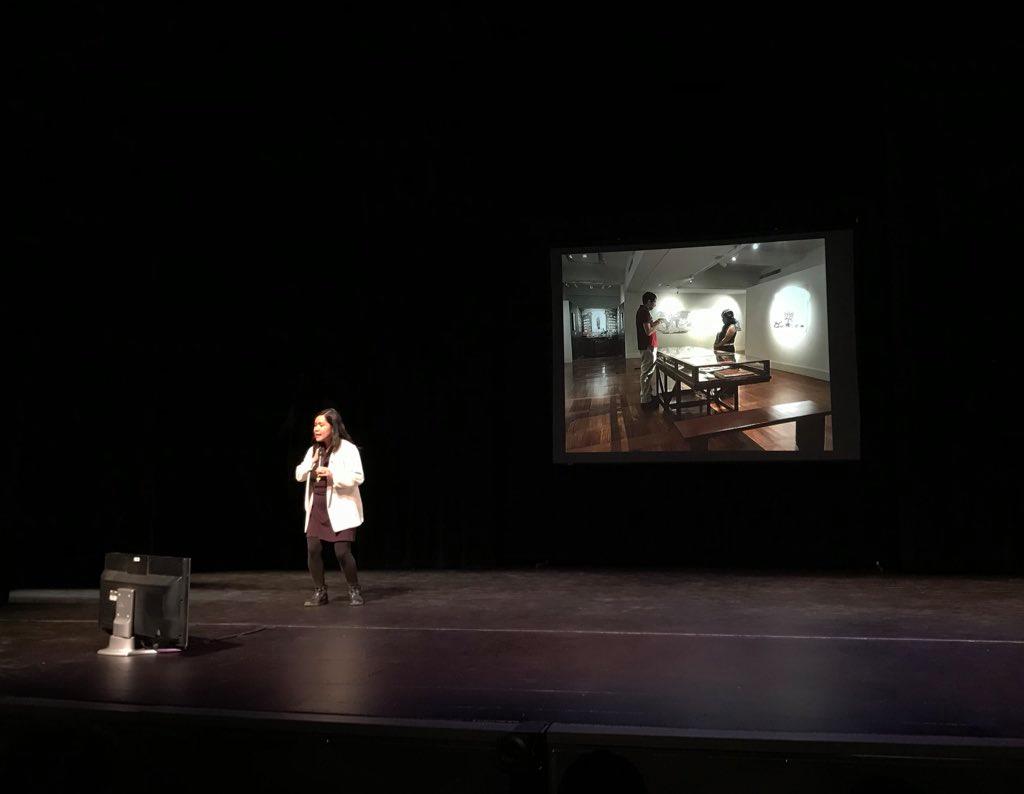
While I’m not as frequent and intense as Ned from the Try Guys that I mention my spouse every single moment of every single day, I’d like to think I make up for it in quality. Back in 2019, I was nervous when I applied as a speaker for Edmonton’s Next Gen speaking event called Pecha Kucha Night. My topic can be described as bit too personal and perhaps uncomfortable for a public audience. It’s titled “Dating a Sexual Assault Survivor”. But I felt in my heart, that my husband and everything he did was amazing, particularly when it comes to caring for someone with a lot of traumatic baggage, and there is a lot.
I was so relieved that I got accepted as a speaker. A bonus is that the event took place a month after our wedding, which was in front of the mural I painted a few years back. It was the perfect way to end the speech. When I got to the part where I said “so a few months ago, I proposed to him and he said yes!” and the large screen showed a wedding photo, cheers erupted from the audience. With all that said, the most valuable part for me is sharing my experience and potentially useful advice on how to love, care and be intimate with a sexual assault survivor. I hope that other couples were able to learn something from it.
Public Articles
While sure, we have our artwork in our house and our private diaries over the years, another way our relationship has been documented publicly is through articles, paid freelance articles, where my relationship with him is a major aspect of the topic.
There’s these two ones through CBC, a major broadcasting outlet in Canada:
And there’s this other one from a local project focused on preserving local heritage and stories:
Whenever I write something that will be published in a large platform like this, I strive to be mindful of the content and language. There are a some topics he is sensitive about so I don’t include it at all. The angle always focused on being informative, maybe a bit romantic but not necessarily explicitly sexual, wholesome and inspirational. So far, I am three for three in these articles. For my larger scale writing projects, this is something I will strive to maintain.
The husband accepts the fact that I’m a bit of a public figure in my own way, and I like to do projects and activities that reaches a wide audience sometimes. As a couple, we have embraced and enjoyed avoiding the trap of obligatory gift-giving for every single occasion, which has saved us a lot of stress and money. I’d say that these are more fun and something you cannot buy from a store!
“That is a cool idea, my love. But I don’t feel comfortable initiating that at all. If we’re gonna do it, I need you to set it up, or at least do it along with me.”
When you are so used to being your own provider, advocate, and nurturer, when you are in survival mode for so long, being afraid can be devastating. Feeling fear means being vulnerable, which means being harmed, putting myself and the people I care about the most (which for most of my childhood would be my brother), at huge physical and emotional risk. The pain would be a double-whammy, from the situation and how our unmet practical needs are exposed, and from the heartache from realizing there is no one to rely on.
Being vulnerable enough to express discomfort is one of the biggest risks I’ve taken, and continue to take, in my adult life. The only setting where I’ve felt okay enough to do this, is the place that matters that most, my own home.
For me, admitting fear involves these different parts and with all of them together, has helped in addressing, confronting or putting things in perspective.
First, is giving myself permission to be concerned or afraid or threatened. Learning that ’emotions are information’ is the foundation of me being able to do this. I’ve learned to not immediately attach a moral assessment to my emotions, and that the concern or fear is related to something about how I perceive my environment. Since all emotions are valid, I’ve learned that it is okay for my mind and hear to express whatever I am feeling in that moment.
Second, is labeling, putting into words the type of fear, and saying it out loud. Anxious, uncomfortable, overwhelmed, unsafe, uncertain, confused, worried about being injured, are just some of the ways I now express my fear about something. Another important part is being able to assess and rate the level of fear. It can be 2 out of 10 level of worry about something in the near future. It can be a split second 5 out of 10 quick jump scare because a garden snake jumped out to our walking path. It could be a 4 out of 10 moment of anxiousness because of having to go door-knocking as a political candidate who is a visibly Asian woman. I realized that the more specific the descriptor and the number rating, the more capable I am in doing the next two steps.
Third, is reaching out to express it. This is also a work in progress. Even the mere act of saying, just to myself “hoo boy, I’m worried about this!” is a milestone in itself. A few times, I’ve come along with my husband and his running group that has meetups all year long, including winter at -30. During one of the winter runs during a milder day, I joined him and the route involved some trails along a side of a hill, doable in the summer but with ice and snow it’s a bit tricky. Allowing myself to even pause and look afraid for long enough for my husband to notice my apprehension, is a form of expression I wasn’t always able to do.
The final one, is to find solutions and asserting my boundaries. I eventually learned that it is okay, it is possible, to move away from the threat. There are a variety of solutions, whether it is just vent and let it go, or monitor the situation because I’m more informed and equipped these days, or let someone do the heavy lifting on my behalf. It sounds like a no-brainer, but I now feel okay saying “that will be physically or medically unsafe, so no thank you” or not be ashamed to tell myself that my financial security is more important at this point.
For so long, the definition of courage that I embraced is in enduring, persisting, putting a brave face. All of that is important, and all of that is out of necessity. My goodness though, it is nice to not to do that all the time. I want to close this post with the lyrices of a song that always resonates with me when thinking about this topic, “The Warrior is a Child” by Gary Valenciano.
Lately I’ve been winning battles left and right But even winners can get wounded in the fight People say that I’m amazing I’m strong beyond my years But they don’t see inside of me I’m hiding all the tears
They don’t know that I come running home when I fall down They don’t know who picks me up when no one is around I drop my sword and cry for just a while ‘Cause deep inside this armor The warrior is a child
Unafraid because his armor is the best But even soldiers need a quiet place to rest People say that I’m amazing I never face retreat But they don’t see the enemies That lay me at his feet
They don’t know that I come running home when I fall down They don’t know who picks me up when no one is around I drop my sword and cry for just a while (I cry for just a while) ‘Cause deep inside this armor (deep inside this armor) The warrior is a child
They don’t know that I come running home when I fall down They don’t know who picks me up when no one is around I drop my sword and look up for a smile ‘Cause deep inside this armor (deep inside)
Deep inside this armor (deep inside this armor) Deep inside this armor (deep inside this armor) The warrior is a child
Trigger warning: Trauma flashbacks, nightmares, violent sexual assault
I’m sharing this in time for Sexual Violence Awareness Month, which is in May. If you have experienced sexual violence, there is help. This is just one of the many amazing organizations that can provide support and healing. https://www.sace.ca/
On Easter Sunday, my husband and I decided to go to bed like it’s a regular Sunday. He is working the next day while I have the day off.
Sometime in the middle of the night, I had a horrific nightmare. Having nightmares related to sexual assault is not new to me, I’ve had them on and off for a few years. But this was such an expected curveball.
I was captured, together with other people, in what looked like a room in a building located in the mining village where I grew up. There were no other clues or signs that indicated where I was, just the people I was with. I was with N(a childhood classmate), his mother C and a few people whose faces I can’t figure out.
Our captors look like soldiers, and they were rounding up the people they have captured. I don’t hear any sounds from the others, because I was paralyzed in horror as I realized what they were doing to the younger women like me. The soldiers were taking turns raping them.
And then, came my turn. My vantage point shifted from what was happening around me to just seeing how my face, my eyes looked like. I can’t tell who or how many men were violating my body. I can’t tell where it hurts, what body parts or tools were they using. Did they have a gun pointed at my head? Were they yanking my hair so they can access my mouth? Am I getting struck by sticks, ropes, or knives? Was the pounding in my vagina or anus so rough my body shook uncontrollably? I don’t know, I couldn’t tell.
From my vantage point, I see just my head, sometimes bouncing and shifting in direction, likely because someone or something was ramming inside me. Am I lying down, am I tied up, am I sitting up, am I being straddled, carried or thrown around? I can’t tell.
Everything around her face – my face – was fading away. And my eyes – her eyes – came to focus. And I know that look. The flash of horror from knowing what is about to happen, then the silent scream of taking in all the pain happening all around my body inside and out, and how much being violated is ripping my soul. And then, the resignation and escape, when the brown of my eyes lost sparkle and life, still wide open but fading into dullness and numbness. My head bounces more roughly, the invasion getting frantic. My mind trying to tell me “he’s almost done, it’ll be over soon”.
The next thing I know, I’m thrown into the ground, my body naked, grime and mud on my arms, legs and knees, my belly feeling hollow and raw. I lay them stunned for a few minutes, and then I tried to crawl on my hands and knees, forcing myself to sit up. As I painfully manage to do so, I look down between my legs. There’s a pool of bloodon the dirty floor, slowly growing in size.
I frantically crawled to the end of the room, where my fellow captives were. I locked eyes with N, who was sitting beside his mother. As I get closer to them, C had a good look at my battered, broken body and my lifeless eyes. She then pulled my in her lap, the way a mother would for her child. I scrambled to touch the blood still coming out from between my legs and weakly asked “I’m not that broken, am I?” She said “no you’re not!” and pulled me closer, as if giving me permission to seek refuge in her arms. I crawled closer to her lap, and wept.
And that’s when I woke up, shaking, crying and breathing hysterically. It shook the bed so much that it woke my husband, who swiftly took me in his arms. This is nothing new to him, although I can tell for sure, the first time in at least a few years.
What’s even more messed up is that it’s not the sexual assault that distressed me so much to wake me up. It was when a motherly figure, one that I don’t have anymore, tried to give support and comfort. The reminder of what I don’t know, of what I will never have again, is what hurt more, enough to shake me awake.
It wasn’t until the morning when I was about to prepare for lunch, alone in the house, that I realized that it has been fifteen years since the sexual assault incidences that happened to me took place. It felt like so long ago, but at the same time, it doesn’t.
Another realization that made me pause is the gruesome scene that came in my dream. The sexual abuse I experienced was with a known person, and involved more blackmail and quiet threats. No tools, weapons, or violent physical injuries occurred. I think that subconsciously, the knowledge that rape and sexual abuse are common tactics in war came up on the surface that night.
During that week I had a surprise. Turns out, my next therapy appointment is for that upcoming Sunday. It was a relief knowing that I’ll have my phone call in just six days instead of thirteen. Telephone therapy went well overall, and this was the last thing I brought up. He confirmed something he had said in the past, the reality of how trauma works. Triggers can be unexpected and can pop up anytime, and it will affect me in varying degrees for the rest of my life. Hearing this a few times in the past, it feels more reassuring every time. Because it means I’m not flawed or weak or bad for having reactions to these again.
But with all that said, I’ll be glad if it is five years or more before I get a horrific nightmare of this sort!
The consequence of not having solid role models of what a loving, caring, mutually equitable marriage looks like, is that I had absolutely no clue where to start. While I am lucky enough to have some memories of my parents until they died when I was eight years old, that is not enough time to learn, remember and apply it in my own relationships. One thing did stand out, and that is they treated each other well, so at least I know that this is a valuable principle that I want to have, and want to make happen, in my own marriage.
Luckily for me, I was book smart as a child and have retained some of the positive aspects of being one. That is, being resourceful and not feeling ashamed to do research, whether it is print or online resources, on how to do things. It’s something I’ve done for many years, including the awkward topics that I felt are just as important, such as learning about sex positions!
A YouTube channel I’ve started watching recently and really loved is Cinema Therapy. It’s an amazing Youtube channel that analyzes movies from a mental health standpoint, from a filmmaking standpoint, and hosted by two men (a registered psychologist and a film director) who are very open about their emotions while reviewing the movies. One of their videos talks about the 1990’s version of the Addams Family movie and how the main characters, Morticia and Gomez, showcase several key principles of a good marriage. In this video, the new concept I learned which I really like is the one of Love Maps.
A Love Map is the “part of your brain where you store all the relevant information about your partner’s life” as referenced in the book mentioned in the YouTube video, the Seven Principles of Making Marriage Work.
This is gonna sound cheesy again, but my husband, bless the man, has already been doing this without knowing the technical term for it. Many times in the past, when he learns something new that caused a strong reaction in me, both positive or negative, he makes an actual effort to remember them.
I’ve talked about the concept of Love Language before. I realized that the concepts of Love Language and Love Map go hand in hand, and I think it’s remarkable! Love Language focuses on categories that are very practical and tangible, while Love Maps can help find and apply specific observations or preferences.
So, using my husband as an example, the love languages he likes to receive are acts of service, quality time, and touch. Integrating the principle of the Love Map here means the following examples:
He appreciates food being prepared for him whenever I am at home. It doesn’t matter at all whether it is 100% homemade, takeout, or simple processed food like a frozen meal or a can of soup. Having a plate or bowl of warm food and a drink placed in front of him is something he really loves.
He appreciates that I know how to repair clothes and re-purpose non-wearable clothes into other functional household items. The most recent one is the pair of pants I repaired so many times, and when it’s no longer salvageable, I turned it into a pillow. He describes them as “gift made with love”.
Spending time doing different things while in the same room is quality time.
He loves cuddles and hugs throughout the day, and bed cuddles during daytime hours can only last up to 30 minutes max, then he gets restless.
In my case, the love languages I really cherish are acts of service, touch, and words ofaffirmation. Integrating the principles of the Love Map here means the following examples:
While I like all various types of affirming words, my outward reactions to them vary. Hearing “you’ve my love” and “I love you” will have the most immediate and reciprocating response with me saying “I love you too!”. Compliments about my skills “you’re such a smart baby!” would make me feel nice inside, but my reaction is more muted, likely because I’m raised to be modest about my skills. Compliments about my appearance “you’re a sexy lady!” are also lovely for my self-esteem, and I need to work on responding to them still. It is nice to be reminded at least one person thinks my butt is cute!
Acts of service for me includes self-organization and self-care, not just actions done directly for me. So, paying the bills on time or emptying the dishwasher are amazing, as well as him taking a break from chores and playing video games so he can de-stress. There’s no need for him to iron my clothes or buy my preferred snacks from the Filipino convenience store.
I love all forms of touch! We hold hands in the car all the time. When we “bump” into each other in our home’s hallways there’s always a little kiss or butt grab! And cuddles for at least 15 minutes at bedtime before sleeping is an integral part of our bedtime routine.
Combining this with other things I’m trying to do for my own individual wellbeing, such as therapy and learning about mental health, I hope that we are able to continue to be there for each other. This upcoming year is a year of a lot of change, and I hope that we will be able to ride out all what is to come and have our relationship in one piece.
There’s no need for a rocket scientist to tell me, or anyone else, that people seem to be more divided than ever. There’s enough commentary around lamenting the increasing ‘us versus them’ mindset, amplified by social media, people speaking out against injustices they have suffered from for so long, and people feeling anxious about all social, economic, and political changes happening around them.
“This is a hill I’m willing to die on” is one of those euphemisms that I, as a English as Second Language speaker, try to wrap my mind around.
In a government advisory board I volunteer for, a long-time board member suggested the concept of ‘understanding, not agreement’.
I think this means, making an attempt to follow the thought process of someone’s argument or reasoning, without necessarily agreeing with this person’s position. It is something I haven’t heard before and it stuck with me ever since. I think that there is value to what he said, something I am discovering more and I expand the ways I volunteer in the community.
It gets tricky of course when the person’s perspective is inherently harmful or invalidating the suffering of others. I don’t have an answer right now on how to navigate this. I think that would be the necessary next stage as I try to get more involved in the community.
In one of my recent appointments with my therapist, we talked about getting backlash and criticisms and how to react to them. One piece of advice she gave was ‘find the nugget of truth’. I think there is something to that. Even if a racist person keeps on spewing out problematic commentary, if you dig just a little bit, there is something else beneath the hostility. It can be ignorance, it can be fear, it can be lack of belonging, or a little bit of each.
Someone who keeps on mentioning economic impact when it comes to policy decisions might not necessarily be a callous jerk who cares only about jobs. Perhaps their train of thought is that financial stability is a valuable foundation of a person’s wellbeing, and if that is not considered, it can be tough to convince people to do certain actions.
Someone who keeps on mentioning the number of people dying when it comes to policy decisions might not necessarily be a delusional person who thinks the government has unlimited money. Perhaps their train of thought is that every single life has value, and believes that if a person is dead because of government policy failing them, that is completely unacceptable.
Back in university, I remember reading an article about how conservative and liberal minded people can convince the other camp of their perspectives. The essence of the advice was to use the logic and mindset of the other party to frame the arguments towards the topic of discussion. For instance, it can be valuable to say that increased environmental protections through policy can help preserve and maintain the God-given nature, a precious resource and blessing that deserves care.
Given that COVID19 is still an issue, after almost two years, in an attempt to protect my mental health, to protect people around me from being subjected to my anger, and to keep my faith in humanity, I’m trying a bit harder to tell myself these days “understand what led a person to believe that way, even if in my own mind, it is completely nonsensical”. A book I read during a trip, Predictably Irrational: The Hidden Forces That Shape Our Decisions by Dan Ariely, also reminded me of the natural and human flaws of decision-making and belief.
As I browse through the different definitions of the word understand, I’m trying to learn how people behave and communicate, even if I am not convinced of their mentality.
to perceive the meaning of; grasp the idea of; comprehend
to perceive what is meant; grasp the information conveyed
to be thoroughly familiar with; apprehend clearly the character, nature, orsubtleties of
to accept tolerantly or sympathetically
to assign a meaning to; interpret
to grasp the significance,implications, or importance of
And in the process, I can see more clearly why some people have views that are discriminatory or ignorant. Many beliefs and behaviours are harmful even towards oneself, but from the perspective of trauma or being in survival more, a clear path emerges.
How about confronting and addressing these mindsets that are problematic? That is a whole different conversation altogether.
In an attempt to fill the gaps in support and knowledge from my ongoing therapy, I was seeking out additional resources to help with dealing with the pain and loss of being an orphan. While my therapist wasn’t able to point me to an local support group, I found an adequate starting point.
I just finished reading the book Motherless Daughters, The Legacy Of Loss: by Hope Edelman. This is a Thank You Letter and a book review for the person who recommended this book, a remarkable woman in Edmonton named Mimi.
November 29 2021,
Dear Mimi,
Thank you for your lovely invitation to go out for lunch a few weeks after the outcome of the Edmonton Municipal Election last October 18. It was wonderful to chat with someone who experienced many of the things I have as a first-time elections candidate, as someone who is a person of color, and a woman. You shared many stories and insights that will help me as I go through my emotional recovery after not winning this election.
On top of the political commentary and stories, you kindly asked important questions about one challenging reality I have, as someone who doesn’t have a mother figure in my current life, and as someone who hasn’t had such a person for a very long time.
If my memory served me right, you actually haven’t read the book yourself, but you shared to me that Motherless Daughters was a book recommended to you a while back. I believe you said that you’re not the self-help-book-type. I was overjoyed though, since self-help is a book category I read on regular basis. Thank goodness an E-book version was available through the Edmonton Public Library, and I started reading in on nights and weekends when I have spare time.
The book was written and researched by a woman whose mother died when she was young, a teenager, and it involved numerous interviews and questionnaires from other “motherless daughters“. I liked how the book chapters outlined concepts bases on topic, such as navigating womanhood, romance, family, motivation and self-worth as a motherless daughter.
My favourite was how the book outlined key differences in terms of impact, depending on the child’s age when the mother passed away. I was eight when my mother died, together with my father and sister. Old enough to remember who they are and to know that life will never be the same after the deaths. Too young to do basic household management functions on my own. Too ill-equipped to grieve but not immune to the need of it.
It was a tough read, where every paragraph hitting me hard, shedding a light in very dark corners of my scarred soul, revealing wounds that never really completely healed. Especially in the first five chapters, it felt like every third paragraph made me cry, the vision of a child in her brokenness that was never acknowledged, and was just hidden away for so long. The stories of the other women and the commentary from doctors and the referenced resources, are both haunting and illuminating.
While distressing and unfortunate, I learned that it is actually normal for people to freak out when they reach the age of death of their same-gender parent. I thought that being fatalistic, catastrophising is a unique issue I am having due to election stress. Seriously, for the last six months before the election day my mind was telling me relentlessly “If I lose in this election, I have three years left to prove my worth. If I am not able to accomplish something profound and remarkable, my mother’s sacrifice was worthless. I don’t deserve to outlive her, and ending my life then is the right course of action.” I cannot rationalize it then, but yes, I was measuring my life and worth based on a very specific number, 33 years of age.
Now, there is huge comfort from realizing that this is a common occurrence. That subconsciously, people can be neglectful about their lives, or in the case of those whose mothers died of suicide or addictions, the adult “motherless daughter” ends up replicating those behaviours. It comes from wanting to grasp any way to find a connection with the mother that died too soon. So this is something I have to seriously watch for between now and 2024, that I don’t harm or kill myself, either by suicide or self-sabotaging my wellbeing.
Chapters of the book outlined how motherless daughters like me are stunted in our development, pushed to maturity and independence too early in some ways. But we are also stuck in childlike tendencies and yearnings in other ways. Instead of feeling inferior, I felt liberated by this. This paved another path of acceptance, and also pride, that my childlike mindset has not affected my adult life in debilitating ways.
For me, knowledge is power. I imagine it comes from my need for control from needing to look after myself (and my brother) at such a young age. I cannot describe how relived I am in realizing a few things:
That I will likely grieve again, in cycles and waves, for the rest of my life. When I reach womanly milestones, I would then yearn for a mother’s presence and guidance. Like during my first period, potential pregnancy and childbirth, menopause, even being a widow, financial and career changes, and many more.
A few time and age-related stages will be particularly difficult, such as reaching the age my mother died (which for me is in three years), giving birth, and when my child/ren reaches my age when my mother died, which is eight years old.
This is a huge blessing that came at a perfect time. Did you know that just a few weeks ago, during my therapy session right after the election, that I told the doctor that I need a very specific support group for people like me? He was sympathetic and understanding but the referrals provided were too broad for what I am seeking. This is the next closest thing to a support group and it worked really well as a starting point. I’m super grateful for the recommendation, as this has officially marked another journey of my healing from trauma, unpacking the fallout of being an orphan.













 FilipinaYEG