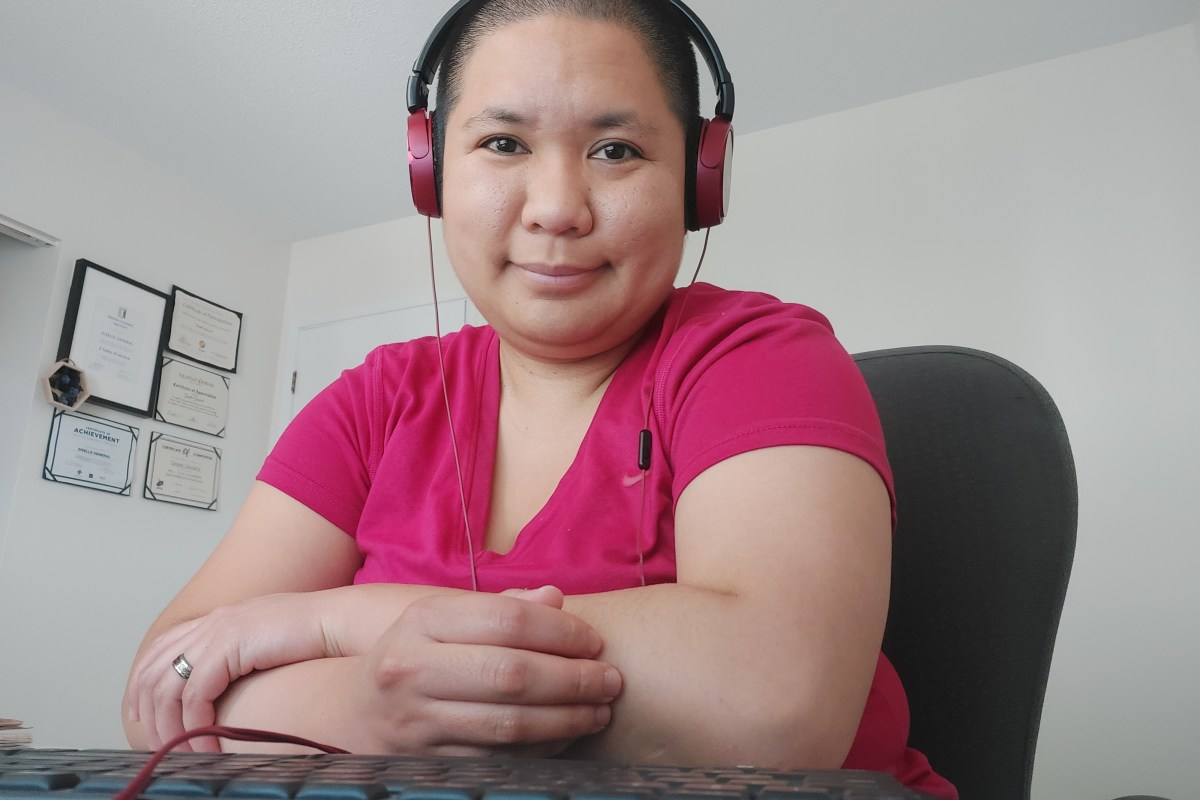
Memoir Writing Reflections #10: I Got a Contract

By: Giselle General

Most of this year has been preoccupied by my second attempt running for city council, where I lost again.

Now that it’s over, I can re-focus again on my other endeavours that have been in the works for several years now. I made a social media post when I signed the dotted line last June, but I can embrace and fully recognize and celebrate it again – I got an author contract!

Earlier this spring I received an offer from NeWest Press, a nonprofit local publisher based here in my hometown of Edmonton. I really love the fact that it is local. I also really love that I am not the first Filipina-Canadian author they worked with. I highly recommend buying or borrowing The Cine Star Salon by Leah Ranada. I figured, if NeWest helped make her book into its final form, then I’ll be in great hands.

I’m equal parts baffled, humbled and excited that I got a contract quickly by comparison, only a year after I have completed the all the professional editing and beta reader services for the manuscript. I’ve heard so many stories of past and present struggles from writers about taking a very long time, as in years, to get a publisher. From feeling frustrated waiting for a long time, many decide to self-publish or make changes to the manuscript over and over to submit again.

It’s such a fascinating and intimidating experience reading the author contract that I searched for lawyers and contract reviewers to help me understand all it entails. There are some straightforward stipulations such as being on time with giving feedback on the manuscript, the advance payment, how many will be produced and what happens when copies are sold. And there are some long-term items should the book gain traction, such as movie rights, international distribution and translation.

Part of what makes this book writing process likely a bit unusual compared to many writers, is that I technically already got compensation. Thanks to the grants I applied for during the writing and editing process, I feel like I already earned some income from my writing efforts. And I will be the first to recognize how fortunate that is. I still remember the e-newsletter from the Edmonton Arts Council emphasizing that roughly 20% of applicants get approved. I bet that percentage is even smaller with the Canada Council for the Arts with the applicants all across the country. Both organizations gave funding for this book. I will never take that for granted.

As a result, I don’t feel pressured to sell a certain number of books to earn back my time and effort to break even or make a profit. Everything else is gravy. But of course, I’d like to have as many book sales as possible. The fact that contracts now have standard clauses for movie rights and international distribution can make anyone dream big!

The most remarkable part of this, is that it truly feels like a full-circle moment. The assigned editor for this final stage is the one who helped me get started in the first place. Wendy McGrath, my author mentor with the Writers Guild of Alberta program called the Horizon Writers Circle back in 2022. The one who said to me with fierce determination when I first talked about the idea of the memoir, “yes, in six month we will finish a first manuscript together!” The one who insisted that I start applying for grants so I can get professional editing services and pay them properly. The one who also edited a separate written work for a local anthology. The one who already have read and edited several chapters of the first draft. Most definitely, the perfect person to help take it to the finish line.

I like my rules and timelines so pretty soon, I will be fully working on the final round of editing for the manuscript before it officially goes on print. I had two additional manuscript review services I used a while back, but I didn’t incorporate their recommendations when I submitted the manuscript to a few publishers. This final review will be the perfect time to read the feedback to see if the delivery of the story can be more effective in some way.

Some major changes that need to be done are changing the names of the characters to protect people’s identity and decisions on how to deal with copyrighted content such as songs and poems. It felt right in my heart to add actual sections and quote them in the chapters when I was first writing. But in its final form, I feel more open to removing it altogether. It can be quite expensive to request for authorization and rights.

I’ve casually talked to people in the city the past few weeks about the book, as a way to deflect the conversation after I receive the standard sympathetic comments for losing at the election again. I met a person from another local bookstore I haven’t heard of, who said their shop is willing to host an event and a local reading session. My massage therapist told me that I should inform them when the book is out as they have a shelf by the reception area to sell locally made products. I’ve already been to a few book launch and author reading events and plan to attend more in the next while.

Even before all the book-related activities, I do have another launch coming up soon, the premiere of the documentary project Building Pinoy. Any lessons about promoting a creative project, dealing with reactions, will definitely be something that I’m sure I can apply for the book.

There’s an actual finish line that I can foresee. A year and a half will fly by quick.
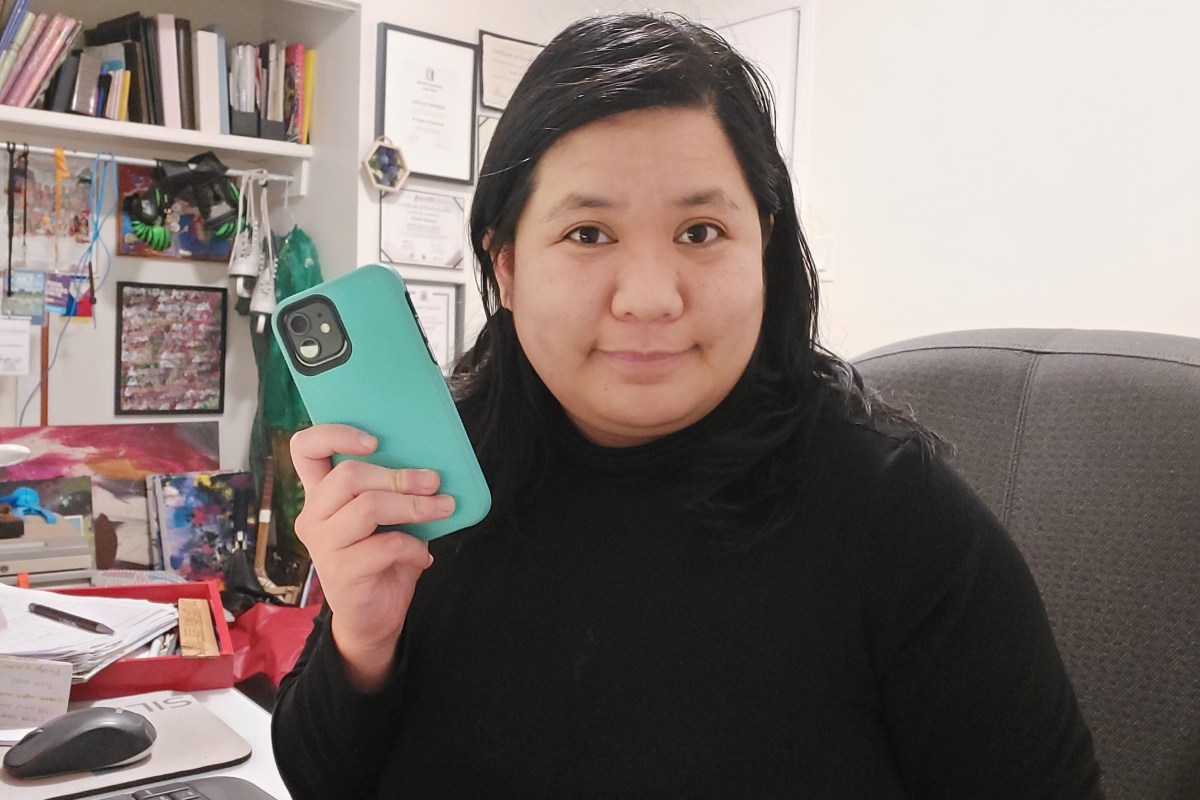
Memoir Writing Reflections #9: The Paid Services are Done!

By: Giselle General

During the Writers Guild of Alberta 2024 conference where I spoke in a panel about memoir writing, I mentioned that a big driving force in my decisions is fairness in compensation. The moderator of the panel seemed to appreciate how much I emphasized paying people properly for their efforts. In an area where people are typically underpaid, if they are paid at all, I vehemently refuse to add to the exploitation of artists.

That was why I really appreciated the advice from my writing mentor Wendy, that I can – and should – apply for grants. It didn’t even occur to me that I can get money to cover expenses I needed, let alone have money to pay myself for the efforts beyond writing the book.

Based on my online search, I concluded that I needed a developmental editor, a line editor, and a copy editor. What they do are related to each other, but are also distinct. This resource (written for a Canadian audience from a Canadian webpage) can help provide clarity on the differences of each. I contacted several editors using both the directory I found online and also contacting a facilitator of a writing workshop that I enjoyed. After getting quotes and plugging in the numbers on the grant applications, I clicked submit. I had earlier success with a smaller grant, but these ones are different, with a complete budget breakdown for each expense. I agonized on how much to add in the subsistence category until I decided to allocate a partial subsistence since I won’t be doing this book project full time. I hoped that my explanation that I contacted three sources for a quote for each editor service was both believable and accurate. I told myself to wait patiently, doing as many self-edits as I can until the professionals take over – if I can can hire them, that is.

A woman browsing their laptop, with books and a coffee on their desk.

To my surprise, my grant applications got approved. The money I asked for is also a pretty decent size, about tens of thousands of dollars. I would have been content to be approved the money I needed to pay myself a partial subsistence (some kind of living allowance for doing this work). But I got exactly what I requested, to the penny. Right after the agreements were signed and the money got deposited, I contacted the first editor right away, worried that after three months that they have other projects and won’t have time to mine anymore.

Thankfully the developmental editor was available, a fellow Filipina-Canadian who is deeply involved in social justice, arts, and literary community in Ontario through an initiative called Living Hyphen, supporting the creative expression of hyphenated Canadians like her and me. When she gave her quote earlier she even offered to give a discounted rate in case finances are an issue, but I placed the full amount in the grant application and now that I got it, I’m ready to pay that full amount. We had to sort out timezone differences for the video calls and sent several emails back and forth to ensure the contract details worked for both of us. We agreed for her to have three months to do the review since she needed to read the whole manuscript to give the big-picture and structural advice that the developmental editor is supposed to do, while tolerating my countless grammatical mistakes.

When I received her very detailed report on what to consider before the next round of edits, I asked her a very vulnerable question: “You know how in our culture, we are supposed to obey the elders and authorities without question? I feel unsure about your report. Am I supposed to obey and follow them all? Am I supposed to do them and send back to you for approval?” I’ll always treasure her kind response to this. “Whatever you decide is up to you. You have the final choice to accept, reject any or all of the recommendations. It’s your story.” Definitely worth every dollar I was able to pay – thank you funding grants!

After a few more discussions where I realized she didn’t understand something major in the story, I knew I had a lot of work to do. While doing all these edits, I contacted the line editor next – the one who would take up the challenging tasks of editing the grammar, line by line. This person is not a Filipino – which I did on purpose because it is important for a native-English-speaker to understand the story and to flag Filipino references that are unclear to her. With how the scheduled ended up falling in place, she had to edit from mid-December until early January. I felt a bit guilty and emphasized that there’s no need to work through this over Christmas break. But she seemed okay with doing it. After all the hundreds of verbal tense edits she did on the almost 90,000-word manuscript, I gleefully e-transferred the payments.

A month after the line edits were completed, I contacted the person I chose as a copy editor, a fellow Filipino-Canadian in the local literary community in early 2024. This is my third professional editor so I kind of know the motions: preliminary meeting and discussion, contracts, payment details, sending a copy of the manuscript, and then waiting patiently. Through him, I saw the clear signs of a professional who cares about outcomes and not just getting paid. He booked a meeting with me to flag his concerns, believing that my manuscript is not ready for copy-editing just yet since there are certain parts of the story that he had trouble understanding. I told him my short-term goals which is to have a manuscript and templates of documents to contact agents and publishers.

So we had to change our scope to help achieve that – to do some line editing and copy editing of the sample chapters I will send, to do another set of line editing on the chapters with sensitive content, and to help me draft the content I will send for applications to get the book published. Think of it as a resume-writing service, but the applicant is me as a writer and the story of the memoir. All these cost a bit more, but with the grant funding I got, I was able to make some adjustments.

Once his edits were completed, the literary conference took place. The organizers did a fantastic job with the panel, as the first panelist had at least two memoirs published and bunch of other books, the second panelist had one memoir published, and there’s me who just finished the professional edits of the manuscript. Maybe I’ll reach the same achievement as the other two, but for the audience it was helpful to listen to writers at different stages.

A wall in Giselle's office with a sticky note with writing notes, a sheet with brand new jeweled stickers, and a sheet used as a tracker for editing book chapters.

Given the extra funding I got, the first consultant-based reading service I used was the Manuscript Reading Service of my province’s writing guild here Alberta. As I paid the fees and waited for the manuscript to be reviewed, I took my mind off anxiously waiting by doing other visual artistic projects, mostly upcycling. I particularly liked the pay structure, how reviewer gets most of the payment. The review I received was insightful.

After I went through another round of self-edits, it’s time to do the other professional service I never thought I’ll have the funds for – beta readers. Their role is to read the the manuscript and assess it as a “regular reader”. I did this for a Canadian author a few months ago and it was a pretty cool experience. I admit, I had an “imposter syndrome” moment and wondered if my time and effort reviewing the document, and my insights condensed in a four-page report, were worth the fees given to me. It was a process to re-frame my mindset. Consultants of all sorts are paid for a reason, so I deserved that fee as well.

For my manuscript I ended up having three beta readers, a writer based in the US, then two people from my city, a non-Filipino person I know through my other community service work, and a Filipino person with a education in writing. I sent them the same set of questions about their experienced reading the book and their responses were quite different than I realized. It’s exactly the feedback I needed because my story has very Philippines-based context, that would be published in a country outside of my motherland (if I get lucky), with a diverse audience. Until now, I actually have a lot of decisions to make on whether their opinions will sway me enough to edit certain book chapters. Or perhaps I should wait until an agent or publisher reads the sample chapters and we can work through the rest of the edits together.

I joked a few times that dealing with grants is the worse combination of applying for jobs and doing your taxes, including the need to report what you did with the money at the end of the time period. For the first art funder I submitted my report and it was accepted, which meant that my recordkeeping was organized and they clearly understood where and how I spent their funding for this project. As this year comes to a close, I am preparing my final report to the second funder as well.

It’s still so humbling to think about the financial access I was able to tap into, and because of that, I was able to pay all these professional writing services the amount they asked for. No haggling, not undercutting. This whole experience for the past year and half drives my motivation even more to get this story to the finish line, to its final published form.

Back view of Giselle in her office desk using her computer.

Life in the (Slow) Swimming Lane: Conquering the Deep End of the Pool

By: Giselle General

In December 2023, so about a year ago, I decided to finally work on something that eluded me since I was a kid. The ability to actually finally stay afloat and tread on the deep end of the swimming pool. I figured that there’s no better place to do this than the place where I used a swimming facility for the first time over a decade ago, the YMCA on the west end.

I grew up in a mountain village in rural Philippines, where swimming pools are nonexistent. The hot spring resorts in the nearby mountains are not the optimal place to learn how to swim properly as they are designed for large groups that go there to socialize and splash around on waist (or chest) deep water. When I moved to the city, the school I attended didn’t have a pool despite it being a private school – only the more expensive ones had them.

When I moved to Canada at 16, I never heard any invitations to check the pool at my high school, so whether our school even had a swimming team or the related facilities will forever be a mystery to me.

Back in 2011 at age 20 out of my own initiative I finally went to the YMCA on the west end. I forked up the monthly fee despite being a part time student with seemingly endless expenses from my schooling, home expenses, my brother’s upcoming immigration to Canada and shopping for all the supplies he needed, and things that a young adult would like to get every now and then.

It was awkward at first. I observed other people who used the floating belt and how they swam on the pool within the confines of the plastic ropes. My hands, feet or shoulders kept hitting the plastic rope, I can hardly breathe, and I gasped loudly in relief once I reached the end of the lane. I tried to go twice a week in the summer before my shift at work started at 1 PM. But that summer flew by fast. As soon as my teen brother arrived in Canada that fall and I got admitted to to co-op placement program for my business degree in university, the swimming routine went adrift.

Fast forward to the next attempt at the pool in 2014, when I got an office job in downtown Edmonton. The downtown YMCA was only two blocks from my office and I managed to stick to my gym membership for about six months before I fell out of habit again. The workout rooms and the group exercise classes gave me a strange dilemma, and only after a few tries in the pool, I opted to do exercises that don’t require me to smell like chlorine even after taking a shower.

I haven’t thought of swimming again for many years until 2023. I noticed that my back and shoulders were hurting more often, and going for a massage once a month didn’t seem to be enough. I also found out that my new job then didn’t cover the cost of massage therapy. I needed a cheaper way to get the movement that my shoulders and back needed that stretching, dancing and pilates fail to help.

It occurred to me that my Saturday afternoons were free while the husband was away with the drinking and running group. I figured, might as well work on a fitness goal for myself too!

Since it’s been such a long time since I was last in a pool, I booked one private lesson to assess my skill level – or should I say, lack of skill. I just need to know whether I can be on the deep end while wearing a flotation belt without panicking or feeling ashamed. That was the best $45 and half-hour session I’ve spent for myself that year. The lifeguard instructor confirmed I can rotate my arms and flip my feet just fine and watched closely my awkward attempt to do the “egg-beater technique” to tread water on the deep end. “Now, all you need is practice”, he said. That I sure can do.

That became my routine. Saturday afternoons, as soon as the husband drives off, I got ready to take the bus to the YMCA. Two walls of the swimming room had clocks. I eyed on the clock’s hand rotating as I swam back and forth with the floater belt acting like an armour of courage. On my third visit, I waited until the open space with the deep end was free of the lane-swimmers, take off the floater belt and twirl my arms, legs and feet. When the water reached my chin, I’d grab onto the edge of the pool for a moment, and then let go for another try.

With more visits in the pool, I gained more seconds treading water on the deep end. 15 seconds, then 25, then 30, then 45, and then a full minute before needing to grab onto the pool’s edge. Then a minute, and then a minute an a half. The hands of the clock making a full rotation acted like my cheerleaders, beckoning me push just a little harder. The day came when I went onto the swimming lane with no floater belt, from the shallow to the deep end for a minute and swam back, and did that over and over for a half hour. By March, I finally reached the milestone of being a mildly-functional swimmer.

There was actually a swimming facility closer to my home. I eagerly watched the city’s webpage on recreational facilities for the pool’s re-opening. I got annoyed when the opening got delayed three times. I admit I was also losing motivation to take the 25 minute bus ride to the other pool and back. When the neighbourhood pool finally did open, it was exactly the next level of learning I needed. It’s only a fifteen-minute walk to my house and because of that I can shower at home afterwards. Literally no excuses this time.

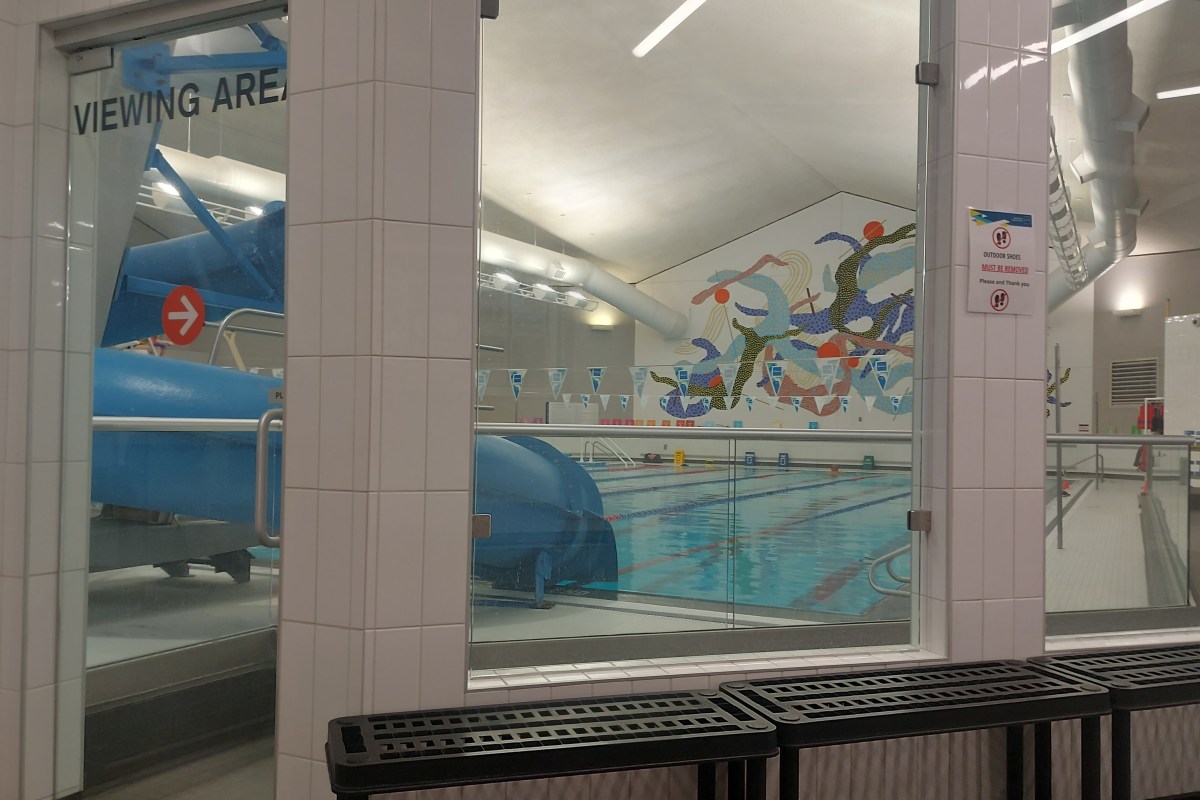
The smell and feel of the poolwater was somehow different. A bit gentler and I loved it. The change rooms and locker spaces were much bigger too. When the entire pool is configured for lane swimming only, there are six lanes that has room for one swimmer going in both directions so it is effectively 12 lanes. On the days when I go and it is open swim time, the pool is divided into the shallow, middle and deep sections. It was another great way for me to hang out in the deep end for as long as I need to, as long as I get out of the way of those using the water slide, diving board, and rope.

Whenever I go to the pool, I make sure that I stay in the lanes clearly labelled as “slow”, so I stay out of the way from those who were zipping through the lanes at what looks like to be five times my speed. I still bump the plastic floating dividers sometimes. But at least I don’t panic and need to be pulled out by the lifeguards. As I watch other swimmers with the floating belt swimming on the lane next to me, I try to subtly beam positive vibes and prayers to them, hoping that they too will reach the milestone of feeling more skilled in the water.

Just like any habit that is supposed to be healthy, around late summer I started to fall out of habit again. This time around, my body tells me when I really needed it – no excuses. After only a half-hour swim, my shoulders and back feel much more relaxed and nimble. And at $8 per trip to the pool, it’s definitely much cheaper than massage therapy. It’s not just exercise – it’s therapy, it’s pain management. For the drop-in rate, I got a discount because of the family membership fee I purchased for the neighbourhood’s community league, which is surely a bonus.

Also since the summer I joined my husband a bit more regularly when he goes to our very unique running-and-drinking group. A 45-minute brisk walk is a good addition to my fitness routine, if I choose to ignore the snacks and alcohol that we consume at the end of route. And as always, for doing errands that are close by, I walk for up to 30 minutes one way instead of taking the bus or waiting for a car ride. The true definition of a 15 minute neighborhood that makes certain fitness activities more achievable for me.

My goal is to one day to be a more public space to test how I deal with the deep waters then. I’m thinking the WaterPark that is pretty close. Or if I get invited to a social event in someone’s backyard pool or a lake that works for me too. I’m just thrilled that I won’t need to piggyback off my husband like when we were at the hot springs in Iceland in 2018 or at the local WaterPark in 2019. To be able to carry my own weight, or at least, my body afloat in the deep end, is an empowering feeling I didn’t realized I needed until I achieved it.

Love Language Reflections: Happy Wife about ‘Househusband Friday’

By: Giselle General

Lately, my corner of the internet is full of discussions about how couples share responsibilities in the home, how in many cases the division of tasks could get unequal, and passionate opinions on what to do when this is the case. I wanted to add my two bits into this discourse, not to side myself with a specific point of view, but to reflect and assess my situation as someone who is married for coming into five years (wow!) and sharing a home with my now-husband for coming into thirteen years.

In 2022 when my husband started to work for my father-in-law, he would go to work four days a week and then go to school remotely on Fridays. On these days he would be in the home office for most of the day, taking breaks only for lunch. Then he started to do one task which is doing laundry. It’s easy enough to do in between long study sessions since we only have two loads of laundry between us. Last year, around October 2023, he took a break from schooling on Fridays and it became what we now officially call as Househusband Friday.

How does it look like? It starts with us doing our own thing for breakfast and then once I’m ready to leave to the office for work, he would walk me to the bus stop. So we’ll have that small bit of quality time during the walk until the bus picks me up and I wave goodbye looking out the window. Maybe it looks like I’m a child being dropped off the yellow bus to school, but I don’t care. I love it. It’s sweet. It’s very kilig – Filipinos would get it!

Then when he gets home, from 8 AM to 1 PM he would nonstop work on the list of tasks. These included weekly chores like doing laundry and dishes, semi-monthly chores like vacuuming, dusting and grocery shopping, and the as-requested tasks like disposing items to the eco-station, changing the batteries of smoke detectors, deep cleaning the very top shelf of the kitchen cabinets, and more. He would then relax for a couple of hours, and then make dinner.

If there’s one thing we both love – I mean aside from each other – it’s our task lists. So it is not weird, unromantic, or offensive to have a list on our whiteboard of the things to do and even what I would like to have for our dinner. I’m pretty flexible with it actually. After a few months of this routine, it feels so nice to come home to a warm meal and a yummy drink (usually a smoothie) ready. And usually there’s leftovers enough for one or two meals on the weekend.

Then as the weekend comes, it’s my turn. I love to neatly put away our clothes, so I’m in charge of folding and hanging laundry. When the bathroom needs deep cleaning, that’s on me as well. I do prepare any other meals for the weekend, while he finds time to check his budget and pay the shared home bills. If there’s a home tasks we need to do together, we find time for them as well. If the chore is a bit creative, we like to consider it a mini date, like when we made this lawn ornament a few weeks ago.

On the living room of Giselle's home, is a lawn ornament of a donkey hitched on a wagon. It received a fresh coat of paint done both by Giselle and her husband.

The day before the start of the work week, usually Sunday or Monday of a holiday long weekend, is the busiest for me as I meal prep for the week. But it’s not all me. My husband cooks the meal we bring to his father’s place for our regular Sunday dinner, or as we call it, “Spaghetti Sunday” because we mostly make spaghetti and meatballs.

As a couple we also like having titles or official terminology on things we do. We describe ourselves as “team communicate”, we ask for a “feelings check” or start the “intensity check” process when we are stressed, so “househusband Friday” was a very welcome addition. Once a month, we also have a dedicated “plant maintenance day” for when we clean and re-organize our 12 Aerogarden units for our indoor farming set up.

During the week, we strive to cover for each other too. We load, run, and unload the dishwasher with minimal prompting. When I make one of the upcycled outfits and bits of thread and fabric are strewn over the dining table, I do a quick sweep with the walis, a plant-based soft broom imported from the Philippines. He is good at preventing messes from happening in the first place.

Truth to be told, I really appreciate that there’s more awareness and discussion about how couples divide household chores. I feel horrified at the stories I read about how apparently, husbands would deliberately and maliciously mess up a task to make their spouses upset to the point of not asking for help again. I remember being stunned at learning the term weaponized incompetence, but it fits in many cases.

The tricky and nuanced part is determining when to confront, when to educate, when to accommodate, and when to finally terminate the relationship. In online discourse where stories are condensed and context could be incomplete, it can feel excessive to see suggestions of “throw the whole man away.” But there are times when it’s valid. There can be times though when digging deeper through the root of the problem, whether it is trauma, illness, difference in cognitive abilities, lack of education but with willingness to learn, or something else, can help make a process that works for everyone involved.

I think it’s partly why I cringe when some people claim that a to-do list is too childish or offensive. And if a list is a no-go, I could imagine the haters when they find out how I write the grocery list for my husband since he started going alone during Househusband Fridays. Not only is it handwritten (gasp!), I make a new one every time instead of a standard list (gasp again!), the items are arranged based on type of item and also listed sequentially based on the layout of the store. Personally it is the ultimate example of setting someone up for success and making the tasks as quick and efficient as possible.

Giselle is holding a handwritted grocery list for a shopping trip at Costco. The items are arranged by section in order from the left to the right side of the store.

In my humble opinion, chores are most of the time not fun. Anything and everything that can be done to make it as quick, efficient, and enjoyable for the couple as they do them individually and together, is a win. I heard the argument that money is the main reason for divorce. I’d say a second close one is conflict with domestic duties as they are part of everyday life. It these issues are unresolved, it can affect someone multiple times a day, and can really wear people down over time.

Appreciation goes a long way too. Maybe it seems childish, but the occasional compliment for completing chores or admiring the outcome can help remind our spouses that the we see the effort they do. I think the most common phrase we say in my home is “thank you, baby!”

Chores and the domestics are an integral part of one’s health and keeping the relationship strong and sustainable. If there’s one thing I wish all couples have, is to reach a state of domestic delight. That the mundane aspects of maintaining their home is a source of joy, security, confidence and bonding.

During one of the househusband Fridays this summer, I had the day off. He still went through most of the tasks on the list, but I took over some of the seasonal tasks I added earlier this week. He did the weekly laundry and dishes and the vacuuming for the month. I mowed the grass, reorganized our little backyard patio, from the furniture, the barbeque and the pile of bags of refundable bottles. Afterwards he started to install a second-hand printer we got, until it got so frustrating that he smashed it just like in Office Space. He wanted that printer out of the house ASAP so we went to the eco-station to dump it off.

As we waited for our turn to enter the eco-station gate he asked, “Does this count as a date?”

Giggling I said, “Of course!”

We continued to hold hands, with his other hand on the wheel, while the car idled along a queue of cars with people doing the same mundane task of disposing their trash.

Memoir Writing Reflections #8: Retreats and Panels

By: Giselle General

Frankly, I’ve always felt a bit reluctant to “connect more with the writing community”. Perhaps it’s the introvert in me. Perhaps it stems from my younger self who didn’t really learn the proper life skills to build and maintain a lot of friendships. But over the past few months, I had a chance to make some effort on this goal in incremental ways.

I applied to attend the Pandemic University Nonfiction Writing Retreat which happened in May. I must say, the idea of a writing retreat felt foreign and out of reach for the longest time, as they typically involve going into some faraway touristy area or an isolated cabin in the woods, hours or even days of uninterrupted writing in solitude or small groups, and being completely disconnected from my home base and everyday life. That’s a bit much for me, I didn’t think I’ll have the time or even money for such as retreat.

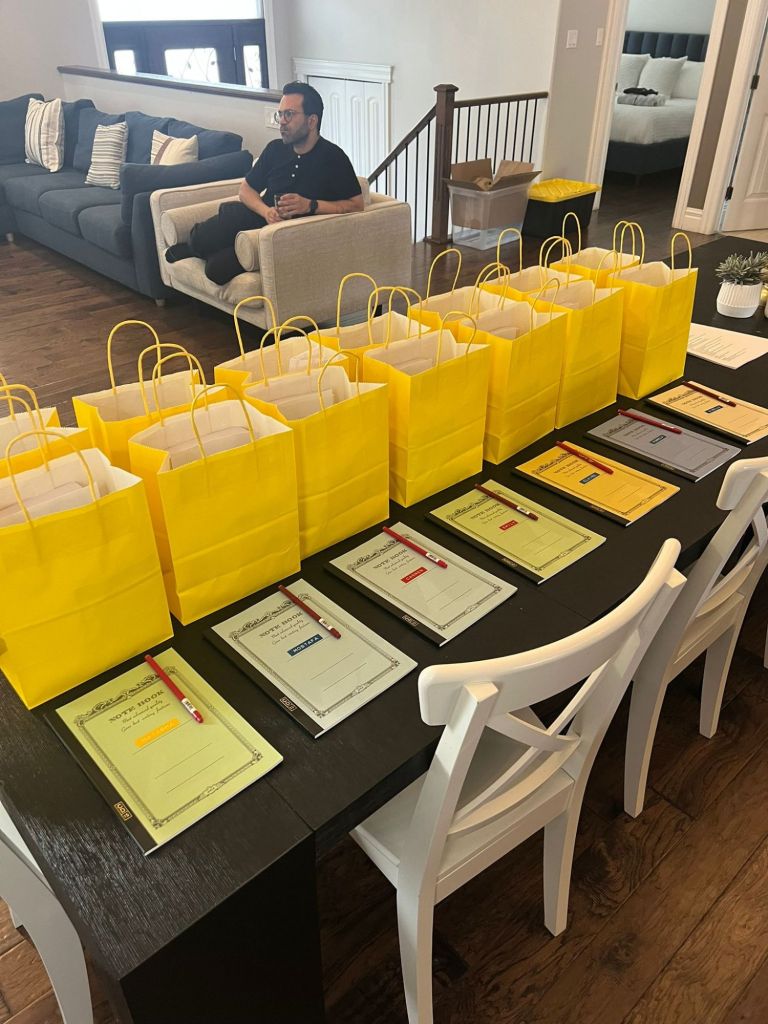
A table of gift bags and notebooks set up during the first night of the Nonfiction Writing Retreat.

So when this opportunity came up that gives me the choice to stay in my home city, be taken care of for majority of the day, and come to my home and husband in the evenings to recharge in familiar surroundings, I thought it was perfect. I’ve been wanting to attend Pandemic University courses for a long time but wasn’t able to find the opportunity to register. Also, the retreat being in Edmonton meant that it was more affordable for me.

When I went on the first night straight from work on the Friday evening, I was relieved that wasn’t too crowded, a total of 20 people if adding all the organizers and attendees. It is so much smaller and intimate which is exactly what I needed for my first-ever retreat ever. There were three presentations on various topics related to creative nonfiction that I recall were being offered as standalone courses, and then a Q and A with the organizers. Turns out, listening while sitting on a couch or dining chair with over a dozen creative people is so invigorating and cozy.

I remember feeling super self-conscious during the part where attendees like me were placed in smaller groups to do activities, review each others’ written drafts, and even during the one-on-one meeting to talk about my specific projects. It was very helpful though! I managed to ask questions and get advice on the two artistic projects I’m working on, the memoir and the documentary.

The wide range of backgrounds and topics that the attendees wrote about is just remarkable to see. Many of us have written, or are currently writing about really heavy topics and there’s something just so profound about being in the presence of people who managed to express their stories and insights through carefully crafted words. Whether it is the death of loved ones, torturous hardship, sparks of insight from unique experiences, or wanting to talk about someone they knew who is doing incredible things, everyone seemed to have the belief that this is worth sharing to the world.

The two delightfully surprising things about the retreat for me is how much I appreciated having my basic needs (my meals) prepared for me for two and half days, and how much I enjoyed talking about writing experiences in a homey setting. Turns out, it’s actually wonderful to have a block of time in between workshops for some independent working, which I used to start applying the advice I received earlier that day.

If time, resources and opportunity allows it, I definitely would do this again. We now have a group chat as well where people continue to share updates, advice from each other. Not bad for an ongoing community moving forward.

The back wall of the restaurant Otto, where the participants and organizers of the Nonfiction Writing Retreat and a few guests are assembled for a group photo.
Digital poster of the Writers Guild of Alberta conference  "No Place Like Home". The panel is "Memoir: Telling the Truth is Hard".

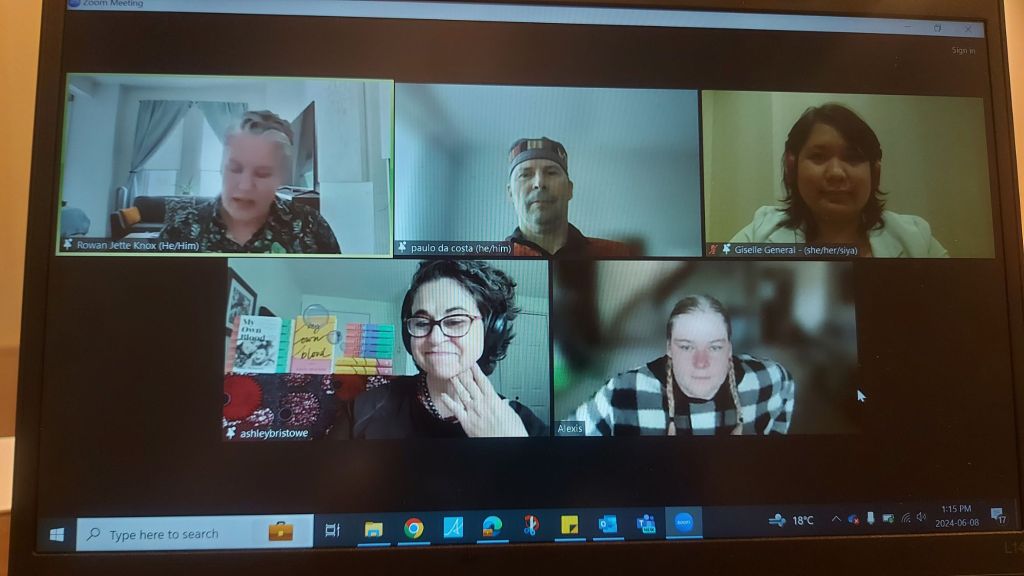
Then in June, I had the honour of being a panelist for the Writers Guild of Alberta conference which took place this year in Edmonton. Last year it was in Calgary and I joined the panels and events remotely, of which the organizers did a fantastic job. So when I was asked to participate in an online panel, I knew the logistics would go smoothly.

When I got the invitation though, I just to double check with them if they truly wanted me in it when I don’t have a published memoir. It looks like that is THE reason they asked me to be a panelist. It was fun, and I hope that it was helpful for those who listened to my rambles.

I was trying hard to not squeal and fangirl too much when I found out who our moderator was, and I think I managed to keep it together during the panel. People seemed to be equal parts amused and confused that I had a spreadsheet to keep track of the different chapters I wrote and the different live events I wanted to be mentioned in the story. I knew that being organized helped me with getting the draft done, and I shared many times how much the Writers Guild of Alberta’s programs and services, most especially the Horizon Writers Circle program where I was matched with Wendy McGrath, helped with making the first draft of the manuscript into reality.

We the panelists answered some of the questions in drastically different ways, which I hope can serve as a reassurance to the audience that they are multiple approaches to doing things – from the writing, the drafting, choosing which stories to tell and how much, and finishing the work.

Screen of the Zoom meeting during the panel "Memoir: Writing the Truth is Hard where Alexis, Giselle, Ashley, paulo and Rowan are joining the meeting.

I do admit it feels really nice to hear people say “I look forward to seeing your book published”…”I look forward to reading it.”

I also appreciate that the conference is not as large and overwhelming compared to, let’s say, the transit conference I attended last November. At the larger gatherings, during the meals and the keynotes, there is about 150 people or less, enough to see everyone across the end of the banquet hall. The panels and keynotes I attended were very informative and insightful, and I loved witnessing for the first time how a literary awards ceremony looks like.

I managed to meet a few of my fellow Filipino creative people in the conference and hung out with some of them during the breaks. I ran into my editor, which I also mentioned during my panel.

Chances are that next year the WGA conference will be outside Edmonton, but I’m positive that I can join again either virtually or a short drive away. Maybe it will be in Red Deer! That would actually give me a reason to finally see the city.

The Filipinos I met at the conference were truly motivated to continue building our own community to support each other as well. Just a few weeks after the conference and after other artistic events for Filipinos in Edmonton took place, I got looped into a Facebook group chat for Filipino-Edmontonian artists.

The timing of these weekend multi-day activities worked perfectly in the whole project management of the memoir, as I was then working on the final set of professional edits. I’m hoping that I can find time and energy to nurture my growing community, support them in their ongoing work, and for them to celebrate my own accomplishments when it’s time.

And the journey to making this book a reality continues….

When Community Service and Self Care Goals Conflict

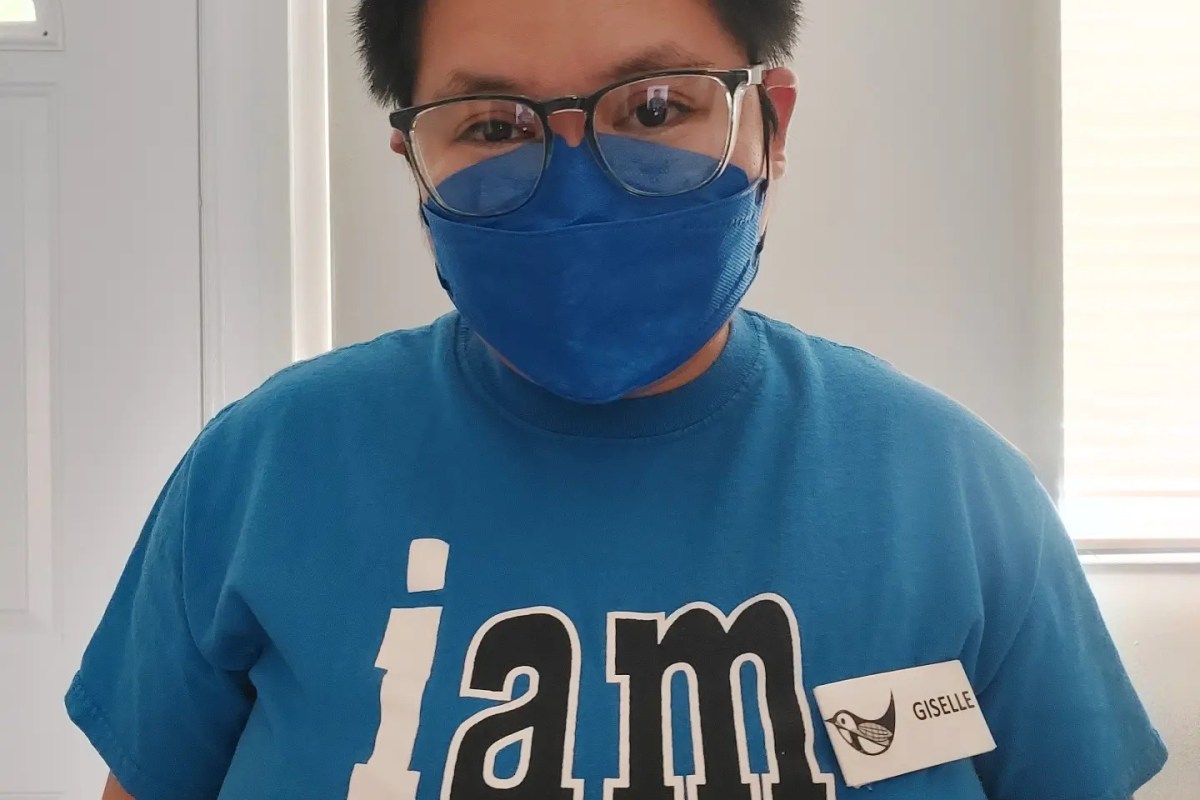
Giselle wearing a stylish safety glasses, KN95 mask and a volunteer Tshirt

By: Giselle General

Last fall, I had an an eye-opening moment as I went about doing my volunteer activities. During the third weekend of September 2023, I had two activities back-to-back, both outdoors. From morning until early afternoon, I was in my neighbourhood park helping with an annual gathering that includes serving lunch, having activities for kids and families to enjoy, and for residents to apply for their membership with our organization. Shortly after, I went to an Philippine arts event at an outdoor park in downtown Edmonton.

When the day began, I checked the air quality index and it is a 4. Not yet a concern which is great. But as we approached the lunch hour, my eyes started to feel irritated so I wore my glasses. It’s not the type that corrects your vision, but a cuter version of safety glasses I got a few years ago. Turns out, my eyes get irritated by the wildfire smoke, more easily that the average person.

It was 3 PM when I rushed to the arts event, where I kept my glasses but didn’t wear an N95 mask. That was my mistake. Although I must say that communicating and connecting with my fellow writers in our booth was so much more efficient without the mask. Also, since we were outdoors, I figured the COVID risk would be minimal.

Unfortunately on my bus ride home, as I sat on my seat resting my legs from walking and standing all day, that’s where it hit me. When taking transit I still wear a mask because I definitely don’t want to catch any of the respiratory viruses spreading around. As I sat patiently waiting for the bus to reach the west side of the city, I checked the air quality index app again. It went up to 8 – high risk! No wonder my eyes were irritated for the afternoon. As soon as I arrived home, I plopped on the couch while struggling to answer my husband’s question about what we plan to have for dinner. After dinner, my chest started to hurt, and I have to make an effort to breath in for the rest of the night.

I had plans to attend other neighbourhood events the next day, but when I looked out the window and saw the familiar orange haze in the sky I knew it’s a bust. The air quality index app showed a rating of 8 in the morning which went up to 10+ in the afternoon. I have to stay in.

This is just frustrating. I very much hate the fact that my own body seems to now get in the way of my volunteer activities. I also know that since COVID precautions are virtually nonexistent in public spaces, the burden on individuals to protect themselves is just more significant. The worst part is, event individual precautions are less effective especially if let’s say, you are one one of the 100+ people in an indoor hall during a community engagement event. While on one hand, I know that my assistance and contributions will be very helpful during the said event or activity, none of the organizers, fellow volunteers, or attendees would step in to help me if I get permanent harm from attending.

Perhaps that is part of the reason why that even more so the past few months, I make sure that majority of my volunteer activities can be done from home. Writing two informative articles for the monthly ethnic paper for the Filipino community in Edmonton continue to be rewarding. Over winter and until now, I started to do volunteer sewing tasks, upcycling old merchandise from my husband’s running group and turning them into personalized outfits. The documentary and book projects are also tasks that hopefully will make a positive impact in the future and can be done without risk of being exposed to smoke, fumes, viruses, hostile weather or all of the above.

There’s really no solid takeaway message I can pin down. During my election campaign a few years ago, I made decisions that I know prioritize my wellbeing and my life over potentially winning over votes. “My goal is to come home alive” and “if I’m sick, severely injured, or dead, then I won’t be able to help” are my personal constant reminders when I feel guilty about missing community events or volunteering opportunities.

In the new year, I tried to nudge more of my free time towards improving my personal health. Weekends offer what seems to be an unlimited opportunities to get involved and volunteer, whether it is events, workshops, rallies, and more. However, given that my husband goes out for a run with his running group in the afternoons (in the winter), I discovered that it is best to try a fitness related activity that I can try to stick to on a weekly basis. So for that past three months, that has been swimming for about 45 minutes at the local YMCA.

Giselle wearing a swimsuit getting ready for a swim.

This weekly swim routine has paid off really well in just a few weeks. It’s hugely help reduce my shoulder, neck, and back pain from doing office work full time. Swimming laps and treading water is definitely good cardio without aggressively hurting my joints. And slowly, as I gain confidence in learning how to tread in deep water, I also manage my fear while celebrating my incremental improvements.

This tradeoff has been worth it for now. My community service time and activities are sprinkled over week nights, lunch breaks and weekends, so I figured carving out a premium time for my self is the right call for now. I do dread the upcoming summer though with the greater likelihood of forest fires and smoke risk. Maybe volunteering for public and indoor activities is the approach moving forward.

Memoir Writing Reflections 7: The Boss of My Book

By: Giselle General

I can hardly believe it but the time has come. It is manuscript feedback and editing time – first round, that is. Just around the last week of September I finally received the Editorial Letter from the Developmental Editor. I received a 19-page document and I couldn’t help but chuckle. It was more like a report than a letter, maybe even a little book.

My goodness is it a lot! In a good way. The letter organized the feedback in categories, and under each, there were several examples from the manuscript where these problems have come up repeatedly. In addition, in the actual copy of the manuscript she added some recommended edits (through the Tracked Changes feature) as well as comments on actual paragraphs. There were many of these throughout the 150-page, 85,000-word document.

With this, I learned that the timeline I submitted for the editing process might not be as realistic as I would have liked. Perhaps, if all I’m doing is creative work full time with volunteering at nights and weekends, maybe it would be achievable. But it’s different now. I have a separate full time day job that involved writing, coordinating and some creative work. Then all the volunteer commitments involve communicating, coordinating and some creative work. As much as I wish I have unlimited energy, alas I am only human. Working on the manuscript is set aside for the weekends.

When I first read the document and the email, I was anxious on what I was supposed to do with the feedback. There was one question in my mind that worried me the most. And I wanted to share that part of the email exchange here:

Hi Justine,

I have a follow-up question regarding the potential next steps after a writer receives the feedback on a developmental edit. I guess I’m struggling a bit with the Filipino tendency to be “always obedient” and “follow everything that is told by a person of authority and expertise”, combined a tendency to be a people-pleaser. 

If feels kind of silly to ask but I’d appreciate some clarity. I know that in your email and letter it says that your comments are “recommendations”. But as far as me as a writer, what happens next? Is this kind of a like a thesis document where I send you additional versions and that you look at it again until you approve the version and are satisfied with the edits? Or do I basically have free reign as far as which suggestions to apply or reject? If for instance I make significant edits to the manuscript and would like another comprehensive review, that is a separate and independent agreement for another developmental edits, is that correct? 

Hi Giselle,

I just opened up editor access on that line edit of your manuscript. Let me know if you’re still having issues opening it up and I’ll try and turn it into a Word doc.

Now for your question – not silly at all!  You have free reign at this point to apply or reject any/all my recommendations. It’s completely up to you as a writer! I don’t need to “approve” your manuscript for you to move on – that’s for you to decide 🙂 

Email exchange between Giselle and Justine from Living Hyphen, October 2023

Reading the email response was a huge sigh of relief.

When I mentioned this to my husband, he told me with such conviction, “You are boss of your own book.” The words on your book will be written the way that works best for you.”

This way of thinking is so new to me. I’ve always have the mindset that experts or authority figures have greater knowledge and expertise than me, so I must follow all their advice. But as I go through the recommended edits of not just the memoir, but for the other creative projects I’m doing, there had been times when I read the comments and think “that suggestion doesn’t make complete sense, but I can see why they suggested it. I don’t think I’ll do it 100% but will do something else that will resolve the issue that was flagged.”

For the Developmental Editor feedback, I actually had to review my draft manuscript backwards, from the last chapter to the first.

Writing and then editing a book is such a long process. From the various writing groups I joined, some people take weeks, months, or even multiple years to write and edit their draft. The last thing I wanted is for this project to get lost in the fast pace shuffle of life. Since I’m the type of person who needs a target end goal to stay motivated, I’ve set mid-December as my deadline to work on the developmental edits. That’s three months of incrementally working over the weekends, a few chapters at a time.

If all goes well, my Christmas gift to myself is the peace of mind from sending off the updated draft to the next person who will review it, the Line Editor. A line editor works line-by-line, tightening up sentence structure so the language is sharp and clear. I’m excited and nervous about this. I hope that I caught all the comma splice statements that seem to be a bad habit of mine. But if there are a few more, that the Line Editor can make them better.

Memoir Writing Reflections #6: The Bucket Analogy

by: Giselle General

Through social media posts, blogs on this site, and a few local media interviews, I’ve been sharing my journey in writing this memoir. The more experiences and milestones get documented, the more reassured about doing it in the first place. Not only does it help me have a point-in-time memory captured of the experience, sharing it seem to reach out those who are thinking of doing some kind of creative work as well.

I’m feeling a bit antsy since the developmental editor is working on the manuscript and I have about two more months to go before I get to see the feedback and dive in to make changes. A few times actually, I noticed some comments pop up on the Google doc and I immediately archived those email notifications, not wanting to see them too early.

Just recently, a friend who also lives here in Edmonton reached out to me to ask for advice on writing the memoir. This person is quite active on social media sharing her takes on social issues and sharing some of her personal life. If she wanted to, she has a lot to tell that would be a good fit for a memoir. I got the request through a private message on Twitter, then I set up an invite to do an online meeting.

I told her that the cliché advice of having an outline made sense to me, but instead of making a spreadsheet, a document or to-do list, I treated one chapter as one blank word document. The file name of the document is the rough idea of what the chapter would be about. The file name had a number in the beginning so when I click the button to sort the files, they will be chronological. When I then feel inspired to write about that chapter or topic, I have a space ready to go and write.

This enabled me to bounce around the timeline of my book. When I’m in the mood to write something really heavy and intense, like the events in March or May 2007, I can do that. When I’m emotionally drained and wanted to write about a more lighthearted chapter of events sometime in summer 2003, I can work on that too.

The analogy I used was buckets. I got a bunch of buckets, labelled them, and eventually these empty buckets got filled little by little until I was done.

But then I realized that her situation is not the same as me when I started. She is not starting from scratch, but rather, she already has a draft of 30,000 words. It’s milestone I personally reached a month after I started writing. I’m glad she’s has a good sized manuscript, and she shared about being overwhelmed of the documents. That makes sense.

Using the same analogy of the buckets, I told her “You have a big bucket of words already! Splitting the content into small buckets, where a few paragraphs focus on one experience story, theme, can be a way to manage it.”

My chapters varied in length. On average they are two pages long, with the 12 point font, single space format. Some are slightly shorter, I have about five that are outliers, that are 5 pages or more.

When I gave the advice to this friend, I suggested to read through from the top for a few pages. Once there seemed to be a natural pause, whether a small story ended or any reflections concluded for that particular topic, take that entire section and separate it as its own chapter. Then there’s Chapter 1. Move on and take a few paragraphs or pages, there’s Chapter 2. A small bucket of content being scooped out of the big hulking container of words.

Funny enough, when I submitted the manuscript to the developmental editor I actually have to combine all 43 chapters into a single document. The opposite process, pouring them all into one big bucket. It was easier and more efficient than I realize. As I copied and pasted each chapter in order, I made sure that the table of contents are set up properly and link to the right chapters. Scrolling a big document and having to begin from the top would be quite annoying I can imagine.

It was a good way to be a bit more productive while trying to wait paitently for the edits. Just over a month left!

The Unusual Birthday Gift I Gave Myself Last Year

By: Giselle General

Last year on my birthday at the end of May, I did something that I considered an unusual, but valuable, gift to myself. I officially handed my letter of resignation to the job I had for eight years.

Materially, my life is overall comfortable. Also I find shopping for items like clothes, cosmetics, gadgets pretty dreadful. Having to think of gift items for people to get me is the opposite of fun. Thinking of what to buy myself as a treat that need to be bought at a specific time of year is also pretty restrictive.

As my wages grew over the years, both from my employment and the honourariums for some of my volunteering and writing work, I try to be very mindful of lifestyle inflation. I didn’t want to fall into the trap of buying something just because I could. In the occasions where I do splurge, those purchases were made intentionally and with no guilt.

A big theme I’ve seen in how I approach my birthday is about giving myself something special of great non-tangible value. The trip I took in New York City in 2019 is my first overseas solo trip, granting myself the new experience of independence and rare unrestricted indulgence. The boudoir photoshoot I also booked a day before my birthday is to grant myself a new way of reclaiming my body and sense of self, a valuable thing for sexual abuse survivors like me. In 2020, I hired a freelance artist to recreate a piece of artwork I drew in 2013, granting myself a way to preserve precious memories and the enjoyment of collaborating with an artist. The drawing in particular was the memento I made from my first trip to the Philippines after immigrating, taking my Canadian (white) boyfriend in tow. In 2021, my self-gift was as simple as granting myself rest and family time as I started to ramp up my election campaign running for city councillor. Something truly in short supply and so precious for that period of time.

For my birthday last year, the plans to celebrate were straightforward and already confirmed. My brother worked night shift so meeting him separately worked better since typically dinner times happen when he is already on his way to work. The husband’s family will be coming over for a separate dinner in the home we just moved in to a few months prior. They planned to bring black forest cake. Perfect.

The only thing missing is the precious thing for me.

I talked to my husband about the idea throughout the month of May. This was not something taken lightly. The job search process over the past few months were not going so well, and I knew it is because I was not giving it the right energy and focus. Also, in the past, I was unemployed when I applied for that job I truly enjoyed for eight years. It seemed like I can only do one of these two things at a time: work full time or job hunt full time.

On top of this, I realized that I never had a full two-month summer break since before my parents died, which was the summer of 1999. Since 2000, my summer breaks consisted of working for most of it, either working in the store in the mining village in the Philippines, working in retail or placements during my university years, and then as a full-time working professional. As a child, since my birthday was the end of May, just right before the schoolyear begins in the Philippines, my birthday always marks the end of a notable period of time and the beginning of another.

I looked at my bank account repeatedly. I inspected the information in the budgeting software I used since 2017. If I were not to do anything extravagant or ridiculous, I can afford to pay my bills and save for retirement with no interruption, for quite some time.

This is the perfect timing for this reset.

When I woke up on my actual birthday which was a Tuesday, I was a bundle of nerves and certainty. I was working from home that day, in my home office where to my left was a wall of frames, including the employee recognition certificate I received for my years of service. The draft email was already in my inbox. And then I clicked send.

Just a few minutes after, I got a message through our internal chat software. It looked like it came as a surprise. Then emails and video calls took took place, with strategies and decisions to make the most of the one-month resignation notice.

Since we had a hybrid work arrangement still, my office was not as decorated as it was. Packing up any remaining personal items was easy. The last month of work flew by, as I eagerly waited for my last day of work, just right before Canada Day long weekend.

After the long weekend, my relaxed summer break began. Nothing changed in my evenings as I kept all my volunteer commitments. I also wanted to spend the same amount of time with my husband so I kept my sleeping schedule the same. But the time period that is labelled as the typical weekday work hours from 8 AM – 5 PM, were all free and flexible. It felt eerie but not as slow as I expected. Boring and lazy and unstructured was exactly what I’m looking for and what I got. It was quite remarkable.

In the middle and end of the month, when I paid my bills, rent or the automated deduction for my retirement savings got taken out of my bank account, I relished in the feeling that I didn’t have to work during that current week to pay for it. My past self (and of course my husband) helped make this comfortable period of time happen.

When September long weekend arrived as well as back to school for students, I knew this free time was up. It is time to be a responsible adult again and actively work towards finding my next job. I knew it will take months from applications, to interviews, to the offer and a starting date. As fall came and went, the pressure crept up a bit more. Thankfully my husband consistently and patiently put my panicked thoughts into perspective.

In some career-oriented articles, I’ve heard of people talking about the benefit of taking a break, sometimes they call it a sabbatical. The type of break for a working professional where they won’t have to worry about financials, but are able to not work full time to rest or try something different. I didn’t name it that way back in May 2022, but it looks like a two-month sabbatical and life reset is what I have gifted myself. One can argue that it was quite expensive, if not the most expensive gift I have given to myself. My living expenses were $3,500 a month and I didn’t find employment until six months later.

It was wonderful and definitely worth it though. Something that is hard to give or get for someone like me with extreme workaholic tendencies. The gift of rest, of reset, of leisure, of personal flexibility. I hope that I can do it again just a few more times during my prime career working decades.

Event Review: Writers Guild of Alberta “Origins” Conference

By: Giselle General

This past weekend, from June 2 – 4, 2023 I had the great fortune of attending the weekend-long annual conference organized by the Writers Guild of Alberta. They titled their conference this year “Origins: A Return to Networking, Publishing, Genre and Craft.” It’s a hybrid conference, with the in-person location at Fort Calgary and the keynotes and focus workshops available to attend online.

Frankly when I first heard of the conference through the e-newsletter from Writers Guild of Alberta, I was already checking my budget. I started a new job recently so my bank account is not draining anymore and I had full intention of finding a way to pay for it. Then, good news came. As I was a mentee of the Horizon Writers Circle this year, the conference was covered for free. There was even a travel allowance! This prompted a conversation among my fellow mentees to travel together from Edmonton to Calgary.

I agonized for a while on how to attend for two main reasons. I’m learning to be more kind to myself and be more conscious of my precious and limited energy for socializing. I haven’t attended a multi-day conference since November 2018 and I found it exhausting. If I wanted to focus on learning, I need to protect my capacity.

I’ve also felt reluctant to probe and ask questions related to COVID precautions and limiting viral transmission. I don’t feel comfortable attending large gatherings that can be a superspreader event. What’s the point of learning about improving my writing craft, if I die or get permanently debilitated by long COVID?

After some deliberation I decided to join the event virtually. As I read the details in the registration I felt hopeful that the virtual components were planned and executed seamlessly. As the conference day approached, I received the instructions on travel, accommodations, and online links. I was amazed by how the online component felt naturally included, and not something that was thrown together last minute. This gave the impression that the organizers have full intention for the event to be inclusive, compassionate, flexible, accommodating, which is what I believe the artistic and literary world is supposed to be.

How was Friday?

I rushed to finish dinner and run the dishwasher before plugging my headphones and connecting online. I then discovered that the opening keynote speaker is sick, and at the last minute, is joining online from their home in Edmonton. So technically speaking, I’m geographically closer to her. Her manner of describing how humans use language as a means to make change was just so awe-inspiring to me.

I knew that those who attended in-person had an opening networking event and a casual get-together after the keynote. As my online meeting linked closed, I happily went on to do chores to ensure my weekend is as cleared as possible.

How was Saturday?

Turns out, the morning keynote speaker had a travel-related hiccup and didn’t make it to Calgary. I’m super duper grateful to the power of the internet, giving him a way to do a virtual presentation. It was a compelling keynote that reminded me to continue learning about Canadian history that was not taught in my newcomer orientation and citizenship booklets, to find them in literature that is being produced these days. For Indigenous writers, it is a way to control the narrative of their lives and experiences withing the wider Canadian society and story. For recent immigrant and settlers like me, there’s many ways to learn and enrich our understanding of this place where we live.

It was my first time participating in a panel workshop with writing exercises for both attendees in-person and virtual. The last time I attended a writing workshop with writing prompts (as in, you get five minutes to write answering the question the facilitator gave) was at Pinoys on Parliament conference last year, but all of us are attending virtually so there’s lesser technical hiccups. This is also my first interactive workshop related to memoir.

“Do what’s right for you, for this project, at this time.” I appreciate the compassion, the permission, and flexibility when it comes to processes and decisions. The reminder of the fundamentals that are sometimes forgotten was very valuable. As always, there’s the “good problem” of having too many good choices of panels to attend. When I was choosing which to attend, I read all the details to my husband who does not do artistic of literary work. His perspective helped me narrow it down to the one that makes most practical sense. The fact that we can watch the recordings afterwards is also very reassuring.

I’ve organized events and conferences myself, so I have full appreciation of what happens behind the scenes. It was incredible to see the resources adjustments to mitigate the tech issues. Really incredible and appreciated.

How was Sunday?

Our keynote for Sunday joined us virtually from overseas, all the way from Greece. It was such a delightful and insightful Q and A about their approach across different projects and genres. There’s great comfort in hearing a successful writer acknowledging that certain processes related to writing are still difficult. For an outdoor hotel in Europe and only with one single internet interruption, I’m overjoyed that the setup of the conference allowed her to share her time with all of us.

As someone who belongs to many nonprofit boards, I appreciate the value of the seemingly boring but very important activity during an Annual General Meeting. I’d say it’s the most engaging one I’ve attended in a long time, particularly on the elections part. I’m glad that the Writers Guild of Alberta will have a full board of directors for the upcoming year, and that they are working on ensuring their committees are able to help with particular goals, such as membership engagement, diversity and inclusion, and youth supports.

The afternoon panel I would say is the most practical and helpful for me in my personal writer’s journey. The Q and A between publishers and agents addressed many questions from the in-person and virtual audience with tangible examples whenever they could, and saying frankly “I don’t know” and “it depends” at other times. My notebook is filled with notes on what I can work on in the next few months as I set up my schedule with editors and publishing one day.

Takeways

I’ve helped organized many events and conferences in the past, and have attended many events and conferences before COVID and in recent years. I am very aware of the additional time, coordination, cost, and sometimes, stress that comes from organizing events in a hybrid fashion. I’m immensely grateful that they did so. It meant that three of the major speakers were still able to share their wisdom despite unexpected cancellations or other plans that resulted in scheduling conflicts. It helped me focus on my primary objective for this conference, which is to learn and preserve my energy accordingly – and also preserve my limited vacation time and money. Alberta is a massive province and it’s difficult to expect rural Albertans writers to be able to travel all the way to a major city, or from one major city to another. It’s a truly tangible way to showcase the commitment to diversity and inclusion.

My two final takeways with my ongoing literary journey that I hope are action-oriented are these:

First, joining a literary-oriented organization and paying the nominal membership fee is very much worth it. Just starting with one is enough. In my case it was through the Writers Guild of Alberta. This one membership is what helped me pace myself in gradually expanding my literary community, where I eventually felt convinced that despite the seemingly grandiose image that come up with the word “guild”, that perhaps I belong here too.

Second, especially for people like me who don’t have a career in literature, to carve some time for a literary or artistic program or event. There’s no need to pressure one’s self to spend a lot of money or fill every single evening or weekend. A small local event once a month, one multiple-month flexible program per year, once conference in the spring and one in the fall. All these add up after a while.

This event has been such a gift. It’s a comment that came up in the comments during the virtual meetings. Simple and the most accurate way to describe it. Huge huge thank you to the organizers, sponsors, staff and volunteers for making it a success.