On a previous post, I mentioned about our monthly routine to take care of all our indoor hydroponics gardening that we named “Plant Maintenance Day”, which we just completed today. I thought it would be cool to show a glimpse of the process to make sure that the plants are as healthy as they can be and that the equipment lasts as long as possible.
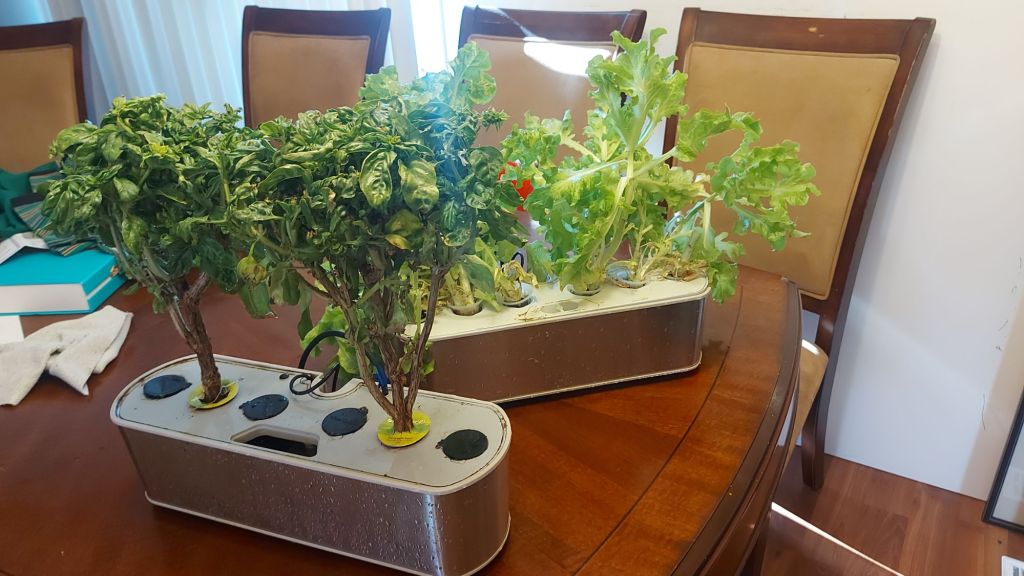
Newer models of the Aerogarden are much easier to clean, just like this oval shaped unit with no strangely shaped components inside the water basin. This basil plant looks overall healthy, although the slightly brown shade of the roots is a slight concern.
This Jalapeno plant is getting tall, and the clear roots is a sign that it’s healthy. We just harvested dozens of peppers a few weeks ago and there’s more that are developing. It is nice to see the roots while I washed the underside of the plant unit.
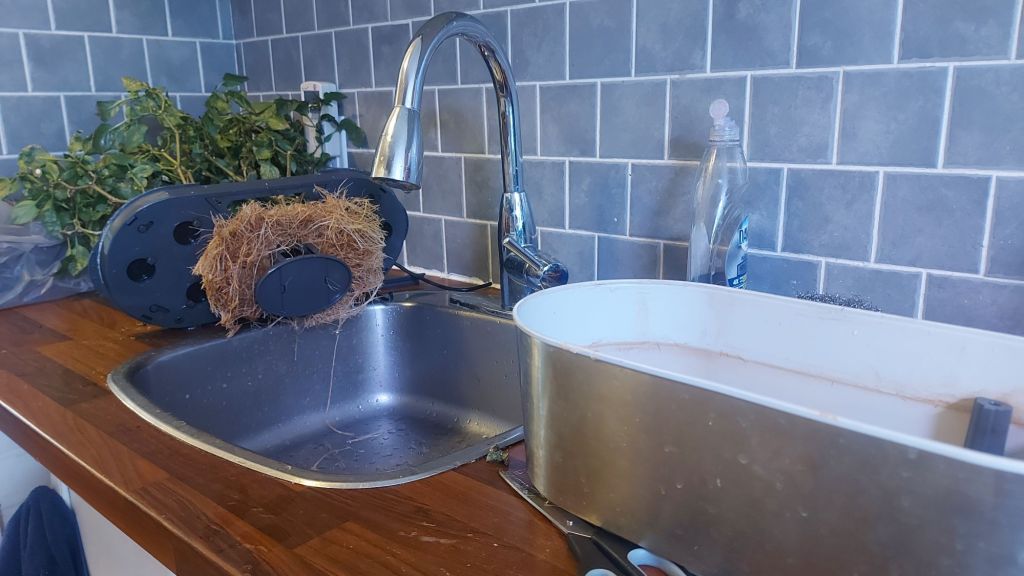
I’m so relieved that our sink has one of those faucets with a movable spout as it makes filling water in containers easier, including for the planters after washing them.
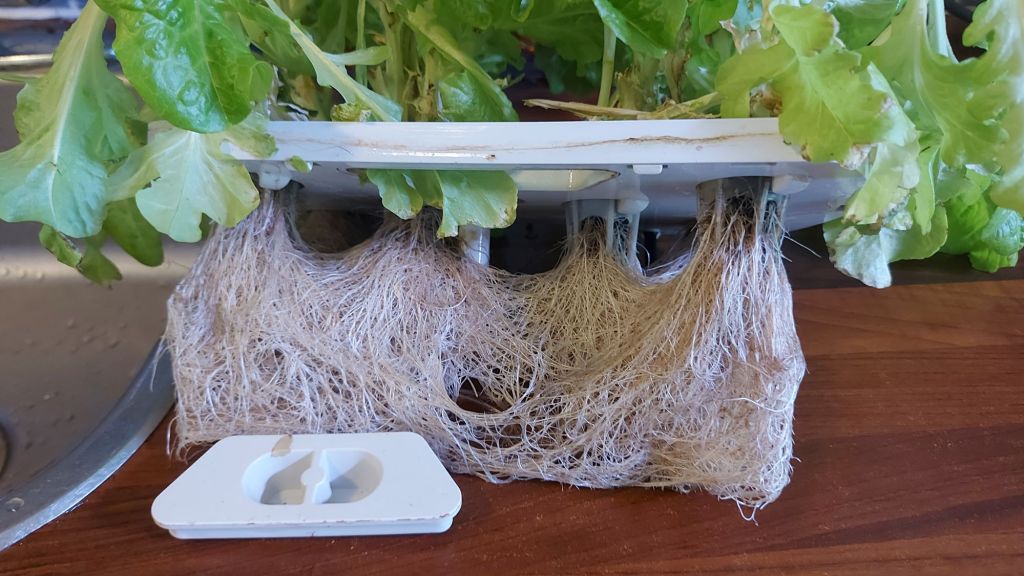
I guess there is strength in unity! This long Aerogarden unit where we planted all six pods with lettuce, had their roots intertwined with each other. I just needed to trim the bottom a little bit because if the roots fill in the container (which has happened before), the plant will start to get ill.
It’s a production line cleaning all the 12 Aerogarden units. After I finish cleaning them and re-filling with fresh water, I place them on the dining table, ready to be returned to our plant shelf.
These bright and white roots are a delight to see under the other Aerogarden unit we planted with lettuce. Two of the planters with lettuce is the perfect amount to make enough salads for the husband’s work lunches for the week.
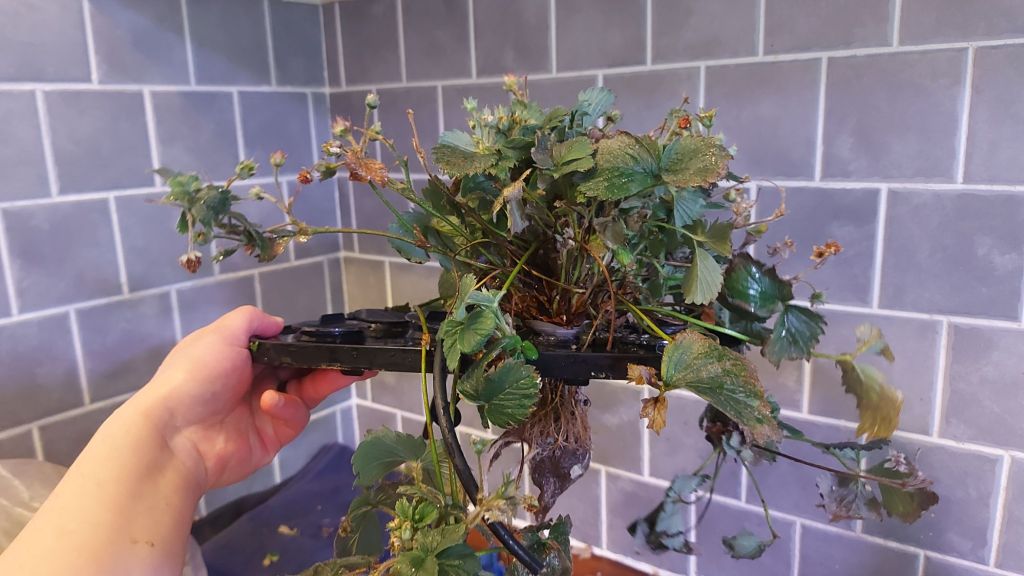
This strawberry plant is not looking well at all. It looks like strawberries are not a good fit for hydroponics gardening of this style. But we wanted to give this one more chance, so it goes the usual treatment of getting the roots washed as well as the whole planter.
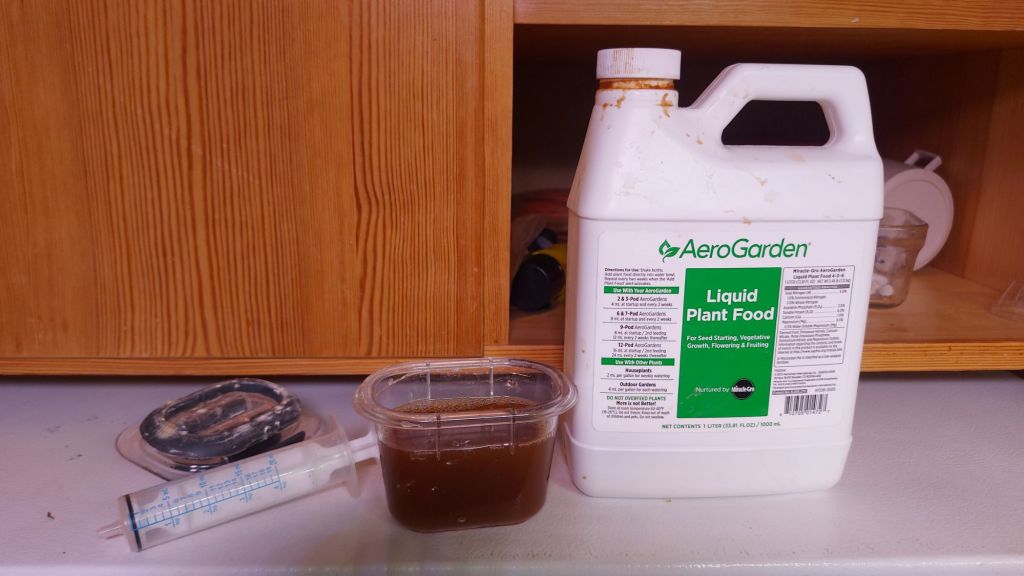
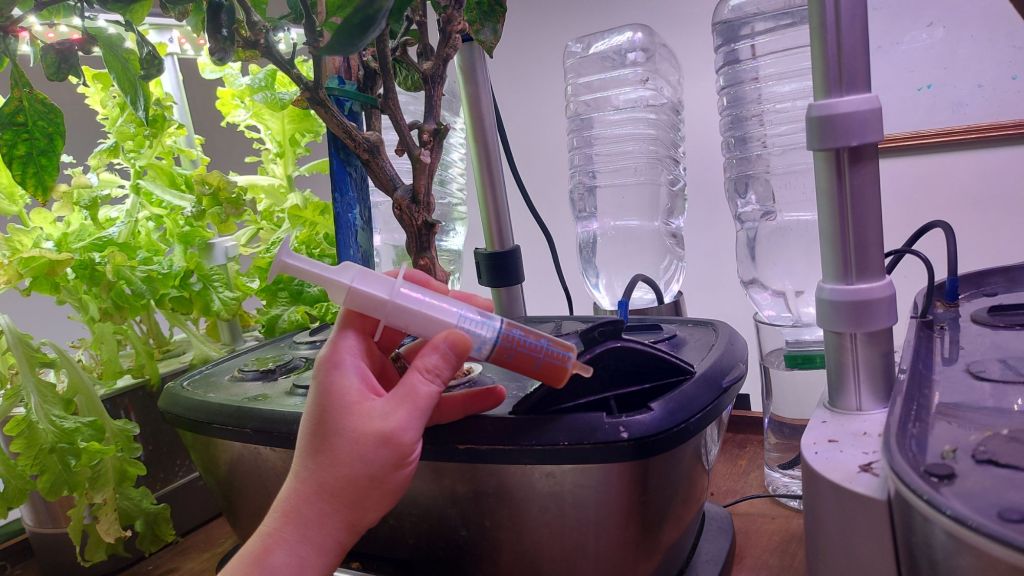
After each planter gets fresh water, they get a new dose of fertilizer as well. A syringe makes measuring and placing this liquid very easy.
This planter is the top shelf, so it’s about five and a half feet high and I had to reach with a step stool. While this is a good spot to put the fertilizer in, I just had to go with whatever hole I’m able to reach and see clearly.
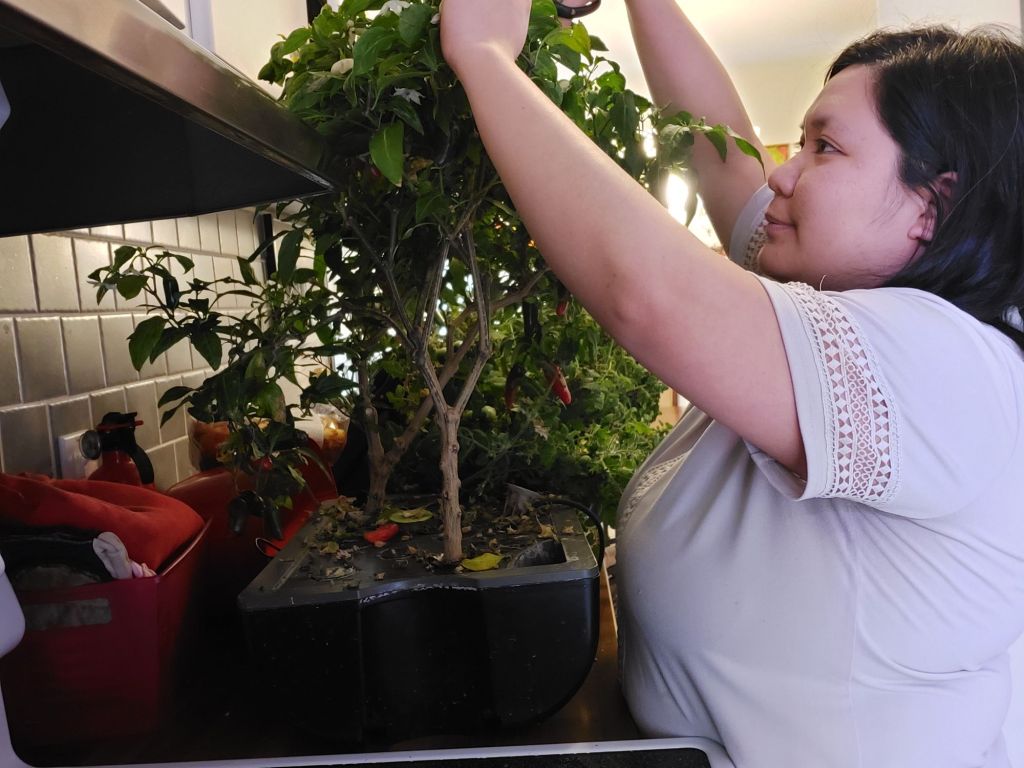
The height of all the plants need to be limited, otherwise they will hit the top panel with the lights and the bulbs get damaged. So this one got a very aggressive “haircut” from me today. Then I harvested all the peppers that were turning red.
And after cleaning off all the random plant leaves and dirt that have fallen off during the cleanup, the plants are happy for another month!
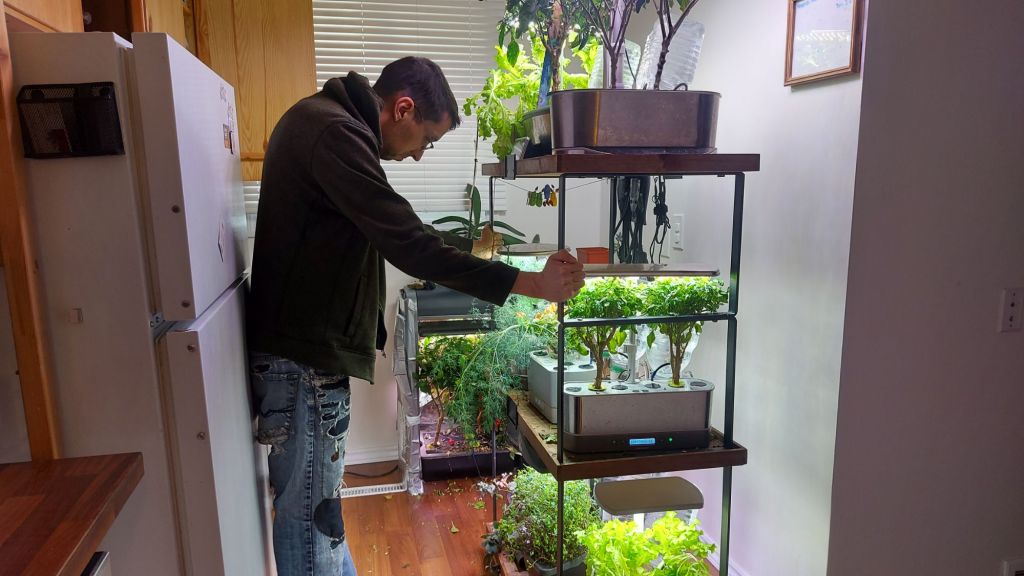
It’s remarkable how we have been doing this for almost three years now. While working side by side today, he asked me if I would consider outdoor gardening. I said not anytime soon, because I truly enjoy seeing the greenery all year long, as well as the delicious harvests that we get. As long as we have the energy to do the detailed cleanup once a month, adding water and fertilizer as needed, and harvest regularly before the fruits get overripe, we’ll keep this routine as is.
Magtanim ay di biro, Maghapong nakayuko, Di naman makatayo, Di naman makaupo! (Planting is not a joke, as you need to bend over all afternoon, you cannot stand, you cannot sit!)
This is a folk song I remember learning as a child, about the hard work that is required to plant rice in farming fields. While I personally haven’t experienced that as a child since I grew up in a mountainous region in the Philippines before coming to Canada, it got instilled in my mind that care for plants is a serious and important thing.
Potted plants were a common thing in the homes where I lived in both countries. They came in different forms: an outdoor plant box, milk cans or clay pots for indoor plants, or just a raised garden bed right by the stairs leading up to the house. But plant care in Canada was a whole different ball game since the drastically changing seasons dictate what, when and how plants need to be care for.
I started paying more attention to indoor plants in the places I lived in, when I moved in with my then boyfriend, now husband. In his condo, he had one potted plant that he got from his mom as a housewarming gift. It’s one of those generic types of plants seen in many people’s homes. He had a nickname for it that stuck, Mr. Plant. We found the perfect spot for it, right beside the narrow living room window, perched by the edge of the TV stand. It was relatively low maintenance, watering it once a week and not putting any fertilizer was enough for it to survive long enough for us to take it to the house we moved in to in 2015.
That house came with one plant that was hanging by the stairwell ceiling, so we nicknamed it H. Plant, and yes H stands for “hanging”. We watered it regularly but didn’t put fertilizer as we never got into the habit of it. When there were a few leaves that were dying, I’d cut them off and put it in the pot, hoping to myself that it can be somehow a fertilizer substitute. I thought, it’s organic material, right? We also inherited an Aloe Vera plant from our friend, after their then newly-acquired cat kept on attacking it, which we aptly nicknamed A.V. Plant. It’s quite obvious that we name things in a practical, not creative way. We got a few other small pots of plants that didn’t survive as long, such as the one I got as a wedding gift, and one free pot I got from work for Earth Day.
Sometime later in the year 2021, when we were shopping at Costco, my husband decided to take an impulse purchase, which is very rare. He decided to get tabletop Aerogarden, which is a techy pot for plants that uses water, fertilizer, with buttons and a digital screen to remind you to add water, change water, put fertilizer, and more. This was set up for planting herbs. I was at first skeptical of it, but the husband seems eager to try it, and promised to be on top of the maintenance. And it worked! Some of the plants grew early and quickly, and I had to keep up with trimming and harvesting the herbs and integrate them in our meals. That has been pretty fun, and delicious! The best part for me is being able to make homemade pesto with the very healthy basis plants (both Genove Basil and Thai basil) that is tasty and nut free. The dill has died and we tried to put a root of a spring onion and it also worked!
As a couple, we’ve never really been the type to pick plants for our house because they are pretty. We were so low maintenance and unmotivated to put plants in our front lawn and backyard in the bigger house we had! But the Aerogarden sparked a new interest to plant things that are more of a win-win for us, healthy because of better air quality inside the house, and healthy because they are edible. In Edmonton, there’s also additional conversations about edible gardens in outdoor settings. More people are setting up fruit and vegetable garden beds and pots in their front yard, more neighbourhood groups are setting up community gardens (including my own), and the city is helping those who want to put edible food plants in trails and neighbourhood ponds.
In addition to increased conversations about planing for sustenance, there’s also more encouragement towards planting outdoors with a goal towards naturalization. As in, planting pants, shrubs, bushes that are native plant species in the area, and in a way where mowing won’t be necessary. I thought that there’s merit to the idea, and I’m eager to see more people take up on it. Now that we moved to a townhouse with a very small patch of dirt under our property lines, I don’t think we’ll be able to contribute much to this idea. Overall, it’s pretty neat to see what captures people’s interest in plant care in their homes and immediate surroundings!




 FilipinaYEG