Recovering Political Candidate: Steep Cost and Sacrifices

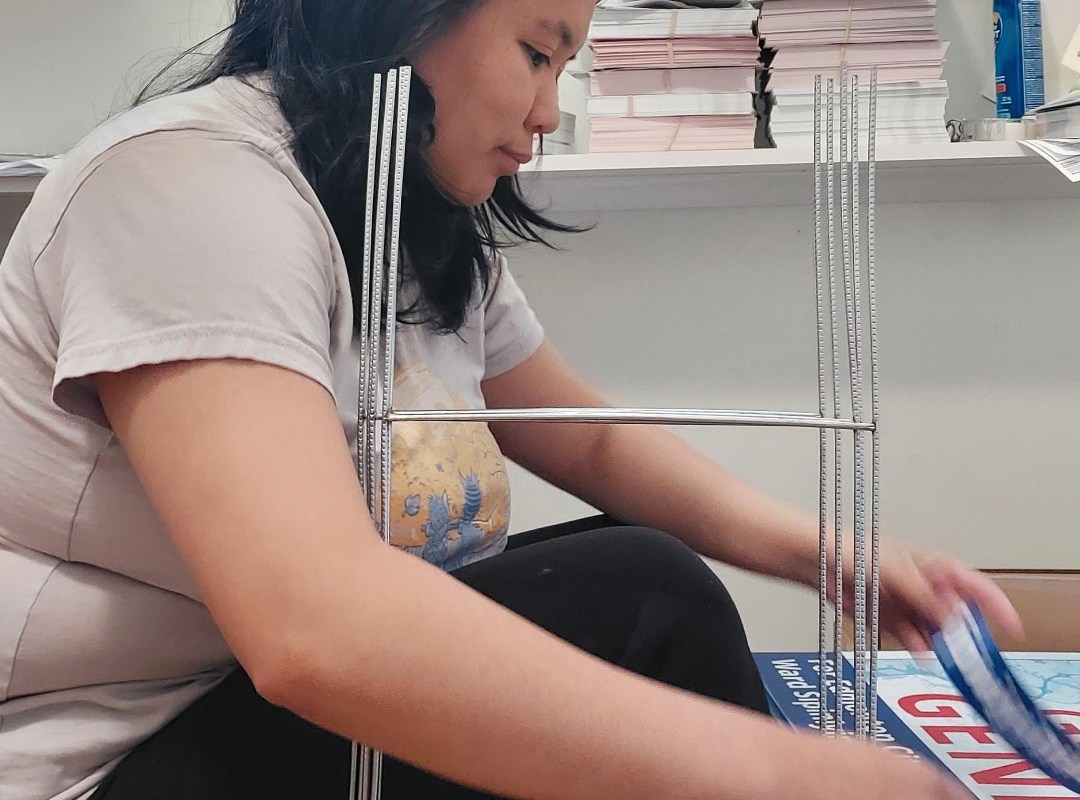
Giselle assembling lawn signs for the 2021 election campaign.

By: Giselle General

I suppose it’s kind of strange that I’m continuing the name of these series as “Recovering Political Candidate” given that I am running again. There’s already two posts I made as part of this series:

Then again, it feels like while I’m embarking on one, I’m still recovering from the previous one, unpacking all the things I’ve experienced and observed. Time gives perspective as they say, and going through the same experience again, I suppose this time for me, with four years of maturity, sheds things in a different light.

When people think about running for office, they often imagine debates, door-knocking, and campaign signs. But what most don’t see—and what few openly talk about—are the financial, professional, and emotional costs of stepping into the political arena. For those of us who come from working-class, immigrant, or marginalized communities, these costs aren’t just inconvenient. They’re systemic barriers.

As someone who immigrated to Canada as a child and became the first in my family to graduate from a Canadian university, I’ve experienced the unspoken challenges of trying to “break in” to political spaces while navigating real-life survival. I didn’t grow up around people who ran for office. My relatives didn’t work white-collar jobs or attend Chamber of Commerce lunches. Like many others, I was figuring it out as I went—sometimes fumbling, sometimes scraping by, always learning.

When I ran for City Council in 2021, I had to keep working full-time in the spring and summer with two months off full-time campaigning.

A time-tracking table. Each half-hour  for every day of the week is represented by one cell on the table. Times are color-coded as follows: Sleep, Personal Care, Meals, Chores, Commute to Work. Work. Family/ Friends social time. About 30 hours is not color-coded, representing the maximum hours that can be spent theoretically, on the election campaign.
I wondered what the true difference between a candidate who is campaigning full time compared to someone who is doing it after work. And it’s all the green blocks here, about extra 30 – 40 hours every week. That’s why I can’t help but wonder, even I’m technically adding more, would three months of full-time campaigning be enough?

I banked my vacation days and carefully budgeted unpaid leave. Not because I had the luxury to, but because I couldn’t afford to stop earning income. I later learned that many candidates take months off entirely, living off savings or family support. I didn’t have that option then.

In this second run, I’ve come to see just how many “norms” in local politics are built around people with financial privilege, professional networks, or flexible lifestyles. Here are just a few examples of the hidden costs:

Visibility Comes with a Price Tag

Being “present” at the right events such as fundraisers, business luncheons, galas, is often seen as a sign of seriousness. But tickets can cost $50 to $200 or more. Even free events often expect donations. Most happen during the workday, which means using time off or risking your job. And for women, racialized folks, and those with specific appearance pressures, just showing up polished and prepared costs time and money.

Running While Working Can Break You

There’s a quiet expectation that serious candidates go on leave to campaign full-time. But unpaid leave means lost income, and not everyone can afford that. Some of us push through by working during the day and campaigning at night, leading to exhaustion, burnout, or even injury. This is a real and unsustainable cost.

In 2021, my husband and I decided that I will never compromise on my sleep (so no all-nighters) that he will not be deeply involved in the campaign so we have a semblance of a healthy home life, and that the financial cost of taking a bit more time off work is worth it. We are hoping it will help prevent permanent injuries or trauma.

Starting Up A Campaign Isn’t Free

Even a modest campaign needs branding, a website, photos, flyers, signs. Unless you’re fundraising from day one or have wealthy donors ready to go, those expenses fall on you. There’s also pressure to appear “professional” which means a slick logo, high-quality materials, a polished online presence. That’s because anything less may be judged as unprepared or unserious.

While I’m re-using many supplies form 2021, I know if I don’t freshen up my style, it will be outdated and out of touch. There are many more cool apps and tools that help make things more efficient, and many are subscription based that can stack up if not kept in check.

Who You Know Matters – Much More Than Anticipated

I’ve spent years volunteering, organizing, and serving on boards, but I’ve also learned that social capital doesn’t always translate into campaign capital. Recognition and legitimacy are often reserved for those already plugged into elite circles or political dynasties. Meanwhile, working-class and immigrant leaders are often asked to “prove” themselves for years—often invisibly—before being seen as viable.

As a simple example, through my community service I knew of about 5 executive directors or CEO-level people from nonprofits. If many of them decline to publicly endorse me because of repercussions at their job, the list runs out pretty quickly. While someone with deeper networks and connections, whether it is because they had parents who are still alive and able, or who were also are politically connected, had a profession that already has a certain prestige assigned to it, or had lived in the area for much longer, the odds are definitely in their favour.

Where Campaign Schools Fit In

One thing that has been incredibly valuable to me has been participating in campaign schools—local and national programs designed to help women learn the basics of running for office. I’ve attended several, and I always leave feeling inspired and energized. They offer toolkits, checklists, and often a sense of solidarity that’s hard to find elsewhere. Being in a room full of women determined to lead and make a difference is powerful.

But for those just starting out, what’s offered in these programs is maybe 5% of what’s truly needed to launch a viable, well-resourced campaign. Turning that initial spark into a full campaign with traction, momentum, and infrastructure is a whole other challenge—especially if you don’t already have access to wealth, political connections, or campaign professionals.

That’s why these programs must not just continue—they need to grow. Campaign schools and women-in-politics initiatives should be more robust, more practical, and more deeply connected to the realities that many of us face: holding down full-time jobs, navigating care responsibilities, or entering spaces where people don’t expect someone like you to lead. We need to move from inspiration to implementation, and that takes sustained, tangible support.

What now?

This isn’t just my story. It’s a structural pattern. Politics in Canada, even at the local level, often functions as a gated space. Those gates aren’t always locked, but they are weighed down by money, time, and access. And the reality is, people from communities like mine often pay the price just to stand in the same room.

But here’s what I’ve learned: knowing these barriers doesn’t make me cynical—it makes me even more committed to change. Because if we want a city that’s truly inclusive, we need a political system that supports everyday people stepping into leadership.

That means:

  • Talking openly about the financial and emotional costs of candidacy.
  • Supporting candidates not just with votes, but with practical help—rides, printing, graphic design, donations, and more.
  • Reimagining what political legitimacy looks like, so it’s not based on your job title, who you golf with, or shared tables at a fancy gala, but your service to your community.

I’m still learning, healing, and unlearning as I go—just like many others. The journey of immigration, trauma, and over-responsibility doesn’t disappear when you run for office. But neither does the strength and wisdom that comes from living through it.

So if you’re thinking of running someday, or if you’re supporting someone who is: know that it’s okay to ask for help. To name the barriers. To build slowly and strategically, even if you don’t have all the traditional tools.

The more of us who show up authentically, the more we change what “leadership” looks like in this city.

I’m still willing to spill the tea!

And I’ve offered this before and I will emphasize it again. If you are interested in running for politics and wanted to know how it really looks like for someone who was described as marginalized, underdog, non-conventional candidate, who is an everyday worker and attempted to do this in 2021, I’m willing to tell it all. While scheduling might be trickier because I have to hustle even more to make up for what I’m lacking, I’m willing to share the numbers, the details of the years of planning, the financial and family decisions, the spreadsheets and timelines I aimed for, I reached and I missed. Talk to me, and I will share the real deal of my experiences. Not to scare people off, but to be more equipped.

Support Canadian With Your Patronage and Pocketbook: Repost from Alberta Filipino Journal

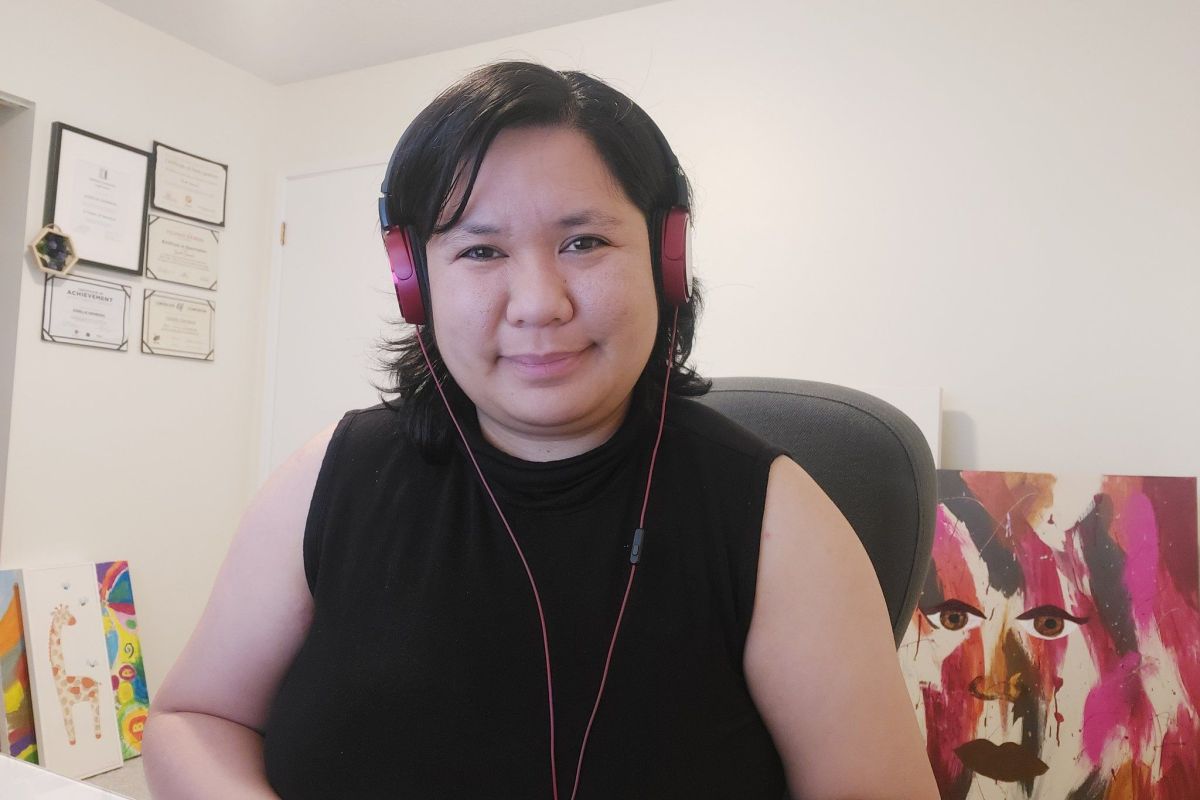
Giselle holding a computer table showing the page "Made in Canada: by Canadians, for Canadians"

By: Giselle General

I am a columnist for two newspapers in Alberta that serve the Filipino community. I feel particularly proud of this one because of the timely topic and integrating ideas beyond making shopping decisions. This was published in February 2025. You can get a free copy of the paper, published monthly, from many Filipino-owned businesses in Edmonton. You can also view everything digitally at www.albertafilipinojournal.com/.


Community Resource Article – Support Canadian with your Patronage and Pocketbook

Many of us have heard about impending tariffs by the United States. Because of this, there’s a boost to ‘Buy Canadian’ more than ever. You might be wondering how you can take part, especially if you have a tighter budget, or have gotten use to the popular options.

Supporting Canadian businesses comes in many forms. It can be as hyper-local as using products and services made in our city, prioritizing art or events made by fellow Canadians anywhere in the country or not spending money at all. Below is a list of ideas you can consider, to have more Canadian in your everyday activities and purchases.

Media and Entertainment

  • CBC Gem: You can create a free login on your computer or Smart TV and watch news, shows and movies produced in Canada through our public broadcaster.
  • TELUS STORYHIVE: This special program funds content made by locals in Alberta and BC, such as short-form documentaries on community topics, podcasts and vod-casts, mini-series, and more. My documentary about Filipinos in Edmonton is funded through this and there’s lots of great shows to watch. It’s on Telus Optic TV and YouTube.
  • Accessible Media Inc. Canada: It is a dedicated channel created about, and by, Canadians with disabilities. There’s so much inspirational and well-produced content to watch.  You can create a free login on your computer or Smart TV or watch on YouTube.
  • CKUA Radio Station: This radio station, with a webpage and app, is based in Alberta and showcases music from all over the world, a great way to break way from Hollywood-produced music.
  • Filipino-Canadian content: There are many kababayans countrywide that produce content and it’s time to them to our lists. Whether it is the What’s the Tsismis podcast, the many vloggers on YouTube, documentaries Paglalayag, Canadian Adobo and Kalinga,  or books such as Magdaragat, Reuniting with Strangers, Tony’s Wheels, and more.

Consumer Goods

  • Made in Canada directories: Webpages can identify products made in Canada, which can help with your shopping. Some of these are: madeinca.ca as well as madeincanadadirectory.ca.
  • Bulk Barn: This is a great store where you buy items by weight, such as flour, rice, spices, pasta, candies, and more. If can save more money than buying in small packages, and it’s Canadian.
  • Farmers Markets and Pop-Up Markets: There are indoor farmers markets and pop-up markets hosting local businesses. They even give a chance for ones that have closed to come back in a different way. For example, Intent Coffee, a café by Filipinos in Edmonton, has returned as a pop-up café.
  • Cultural Stores: If you continue to support these stores, whether the products made by a kababayan locally, imported from the Philippines, an Indigenous creator, or a multicultural market by fellow immigrants in Canada, that certainly counts as a way to support.
  • “Buy Nothing” Neighourbood Groups: Instead of buying an item right away, perhaps a neighbour is giving it away for free. Connect with your neighbourhood’s Buy Nothing Facebook page and see if you can get the item you need. It’s a great way to save money, help the environment, and connect with neighbours.
  • Business Districts in the city: Whether it is Whyte Ave, Stony Plain Road, Downtown, or the ones by your neighbourhood block, visiting and patronizing independent businesses there is a very valuable way to support Canadian locally.  

Attractions, Events and Activities

  • Tourism Webpages for Cities and Towns: Our province has Travel Alberta, a great resource to discover places to visit in our beautiful province, or even how to have a successful business in the Canadian tourism sector. Many local areas have similar resources to help you spend your tourism dollars here, such as Visit Jasper, Explore Edmonton, Tourism Calgary, Visit Drumheller, and more.
  • Getting at the Neighbourhood Level: At times, there’s no need to travel far and use companies to have fun and have meaningful experiences. I highly recommend checking the events in your local neighbourhood such as your neighbourhood community league, the nearby seniors centre, and schools.
  • Exploring Local Recreation Destinations: Consider trying a festival in the city you haven’t considered before. If you haven’t visited the local zoo, museum, library with unique architecture and free drop-in programs, or the local skating rink, here is your chance to prioritize them.

It is very important to think long-term, sustainable, and manageable. If you are unable to do all of these or might need to change, that’s completely okay and valid. If you learn about other options outside this list that works better for you, do them. I heard the saying “vote with your wallet” and I believe it also works with international trade. Let’s support Canadian with our choices and wallet even more moving forward!

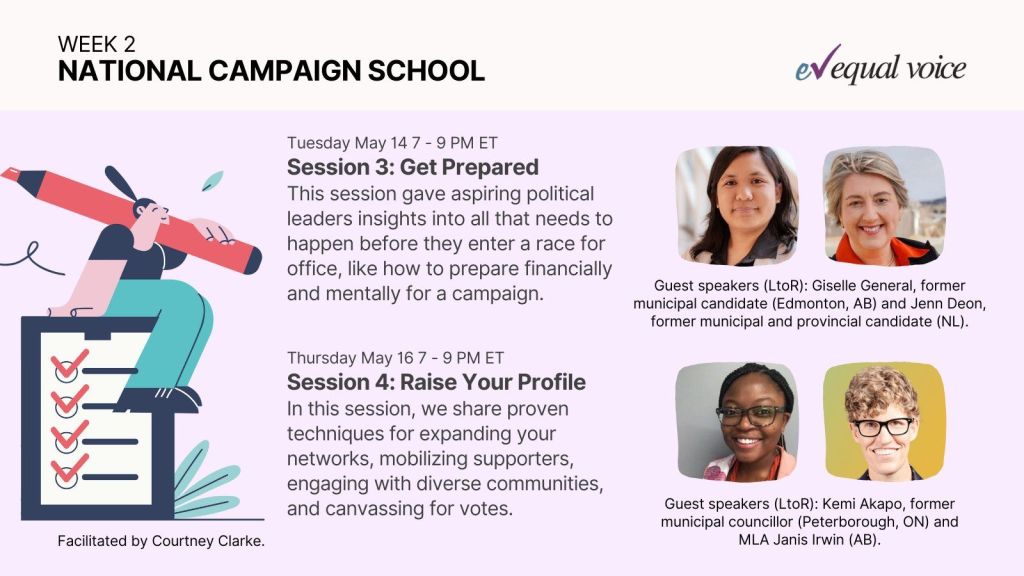
Recovering Political Candidate: I spoke at a Campaign School

By: Giselle General

I thought that being an election campaign failure – as in not winning the seat I was running for – would render my efforts meaningless. So it is to my surprise that I have been requested to speak to my experiences as an election candidate. I suppose there is truth to the saying that it is through mistakes and failures that people can gain the most growth.

I personally had benefitted from election campaign schools in the past, the first being the eight-month long program by the City of Edmonton back in 2017. The very local context of that program was really helpful for me as someone who was just somehow considering the idea of bring politically active at a candidate level. The experiences shared by the guest speakers then, many of which actually won, made the experience real and human.

Equal Voice is a Canada-wide organization helping women who want to run for politics or support those who wanted to do so. The first workshop I attended was hosted by the Alberta chapter of the organization. If I recall correctly, the Alberta chapter is no longer functioning, but the national organization continues to be active.

It looked like the other provincial chapters were super active as well. It was why I was so surprised when an organizer from the Newfoundland and Labrador chapter contacted me in October to speak to my experiences for their online election campaign school events. I was more than happy to share (maybe vent a little bit, haha) about what I did from 2018- 2021 to prepare for full-on election campaign mode leading to October 18, 2021.

Then in early April I heard from them again to speak on the same topic for their current campaign school. I guess I shared a few useful things last time, because the instructions I got were “just do the same things as last fall as you did great.” I’m really thrilled about the new options available now that online events are more frequent.

For those interested, here are my speaking notes, the longer version of what I shared .

  • INTRO: Even if you forget specific details, the main takeaways I’d like to share are:
    • Self awareness and using your strengths and skills as a foundation is very important.
    • Remembering there’s life after the election so consider your decisions accordingly.
    • All the things you do and life/ professional skills you have are all useful for the campaign.
    • Take inventory of your privileges and points of marginalization, being aware helps with planning and being compassionate to yourself. 
  • Conversations you had with your loved ones, your employer
    • Husband – Clearly defined role of my family members. For me, the campaign is NOT a family affair. There were some tradeoffs, but separating my campaign and family life from the get go was worth it for me. “I want to continue to be married after the election.”
    • Brother: I reassured my brother that it’s not as violent as the Philippines and (maybe) I won’t get murdered here. But if I do, my will, and life insurance, and organ donor card is up to date and they know what to do. 
    • Employer (Nonprofit Org): They knew I do a lot of community service and when I went to an election campaign school and all of my city volunteering, it’s just a matter of time. We discussed things such as what type of leave (banked vacation + some unpaid time off), how much (or little) should I publicize my employers name to protect their privacy (I didn’t use their name), and duration of time off (2 months until end of the election month – I returned November 1). 
  • What kinds of things were you doing to prepare for your campaign, in advance?
    • 2021 was my first time running so it wasn’t like I had a strict guideline or a playbook. Also, COVID-related restrictions truly influenced my decisions. I wanted to behave as compassionately and ethically as I could, so I likely wasn’t going out in public right away compared to many people. 
    • Personally, with the things I did, I never had a political objective in mind. I never thought of “oh I will do this so that when I run they will think of me at the election” because frankly even now it feels sleazy to me. My focus at the time was to continue the things I already do that has some kind of public component and sharing about what I do and what I believe in regularly on social media. On social media I did the 70 – 30 rule. 70% re-posting and amplifying content I resonate and believe in, 30% posts about what I’m interested in or doing that aligns with my values. If there’s an overlap with municipal politics, that’s a bonus.
    • I also found community service that had the overlap of 1 – things I like, 2- things I am good at 3 – some level of public profile and 4 – some connection to the city or municipal matters. Transit board, neighbourhood board, multicultural journalism, city-focused nonprofit boards. 
    • The rest are tasks that helped me in my personal life that have a positive spill-over effect for running for office (as outlined below).
  • How did you save money and for how long?
    • Saved money for 3 years (up to $17,000) so I have savings to pay the full amount candidates can pitch for the campaign, and cover my entire salary when I’m was away for 2 months.  I did this from 2019 – 2021, $500/ month and the pandemic also helped cut my expenses. I’m doing this again. I’m a DINK household who is NOT passionate about travel. 
  • How did you grow your network in advance of putting your name on the ballot, and prepare your network for this political journey you were taking?
    • For me, given I’m an introvert, yes social media helped a lot. I know many candidates are community leaders that seem to be in every community fundraiser, picnic, gala and public event. And that likely increased their visibility. But that’s not who I am. Also in 2020, opportunities are more limited and I wanted to be – and still am – COVID-cautious. 
    • I learn about people who have different beliefs by curating my social media feed (particularly Twitter and LinkedIn) strategically. I don’t argue or shame them, but I **do** read the hot takes and the comments. 
    • Also, through paying attention to the local media here, including actually paying subscription fees for a local media startup, I have deeper understanding and awareness of local political issues.
  • Any appointments to be made, or tips for endurance, mental health, physical health on the campaign trail? 
    • I went to therapy (to address personal issues which in my case is sexual abuse trauma) and had therapy on an ongoing basis throughout the campaign. Fortunate enough to find free ongoing mental health resources. Need to search and apply and wait. 
    • Not commit to any political parties at a federal or provincial level. 
    • Not be ashamed of my lone wolf/ introvert tendencies. I worked with it, not against it. It saved me stress and angst. 
    • Share personal observations on the campaign trail – I talked about human but mundane things such as safety, bathroom access, accessibility in apartments, (lack of)  wheelchair ramps on most houses, taking the bus to carry campaign supplies around, etc. 
    • While it sounded like an exaggeration, I made a “extreme worst case scenario” list of what will make me cancel the campaign or prevent me from running (ex. me dying. my husband dying, our house going on fire and losing our home. either of us becoming bankrupt, amputated, drastically disabled, etc.) 
    • I also made a list of my campaign goals, with a realistic and dark side because of my reality as woman who is an immigrant, who looks Asian/ Indigenous, who is COVID-cautious, who cannot drive and has bladder and mobility issues. 1 – not die, 2 – not be in financial ruin, 3 – run a campaign based on my principles, with a combination of inspiring and education, 4 – win. 
  • Highlights, lessons learned on the campaign trail? Things you’d do differently the second time you run?
    • If I run again, I will do many of the prep I did from home and personally that helped me in 2021. I had very clear expectations and boundaries with my husband and with myself. (See tips above).
    • But I will be more careful of what I say on social media 2 years before the campaign period. I made a social media post about running for election and as a consequence, one of the boards where I volunteer asked me to step down from an executive (Vice President) position from that board. While I wasn’t actively campaigning yet, the risk of conflict of interest, real and perceived, is too risky for them. I was actually afraid I’ll be asked to step down, and that would have been bad for me as I’m the only Filipino member of the board and I want to stay and make an impact there. I continued to be a ‘regular’ board member and became an executive again after the election. But the timing of when you official share your interest in running, even if you are not officially on campaign mode yet, can impact your current community involvement. 
    • Employer conversations will be different this time around as I am a public servant now (work for provincial government). I’ll need to be a lot more quiet about it and know my work benefits and rights early next year. 
    • Maybe, using a language, timing and setting that resonates with my values of a “non politically smarmy politician”, perhaps I will share in in-person conversations more often that I will be running. It looks like there were some awareness gained in 2021 and there were offers for people to support more directly in the future. 
    • I will continue to have strict accessibility standards. So many people are still so ableist and don’t know how to produce accessible digital communication. I did it all and I’m proud of it. I’ll do it the same way again and not compromise on this. 
    • Remind myself again that THERE IS LIFE AFTER THE ELECTION, if I win, then that begins my journey as an elected official. if I lose, I gotta do the clean up, reporting and back to my former job and family routine at some point. Have a long term view of decisions you make. 
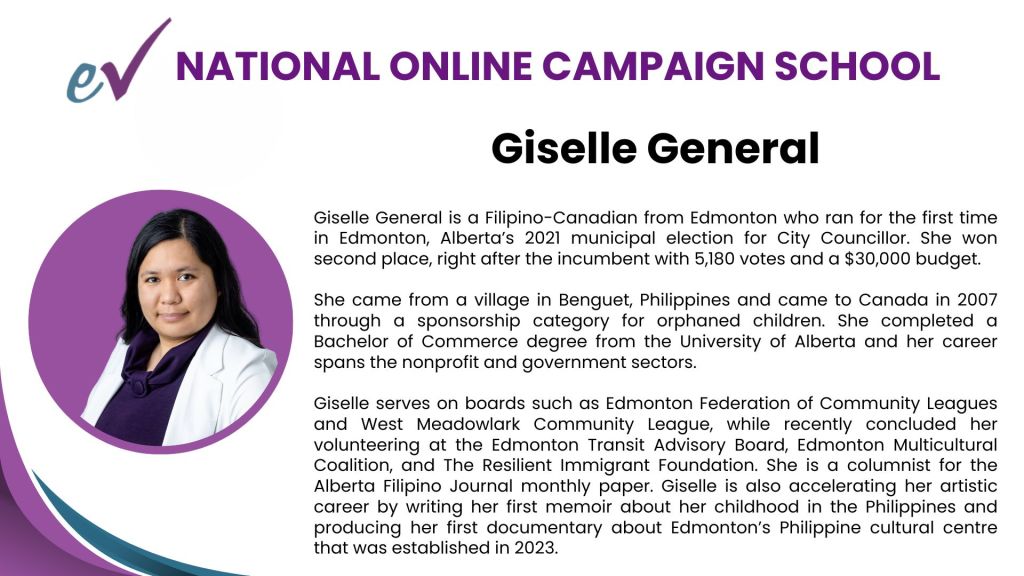
Between October 2023 and May 2024, some of my community positions have changed into former positions so I needed to make sure that my bio for the campaign school promotions was updated.

It seemed like the perspectives I shared were well-received based on the reactions in the smaller discussions and the follow-up email from the organizer. It was a great experience, especially for doing it the second time around, and if they invite me for a future talk or panel I certainly will do it again.

For those who wanted to run, it is a lot of work, and some of the things I did contradicted the other panelist’s experience. So take what works and make it your own.

Recovering Political Candidate: What I wish I Knew

By: Giselle General

Sometime in December 2023, I was contacted by a researcher who is working on a paper asking for the financial barriers faced by women running for public office. Did she ever find the right person willing to talk and vent about this very topic! I was connected to her through a national organization that aims to encourage women to run for public office.

I shared what I knew and gave so much more information that the questions she outlined in her 3-page questionnaire. I truly hoped I didn’t sound too grouchy when I explained all the potential barriers, both ones I experienced personally and broader patterns I’ve observed.

Despite the fact that my candidacy was coming up to three years ago, I remember many things that I wished were more clear during the campaign workshops and campaign toolkits that I accessed between 2017 – 2021.

So here is a short list of what I wish I knew.

  • About the “social etiquette” in Canada, Alberta, and Edmonton when it comes to door-knocking. I didn’t feel confident enough to reassure volunteers on how to handle different types of situations such as homes having no mailboxes, the “no soliciting” signs, entering gates and how long to wait at the doors.
  • How to handle conversations with one’s employer on handling things such as time off, salary and using vacation days and reputation management for the workplace. I think I handled it okay, but if I had more information I would have been less terrified.
  • The range of options on how to handle the election campaign with family members.
  • Exercise routines to help manage pain and soreness from walking, standing a long time, using mobility aids (like my walking cane) for a long time, hand care (from knocking on all the doors), and more.
  • Personal finance budgeting once the motivation to run is there. This includes saving for money for taking time off from work to do campaigning full time, money to initially fund election expenses, budgeting some extras that may be needed such as replacement shoes, therapy appointments, pens, umbrellas, or takeout food.
  • Options for campaign finances, as in ideas of what a low-budget, medium-budget, and a high-budget campaign can potentially look like, as it took me too long to decide whether I should get one digital billboard or one bus bench.
  • Tips and tricks to coordinate with landlords to connect with apartment residents, as this process also took a lot of time coordinating while being afraid I might be somehow breaking some election rule that I was never aware of.

I will likely talk about this more in future posts. In the meantime, I eagerly look forward to the research publication talking about this topic.

Everyday people that wanted to participate in the political discourse in this very important way should feel confident in their ability to do a decent job. They should not feel demoralized by obstacles that seem systemic in nature.

To conclude, here’s the copy of the post I wrote for the Alberta Filipino Journal back in 2021 during the beginning of the actual campaign.

General Point of View: Trailblazing and Smashing Ceilings – The Journey of a First-Time Elections Candidate

By: Giselle General, April 2021

This election candidacy is a journey five years in the making.  Here is a reflection on my experiences as of this date as someone running for the first time.

A main challenge is informing people on different topics. There are many issues that affect our daily lives, and it can be difficult to remember which level of government is responsible. On top of that, there are issues that are a shared responsibility between the municipal, provincial and federal government. So it is important for me, my campaign team, and other candidates to be informed and patient when discussing with others.

The electoral district boundaries not only changed in composition, but also the names have changed. They are changed from numbers to Indigenous names. I think the names are beautiful and meaningful, but many are frustrated and unwilling to learn. I can personally attest that all it takes is practice, just like learning Asian geography back in high school. After a few rounds of practice, I can confidently say without missing a beat that “I am running for city councillor for West Edmonton, the ward of sipiwiyiniwak!” Those in ward Dene and O-day’min will have an easier time, while those in ward Ipiihkoohkanipiaohtsi would need to practice a few more times.  

I found out that apartments and condo buildings are usually ignored by campaign teams. I found this shocking and unacceptable! Because most apartment buildings are rentals, this means that many people who are not homeowners and from lower economic background are not given the same opportunity by election candidates to share their thoughts about political matters. No wonder the voter turnout in municipal elections is only 30%. Like a spark that ignited in me, I felt a fierce sense of determination to go against the tide and find ways to connect with people living in higher-density places. I hope that landlords and building managers would cooperate with my campaign team so we can engage with residents effectively and safely.  

A harsh and true advice I received was “you need a lot of money”. And I don’t have a lot. I feel motivated to find creative ways to compensate for the shortage of money, and fun ways to raise money and support. From virtual dance-a-thons as a fundraiser, using social media for marketing instead of spending money on billboards, and asking volunteers to drop off brochures instead of paying Canada post thousands of dollars, the ideas seem to be endless. Necessity is the mother of invention as they say, and I’m excited to find innovative ways to connect with potential voters and supporters. I hope that I get hundreds of volunteers from all walks of life, and that even those who cannot vote yet, the newcomers and under 18 years old, feel inclined to join the campaign team as well.  

The election day is in October, and given how time feels like it’s slipping through our fingers, it will be here before we even realize it. All the spare time I have, between breakfast and starting work, between dinner and bedtime, between laundry and cooking on the weekends, are occupied by the seemingly endless tasks to gain more resources, to recruiting volunteers, to ensuring we consult with people with different perspective. Door-knocking officially starts in May and I’m eagerly looking at the calendar counting down the time.  

I am excited to be transformed by this experience. I suppose, turning 30 years old this year also highlights the significance of this adventure. I’d love to win of course, but it’s more that that. My hope is that I am just one of the many people from under-represented backgrounds, of the women, the young adults, the migrants and the Filipinos who would take the leap and throw their name in an election race. I hope that my experience can serve as inspiration and a resource guide in navigating an election candidacy that appropriately considers the complications that arise from our lived experiences. If I don’t end up being that trailblazer, I hope that someone else does not too long after I run.