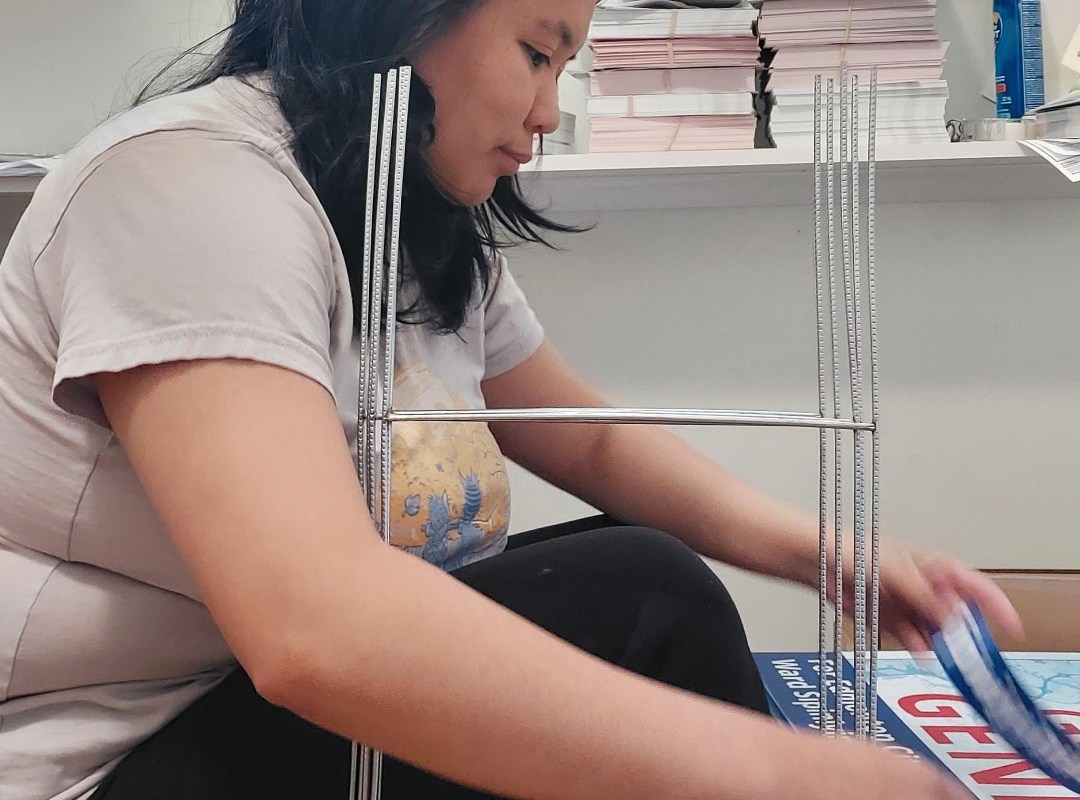
By: Giselle General
I suppose it’s kind of strange that I’m continuing the name of these series as “Recovering Political Candidate” given that I am running again. There’s already two posts I made as part of this series:
- Recovering Political Candidate: What I wish I knew
- Recovering Political Candidate: I spoke at a campaign school
Then again, it feels like while I’m embarking on one, I’m still recovering from the previous one, unpacking all the things I’ve experienced and observed. Time gives perspective as they say, and going through the same experience again, I suppose this time for me, with four years of maturity, sheds things in a different light.
When people think about running for office, they often imagine debates, door-knocking, and campaign signs. But what most don’t see—and what few openly talk about—are the financial, professional, and emotional costs of stepping into the political arena. For those of us who come from working-class, immigrant, or marginalized communities, these costs aren’t just inconvenient. They’re systemic barriers.
As someone who immigrated to Canada as a child and became the first in my family to graduate from a Canadian university, I’ve experienced the unspoken challenges of trying to “break in” to political spaces while navigating real-life survival. I didn’t grow up around people who ran for office. My relatives didn’t work white-collar jobs or attend Chamber of Commerce lunches. Like many others, I was figuring it out as I went—sometimes fumbling, sometimes scraping by, always learning.
When I ran for City Council in 2021, I had to keep working full-time in the spring and summer with two months off full-time campaigning.

I banked my vacation days and carefully budgeted unpaid leave. Not because I had the luxury to, but because I couldn’t afford to stop earning income. I later learned that many candidates take months off entirely, living off savings or family support. I didn’t have that option then.
In this second run, I’ve come to see just how many “norms” in local politics are built around people with financial privilege, professional networks, or flexible lifestyles. Here are just a few examples of the hidden costs:
Visibility Comes with a Price Tag
Being “present” at the right events such as fundraisers, business luncheons, galas, is often seen as a sign of seriousness. But tickets can cost $50 to $200 or more. Even free events often expect donations. Most happen during the workday, which means using time off or risking your job. And for women, racialized folks, and those with specific appearance pressures, just showing up polished and prepared costs time and money.
Running While Working Can Break You
There’s a quiet expectation that serious candidates go on leave to campaign full-time. But unpaid leave means lost income, and not everyone can afford that. Some of us push through by working during the day and campaigning at night, leading to exhaustion, burnout, or even injury. This is a real and unsustainable cost.
In 2021, my husband and I decided that I will never compromise on my sleep (so no all-nighters) that he will not be deeply involved in the campaign so we have a semblance of a healthy home life, and that the financial cost of taking a bit more time off work is worth it. We are hoping it will help prevent permanent injuries or trauma.
Starting Up A Campaign Isn’t Free
Even a modest campaign needs branding, a website, photos, flyers, signs. Unless you’re fundraising from day one or have wealthy donors ready to go, those expenses fall on you. There’s also pressure to appear “professional” which means a slick logo, high-quality materials, a polished online presence. That’s because anything less may be judged as unprepared or unserious.
While I’m re-using many supplies form 2021, I know if I don’t freshen up my style, it will be outdated and out of touch. There are many more cool apps and tools that help make things more efficient, and many are subscription based that can stack up if not kept in check.
Who You Know Matters – Much More Than Anticipated
I’ve spent years volunteering, organizing, and serving on boards, but I’ve also learned that social capital doesn’t always translate into campaign capital. Recognition and legitimacy are often reserved for those already plugged into elite circles or political dynasties. Meanwhile, working-class and immigrant leaders are often asked to “prove” themselves for years—often invisibly—before being seen as viable.
As a simple example, through my community service I knew of about 5 executive directors or CEO-level people from nonprofits. If many of them decline to publicly endorse me because of repercussions at their job, the list runs out pretty quickly. While someone with deeper networks and connections, whether it is because they had parents who are still alive and able, or who were also are politically connected, had a profession that already has a certain prestige assigned to it, or had lived in the area for much longer, the odds are definitely in their favour.

Where Campaign Schools Fit In
One thing that has been incredibly valuable to me has been participating in campaign schools—local and national programs designed to help women learn the basics of running for office. I’ve attended several, and I always leave feeling inspired and energized. They offer toolkits, checklists, and often a sense of solidarity that’s hard to find elsewhere. Being in a room full of women determined to lead and make a difference is powerful.
But for those just starting out, what’s offered in these programs is maybe 5% of what’s truly needed to launch a viable, well-resourced campaign. Turning that initial spark into a full campaign with traction, momentum, and infrastructure is a whole other challenge—especially if you don’t already have access to wealth, political connections, or campaign professionals.
That’s why these programs must not just continue—they need to grow. Campaign schools and women-in-politics initiatives should be more robust, more practical, and more deeply connected to the realities that many of us face: holding down full-time jobs, navigating care responsibilities, or entering spaces where people don’t expect someone like you to lead. We need to move from inspiration to implementation, and that takes sustained, tangible support.
What now?
This isn’t just my story. It’s a structural pattern. Politics in Canada, even at the local level, often functions as a gated space. Those gates aren’t always locked, but they are weighed down by money, time, and access. And the reality is, people from communities like mine often pay the price just to stand in the same room.
But here’s what I’ve learned: knowing these barriers doesn’t make me cynical—it makes me even more committed to change. Because if we want a city that’s truly inclusive, we need a political system that supports everyday people stepping into leadership.
That means:
- Talking openly about the financial and emotional costs of candidacy.
- Supporting candidates not just with votes, but with practical help—rides, printing, graphic design, donations, and more.
- Reimagining what political legitimacy looks like, so it’s not based on your job title, who you golf with, or shared tables at a fancy gala, but your service to your community.
I’m still learning, healing, and unlearning as I go—just like many others. The journey of immigration, trauma, and over-responsibility doesn’t disappear when you run for office. But neither does the strength and wisdom that comes from living through it.
So if you’re thinking of running someday, or if you’re supporting someone who is: know that it’s okay to ask for help. To name the barriers. To build slowly and strategically, even if you don’t have all the traditional tools.
The more of us who show up authentically, the more we change what “leadership” looks like in this city.
I’m still willing to spill the tea!
And I’ve offered this before and I will emphasize it again. If you are interested in running for politics and wanted to know how it really looks like for someone who was described as marginalized, underdog, non-conventional candidate, who is an everyday worker and attempted to do this in 2021, I’m willing to tell it all. While scheduling might be trickier because I have to hustle even more to make up for what I’m lacking, I’m willing to share the numbers, the details of the years of planning, the financial and family decisions, the spreadsheets and timelines I aimed for, I reached and I missed. Talk to me, and I will share the real deal of my experiences. Not to scare people off, but to be more equipped.


 FilipinaYEG