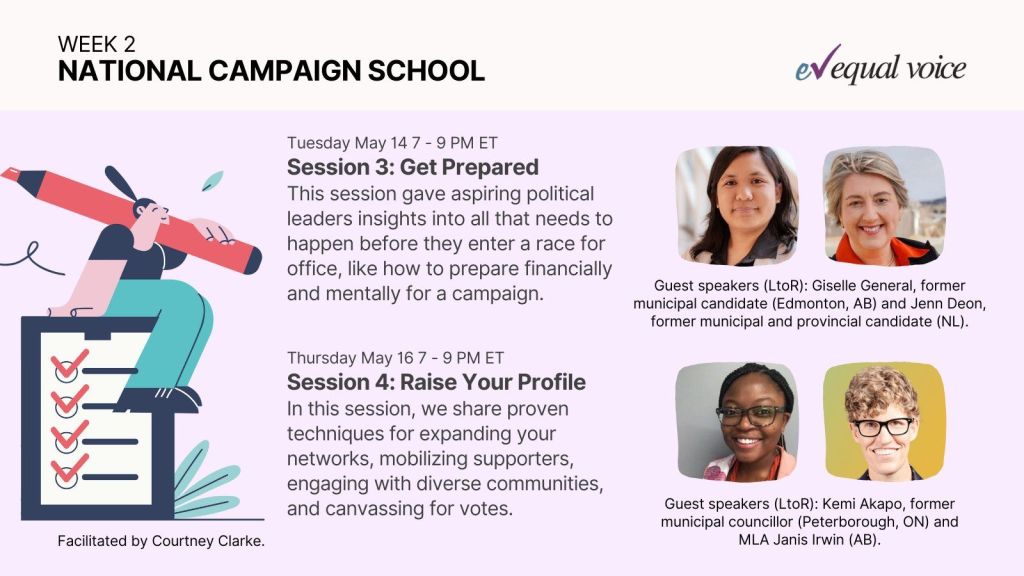
Recovering Political Candidate: I spoke at a Campaign School

By: Giselle General

I thought that being an election campaign failure – as in not winning the seat I was running for – would render my efforts meaningless. So it is to my surprise that I have been requested to speak to my experiences as an election candidate. I suppose there is truth to the saying that it is through mistakes and failures that people can gain the most growth.

I personally had benefitted from election campaign schools in the past, the first being the eight-month long program by the City of Edmonton back in 2017. The very local context of that program was really helpful for me as someone who was just somehow considering the idea of bring politically active at a candidate level. The experiences shared by the guest speakers then, many of which actually won, made the experience real and human.

Equal Voice is a Canada-wide organization helping women who want to run for politics or support those who wanted to do so. The first workshop I attended was hosted by the Alberta chapter of the organization. If I recall correctly, the Alberta chapter is no longer functioning, but the national organization continues to be active.

It looked like the other provincial chapters were super active as well. It was why I was so surprised when an organizer from the Newfoundland and Labrador chapter contacted me in October to speak to my experiences for their online election campaign school events. I was more than happy to share (maybe vent a little bit, haha) about what I did from 2018- 2021 to prepare for full-on election campaign mode leading to October 18, 2021.

Then in early April I heard from them again to speak on the same topic for their current campaign school. I guess I shared a few useful things last time, because the instructions I got were “just do the same things as last fall as you did great.” I’m really thrilled about the new options available now that online events are more frequent.
For those interested, here are my speaking notes, the longer version of what I shared .

  • INTRO: Even if you forget specific details, the main takeaways I’d like to share are:
    • Self awareness and using your strengths and skills as a foundation is very important.
    • Remembering there’s life after the election so consider your decisions accordingly.
    • All the things you do and life/ professional skills you have are all useful for the campaign.
    • Take inventory of your privileges and points of marginalization, being aware helps with planning and being compassionate to yourself. 
  • Conversations you had with your loved ones, your employer
    • Husband – Clearly defined role of my family members. For me, the campaign is NOT a family affair. There were some tradeoffs, but separating my campaign and family life from the get go was worth it for me. “I want to continue to be married after the election.”
    • Brother: I reassured my brother that it’s not as violent as the Philippines and (maybe) I won’t get murdered here. But if I do, my will, and life insurance, and organ donor card is up to date and they know what to do. 
    • Employer (Nonprofit Org): They knew I do a lot of community service and when I went to an election campaign school and all of my city volunteering, it’s just a matter of time. We discussed things such as what type of leave (banked vacation + some unpaid time off), how much (or little) should I publicize my employers name to protect their privacy (I didn’t use their name), and duration of time off (2 months until end of the election month – I returned November 1). 
  • What kinds of things were you doing to prepare for your campaign, in advance?
    • 2021 was my first time running so it wasn’t like I had a strict guideline or a playbook. Also, COVID-related restrictions truly influenced my decisions. I wanted to behave as compassionately and ethically as I could, so I likely wasn’t going out in public right away compared to many people. 
    • Personally, with the things I did, I never had a political objective in mind. I never thought of “oh I will do this so that when I run they will think of me at the election” because frankly even now it feels sleazy to me. My focus at the time was to continue the things I already do that has some kind of public component and sharing about what I do and what I believe in regularly on social media. On social media I did the 70 – 30 rule. 70% re-posting and amplifying content I resonate and believe in, 30% posts about what I’m interested in or doing that aligns with my values. If there’s an overlap with municipal politics, that’s a bonus.
    • I also found community service that had the overlap of 1 – things I like, 2- things I am good at 3 – some level of public profile and 4 – some connection to the city or municipal matters. Transit board, neighbourhood board, multicultural journalism, city-focused nonprofit boards. 
    • The rest are tasks that helped me in my personal life that have a positive spill-over effect for running for office (as outlined below).
  • How did you save money and for how long?
    • Saved money for 3 years (up to $17,000) so I have savings to pay the full amount candidates can pitch for the campaign, and cover my entire salary when I’m was away for 2 months.  I did this from 2019 – 2021, $500/ month and the pandemic also helped cut my expenses. I’m doing this again. I’m a DINK household who is NOT passionate about travel. 
  • How did you grow your network in advance of putting your name on the ballot, and prepare your network for this political journey you were taking?
    • For me, given I’m an introvert, yes social media helped a lot. I know many candidates are community leaders that seem to be in every community fundraiser, picnic, gala and public event. And that likely increased their visibility. But that’s not who I am. Also in 2020, opportunities are more limited and I wanted to be – and still am – COVID-cautious. 
    • I learn about people who have different beliefs by curating my social media feed (particularly Twitter and LinkedIn) strategically. I don’t argue or shame them, but I **do** read the hot takes and the comments. 
    • Also, through paying attention to the local media here, including actually paying subscription fees for a local media startup, I have deeper understanding and awareness of local political issues.
  • Any appointments to be made, or tips for endurance, mental health, physical health on the campaign trail? 
    • I went to therapy (to address personal issues which in my case is sexual abuse trauma) and had therapy on an ongoing basis throughout the campaign. Fortunate enough to find free ongoing mental health resources. Need to search and apply and wait. 
    • Not commit to any political parties at a federal or provincial level. 
    • Not be ashamed of my lone wolf/ introvert tendencies. I worked with it, not against it. It saved me stress and angst. 
    • Share personal observations on the campaign trail – I talked about human but mundane things such as safety, bathroom access, accessibility in apartments, (lack of)  wheelchair ramps on most houses, taking the bus to carry campaign supplies around, etc. 
    • While it sounded like an exaggeration, I made a “extreme worst case scenario” list of what will make me cancel the campaign or prevent me from running (ex. me dying. my husband dying, our house going on fire and losing our home. either of us becoming bankrupt, amputated, drastically disabled, etc.) 
    • I also made a list of my campaign goals, with a realistic and dark side because of my reality as woman who is an immigrant, who looks Asian/ Indigenous, who is COVID-cautious, who cannot drive and has bladder and mobility issues. 1 – not die, 2 – not be in financial ruin, 3 – run a campaign based on my principles, with a combination of inspiring and education, 4 – win. 
  • Highlights, lessons learned on the campaign trail? Things you’d do differently the second time you run?
    • If I run again, I will do many of the prep I did from home and personally that helped me in 2021. I had very clear expectations and boundaries with my husband and with myself. (See tips above).
    • But I will be more careful of what I say on social media 2 years before the campaign period. I made a social media post about running for election and as a consequence, one of the boards where I volunteer asked me to step down from an executive (Vice President) position from that board. While I wasn’t actively campaigning yet, the risk of conflict of interest, real and perceived, is too risky for them. I was actually afraid I’ll be asked to step down, and that would have been bad for me as I’m the only Filipino member of the board and I want to stay and make an impact there. I continued to be a ‘regular’ board member and became an executive again after the election. But the timing of when you official share your interest in running, even if you are not officially on campaign mode yet, can impact your current community involvement. 
    • Employer conversations will be different this time around as I am a public servant now (work for provincial government). I’ll need to be a lot more quiet about it and know my work benefits and rights early next year. 
    • Maybe, using a language, timing and setting that resonates with my values of a “non politically smarmy politician”, perhaps I will share in in-person conversations more often that I will be running. It looks like there were some awareness gained in 2021 and there were offers for people to support more directly in the future. 
    • I will continue to have strict accessibility standards. So many people are still so ableist and don’t know how to produce accessible digital communication. I did it all and I’m proud of it. I’ll do it the same way again and not compromise on this. 
    • Remind myself again that THERE IS LIFE AFTER THE ELECTION, if I win, then that begins my journey as an elected official. if I lose, I gotta do the clean up, reporting and back to my former job and family routine at some point. Have a long term view of decisions you make. 
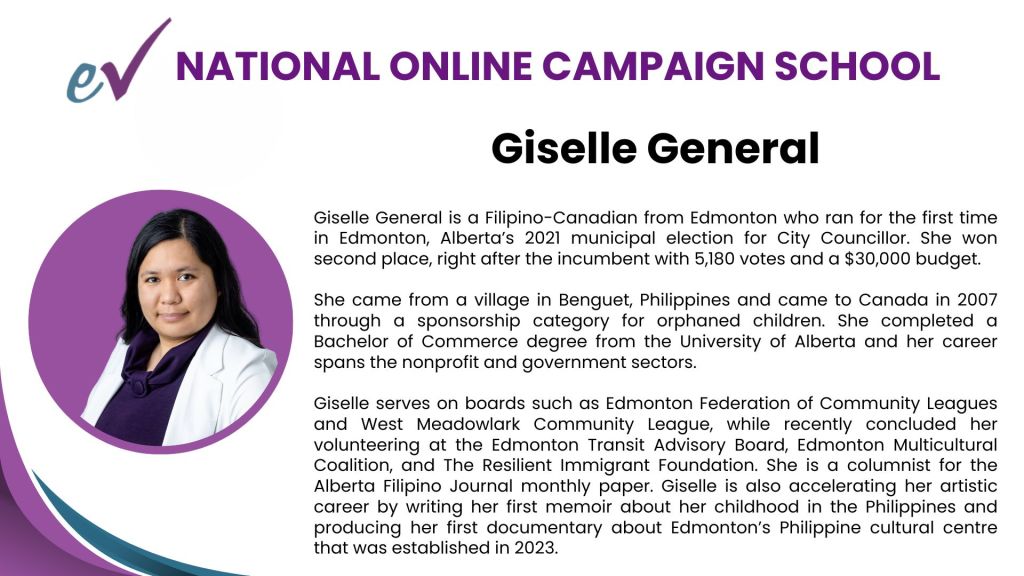
Between October 2023 and May 2024, some of my community positions have changed into former positions so I needed to make sure that my bio for the campaign school promotions was updated.

It seemed like the perspectives I shared were well-received based on the reactions in the smaller discussions and the follow-up email from the organizer. It was a great experience, especially for doing it the second time around, and if they invite me for a future talk or panel I certainly will do it again.

For those who wanted to run, it is a lot of work, and some of the things I did contradicted the other panelist’s experience. So take what works and make it your own.
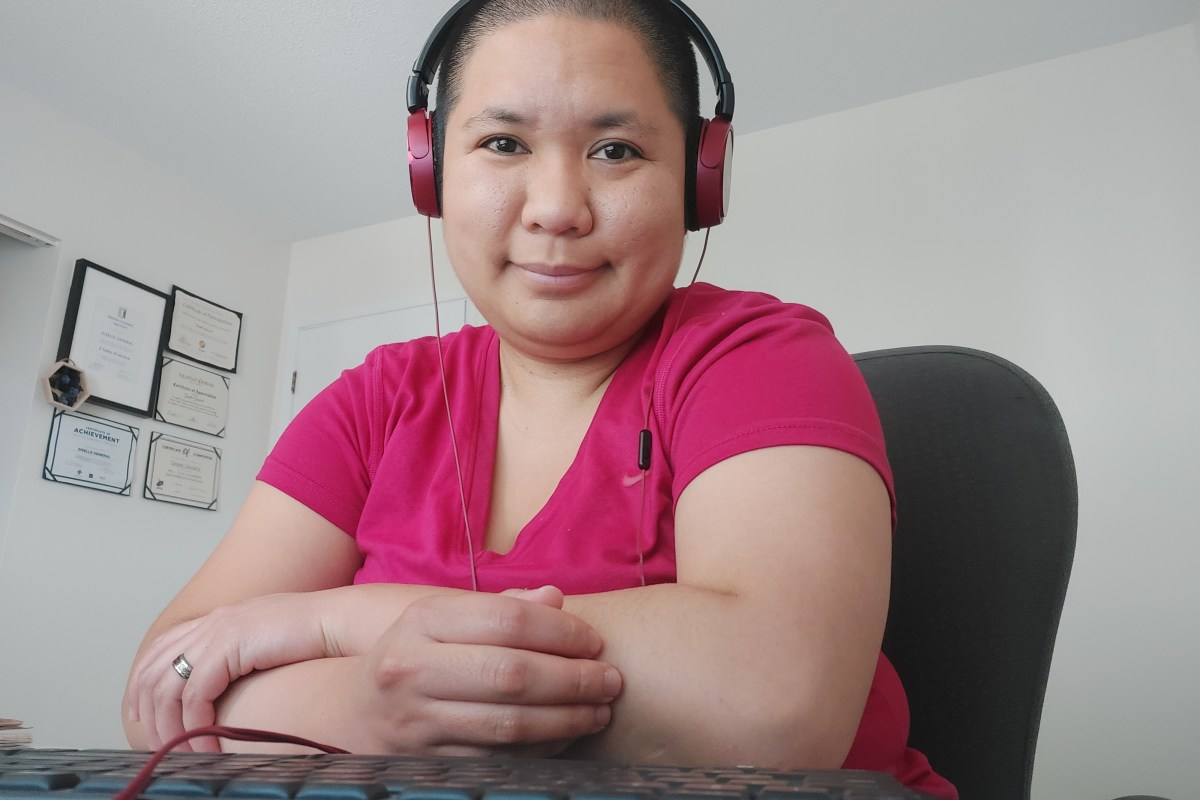
Event Review: Writers Guild of Alberta “Origins” Conference

By: Giselle General

This past weekend, from June 2 – 4, 2023 I had the great fortune of attending the weekend-long annual conference organized by the Writers Guild of Alberta. They titled their conference this year “Origins: A Return to Networking, Publishing, Genre and Craft.” It’s a hybrid conference, with the in-person location at Fort Calgary and the keynotes and focus workshops available to attend online.

Frankly when I first heard of the conference through the e-newsletter from Writers Guild of Alberta, I was already checking my budget. I started a new job recently so my bank account is not draining anymore and I had full intention of finding a way to pay for it. Then, good news came. As I was a mentee of the Horizon Writers Circle this year, the conference was covered for free. There was even a travel allowance! This prompted a conversation among my fellow mentees to travel together from Edmonton to Calgary.

I agonized for a while on how to attend for two main reasons. I’m learning to be more kind to myself and be more conscious of my precious and limited energy for socializing. I haven’t attended a multi-day conference since November 2018 and I found it exhausting. If I wanted to focus on learning, I need to protect my capacity.

I’ve also felt reluctant to probe and ask questions related to COVID precautions and limiting viral transmission. I don’t feel comfortable attending large gatherings that can be a superspreader event. What’s the point of learning about improving my writing craft, if I die or get permanently debilitated by long COVID?

After some deliberation I decided to join the event virtually. As I read the details in the registration I felt hopeful that the virtual components were planned and executed seamlessly. As the conference day approached, I received the instructions on travel, accommodations, and online links. I was amazed by how the online component felt naturally included, and not something that was thrown together last minute. This gave the impression that the organizers have full intention for the event to be inclusive, compassionate, flexible, accommodating, which is what I believe the artistic and literary world is supposed to be.

How was Friday?

I rushed to finish dinner and run the dishwasher before plugging my headphones and connecting online. I then discovered that the opening keynote speaker is sick, and at the last minute, is joining online from their home in Edmonton. So technically speaking, I’m geographically closer to her. Her manner of describing how humans use language as a means to make change was just so awe-inspiring to me.

I knew that those who attended in-person had an opening networking event and a casual get-together after the keynote. As my online meeting linked closed, I happily went on to do chores to ensure my weekend is as cleared as possible.

How was Saturday?

Turns out, the morning keynote speaker had a travel-related hiccup and didn’t make it to Calgary. I’m super duper grateful to the power of the internet, giving him a way to do a virtual presentation. It was a compelling keynote that reminded me to continue learning about Canadian history that was not taught in my newcomer orientation and citizenship booklets, to find them in literature that is being produced these days. For Indigenous writers, it is a way to control the narrative of their lives and experiences withing the wider Canadian society and story. For recent immigrant and settlers like me, there’s many ways to learn and enrich our understanding of this place where we live.

It was my first time participating in a panel workshop with writing exercises for both attendees in-person and virtual. The last time I attended a writing workshop with writing prompts (as in, you get five minutes to write answering the question the facilitator gave) was at Pinoys on Parliament conference last year, but all of us are attending virtually so there’s lesser technical hiccups. This is also my first interactive workshop related to memoir.

“Do what’s right for you, for this project, at this time.” I appreciate the compassion, the permission, and flexibility when it comes to processes and decisions. The reminder of the fundamentals that are sometimes forgotten was very valuable. As always, there’s the “good problem” of having too many good choices of panels to attend. When I was choosing which to attend, I read all the details to my husband who does not do artistic of literary work. His perspective helped me narrow it down to the one that makes most practical sense. The fact that we can watch the recordings afterwards is also very reassuring.

I’ve organized events and conferences myself, so I have full appreciation of what happens behind the scenes. It was incredible to see the resources adjustments to mitigate the tech issues. Really incredible and appreciated.

How was Sunday?

Our keynote for Sunday joined us virtually from overseas, all the way from Greece. It was such a delightful and insightful Q and A about their approach across different projects and genres. There’s great comfort in hearing a successful writer acknowledging that certain processes related to writing are still difficult. For an outdoor hotel in Europe and only with one single internet interruption, I’m overjoyed that the setup of the conference allowed her to share her time with all of us.

As someone who belongs to many nonprofit boards, I appreciate the value of the seemingly boring but very important activity during an Annual General Meeting. I’d say it’s the most engaging one I’ve attended in a long time, particularly on the elections part. I’m glad that the Writers Guild of Alberta will have a full board of directors for the upcoming year, and that they are working on ensuring their committees are able to help with particular goals, such as membership engagement, diversity and inclusion, and youth supports.

The afternoon panel I would say is the most practical and helpful for me in my personal writer’s journey. The Q and A between publishers and agents addressed many questions from the in-person and virtual audience with tangible examples whenever they could, and saying frankly “I don’t know” and “it depends” at other times. My notebook is filled with notes on what I can work on in the next few months as I set up my schedule with editors and publishing one day.

Takeways

I’ve helped organized many events and conferences in the past, and have attended many events and conferences before COVID and in recent years. I am very aware of the additional time, coordination, cost, and sometimes, stress that comes from organizing events in a hybrid fashion. I’m immensely grateful that they did so. It meant that three of the major speakers were still able to share their wisdom despite unexpected cancellations or other plans that resulted in scheduling conflicts. It helped me focus on my primary objective for this conference, which is to learn and preserve my energy accordingly – and also preserve my limited vacation time and money. Alberta is a massive province and it’s difficult to expect rural Albertans writers to be able to travel all the way to a major city, or from one major city to another. It’s a truly tangible way to showcase the commitment to diversity and inclusion.

My two final takeways with my ongoing literary journey that I hope are action-oriented are these:

First, joining a literary-oriented organization and paying the nominal membership fee is very much worth it. Just starting with one is enough. In my case it was through the Writers Guild of Alberta. This one membership is what helped me pace myself in gradually expanding my literary community, where I eventually felt convinced that despite the seemingly grandiose image that come up with the word “guild”, that perhaps I belong here too.

Second, especially for people like me who don’t have a career in literature, to carve some time for a literary or artistic program or event. There’s no need to pressure one’s self to spend a lot of money or fill every single evening or weekend. A small local event once a month, one multiple-month flexible program per year, once conference in the spring and one in the fall. All these add up after a while.

This event has been such a gift. It’s a comment that came up in the comments during the virtual meetings. Simple and the most accurate way to describe it. Huge huge thank you to the organizers, sponsors, staff and volunteers for making it a success.

Pecha Kucha Speech Transcript: I made it out alive! My first attempt running for Edmonton Municipal Election during COVID

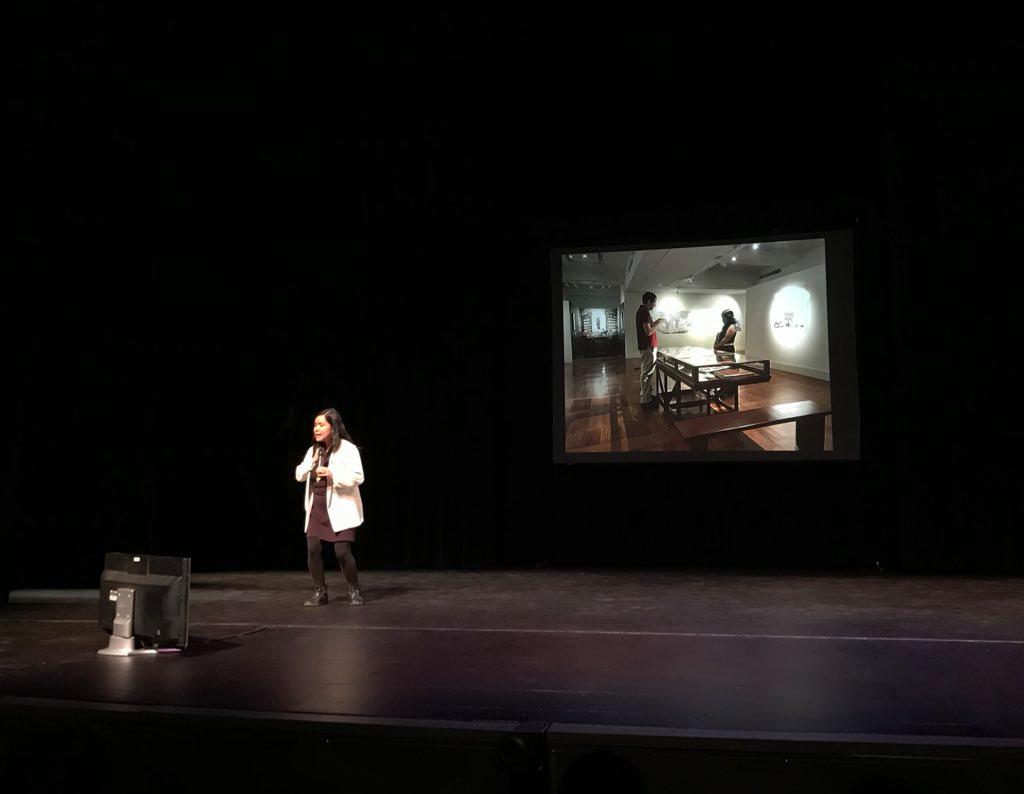
Giselle delivering a speech at the stage of Metro Cinema in Edmonton

After a long hiatus no thanks to the pandemic, it seemed fitting that my first in-person speech activity was with the same event where I did my last in-person speech from 2019. It’s with Edmonton Next Gen for their Pecha Kucha night! This is the transcript of my speech titled “I made it out alive! My first attempt running for Edmonton Municipal Election during COVID”

  1. That was nothing to sneeze at! It’s a phrase I never heard before, until after the election day. 5180 votes, Second place against an incumbent, with limited funds and during a pandemic, was apparently noteworthy.
  2. You should feel proud, I was told. How do I feel? Not that. I felt gratitude, inspiration, motivation and energy. Most of all, huge relief that I made it out alive, uninjured, not severely traumatized.
  3. There are many “typical” things you need to prepare for when running as a candidate, your platform, who to ask to volunteer or donate, the GOTV plan, short for Get Out The Vote, print and online communications and more.
  4. In 2016, I attended my first elections 101 program, hosted by the city for women who want to be involved in municipal politics. A current city councillor (born & raised Canadian white guy) did his energizing pitch that we, women, should run.
  5. In the Q and A I raised my and asked, ummmm sir, councillor may I ask, is it safe to run for politics in Edmonton, in Canada? Do I need to worry about getting killed and my dead body floating in the River Valley?
  6. He was shocked and reassured me it IS safe to run here. A fellow workshop participant told me, wow, I was worried about social media trolls, I didn’t even think about actual threats to my life. For me that was top of mind.  
  7. From then on, in the other workshops and campaign toolkits I accessed, I realized it gives some fundamentals, but won’t be sufficient to help me run a campaign that aligns with my values and will keep me safe, healthy and uninjures.
  8. Immigrants and visible minorities have a steep learning curve about the political culture here. It’s even worse when you came from a country where politicians, journalists and activists do get murdered on a regular basis.
  9. When a candidate knocks on your door, what comments do you make? I got “Do you have kids?” “What’s your background?” “Are you Native?” “I love the Filipino caregivers!”  Do male or white candidates get these also, I wondered.
  10. I know that all it takes is one violent incident to cause permanent injury and harm. I had to constantly think, I can protect and defend, administer first aid,  call 911 quickly when things go very wrong for me? 
  11. I have a very difficult time asking for help and this stems from a lot of personal trauma as an immigrant and an orphan. It’s a huge challenge to overcome and that was important, since the area for ward sipiwiyiniwak, where I was running, is massive!
  12. Campaigning during COVID added more concerns, on because of the increased prevalence of Anti-Asian racism. I can’t change how I look. I’m someone who looks visibly Asian, wears a mask, and also gets misidentified as Indigenous.
  13. The volunteers who were my fellow immigrants had additional fears that was tough to overcome. The big one, dropping off flyers in mailboxes. Despite my reassurances that it’s permitted. They skipped the ones that says “no flyers or no soliciting”
  14. They’re worried about getting yelled at as ignorant, rule breakers, they’re afraid of harassment. They’re worried about my reputation too. The tradeoff, better for people to not know me, than being angry at me after seeing an flyer they didn’t want.
  15. As someone who can’t drive and with a weak leg, I carried heavy supplies and went to neighbourhoods on foot, car and bus. Which shocked bus and uber drivers, seeing a candidate who’s literally living like an average person.
  16. With that said, many people donated and shared their time and talents. People doorknocked and flyer dropped with me in hot summer days and rainy afternoons, dealing with hazards on streets. Sidewalks and front lawns, across older and developing neighbourhoods.
  17. People I’ve never met until the campaign reached out through email and social media, who helped remotely and positively talked about my candidacy to others. Trolls were very few, but supportive people, thank goodness, it’s abundant.
  18. The next day, after the election I got a message on Twitter from a competitor I’m on good terms with. Like me, he didn’t win. His message said “well that was a waste of time”. And that’s one huge thing I disagree with.
  19. For me this is just part of community service and being an adult. Within  a week, I resumed my volunteer duties with my neighbourhood, ethnic community, and the city. I went back to my nonprofit job, booked a massage, and an appointment with my therapist.  
  20. I’m alive, uninjured and not severely traumatized. I plan to share my insights, and campaign templates to anyone who wants it. And if I’m fortunate enough, I might be healthy enough, wiser and equipped for a future candidacy. TY.

This post will be updated once the video of the presentation is available. Thank you to Edmonton’s Next Gen, the organizers of Pecha Kucha Night that takes place three times a year, for the opportunity to present, especially for something as significant as your first in-person event since COVID started. For more information such as previous presentations how to support or participate, visit https://edmontonnextgen.ca/pkn.

Pecha Kucha Night Speech Transcript: Dating a Sexual Assault Survivor

Pecha Kucha is a presentation format where the presenter has 20 slides, 20 seconds, and it is strictly timed. This is the transcript of the presentation I made on October 30, 2019 entitled “Dating a Sexual Assault Survivor”

  1. This is us, Corey and Giselle. He’s a white guy, born and raised in Edmonton with a complete family, and middle-class upbringing. I’m an orphan girl from a mining village in the Philippines, immigrated as a teenager, and bounced around different homes.
  2. The sexual assault incidents happened during my final year of high school in the Philippines. That same year, I moved to Canada in Aug 2007. It’s a tough year. Let’s say that there wasn’t enough support for me during this difficult time.  
  3. When you date a sexual assault survivor, disclosure will not come immediately. It took me two years since we started dating to feel safe enough to share as much detail as I can. It was a risk. I even told him he can break up with me afterwards.
  4. If you are the lucky one who actually had sex education in school, you may have to be the one to introduce terminology and concepts to your love one who experienced sexual assault. If you do this, be informative and non-judgemental in your approach.
  5.  In his case, he quoted to me the specific Criminal Code of Canada section that outlined the definition of sexual assault. He made it clear that he knows  what happened to me IS indeed, sexual assault – full stop.
  6. It is so important to make your partner feel that you believe them. If the culture, the environment they lived in doesn’t believe in sexual assault, if the people surrounding them didn’t believe either, your reaction and support will make a BIG impact.
  7. If there are other causes of trauma, things can get complicated. I’m also an orphan, and that influences my viewpoint in life in good and bad ways. But with time and support, these can be worked through simultaneously.
  8. In my case, I have a very difficult time asking for help about anything, big and small. It comes both from having to be independent because I’m an orphan, and from not getting the help I needed after I revealed I was being molested.
  9. If the perpetrator will be around, you need to have a plan. There was this trip to the Philippines, where the perpetrator and I will be in the same space during this family gathering. My partner made sure the perpetrator would stay FAR away from me.
  10. Doing your own research about the other challenges your love one experienced is really helpful. In this case, he did a lot of research to help him understand the different types of problematic family dynamics that I experienced but he didn’t to through.
  11. If they finally go to therapy, just be there for them. I went to therapy two years ago for about 8 months.  After every appointment, he’s ready at home with some cuddles and  conversation. We call it “follow-up therapy” – in bed.
  12. And, speaking of bed. When you get intimate, if they say no. LISTEN! If they want to change something, understand them and do it. This takes a lot of courage to say. It usually means that something is REALLY scary or REALLY painful.
  13. Your relationship CAN be the opportunity to realize that vulnerability is worth it, that you CAN be accepted as who you are. A chance to see that sex, intimacy and pleasure can go hand in hand. That saying no is not a deal-breaker.
  14. In many ways, they are experimenting with the idea of consent, which wasn’t there when they were assaulted. The question in their mind is “this time, do I have a say?” “Will I get heard if I actually say something?”
  15. In the summer of 2010 had our first kiss in his car, he actually asked “can I get a kiss goodnight?”. I actually liked it! I like being asked, being consulted, my input being valued. Turns out, consent is sexy.
  16. Reproductive health tasks from pap smears, STD testing, seeing a doctor, ultrasounds is a big deal. Being comfortable to do all these things is a victory. Encourage and celebrate it. And proactive with your own reproductive health as well.
  17. The survivor is primarily responsible for their healing and their journey. As the significant other, you will be there for support, patience and a little bit of push when needed. But this needs to be at their own pace and time. 
  18. It’s also worth nothing that trauma is not a complete excuse for awful behaviour. I’m relieved that I was confronted for my immature reactions and poor decisions, and we managed to talk it out and solve it as a couple.
  19. After 9 years of dating, I proposed to him in July and he said yes! And we just had our wedding last month in Edmonton! I’m grateful for him being in my life and supporting me in my healing process.
  20. This is my journey, other survivors and their loves ones may have a different process, and that’s completely okay. We want the same things for our selves and our love ones, acceptance, being cared for, being cherished for who we are.

This post will be updated once the video of the presentation is available. Thank you to Edmonton’s Next Gen, the organizers of Pecha Kucha Night that takes place three times a year, for the opportunity to present. For more information such as previous presentations how to support or participate, visit https://edmontonnextgen.ca/pkn.

Volunteering and Community Involvement Review: Philippine Heritage Month

June has been officially declared as Philippine Heritage Month, for Edmonton, the city I live in, the whole province of Alberta, and the country! Events have sprung up that celebrate Philippine culture, providing means to get people to gather together and have fun. Edmonton is known to be a festival city, so it is not surprising that there are different festivities and activities to choose from. Here’s a quick overview of the events I knew about.

Last June 1, there is an indoor parade at Kingsway Mall. The format of the event is very much like the “Flores de Mayo” celebrations in rural towns and villages in the Philippines. “Flores de Mayo” is festival held in the Philippines in the month of May. It is one of the May devotions to the Blessed Virgin Mary and lasts for the entire month, and such celebrations are not complete without a parade. For the one that took place here in Edmonton, everyone was invited to attend, wearing their most glamorous attire. After the parade, there was a program with various types of entertainment. According to the Facebook posts, it went well! I was so sad to miss it, and I hope to attend next year

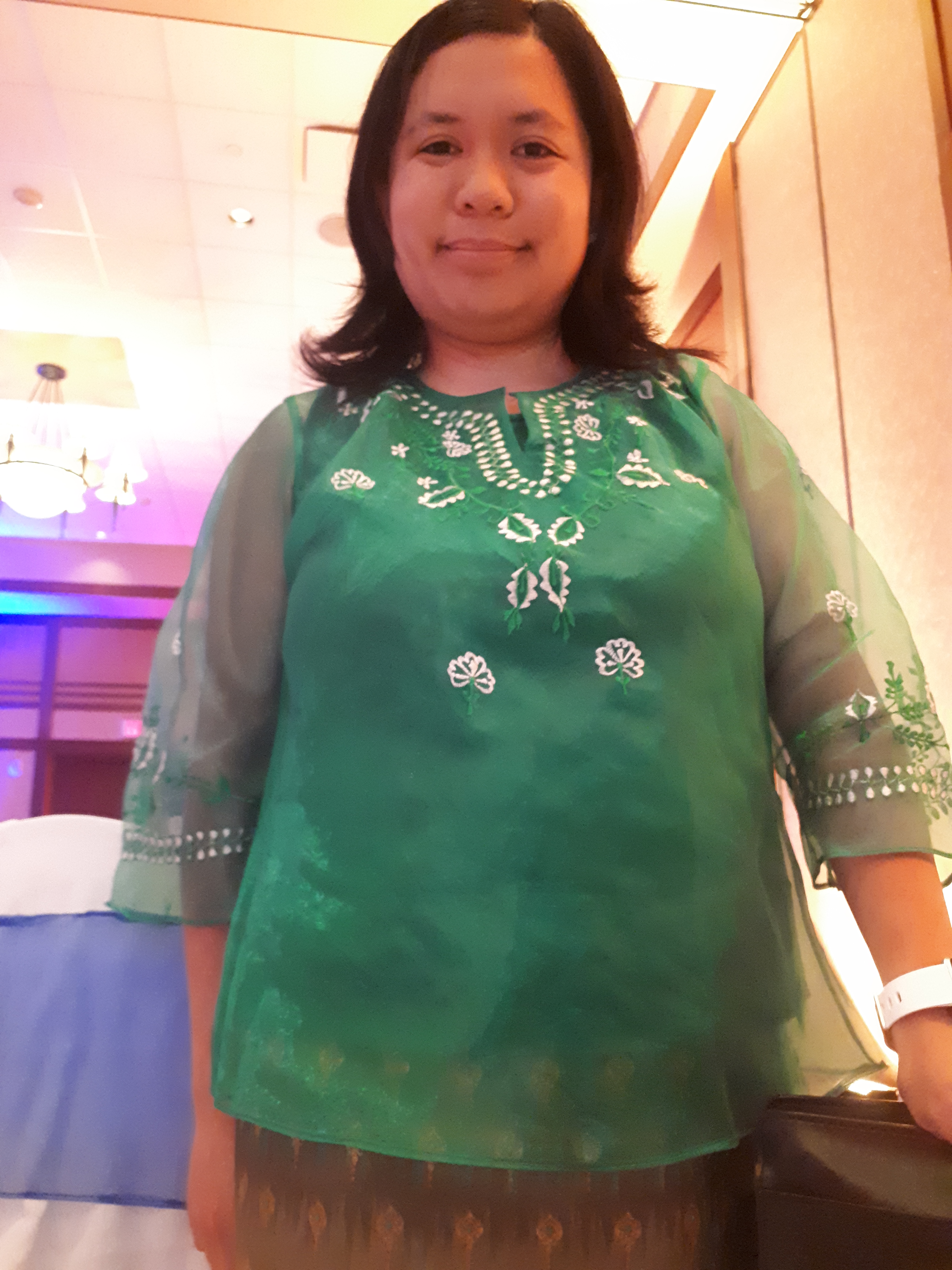
And then, on June 8, there was Philippine Independence Day Celebration gala at River Cree Casino. It was another excuse to look fancy in my traditional Filipiniana attire I purchased a few years ago. I went on behalf of the Alberta Filipino Journal as I am a regular writer for them, and managed to get to know people and mingle. All of these are complemented with a great dinner, amazing performances, and a dance floor where almost everyone participated afterwards.

I literally danced like no one’s watching, in my Filipinana attire and with no dancing partner, it was no big deal. It’s nice to meet more people involved in the community here in Edmonton, especially those who have been here for many years more than me. Stories from the past of previous events and how they have bloomed to what they are today, is incredible to listen to. One thing I realized is that there are many organizations and it’s valuable to keep track of who is a part of which, since there is overlap.

On June 19, at the University of Alberta Myer Horowitz theater, was the film screening of a Filipino American documentary called Ulam:Main Dish. On that day, I had to run back to the house when I realized my tickets were on my desk at home, instead of my bag! The Myer Horowitz Theater is a great venue. It was such a coincidence when I was in New York City a few weeks ago, the restaurant owner of Kabisera said she knows some of the other New York Filipino restaurant owners being featured in the documentary. I really appreciate the panel afterwards, hearing from different Filipino folks in the food industry.

And then on June 22 and 23, there was the weekend long Filipino Fiesta (festival). I’m only able to attend the first day, and made my day more productive by volunteering to make sure that the parade around the park goes smoothly. It was a good decision and I’m so glad I did it.

The performances ranges from different traditional dances, pop and rock bands, a full-hour Zumba session, and some storytelling from long-time organizations in Edmonton and Alberta. It’s incredible to learn about Filipinos who have been here for forty years or more. A well-known musician Yeng Constantino came from the Philippines and performed during the “TFC Hour”. Her songs were an iconic part of my teenage years just slightly more than ten years ago, and my voice was hoarse after fangirling the entire time.

One thing to remember moving forward, is that these gatherings and opportunities are not limited to the month of June. There are numerous groups in Edmonton, some have existed for decades, that serve as great opportunities to meet with like-minded people or maintain one’s interest in an aspect of the Filipino culture. There are arts oriented ones like the Saranay Association of Edmonton, ones based on alma mater affiliation like the University of the Philippines Alumni Association, activity based like the Martial Arts Society and the Pinoy Zumba group or even regional ones like the Batanguenos Association. I hope that all newcomers to the country, or whichever country they end up immigrating to, manage to find the means to stay connected and engaged to their heritage while making a home in this new place.