Memoir Writing Reflections #10: I Got a Contract

By: Giselle General

Most of this year has been preoccupied by my second attempt running for city council, where I lost again.

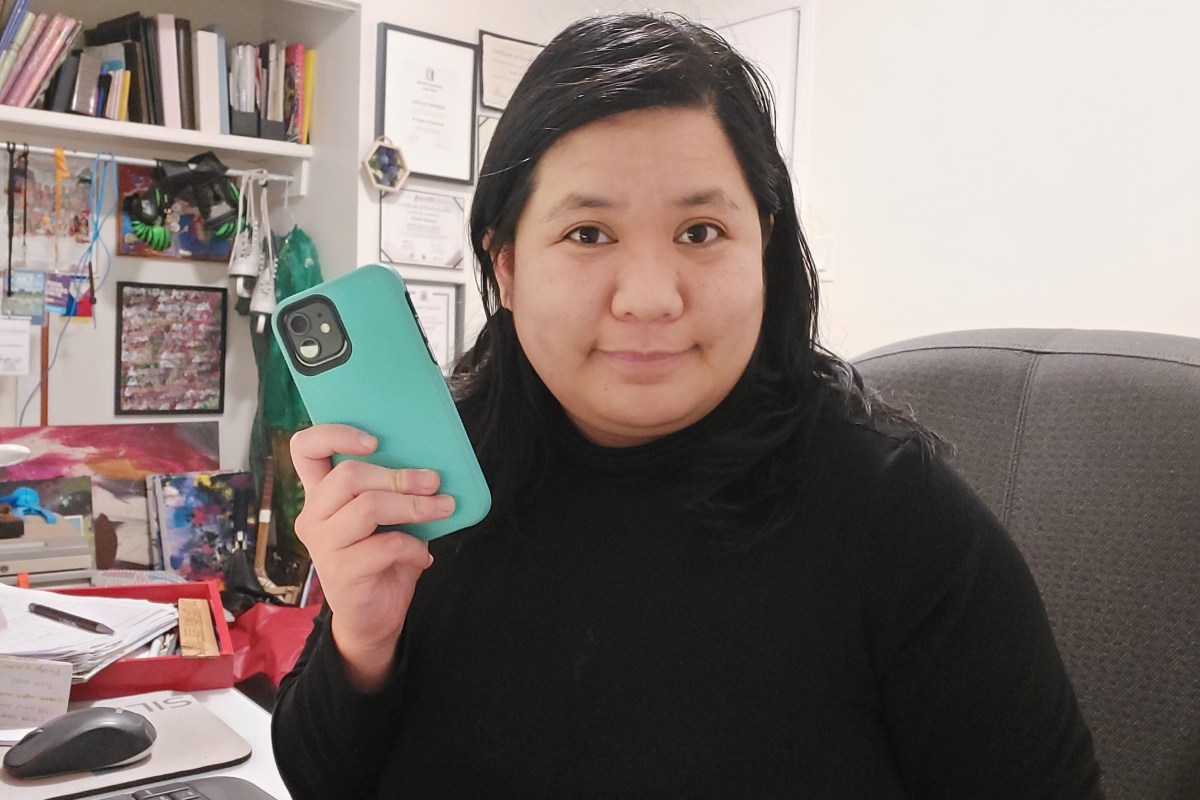
Now that it’s over, I can re-focus again on my other endeavours that have been in the works for several years now. I made a social media post when I signed the dotted line last June, but I can embrace and fully recognize and celebrate it again – I got an author contract!

Earlier this spring I received an offer from NeWest Press, a nonprofit local publisher based here in my hometown of Edmonton. I really love the fact that it is local. I also really love that I am not the first Filipina-Canadian author they worked with. I highly recommend buying or borrowing The Cine Star Salon by Leah Ranada. I figured, if NeWest helped make her book into its final form, then I’ll be in great hands.

I’m equal parts baffled, humbled and excited that I got a contract quickly by comparison, only a year after I have completed the all the professional editing and beta reader services for the manuscript. I’ve heard so many stories of past and present struggles from writers about taking a very long time, as in years, to get a publisher. From feeling frustrated waiting for a long time, many decide to self-publish or make changes to the manuscript over and over to submit again.

It’s such a fascinating and intimidating experience reading the author contract that I searched for lawyers and contract reviewers to help me understand all it entails. There are some straightforward stipulations such as being on time with giving feedback on the manuscript, the advance payment, how many will be produced and what happens when copies are sold. And there are some long-term items should the book gain traction, such as movie rights, international distribution and translation.

Part of what makes this book writing process likely a bit unusual compared to many writers, is that I technically already got compensation. Thanks to the grants I applied for during the writing and editing process, I feel like I already earned some income from my writing efforts. And I will be the first to recognize how fortunate that is. I still remember the e-newsletter from the Edmonton Arts Council emphasizing that roughly 20% of applicants get approved. I bet that percentage is even smaller with the Canada Council for the Arts with the applicants all across the country. Both organizations gave funding for this book. I will never take that for granted.

As a result, I don’t feel pressured to sell a certain number of books to earn back my time and effort to break even or make a profit. Everything else is gravy. But of course, I’d like to have as many book sales as possible. The fact that contracts now have standard clauses for movie rights and international distribution can make anyone dream big!

The most remarkable part of this, is that it truly feels like a full-circle moment. The assigned editor for this final stage is the one who helped me get started in the first place. Wendy McGrath, my author mentor with the Writers Guild of Alberta program called the Horizon Writers Circle back in 2022. The one who said to me with fierce determination when I first talked about the idea of the memoir, “yes, in six month we will finish a first manuscript together!” The one who insisted that I start applying for grants so I can get professional editing services and pay them properly. The one who also edited a separate written work for a local anthology. The one who already have read and edited several chapters of the first draft. Most definitely, the perfect person to help take it to the finish line.

I like my rules and timelines so pretty soon, I will be fully working on the final round of editing for the manuscript before it officially goes on print. I had two additional manuscript review services I used a while back, but I didn’t incorporate their recommendations when I submitted the manuscript to a few publishers. This final review will be the perfect time to read the feedback to see if the delivery of the story can be more effective in some way.

Some major changes that need to be done are changing the names of the characters to protect people’s identity and decisions on how to deal with copyrighted content such as songs and poems. It felt right in my heart to add actual sections and quote them in the chapters when I was first writing. But in its final form, I feel more open to removing it altogether. It can be quite expensive to request for authorization and rights.

I’ve casually talked to people in the city the past few weeks about the book, as a way to deflect the conversation after I receive the standard sympathetic comments for losing at the election again. I met a person from another local bookstore I haven’t heard of, who said their shop is willing to host an event and a local reading session. My massage therapist told me that I should inform them when the book is out as they have a shelf by the reception area to sell locally made products. I’ve already been to a few book launch and author reading events and plan to attend more in the next while.

Even before all the book-related activities, I do have another launch coming up soon, the premiere of the documentary project Building Pinoy. Any lessons about promoting a creative project, dealing with reactions, will definitely be something that I’m sure I can apply for the book.

There’s an actual finish line that I can foresee. A year and a half will fly by quick.
Memoir Writing Reflections #9: The Paid Services are Done!

By: Giselle General

During the Writers Guild of Alberta 2024 conference where I spoke in a panel about memoir writing, I mentioned that a big driving force in my decisions is fairness in compensation. The moderator of the panel seemed to appreciate how much I emphasized paying people properly for their efforts. In an area where people are typically underpaid, if they are paid at all, I vehemently refuse to add to the exploitation of artists.

That was why I really appreciated the advice from my writing mentor Wendy, that I can – and should – apply for grants. It didn’t even occur to me that I can get money to cover expenses I needed, let alone have money to pay myself for the efforts beyond writing the book.

Based on my online search, I concluded that I needed a developmental editor, a line editor, and a copy editor. What they do are related to each other, but are also distinct. This resource (written for a Canadian audience from a Canadian webpage) can help provide clarity on the differences of each. I contacted several editors using both the directory I found online and also contacting a facilitator of a writing workshop that I enjoyed. After getting quotes and plugging in the numbers on the grant applications, I clicked submit. I had earlier success with a smaller grant, but these ones are different, with a complete budget breakdown for each expense. I agonized on how much to add in the subsistence category until I decided to allocate a partial subsistence since I won’t be doing this book project full time. I hoped that my explanation that I contacted three sources for a quote for each editor service was both believable and accurate. I told myself to wait patiently, doing as many self-edits as I can until the professionals take over – if I can can hire them, that is.

A woman browsing their laptop, with books and a coffee on their desk.

To my surprise, my grant applications got approved. The money I asked for is also a pretty decent size, about tens of thousands of dollars. I would have been content to be approved the money I needed to pay myself a partial subsistence (some kind of living allowance for doing this work). But I got exactly what I requested, to the penny. Right after the agreements were signed and the money got deposited, I contacted the first editor right away, worried that after three months that they have other projects and won’t have time to mine anymore.

Thankfully the developmental editor was available, a fellow Filipina-Canadian who is deeply involved in social justice, arts, and literary community in Ontario through an initiative called Living Hyphen, supporting the creative expression of hyphenated Canadians like her and me. When she gave her quote earlier she even offered to give a discounted rate in case finances are an issue, but I placed the full amount in the grant application and now that I got it, I’m ready to pay that full amount. We had to sort out timezone differences for the video calls and sent several emails back and forth to ensure the contract details worked for both of us. We agreed for her to have three months to do the review since she needed to read the whole manuscript to give the big-picture and structural advice that the developmental editor is supposed to do, while tolerating my countless grammatical mistakes.

When I received her very detailed report on what to consider before the next round of edits, I asked her a very vulnerable question: “You know how in our culture, we are supposed to obey the elders and authorities without question? I feel unsure about your report. Am I supposed to obey and follow them all? Am I supposed to do them and send back to you for approval?” I’ll always treasure her kind response to this. “Whatever you decide is up to you. You have the final choice to accept, reject any or all of the recommendations. It’s your story.” Definitely worth every dollar I was able to pay – thank you funding grants!

After a few more discussions where I realized she didn’t understand something major in the story, I knew I had a lot of work to do. While doing all these edits, I contacted the line editor next – the one who would take up the challenging tasks of editing the grammar, line by line. This person is not a Filipino – which I did on purpose because it is important for a native-English-speaker to understand the story and to flag Filipino references that are unclear to her. With how the scheduled ended up falling in place, she had to edit from mid-December until early January. I felt a bit guilty and emphasized that there’s no need to work through this over Christmas break. But she seemed okay with doing it. After all the hundreds of verbal tense edits she did on the almost 90,000-word manuscript, I gleefully e-transferred the payments.

A month after the line edits were completed, I contacted the person I chose as a copy editor, a fellow Filipino-Canadian in the local literary community in early 2024. This is my third professional editor so I kind of know the motions: preliminary meeting and discussion, contracts, payment details, sending a copy of the manuscript, and then waiting patiently. Through him, I saw the clear signs of a professional who cares about outcomes and not just getting paid. He booked a meeting with me to flag his concerns, believing that my manuscript is not ready for copy-editing just yet since there are certain parts of the story that he had trouble understanding. I told him my short-term goals which is to have a manuscript and templates of documents to contact agents and publishers.

So we had to change our scope to help achieve that – to do some line editing and copy editing of the sample chapters I will send, to do another set of line editing on the chapters with sensitive content, and to help me draft the content I will send for applications to get the book published. Think of it as a resume-writing service, but the applicant is me as a writer and the story of the memoir. All these cost a bit more, but with the grant funding I got, I was able to make some adjustments.

Once his edits were completed, the literary conference took place. The organizers did a fantastic job with the panel, as the first panelist had at least two memoirs published and bunch of other books, the second panelist had one memoir published, and there’s me who just finished the professional edits of the manuscript. Maybe I’ll reach the same achievement as the other two, but for the audience it was helpful to listen to writers at different stages.

A wall in Giselle's office with a sticky note with writing notes, a sheet with brand new jeweled stickers, and a sheet used as a tracker for editing book chapters.

Given the extra funding I got, the first consultant-based reading service I used was the Manuscript Reading Service of my province’s writing guild here Alberta. As I paid the fees and waited for the manuscript to be reviewed, I took my mind off anxiously waiting by doing other visual artistic projects, mostly upcycling. I particularly liked the pay structure, how reviewer gets most of the payment. The review I received was insightful.

After I went through another round of self-edits, it’s time to do the other professional service I never thought I’ll have the funds for – beta readers. Their role is to read the the manuscript and assess it as a “regular reader”. I did this for a Canadian author a few months ago and it was a pretty cool experience. I admit, I had an “imposter syndrome” moment and wondered if my time and effort reviewing the document, and my insights condensed in a four-page report, were worth the fees given to me. It was a process to re-frame my mindset. Consultants of all sorts are paid for a reason, so I deserved that fee as well.

For my manuscript I ended up having three beta readers, a writer based in the US, then two people from my city, a non-Filipino person I know through my other community service work, and a Filipino person with a education in writing. I sent them the same set of questions about their experienced reading the book and their responses were quite different than I realized. It’s exactly the feedback I needed because my story has very Philippines-based context, that would be published in a country outside of my motherland (if I get lucky), with a diverse audience. Until now, I actually have a lot of decisions to make on whether their opinions will sway me enough to edit certain book chapters. Or perhaps I should wait until an agent or publisher reads the sample chapters and we can work through the rest of the edits together.

I joked a few times that dealing with grants is the worse combination of applying for jobs and doing your taxes, including the need to report what you did with the money at the end of the time period. For the first art funder I submitted my report and it was accepted, which meant that my recordkeeping was organized and they clearly understood where and how I spent their funding for this project. As this year comes to a close, I am preparing my final report to the second funder as well.

It’s still so humbling to think about the financial access I was able to tap into, and because of that, I was able to pay all these professional writing services the amount they asked for. No haggling, not undercutting. This whole experience for the past year and half drives my motivation even more to get this story to the finish line, to its final published form.

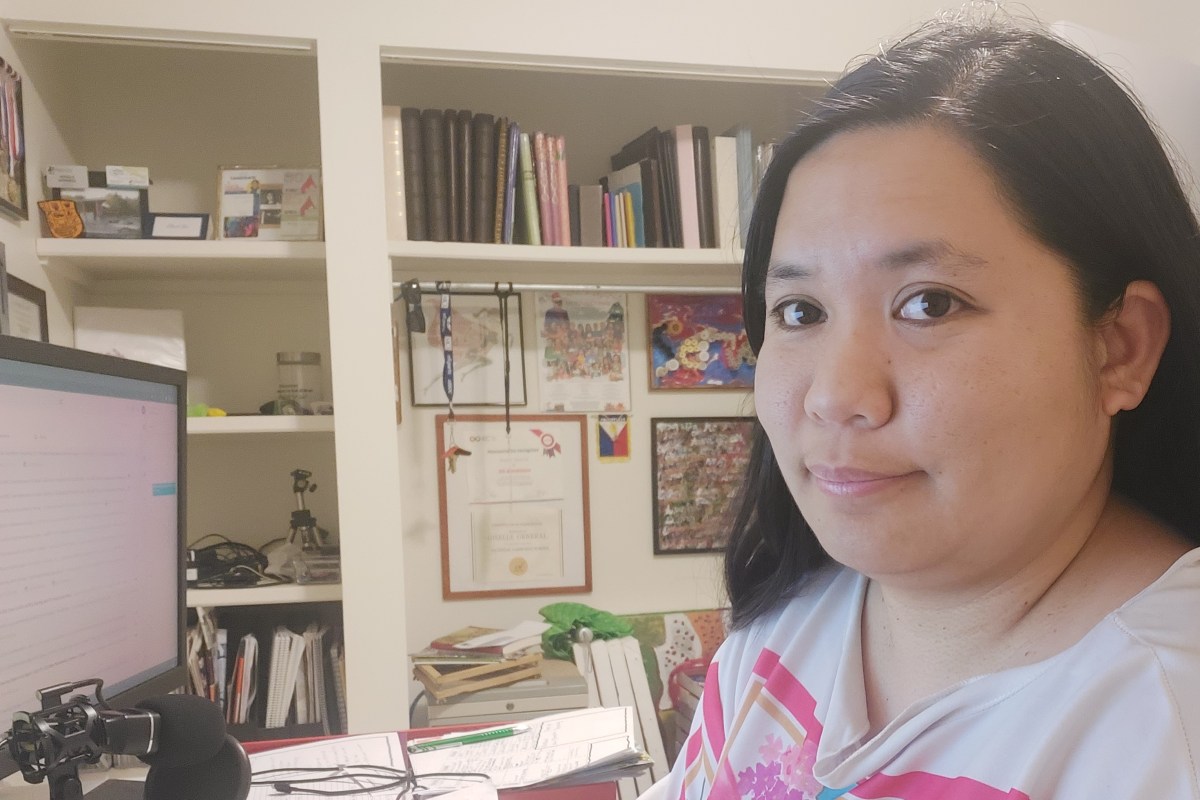
Back view of Giselle in her office desk using her computer.

Memoir Writing Reflections #8: Retreats and Panels

By: Giselle General

Frankly, I’ve always felt a bit reluctant to “connect more with the writing community”. Perhaps it’s the introvert in me. Perhaps it stems from my younger self who didn’t really learn the proper life skills to build and maintain a lot of friendships. But over the past few months, I had a chance to make some effort on this goal in incremental ways.

I applied to attend the Pandemic University Nonfiction Writing Retreat which happened in May. I must say, the idea of a writing retreat felt foreign and out of reach for the longest time, as they typically involve going into some faraway touristy area or an isolated cabin in the woods, hours or even days of uninterrupted writing in solitude or small groups, and being completely disconnected from my home base and everyday life. That’s a bit much for me, I didn’t think I’ll have the time or even money for such as retreat.

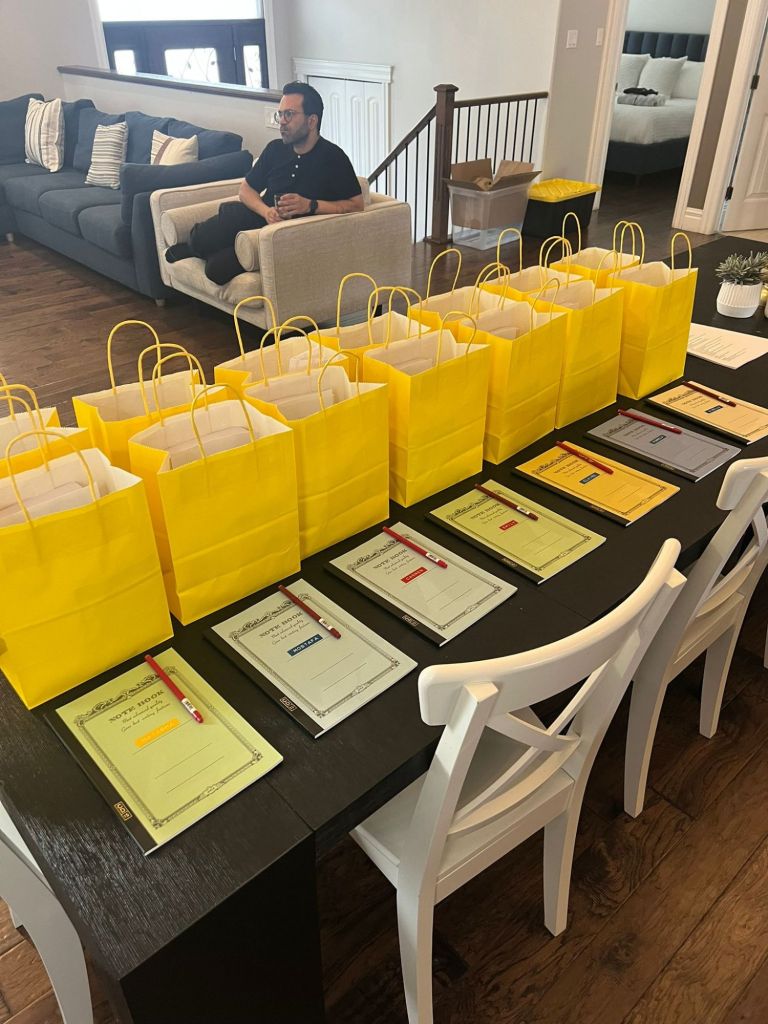
A table of gift bags and notebooks set up during the first night of the Nonfiction Writing Retreat.

So when this opportunity came up that gives me the choice to stay in my home city, be taken care of for majority of the day, and come to my home and husband in the evenings to recharge in familiar surroundings, I thought it was perfect. I’ve been wanting to attend Pandemic University courses for a long time but wasn’t able to find the opportunity to register. Also, the retreat being in Edmonton meant that it was more affordable for me.

When I went on the first night straight from work on the Friday evening, I was relieved that wasn’t too crowded, a total of 20 people if adding all the organizers and attendees. It is so much smaller and intimate which is exactly what I needed for my first-ever retreat ever. There were three presentations on various topics related to creative nonfiction that I recall were being offered as standalone courses, and then a Q and A with the organizers. Turns out, listening while sitting on a couch or dining chair with over a dozen creative people is so invigorating and cozy.

I remember feeling super self-conscious during the part where attendees like me were placed in smaller groups to do activities, review each others’ written drafts, and even during the one-on-one meeting to talk about my specific projects. It was very helpful though! I managed to ask questions and get advice on the two artistic projects I’m working on, the memoir and the documentary.

The wide range of backgrounds and topics that the attendees wrote about is just remarkable to see. Many of us have written, or are currently writing about really heavy topics and there’s something just so profound about being in the presence of people who managed to express their stories and insights through carefully crafted words. Whether it is the death of loved ones, torturous hardship, sparks of insight from unique experiences, or wanting to talk about someone they knew who is doing incredible things, everyone seemed to have the belief that this is worth sharing to the world.

The two delightfully surprising things about the retreat for me is how much I appreciated having my basic needs (my meals) prepared for me for two and half days, and how much I enjoyed talking about writing experiences in a homey setting. Turns out, it’s actually wonderful to have a block of time in between workshops for some independent working, which I used to start applying the advice I received earlier that day.

If time, resources and opportunity allows it, I definitely would do this again. We now have a group chat as well where people continue to share updates, advice from each other. Not bad for an ongoing community moving forward.

The back wall of the restaurant Otto, where the participants and organizers of the Nonfiction Writing Retreat and a few guests are assembled for a group photo.
Digital poster of the Writers Guild of Alberta conference  "No Place Like Home". The panel is "Memoir: Telling the Truth is Hard".

Then in June, I had the honour of being a panelist for the Writers Guild of Alberta conference which took place this year in Edmonton. Last year it was in Calgary and I joined the panels and events remotely, of which the organizers did a fantastic job. So when I was asked to participate in an online panel, I knew the logistics would go smoothly.

When I got the invitation though, I just to double check with them if they truly wanted me in it when I don’t have a published memoir. It looks like that is THE reason they asked me to be a panelist. It was fun, and I hope that it was helpful for those who listened to my rambles.

I was trying hard to not squeal and fangirl too much when I found out who our moderator was, and I think I managed to keep it together during the panel. People seemed to be equal parts amused and confused that I had a spreadsheet to keep track of the different chapters I wrote and the different live events I wanted to be mentioned in the story. I knew that being organized helped me with getting the draft done, and I shared many times how much the Writers Guild of Alberta’s programs and services, most especially the Horizon Writers Circle program where I was matched with Wendy McGrath, helped with making the first draft of the manuscript into reality.

We the panelists answered some of the questions in drastically different ways, which I hope can serve as a reassurance to the audience that they are multiple approaches to doing things – from the writing, the drafting, choosing which stories to tell and how much, and finishing the work.

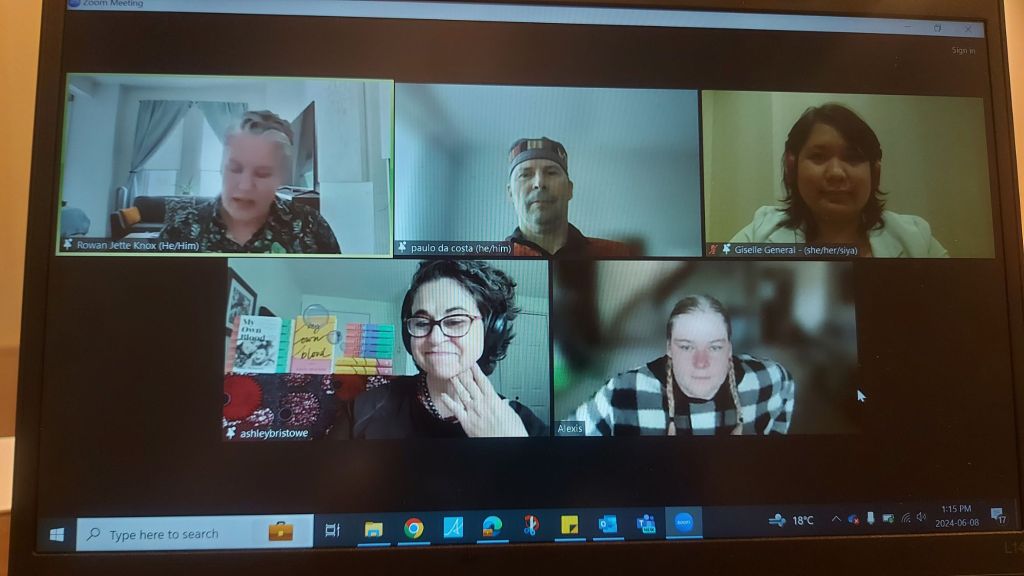
Screen of the Zoom meeting during the panel "Memoir: Writing the Truth is Hard where Alexis, Giselle, Ashley, paulo and Rowan are joining the meeting.

I do admit it feels really nice to hear people say “I look forward to seeing your book published”…”I look forward to reading it.”

I also appreciate that the conference is not as large and overwhelming compared to, let’s say, the transit conference I attended last November. At the larger gatherings, during the meals and the keynotes, there is about 150 people or less, enough to see everyone across the end of the banquet hall. The panels and keynotes I attended were very informative and insightful, and I loved witnessing for the first time how a literary awards ceremony looks like.

I managed to meet a few of my fellow Filipino creative people in the conference and hung out with some of them during the breaks. I ran into my editor, which I also mentioned during my panel.

Chances are that next year the WGA conference will be outside Edmonton, but I’m positive that I can join again either virtually or a short drive away. Maybe it will be in Red Deer! That would actually give me a reason to finally see the city.

The Filipinos I met at the conference were truly motivated to continue building our own community to support each other as well. Just a few weeks after the conference and after other artistic events for Filipinos in Edmonton took place, I got looped into a Facebook group chat for Filipino-Edmontonian artists.

The timing of these weekend multi-day activities worked perfectly in the whole project management of the memoir, as I was then working on the final set of professional edits. I’m hoping that I can find time and energy to nurture my growing community, support them in their ongoing work, and for them to celebrate my own accomplishments when it’s time.

And the journey to making this book a reality continues….

Thank you and goodbye, my relentless sewing machine

By: Giselle General

Our journey together started in January 2016. Only six months after settling in a larger home, I’ve learned the delights of having eight-seater dining table. Not only can we host board games with enough seats for friends, but I can make larger pieces of art.

Inspired by the idea from the brother-in-law in Victoria, I thought that having a couch quilt made with cut-up T-shirts is a great idea. Hence my frantic shopping for a sewing machine with only two weeks to spare before the husband’s birthday. The first thing I saw in the shelves of London Drugs is a box showing a machine with a pink décor, but with a brand name I’ve only known for printers. Well, what the heck, if they can make machines that work well with paper, maybe they can do a decent job with machines that work with thread and cloth.

After making a big mess of thread, strands of cloth, learning how to deal with materials new to me such as “batting” and “interfacing”, I finished the gift just in time. With the quilt now eight years old, it continues to be used daily on the couch as he plays video games. It’s already fraying and staining, that I had to patch it up and test just how many layers of blanket can a simple $90 machine handle.

Many projects came to life, decorated the house and draped over me and my husband’s bodies over the years – from pillow cases, dresses and pants, or multiple repairs of clothes until they fray so badly that they can only be used as rags.

The beginning months of the pandemic was next level as far as sewing projects. When I discovered the need to make fabric laundry bags for healthcare workers, we got to work really relentlessly. From March to September 2020, during spare time on lunch breaks, evenings and weekends, we made 300 of these fabric bags where healthcare workers can put their dirty uniforms after working with sick patients. That was such a process!

Somehow I didn’t realize that the inner rods and gears would wear down. It’s probably from the combination of dust from fabric and my admittedly aggressive pressing of the foot pedal. The first time I noticed that I can only do five stitches in a row and then needle bar grinds to a halt, I tried to fix things in a DIY way. Borrowing the husband’s screwdriver, I managed to unscrew and pry apart the two halves of the plastic cover and dab some oil in the parts that seem to act like gears.

Somehow it wasn’t until 2021 when I realized I should’ve treated you like a car, with tune-up and dusting routines on a regular basis. The first time I took you to the local quilting supplies store I first visited in 2015, the clerk on the machine repair booth gave a scolding look as I admitted I tried to do some solo repairs. The tuneup was successful through and I managed to do more projects.

In the fall of 2022, the husband had a wacky idea of using T-shirts in a different creative way to turn them into skirts or kilts for people in his running group. One kilt that combined 5 shirts turned into another, and now there are about 14 people going for runs and showing off multiple logos of this running group’s merchandise. The kilts became so popular that as per the tradition of this running group, I earned my code name related to my “shenanigans.” I am officially named “Licensed to Kilt”.

Those who requested and received the kilts paid various amounts of cash as a thank you. Back in 2022 I received another sewing machine from the father-in-law, but it was too rickety that one day, parts of the tension wheel flew off the machine. And then, you also had the same issue of breaking into a halt after only five stitches. With the cash from the kilts, both machines went for repair again.

But as I was only halfway through making a new kilt, despite being repaired just recently, you gave out again. I suppose it is time for the new arrival but older version machine to take the reigns.

As you journey into the city’s Eco Station facility this summer (whenever the husband and I actually get motivated to do so), that your go to a better place. Maybe your parts gets dismantled with the salvageable bits of metal be repurposed to something else, or the bits of plastic somehow chemically transformed into fuel.

As we say in our home, thank you and goodbye!

Memoir Writing Reflections 7: The Boss of My Book

By: Giselle General

I can hardly believe it but the time has come. It is manuscript feedback and editing time – first round, that is. Just around the last week of September I finally received the Editorial Letter from the Developmental Editor. I received a 19-page document and I couldn’t help but chuckle. It was more like a report than a letter, maybe even a little book.

My goodness is it a lot! In a good way. The letter organized the feedback in categories, and under each, there were several examples from the manuscript where these problems have come up repeatedly. In addition, in the actual copy of the manuscript she added some recommended edits (through the Tracked Changes feature) as well as comments on actual paragraphs. There were many of these throughout the 150-page, 85,000-word document.

With this, I learned that the timeline I submitted for the editing process might not be as realistic as I would have liked. Perhaps, if all I’m doing is creative work full time with volunteering at nights and weekends, maybe it would be achievable. But it’s different now. I have a separate full time day job that involved writing, coordinating and some creative work. Then all the volunteer commitments involve communicating, coordinating and some creative work. As much as I wish I have unlimited energy, alas I am only human. Working on the manuscript is set aside for the weekends.

When I first read the document and the email, I was anxious on what I was supposed to do with the feedback. There was one question in my mind that worried me the most. And I wanted to share that part of the email exchange here:

Hi Justine,

I have a follow-up question regarding the potential next steps after a writer receives the feedback on a developmental edit. I guess I’m struggling a bit with the Filipino tendency to be “always obedient” and “follow everything that is told by a person of authority and expertise”, combined a tendency to be a people-pleaser. 

If feels kind of silly to ask but I’d appreciate some clarity. I know that in your email and letter it says that your comments are “recommendations”. But as far as me as a writer, what happens next? Is this kind of a like a thesis document where I send you additional versions and that you look at it again until you approve the version and are satisfied with the edits? Or do I basically have free reign as far as which suggestions to apply or reject? If for instance I make significant edits to the manuscript and would like another comprehensive review, that is a separate and independent agreement for another developmental edits, is that correct? 

Hi Giselle,

I just opened up editor access on that line edit of your manuscript. Let me know if you’re still having issues opening it up and I’ll try and turn it into a Word doc.

Now for your question – not silly at all!  You have free reign at this point to apply or reject any/all my recommendations. It’s completely up to you as a writer! I don’t need to “approve” your manuscript for you to move on – that’s for you to decide 🙂 

Email exchange between Giselle and Justine from Living Hyphen, October 2023

Reading the email response was a huge sigh of relief.

When I mentioned this to my husband, he told me with such conviction, “You are boss of your own book.” The words on your book will be written the way that works best for you.”

This way of thinking is so new to me. I’ve always have the mindset that experts or authority figures have greater knowledge and expertise than me, so I must follow all their advice. But as I go through the recommended edits of not just the memoir, but for the other creative projects I’m doing, there had been times when I read the comments and think “that suggestion doesn’t make complete sense, but I can see why they suggested it. I don’t think I’ll do it 100% but will do something else that will resolve the issue that was flagged.”

For the Developmental Editor feedback, I actually had to review my draft manuscript backwards, from the last chapter to the first.

Writing and then editing a book is such a long process. From the various writing groups I joined, some people take weeks, months, or even multiple years to write and edit their draft. The last thing I wanted is for this project to get lost in the fast pace shuffle of life. Since I’m the type of person who needs a target end goal to stay motivated, I’ve set mid-December as my deadline to work on the developmental edits. That’s three months of incrementally working over the weekends, a few chapters at a time.

If all goes well, my Christmas gift to myself is the peace of mind from sending off the updated draft to the next person who will review it, the Line Editor. A line editor works line-by-line, tightening up sentence structure so the language is sharp and clear. I’m excited and nervous about this. I hope that I caught all the comma splice statements that seem to be a bad habit of mine. But if there are a few more, that the Line Editor can make them better.

Memoir Writing Reflections #6: The Bucket Analogy

by: Giselle General

Through social media posts, blogs on this site, and a few local media interviews, I’ve been sharing my journey in writing this memoir. The more experiences and milestones get documented, the more reassured about doing it in the first place. Not only does it help me have a point-in-time memory captured of the experience, sharing it seem to reach out those who are thinking of doing some kind of creative work as well.

I’m feeling a bit antsy since the developmental editor is working on the manuscript and I have about two more months to go before I get to see the feedback and dive in to make changes. A few times actually, I noticed some comments pop up on the Google doc and I immediately archived those email notifications, not wanting to see them too early.

Just recently, a friend who also lives here in Edmonton reached out to me to ask for advice on writing the memoir. This person is quite active on social media sharing her takes on social issues and sharing some of her personal life. If she wanted to, she has a lot to tell that would be a good fit for a memoir. I got the request through a private message on Twitter, then I set up an invite to do an online meeting.

I told her that the cliché advice of having an outline made sense to me, but instead of making a spreadsheet, a document or to-do list, I treated one chapter as one blank word document. The file name of the document is the rough idea of what the chapter would be about. The file name had a number in the beginning so when I click the button to sort the files, they will be chronological. When I then feel inspired to write about that chapter or topic, I have a space ready to go and write.

This enabled me to bounce around the timeline of my book. When I’m in the mood to write something really heavy and intense, like the events in March or May 2007, I can do that. When I’m emotionally drained and wanted to write about a more lighthearted chapter of events sometime in summer 2003, I can work on that too.

The analogy I used was buckets. I got a bunch of buckets, labelled them, and eventually these empty buckets got filled little by little until I was done.

But then I realized that her situation is not the same as me when I started. She is not starting from scratch, but rather, she already has a draft of 30,000 words. It’s milestone I personally reached a month after I started writing. I’m glad she’s has a good sized manuscript, and she shared about being overwhelmed of the documents. That makes sense.

Using the same analogy of the buckets, I told her “You have a big bucket of words already! Splitting the content into small buckets, where a few paragraphs focus on one experience story, theme, can be a way to manage it.”

My chapters varied in length. On average they are two pages long, with the 12 point font, single space format. Some are slightly shorter, I have about five that are outliers, that are 5 pages or more.

When I gave the advice to this friend, I suggested to read through from the top for a few pages. Once there seemed to be a natural pause, whether a small story ended or any reflections concluded for that particular topic, take that entire section and separate it as its own chapter. Then there’s Chapter 1. Move on and take a few paragraphs or pages, there’s Chapter 2. A small bucket of content being scooped out of the big hulking container of words.

Funny enough, when I submitted the manuscript to the developmental editor I actually have to combine all 43 chapters into a single document. The opposite process, pouring them all into one big bucket. It was easier and more efficient than I realize. As I copied and pasted each chapter in order, I made sure that the table of contents are set up properly and link to the right chapters. Scrolling a big document and having to begin from the top would be quite annoying I can imagine.

It was a good way to be a bit more productive while trying to wait paitently for the edits. Just over a month left!

Event Review: Writers Guild of Alberta “Origins” Conference

By: Giselle General

This past weekend, from June 2 – 4, 2023 I had the great fortune of attending the weekend-long annual conference organized by the Writers Guild of Alberta. They titled their conference this year “Origins: A Return to Networking, Publishing, Genre and Craft.” It’s a hybrid conference, with the in-person location at Fort Calgary and the keynotes and focus workshops available to attend online.

Frankly when I first heard of the conference through the e-newsletter from Writers Guild of Alberta, I was already checking my budget. I started a new job recently so my bank account is not draining anymore and I had full intention of finding a way to pay for it. Then, good news came. As I was a mentee of the Horizon Writers Circle this year, the conference was covered for free. There was even a travel allowance! This prompted a conversation among my fellow mentees to travel together from Edmonton to Calgary.

I agonized for a while on how to attend for two main reasons. I’m learning to be more kind to myself and be more conscious of my precious and limited energy for socializing. I haven’t attended a multi-day conference since November 2018 and I found it exhausting. If I wanted to focus on learning, I need to protect my capacity.

I’ve also felt reluctant to probe and ask questions related to COVID precautions and limiting viral transmission. I don’t feel comfortable attending large gatherings that can be a superspreader event. What’s the point of learning about improving my writing craft, if I die or get permanently debilitated by long COVID?

After some deliberation I decided to join the event virtually. As I read the details in the registration I felt hopeful that the virtual components were planned and executed seamlessly. As the conference day approached, I received the instructions on travel, accommodations, and online links. I was amazed by how the online component felt naturally included, and not something that was thrown together last minute. This gave the impression that the organizers have full intention for the event to be inclusive, compassionate, flexible, accommodating, which is what I believe the artistic and literary world is supposed to be.

How was Friday?

I rushed to finish dinner and run the dishwasher before plugging my headphones and connecting online. I then discovered that the opening keynote speaker is sick, and at the last minute, is joining online from their home in Edmonton. So technically speaking, I’m geographically closer to her. Her manner of describing how humans use language as a means to make change was just so awe-inspiring to me.

I knew that those who attended in-person had an opening networking event and a casual get-together after the keynote. As my online meeting linked closed, I happily went on to do chores to ensure my weekend is as cleared as possible.

How was Saturday?

Turns out, the morning keynote speaker had a travel-related hiccup and didn’t make it to Calgary. I’m super duper grateful to the power of the internet, giving him a way to do a virtual presentation. It was a compelling keynote that reminded me to continue learning about Canadian history that was not taught in my newcomer orientation and citizenship booklets, to find them in literature that is being produced these days. For Indigenous writers, it is a way to control the narrative of their lives and experiences withing the wider Canadian society and story. For recent immigrant and settlers like me, there’s many ways to learn and enrich our understanding of this place where we live.

It was my first time participating in a panel workshop with writing exercises for both attendees in-person and virtual. The last time I attended a writing workshop with writing prompts (as in, you get five minutes to write answering the question the facilitator gave) was at Pinoys on Parliament conference last year, but all of us are attending virtually so there’s lesser technical hiccups. This is also my first interactive workshop related to memoir.

“Do what’s right for you, for this project, at this time.” I appreciate the compassion, the permission, and flexibility when it comes to processes and decisions. The reminder of the fundamentals that are sometimes forgotten was very valuable. As always, there’s the “good problem” of having too many good choices of panels to attend. When I was choosing which to attend, I read all the details to my husband who does not do artistic of literary work. His perspective helped me narrow it down to the one that makes most practical sense. The fact that we can watch the recordings afterwards is also very reassuring.

I’ve organized events and conferences myself, so I have full appreciation of what happens behind the scenes. It was incredible to see the resources adjustments to mitigate the tech issues. Really incredible and appreciated.

How was Sunday?

Our keynote for Sunday joined us virtually from overseas, all the way from Greece. It was such a delightful and insightful Q and A about their approach across different projects and genres. There’s great comfort in hearing a successful writer acknowledging that certain processes related to writing are still difficult. For an outdoor hotel in Europe and only with one single internet interruption, I’m overjoyed that the setup of the conference allowed her to share her time with all of us.

As someone who belongs to many nonprofit boards, I appreciate the value of the seemingly boring but very important activity during an Annual General Meeting. I’d say it’s the most engaging one I’ve attended in a long time, particularly on the elections part. I’m glad that the Writers Guild of Alberta will have a full board of directors for the upcoming year, and that they are working on ensuring their committees are able to help with particular goals, such as membership engagement, diversity and inclusion, and youth supports.

The afternoon panel I would say is the most practical and helpful for me in my personal writer’s journey. The Q and A between publishers and agents addressed many questions from the in-person and virtual audience with tangible examples whenever they could, and saying frankly “I don’t know” and “it depends” at other times. My notebook is filled with notes on what I can work on in the next few months as I set up my schedule with editors and publishing one day.

Takeways

I’ve helped organized many events and conferences in the past, and have attended many events and conferences before COVID and in recent years. I am very aware of the additional time, coordination, cost, and sometimes, stress that comes from organizing events in a hybrid fashion. I’m immensely grateful that they did so. It meant that three of the major speakers were still able to share their wisdom despite unexpected cancellations or other plans that resulted in scheduling conflicts. It helped me focus on my primary objective for this conference, which is to learn and preserve my energy accordingly – and also preserve my limited vacation time and money. Alberta is a massive province and it’s difficult to expect rural Albertans writers to be able to travel all the way to a major city, or from one major city to another. It’s a truly tangible way to showcase the commitment to diversity and inclusion.

My two final takeways with my ongoing literary journey that I hope are action-oriented are these:

First, joining a literary-oriented organization and paying the nominal membership fee is very much worth it. Just starting with one is enough. In my case it was through the Writers Guild of Alberta. This one membership is what helped me pace myself in gradually expanding my literary community, where I eventually felt convinced that despite the seemingly grandiose image that come up with the word “guild”, that perhaps I belong here too.

Second, especially for people like me who don’t have a career in literature, to carve some time for a literary or artistic program or event. There’s no need to pressure one’s self to spend a lot of money or fill every single evening or weekend. A small local event once a month, one multiple-month flexible program per year, once conference in the spring and one in the fall. All these add up after a while.

This event has been such a gift. It’s a comment that came up in the comments during the virtual meetings. Simple and the most accurate way to describe it. Huge huge thank you to the organizers, sponsors, staff and volunteers for making it a success.

Memoir Writing Reflections #5: Marinating Time is Over

By: Giselle General

After I finished the first round of drafting, I made the deliberate choice to not do revisions on my memoir manuscript since mid-January. Aside from reading the chapters for the reading event in March and organizing sample chapters for funding applications, I haven’t seen all of the other ones.

I don’t know why I chose a food-related analogy, but I thought letting the documents “marinate” for a few months is a good idea. My mentor author agreed. It seems like many other writers have done the same.

In those months I read two memoirs that have drastically different formats, which is equal parts refreshing and confusing. I suppose there is no truly one-size-fits-all approach.

I did my best to ensure my creative mind is not stagnant. I continue to write for the Alberta Filipino Journal, and some of my recent assignments were actually more challenging as they are more like articles or event summaries. Now that the weather is nicer I’ve also done some artwork again. And I try to write for this blog once a month. Heck, I even made a couple of submissions for a literary magazine. I got rejections both times.

Since I like scheduling and organizing, I’ve blocked a few hours on Sundays to start doing this again and actually booked it in my calendar like an event or appointment. I hope that the time I allocated is well-paced enough for the next two months, until I hear back from the different arts foundations where I submitted funding applications. I’m so very much looking forward to those. I’m excited to have professional editors look at the manuscript so they can chip away at all the awkward and ineffective bits and forge the final piece.

I organized my folders somehow like a factory production, where I have different containers (digital folders) to store various versions until it reaches the final version.

A computer screen showing several folders for a draft book. Each folder is for a different version of the draft.

What happened over the first four Sundays the self-revision time is scheduled in my calendar? I ignored them.

For the first two times, I don’t have any good excuse other than procrastination. Given I volunteer a lot in the city and I’m getting a lot of social media inspiration to deep clean my house, I have lots of alternative activities to do instead of reading through my files.

The third Sunday I have an actual legitimate excuse. My grandmother died and I had to focus on making sure I can communicate with everyone in the Philippines given that their time zone is 14 hours ahead. I have a lot of thoughts and feelings I’m still trying to unpack. On top of that, this particular grandmother, my mother’s mother, is an integral part of my childhood years covered in the memoir.

Now it’s the fourth Sunday of my so-called new Sunday routine to self-revise. I have so many volunteer tasks that I’m falling behind and I’m likely going to prioritize that.

In terms of the actual content I will likely not change anything since it is from the perspective of my childhood self. But my present-day self though, I’m just getting hit with more realizations and recently discovered family history that puts people’s behaviors into context. More nuance, less answers.

I even have other stories I wanted to incorporate somehow. Thankfully through the resources and advice I received I know I have a lot of options. I can write a whole chapter focusing on a experience. But it can also be as powerful as a paragraph, a sentence, or a phrase. It can be outlined as a story as it unfolds and experienced in real time, as an internal monologue, or a recent fleeting memory that can still be from the perspective of the child. This particular story I believe is very important and would enrich the reader’s experience of witnessing this orphaned girl trying to navigate a new reality.

This week I also submitted my report to the arts foundation that gave me the money, the grant, late last year. I’m supposed to report and show how I achieved my goals that I set out in that particular funding application. That was easy for me since the proof is very clear.

Now that grandma is buried and it’s my birthday month I really have to push forward with the self-revisions. That is, if my own existential crisis or health issues don’t get in the way.

Memoir Writing Reflections #4: Beta Reading is Remarkable

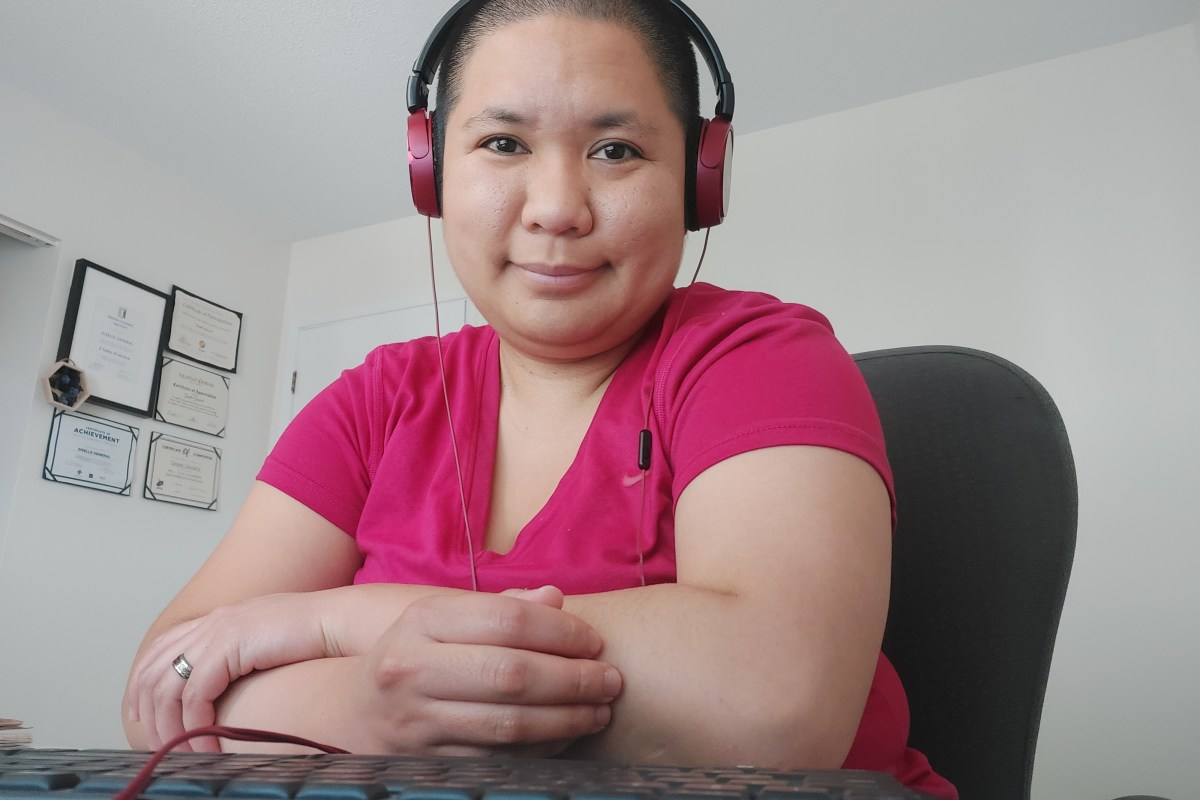
Giselle in her home office sitting by her computer desk.

By: Giselle General

“Writing is a solitary activity, and it is so important to build your community.”

I understand that this is a reason why there are many activities, events and gatherings of various forms that are organized to give artists and writers a chance to get together. From workshops that help people learn specific skills, networking, showcasing one’s work, or even a working-buddy setup to prevent procrastination, there’s immense value in having a living, breathing, human being beside you.

The tricky part is that I personally need to limit my in-person community activities for two reasons. The first reason is I’m an introvert so these activities are meaningful but draining at the same time. The second reason is I am still more COVID-cautious compared to the average person. I had it once and would do everything I can to not get it again or spread it to someone else. Sadly, in most gatherings, hardly anyone wears masks anymore.

To mitigate these risks but also widen my writing community, I did a simple Facebook group search for writers and memoirists and joined three of them. Not too many though, so my feed won’t get dominated by posts from these groups. A lot of the time, I see people asking for advice on a wide range of topics: from grammar, editing, publishing, finding motivation, and many others. Reading these posts were so helpful. Also, I know that by commenting to give advice, or event choosing an emoji to express congratulations on someone’s success, that I’m contributing positively in a small way.

Several posts came to my attention about people asking for a beta reader, whether on how to get one, or asking people to be one.

In simple terms, a beta reader is someone who reads an unpublished work as a test. The writer, or someone else who is organizing the process, will give copies of the manuscript and ask broad questions about the beta reader’s experience reading. I wasn’t asked to analyze the chapters, check for grammar or tone or anything like that. If I boil down the questions I got after reading the book it comes down to “do I like reading it?”

Back in January, I saw a post from a writer asking for volunteer beta readers for their memoir. I just finished the entire first draft of my own manuscript and I decided to leave it alone for a few months. With the extra time I have, I agreed to be a beta reader for a person I’ve never met from the US. We messaged each other a bit on Facebook messenger, exchanged emails and that’s where it began.

I received the first third of the manuscript. I decided to make the experience as close to reading a book as possible. While I decided not to print, I changed the preview mode on Microsoft Word so it looks like a two-paged book or an e-book. I went through the chapters and answered her questions.

Since the questions are focused on impressions and enjoyment, I tried to find a balance between keeping my answers simple and giving some details on what I find vague or confusing that can impact a reader’s experience.

I offered to also be a beta reader for the rest of her manuscript when it is ready. She was happy to have someone who is from a different demographic from her (a younger adult woman from a different country).

Two months after, I got two files, the second and last third of her manuscript. She sent the same questions to gauge my impressions on the content as a reader. For some of the questions I had the same answer; for others, I provided more information and said that my answers from reading the first section apply.

I really enjoyed the experience. It’s an opportunity to see another person’s work in progress and their style in narrating a deeply personal part of their lives. I admire her for making the request on that writer’s group, as I imagine it can be daunting to show something vulnerable and not yet a fully published written work.

Will I do it again? Yes, absolutely! Even if it is a new way of procrastinating, it’s still a more productive way than most.

Memoir Writing Reflections #3: A Mic and A Stage

By:Giselle General

The largest, most intimidating, and important activity of the six-month mentorship is showcasing a sample of the work produced during that time. Since I had a very specific goal, a first draft of the manuscript for the memoir, showing a sample of this is not going to be a problem.

Speaking in front of a crowd is also not an issue for me. I had my elementary school teachers in Philex Mines, Philippines, to thank for that. Also, since 2017, I have spoken in front of crowds about vulnerable aspects of my life because of all the opportunities during the Canada 150 celebrations. 

In February, I was frantically getting organized for a potential new job which started after Family Day long weekend. At that point, I felt that I finished the last wholesale revision of all the 48 book chapters. I was also preoccupied with another important task that I didn’t envision as a part of my writing journey – funding applications. Sure, I did it in September but I was a bit more relaxed and wasn’t taking it too seriously. But after I actually got funding and I realized the implications of having money to help with artistic projects, I took it a bit more seriously. Doing three comprehensive funding applications asking for a larger sum of money and offering a detailed budget was more administratively taxing than I realized. And another person had an artistic idea and wanted to apply together. So, there are a lot of numbers, deadlines, and persuasive language telling strangers why they should give money for our project. Clicking the Submit button and getting the automated notification that the application was submitted gave me a huge sigh of relief.

In mid-February, I had my final one-on-one meeting with my mentor author. A few weeks before, she shortlisted three chapters that she edited for me to read in front of an audience. I timed all of them and was so happy to find one chapter that fits exactly within the six-minute limit. She gave additional tips that I didn’t even consider, such as taking a couple of seconds to self-promote afterward, and giving an introduction with enough context since I am not reading Chapter 1. 

During the week before the event, I actually spent more time thinking of a meaningful way to show my gratitude to Wendy for all the help and mentorship she did over the past six months. I’m a terrible shopper and even a worse gift-giver since I tend to be anti-consumerist and simple. Then the perfect idea came. Since there is a nearby Filipino convenience store, I thought it would be great for her to experience my story in a deeper way. I purchased several products that I used to sell in the store that I managed as a child, placed them in a paper gift bag, and wrote a note. 

When I arrived, it was one of those instances where I was happy to be wrong. I thought that it would be a quiet, intimate setting with just us mentors and mentees, a dozen people around a slightly larger table sharing our literary work. Turns out, it’s a whole performance, with a mic in front of a stage and a dozen rows of chairs. My quick mental math estimated about 80 people. There were writers and artists I’ve seen in the past who attended. When I told this, my husband had the same assumption and was impressed that my fellow mentees managed to present a piece of our writing in front of a larger crowd. On top of that, it is a very distinguished crowd too, people of the actual literary and artistic community in Edmonton. It’s not just a random group of people from the general public. They have a deeper understanding and appreciation of the artist and writer experience. 

For the lineup of mentees, I was first, where I shared a chapter close to the end, right before I immigrated to Canada. People smiled, giggled, and shared a collective “oh!” and “aw” after I read some of the lines in the chapter. I felt they understood the rollercoaster of emotions that my younger self experienced in the stories and internal thoughts in the chapter. After my piece, I talked about the Edmonton Arts Council and the feature they did about my work, where I heavily mentioned the Horizon Writers Circle program.

Then my fellow mentees read their pieces. Essays, poems, prose, and story chapters that captivated and entertained the audience. After the formal event program concluded, so many people in the audience took the time to speak to us individually and congratulate us for being part of the program and for the work we have shared. The conversations went on for so long, the appetizers ran out by the time I finished chatting with people. 

As a treat, I went to a nearby sushi restaurant and indulged. Being alone at a restaurant table was also the perfect way to wind down after being in such a cozy and crowded room – classic introvert of me. 

It’s remarkable, partially unbelievable, that the six months flew by just like that. At this point, I need to wait patiently to get the funding application results so I can hire professional editors to polish the manuscript. I’m also purposefully not looking at any of the files. I figured that letting it sit for at least three months will give me a fresh perspective when I start my self-revisions again. 

For now, learning a completely different kind of writing is at the forefront. Political news release writing and speechwriting will give me new skills that I think will help me improve my skill set moving forward.