Community Resource Article: Resources on Family Violence

By: Giselle General

This article was also submitted by the author as a contribution to the Alberta Filipino Journal (a cultural/ community newspaper in the province of Alberta, Canada) in March 2018

Family violence is defined as the abuse of power within relationships of family, trust or dependency that endangers the survival, security or well-being of another person. It takes many forms including intimate partner abuse, sexual assault, child abuse and neglect, child sexual abuse, parent abuse, elder abuse and neglect, and witnessing the abuse of others in the family. Family violence may include some or all of the following behaviours: physical abuse; psychological abuse; criminal harassment/stalking; verbal and emotional abuse; sexual violence and abuse; financial abuse; and spiritual abuse. 

The definition above is taken from the report called Family Violence Hurts Everyone, a Framework to End Family Violence in Alberta

This is a range of resources that can serve as a starting point when faced with this situation.

  1. Online Resources to Educate: It can be confusing sometimes to understand what is happening or how to describe it. These are online resources to browse and learn more about the situation that you may be facing before taking steps.
    1. The Centre for Public Legal Education Alberta has a series of videos, infographics and brochures that cover things such as the role of the police, protection orders, financial support, leaving an abusive relationship if you are not a Canadian Citizen, and more:  https://www.cplea.ca/publications/abuse-and-family-violence/#domesticviolenceseries
  2. Domestic Violence Shelters: These can be a starting point in searching for a shelter to go to. Different shelters have different levels of service. While some cater exclusively to women, some can help men or cater to specific demographics.   
    1. The Alberta Council of Women’s Shelters has an interactive map that lists all shelters in Alberta at https://acws.ca/shelters
    1. You can call at 1-866-331-3933
    1. Sage Seniors Association is an organization in Edmonton that helps men and women aged 60 and older. You can contact them at 780-702-1520 or http://www.mysage.ca
  3. Financial Abuse/ Dealing with Financial Aftermath of Fleeing from Family Violence: Leaving an abusive relationship can mean your source of money for daily living will not longer be available.  Some programs and resources to help with the financial hardship after fleeing abuse are:
    1. Alberta Works: Supports for Albertans Fleeing Abuse is a program that can provide a wide variety of supports such as funds to relocate, basic needs, and more. Call 1-866-644-9992 on weekdays, 1-866-644-5135 on weekends or get information online at http://www.albertasupports.ca
    1. You can apply for Child Support and Spousal Support through the courts. Contact the Government of Alberta’s Resolution and Court Administration Services at 1-855-738-4747 or visit www.rcas.alberta.ca for help, especially if you cannot afford a lawyer.
  4. Therapy/ Counseling for Healing Psychologically: Healing from the pain of family violence can be difficult and can take a while. These are some resources, both in person and over the phone.  
    1. Sexual Assault Centre of Edmonton is an organization that helps people who have experienced sexual abuse and sexual assault, which is a typical component of family violence. They serve children and adults. The services are free, and they can be contacted https://www.sace.ab.ca/ or at 780-423-4102
    1. The Canadian Mental Heath Association has a list of resources as well for counselling, therapy and support groups. The main website is https://alberta.cmha.ca/ where you can find the webpage for your city or town. You can also access their service by dialling 311 or the Mental Health Help Line at 1-877-303-2642
  5. Child-Specific: There are specialized programs and services to help children as well. This can be valuable since children can process trauma differently, given that they are still growing.  
    1. Zebra Child Protection Centre https://www.zebracentre.ca/
    1. Kids Help Phone Line is an available resource for kids and teens to speak to a counsellor. An online chat option is available at https://kidshelpphone.ca/, through the phone by calling 1-800-668-6868, or by downloading their app called ‘Always There’, available for Apple and Android phones.

While this list is specific to Edmonton or Alberta, an online search that includes your location – if it is a more remote one – can help identify what is available nearby. It is often the case that getting in touch with social agencies for any purpose, if you mention what else you need help with, they can direct you to other resources as well. Websites of specific municipalities also can have a directory of where to get help. Alberta.ca is also a good resource.



Volunteering and Community Involvement Review: Philippine Heritage Month

June has been officially declared as Philippine Heritage Month, for Edmonton, the city I live in, the whole province of Alberta, and the country! Events have sprung up that celebrate Philippine culture, providing means to get people to gather together and have fun. Edmonton is known to be a festival city, so it is not surprising that there are different festivities and activities to choose from. Here’s a quick overview of the events I knew about.

Last June 1, there is an indoor parade at Kingsway Mall. The format of the event is very much like the “Flores de Mayo” celebrations in rural towns and villages in the Philippines. “Flores de Mayo” is festival held in the Philippines in the month of May. It is one of the May devotions to the Blessed Virgin Mary and lasts for the entire month, and such celebrations are not complete without a parade. For the one that took place here in Edmonton, everyone was invited to attend, wearing their most glamorous attire. After the parade, there was a program with various types of entertainment. According to the Facebook posts, it went well! I was so sad to miss it, and I hope to attend next year

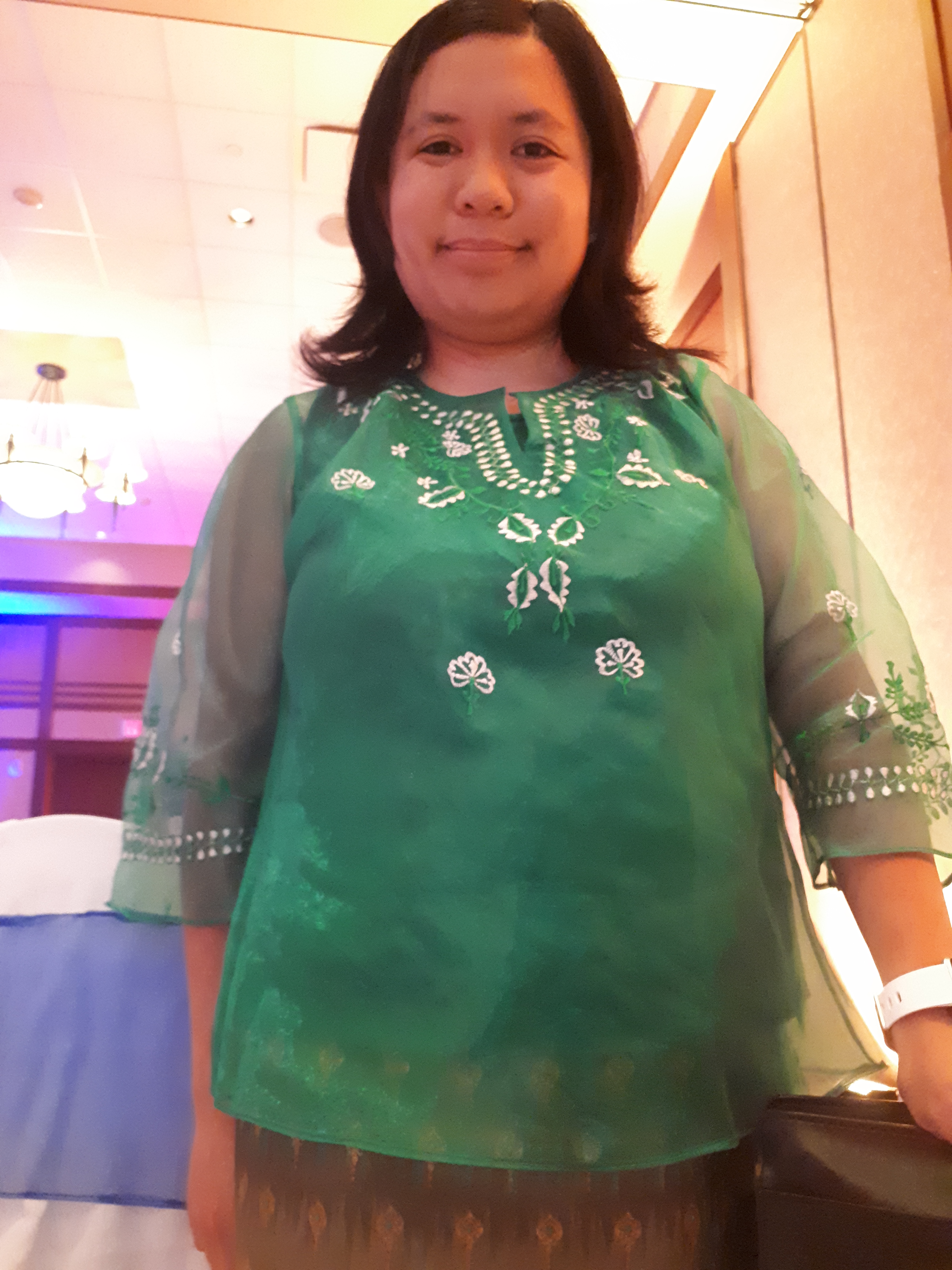
And then, on June 8, there was Philippine Independence Day Celebration gala at River Cree Casino. It was another excuse to look fancy in my traditional Filipiniana attire I purchased a few years ago. I went on behalf of the Alberta Filipino Journal as I am a regular writer for them, and managed to get to know people and mingle. All of these are complemented with a great dinner, amazing performances, and a dance floor where almost everyone participated afterwards.

I literally danced like no one’s watching, in my Filipinana attire and with no dancing partner, it was no big deal. It’s nice to meet more people involved in the community here in Edmonton, especially those who have been here for many years more than me. Stories from the past of previous events and how they have bloomed to what they are today, is incredible to listen to. One thing I realized is that there are many organizations and it’s valuable to keep track of who is a part of which, since there is overlap.

On June 19, at the University of Alberta Myer Horowitz theater, was the film screening of a Filipino American documentary called Ulam:Main Dish. On that day, I had to run back to the house when I realized my tickets were on my desk at home, instead of my bag! The Myer Horowitz Theater is a great venue. It was such a coincidence when I was in New York City a few weeks ago, the restaurant owner of Kabisera said she knows some of the other New York Filipino restaurant owners being featured in the documentary. I really appreciate the panel afterwards, hearing from different Filipino folks in the food industry.

And then on June 22 and 23, there was the weekend long Filipino Fiesta (festival). I’m only able to attend the first day, and made my day more productive by volunteering to make sure that the parade around the park goes smoothly. It was a good decision and I’m so glad I did it.

The performances ranges from different traditional dances, pop and rock bands, a full-hour Zumba session, and some storytelling from long-time organizations in Edmonton and Alberta. It’s incredible to learn about Filipinos who have been here for forty years or more. A well-known musician Yeng Constantino came from the Philippines and performed during the “TFC Hour”. Her songs were an iconic part of my teenage years just slightly more than ten years ago, and my voice was hoarse after fangirling the entire time.

One thing to remember moving forward, is that these gatherings and opportunities are not limited to the month of June. There are numerous groups in Edmonton, some have existed for decades, that serve as great opportunities to meet with like-minded people or maintain one’s interest in an aspect of the Filipino culture. There are arts oriented ones like the Saranay Association of Edmonton, ones based on alma mater affiliation like the University of the Philippines Alumni Association, activity based like the Martial Arts Society and the Pinoy Zumba group or even regional ones like the Batanguenos Association. I hope that all newcomers to the country, or whichever country they end up immigrating to, manage to find the means to stay connected and engaged to their heritage while making a home in this new place.

Community Resource Article: Legal Resources for Those Who Cannot Afford Lawyers

By: Giselle General

This article was also submitted by the author as a contribution to the Alberta Filipino Journal (a cultural/ community newspaper in the province of Alberta, Canada) in March 2018

It is unavoidable to have some challenges in life where legal advice is needed. There are many people, for understandable reasons, that are unable to pay hundreds or thousands of dollars to pay for the full services from a lawyer or law firm. Here is a list of resources that can help inform or mitigate the cost of legal services, or to know about the legal issue before hiring for help.

  1. Online Resources to Educate: It can be valuable to read these booklets or watch the videos they offer. The language in these resources are meant for those who are not lawyers, making it easy to understand. In each website their resources are sub-categorized into different areas of law.
    1. Centre for Public Legal Education Alberta: https://www.cplea.ca/publications/
    1. Native Counselling Services of Alberta: http://ncsa.ca/resources/  
  2. The Government of Alberta Website: Information about legal processes, as well as about the different levels of court are available right on the website. A few key links are below.
    1. https://www.alberta.ca/rights-justice-law.aspx
    1. https://www.alberta.ca/waive-filing-fee.aspx
  3. Legal Centres in the Area, by Independent Charities: These are non-profit organizations that provide legal help to those who are low-income in the area. Criteria may vary depending on someone’s financial situation and the area of law they need help with.
    1. Edmonton Community Legal Centre: www.eclc.ca 
    1. Calgary Legal Guidance: www.clg.ab.ca
    1. Lethbridge Legal Guidance: www.lethbridgelegalguidance.ca
    1. Medicine Hat Legal Help Centre: www.mhlhc.ca
    1. Grande Prairie Legal Guidance: www.gplg.ca
    1. Central Alberta Community Legal Clinic (Red Deer): www.communitylegalclinic.net
    1. Community Legal Clinic – Fort McMurray: www.facebook.com/communitylegalclinicFortMac/
  4. Legal Centres in the Area Ran by Law Schools: The law schools in Edmonton and Calgary also offer legal services, that are ran by law students. These services are for also for those who cannot afford legal help.
    1. Student Legal Services of Edmonton: http://www.slsedmonton.com/
    1. Student Legal Assistance Calgary: http://slacalgary.ca/
  5. Legal Aid Alberta: Legal Aid is a province-wide program that helps eligible Albertans with different areas of law such as serious criminal charges, family law, child welfare, and more. Their website is www.legalaid.ab.ca
  6. Alberta Limited Legal Services Project: For those that may be able to afford some of fees that a lawyer would charge but not the whole amount all at once, this is a service where a lawyer can be hired on a limited scope. The website is: albertalegalservices.com/

If someone is needing legal help but lives in a more remote area like a small town, it is worthwhile to contact the nearest organization geographically. There may be other services that are also available right at the courthouse as well. Hopefully this is a valuable starting point in resolving one’s legal issues while considering financial limitations.

The Bliss of Language-Switching

By: Giselle General

One evening, as I was taking the bus on my way home, sitting at one of the seats on the upper back level, I hear the person behind me talking to someone over the phone. This scenario itself is not new, but something caught my attention that made me smile.

He was language-switching. During the first three minutes of the call, he was talking in straight English. Then afterwards, he started speaking a language I don’t understand, but still, he has used certain phrases in English like “oh my gosh” and “yah exactly” and “only a few followers on Instagram”. I cannot remember much else of what he said in English, but one’s intonation indicates whether what the person is saying is a statement, a question, a story, or a comment. The tone of voice indicates also when the person is usually done speaking that particular sentence. Given that understanding, I was able to get a sense that over the next 10 minutes that I was seated in front of him, he eventually was speaking half the time in English, and have the time in the other language.

Given that I can speak more than one language, and that English is my second language, I totally understand the appeal, the convenience, and the comfort of language-switching. I’ve read a number of articles that lists different terminologies that don’t have an English translation. If the person you are speaking to can understand the hybrid statement that accurately gets your point across, it works out so much better.

Person speaking to a can with a string as a pretend telephone.

I’ve seen it myself in many occasions, especially with talking to fellow Filipinos here in Edmonton. The wary and shy look on their faces lifts up as soon as I start talking in Tagalog, which usually happens when I answer their question in the polite way, adding the word ‘po’, since that indicates that I know what that word is used for. When speaking to clients at our office after my cowokers call me in because they have hit a communication barrier they cannot overcome, there’s a sense of relief when I tell them, feel free to speak in English as much as you like, and you can switch to Tagalog anytime and I’ll translate it for you.

Having a communication dynamic that allows language-switching is also an indicator of how special your relationship is with that person. My brother and I do this on a fairly regular basis. Given that my spouse speaks only in English, and my brother’s girlfriend’s first language is actually not Tagalog, but Bisaya, I usually speak in English with them. With my brother though, I describe our language combination as “English with Tagalog with Ilocano expressions”. As in swear words, yes. It’s a more fitting array of language options for us, given where and how we grew up, and what we’ve been through.

My bet is that this is a common dynamic of every immigrant person, so it is not an unusual scenario. Just noticing this a few days ago made me feel nice which is why I wanted to take a moment to acknowledge it. It’s time to feel pride, not shame, at having a slight accent when speaking in English. I encourage people to start imagining “how many languages does this person speak?”. I think so far I know of one gentleman who speaks seven languages which is incredible! Being multilingual is a freaking superpower!

My Contribution to Sexual Violence Awareness Month

By: Giselle General

May is Sexual Violence Awareness Month. It seems like every week, month, or day is dedicated towards something that it can be hard to keep track, this is something I’m not complaining about at all. Sometimes it can be something fun and casual like National Puppy Day, or something deeply important like Black History Month. I feel fortunate that in Canada, Alberta, Edmonton and other places worldwide, there were opportunities to talk about this important (and terrible) issue, give support to those affected, and have conversation on how to be aware and put an end to this.

The issue is a bit personal to me, since I myself have been a victim/ survivor of sexual assault. I purposefully used both words because these horrific act definitely have harmed me, and that should not be discounted one bit. At the same time, similar to the other life hardships that life threw at me, it is something I have survived from and changed who I am, hopefully for the better. The month had provided me with tangible opportunities to meaningfully participate.

Attending a Fundraising Gala

It seems like fundraising galas are everywhere, and attending them is actually pretty cool. I attended the fundraising gala for the Sexual Assault Centre of Edmonton at the Edmonton Convention Centre. While giving a hefty donation or a regular monthly donation is not within my budget at the moment, I figured that doing a one-time activity and donation is still something.

When it comes to food, I’m not picky anyways, and simply welcome the opportunity to have something different from my regular routine. This gala was a bit special as well, as I managed to join a table with other people who are actively involved in Edmonton. Some people at the table were familiar faces and names, which is thrilling! The keynote speaker, a gentleman who is a lawyer, was wonderful! What I appreciate most about the keynote speaker is that he addressed head on some of the misconceptions that surround sexual assault, from the act, to how survivors behave, and to how a perpetrator can look like. As someone who is part of the legal community, I also appreciate how he humanizes the flaws of the legal system. ‘These are human institutions with people who care‘ he said. I think that when we don’t get the results we are seeking, this is something that we forget in the midst of our anger, pain and discouragement.

Attending an event with a host who is also an auctioneer was a first for me, and seeing how the on-stage sign language interpreters keep up with the host was entertaining! I was blown away by the generosity and disposable income that some people have. Hearing the thousands of dollars being announced during the live auction bids made me gawk, and the tables of items available at the auction tables made me hope that lots of funds are indeed going to support the organization. After this, I definitely feel more inclined to make time and attend more fundraisers like this.

Educating Myself and Learning More Stories

There are lots of ways to make this convenient, specifically through social media. Simply following a few pages that talk about feminism, social issues, storytelling/artistic ones like Humans of New York, give a steady stream on my social media feed about stories and insights that people have. It can be heartbreaking, empowering, informative or hopeful depending on the story or the article. What I know for sure is that it is a reminder of how these experiences are common and universal. My goal is to spread awareness, reduce stigma and victim blaming, and seek out comfort for myself and others.

Evaluating What I Learned from Therapy

It has been almost two years since I went to therapy, and the effort to diligently apply what I have learned is going well. Other positive and healthy habits are being integrated in my life day by day, which also feels very promising. One thing I know is that it will take the rest of my life to remind myself to not be so outcomes-focused in my approach in life, and that is okay.

Also, as it turns out there are times when these calming or self-regulating techniques do not work and I’m not panicking about it. That really is the bigger victory. The calm that comes from accepting that I am a person that grows, changes and that have some weird quirks is liberating. I’m as messed up as anybody else, and this is not a crippling idea anymore.

The dictionary definition of internalize is “to incorporate (the cultural values, mores, motives, etc., of another or of a group), as through learning, socialization, or identification.” This is the biggest victory of my therapy experience, to internalize that it was okay to feel angry and sad and hurt about being treated poorly, to internalize that is is okay to set aside time to acknowledge these feelings, to internalize that there is a way and I deserve to process these feeling and release them, to internalize that I deserve all those good things I life that I didn’t have for a while.

I encourage anyone to find a cause you care about that has a date/ week/ month dedicated to spread awareness, and take it as an opportunity to spread awareness, provide support, and improve ourselves.

On Being Politically Involved: Reflections To Date

By: Giselle General

Since I got my citizenship in 2012, I enthusiastically voted in every single election, simply because if feels right. After attending a few leadership workshops and campaign schools since 2015, I warmed up to the idea of being more politically active. I started in 2017 during the municipal election, when I helped a candidate with Get Out The Vote on election day and cleaning up her campaign office afterwards.

And then this year, I volunteered for a partisan election, helping a candidate in the weeks before the election. The I agonized for months on which candidate and which party to volunteer for, and then decided to volunteer for my riding’s candidate for the Alberta Party. She knocked on my door during the very, very painfully cold weekend in mid-February 2019, when it was about -30 degrees. I must say, kudos to her for braving the cold, she was definitely shivering as I make conversation with her while not cracking the door too widely.

Here are some of my thoughts about this eye-opening experience. Since I plan to run in just a few years’ time, I really appreciate every single moment throughout this experience.

I have to embrace the concept of being imperfect. It took internal convincing and a lot of reflection for me to accept that there is no perfect party, no perfect candidate, no perfect platform, and supporting one is still okay. Not gonna lie, the violent and evil portrayal of politics definitely played a role. If you think about it, why be a part of something that seems to be inherently “bad”? I talked to a campaign manager who said he supports most of the policies – not all – and still has dedicated the past six months supporting two candidates. This is what encouraged me to just give it a try. The amount of passion, anger – yes, but also the enthusiasm of making a dent, a bump, a way to push forward the change that they believe in, it is quite infectious.

Discovering my own style is still a work in progress. This is something that I realized, no one else will teach me. Sure, there is the script for door-knocking and making calls, but I have to work on my conflict-averse tendencies, my fear of getting yelled at. Terror is the right word for me to describe how I feel sometimes, and I try to apply the stuff I learned during therapy to be compassionate and understanding towards the most important person in this experience – myself. I would love to walk long distances to knock on doors and talk to people, but my left leg and foot has been giving me trouble for a while, and after about two hours, I just have to listen and get off my feet. I feel awkward about not remembering everyone’s names, but volunteer frequently enough and you’ll see them again and again, and they become more memorable.

I felt out of place sometimes from being a newcomer. I’m not really well versed in our province and city’s political history, but I took it as an opportunity to learn. From learning what Stephen Mandel has done when he was a councilor and Mayor, to hearing people talk about Peter Lougheed or Ralph Klein quite often. It’s fascinating to read between the lines, the anger, enthusiasm or the faraway looks of these people when they share these stories, the first-hand experiences they had. In each crowd, I still can’t help but do a demographic scan on who is in the room, based on age, livelihood, ethnicity, immigration status. Until it happened, I didn’t quite appreciate how thrilled I felt upon meeting a few Filipinos in Edmonton who are quite politically active for many years and decades.

It is much safer than I thought. When my partner and I went to the Philippines last Christmas, we drove by a funeral for a mayor who is recently murdered in La Union. I then realized that the election is six months away and remembered that election season – which always include deaths – has officially started. I knew it would be different here, but I was still blown away. You can stop supporting a political party, announce it on social media, and stay alive. Despite the occasional sassy people at the doors, anger on social media, and the election signs that get vandalized, there has been zero deaths among the candidates. During the campaign schools, I have met former politicians with jobs in various industries, and they seem happy, engaged and overall okay. This is mind-blowing for me, and I will try to never take for granted.

It is a great way to meet people that can be connections to do other good things. In my campaign team, at least two of the volunteers are lawyers, and one is a law student. Because my day job involves pro bono work and helping those who cannot afford lawyers, it became an opportunity for possible new volunteers. This is quite unexpected but I’ more than thrilled to accept. I met neighbours and when I tell them that I also help with our community league, I hear their opinions and comments about how things are. I’m glad to learn – and pass along to my partner – that some of these lovely people appreciate the community newsletter, the primary way that we give back to help out.

It is much easier than I thought. 99% of the time when door knocking, either people are polite, or do  not answer the door. I’m blown away with all the different ways that voting is made convenient for most people. Maybe one day, if the flaws of technology are managed, that online voting becomes a possibility. I’m saddened and confused why the voter turnout around here is not close to something like 95%, but 70% is record-breaking and that’s good!

Finally, making an impact does not end on election day. I know of many people who are not thrilled about the elections results, and it’s great that many of them are organizing and mobilizing to address the concerns that they have. I appreciate being able to call or send a letter to our elected representative. It’s easy to call them out on social media. There are lots of advocacy groups and volunteer initiatives to be a part of to fight for what you believe in, until the next election day. As far as the provincial election is concerned, I’d like to explore ways on advocating for certain social issues and appeal to the elected representatives – not the party leader – to see if they can bring those perspectives when passing legislation.

What’s next for this year since there is one more coming up? Similar to the provincial election, I would have to agonize on which party to volunteer or donate for. I wonder if it is socially acceptable to volunteer or attend events hosted by multiple parties before making a decision on who to actually endorse. In terms of community involvement, 2019 would be the most unique for me to date.

How to be an Ally: Edmonton-Style

By: Giselle General

When people are being asked to be an ally, based on what I have seen, it is usually in terms of these two:

  • asking men to support women in their fight for equality
  • asking straight people to support the LGBTQPIA2+ community

Being an ally resonates with me, perhaps due to my inclination to be helpful in whichever way I can.

The more I learn about the different ways that people are marginalized, the more I feel motivated to figure out how to do my part. Interestingly enough, in some ways I actually fall under some of these categories. If I would list a few, I am:

  • An immigrant
  • An orphan
  • A woman of colour

But at the same time, I fall under many categories of privilege, of being in the ‘majority’ so to speak. If I would list a few, I am:

  • Straight and cisgender (and I look the part)
  • Educated and literate
  • Able-bodied and neurotypical
  • An immigrant (because in some instances, Indigenous people have more challenges that I don’t necessarily face)

So, what does being an ally look like for me, especially here in Edmonton? Here is how I do it.

Educating Myself

It can be as simple as reading stories and news articles in my own time. I see the point in discouraging those who are already marginalized to explain themselves over and over about the hardships they face. Placing this burden on them can be quite re-traumatizing.

The Power of Social Media

I have curated my social media to help me be more informed and aware. A few recommendations I have are below. And many of these are local content which helps me understand contexts of what is going on around me.

Learning about Indigenous Issues: Institute for the Advancement of Aboriginal Women, Rise in Solidarity Edmonton, CBC Indigenous

Learning about the LGBT community: Gary the Gay, Lizzy the Lezzy, Pride Centre of Edmonton, George Takei, Assigned Male Comics

Learning about challenges of people with disabilities: Voice of Albertans with Disabilities

The Principle of Compassion

From therapy, I was encouraged to be compassionate towards myself. I think it ended up being an ongoing positive cycle. That encouraging myself to care for myself as much as I care for others, resulted into being more caring towards others, especially those whose hardships I don’t (and will never completely) understand.

The next in my to-do list in the journey is understanding and applying practically what it means to stand in solidarity. I think when it comes to making positive change happen, there will be times when I will have to ask other groups to stand in solidarity with me, and that I will stand in solidarity as other groups fight their battles. I’m sure that there will be lots of opportunities to do either, which I’m looking forward to.

The Quest And New Options for “Belonging”

By: Giselle General

With all the conversation about social isolation, mental health, and disconnectedness these days, I have been thinking more about the concept of belonging.

My explorations range from simply thinking things trough, mulling through my head various things I read or hear about and reading books on the matter. I read a few books by Brene Brown on vulnerability, shame, and the idea of ‘daring greatly’ and ‘braving the wilderness’ which on the surface sounds really isolating.

As someone who immigrated to a different country, the concept of belonging gets a bit more muddled. One challenge is the labels we use to identify ourselves can mean not belonging to other groups. Or that more effort or clarification is needed to make the broad connection.

Perhaps it is just a sign of getting older, that I am faced with more paradoxes in life, it’s making my head spin. Assertiveness and collaboration, boundaries and openness, vulnerability and courage, sharing and preserving.

It wasn’t until a few years in university that I discovered a term that resonated with me: introvert. It is a part of who I am that I have learned to embrace and even let shine. I laugh whenever my colleagues and volunteers claim that they don’t believe me since I seem to be so social and cheerful when I interact with them at work. But most of my work is done well within the confines of my closed office door. And that at the end of the day I crave isolation while writing a blog, reading a book, or browsing online. I have attended a ‘Paint Nite’ event with a friend, where we were in a bar following instructions from an instructor on how to make a certain painting. That is fine and neat, but I felt greater satisfaction and artistic expression by doing arts and crafts in isolation, making a mess in our dining table all by myself.

There are times when I feel unease – not as intensely as guilt though – over the fact that I have not really spent time socializing with my relatives. I feel conflicted on who, when and how should we really hang out. Should I ask first? Should I wait for them to reach out? I feel that those gatherings are not as fun as they used to, or was that because I haven’t seen them for a long time? Is the fact that we are related by blood, enough reason to find time to meet up, despite differences in schedule, preferences and values?

Then there is technology. There are now plenty of online communities to connect with like-minded people, even over just that one thing you may have in common. In my opinion, these types of connections are still under-valued. The great benefit of these online forums is how specific they can be, and that specificity of common interest is what makes it difficult to find in real life sometimes. Currently, I am a member of online groups for bullet journaling (essentially a DIY planner/ diary/ scrapbook/ notebook hybrid), sex education and positivity, and being childfree by choice.

One thing I am trying to remind myself is that there is no such thing as feeling like you belong 100% in every single location or setting. And that IS okay! It seems like the excessive pressure to hang out with people is the very reason why social interactions can be unpleasant or not satisfying. Being present, and mindful, and curious are a few things I’m trying to integrate in my life. On in other words, rolling with the punches.

The last thing I am trying to remind myself in the quest of belonging, is that its imperfections and impermanence is not something to be afraid of. It is okay to have a childhood friend for a decade, be disconnected during the adult years, and perhaps, rediscover the kinship upon retirement age. It is okay to take a break or unflollow online groups if it seems like the right thing to do. It is okay to formally break a friendship or let it fade away by not corresponding. It is okay to mumble and be awkward and focus on your group’s activity, taking extra time before disclosing personal details.

The two statements I heard not too long ago that resonated with me is “I feel complete in an empty room” and “You are amazing, just the way you are”. I think that convincing myself of the first statement, and viewing other using the second statement, will be valuable guides in navigating the colourful, unpredictable, messy, journey of connecting with fellow humans.

Can’t Pour From an Empty Cup – My Challenge with Giving Donations

By: Giselle General

Whether it is from being more connected through social media, or with just being more connected in the community where I live now, I feel that I have been receiving so many more requests for help, specifically financial help. And all of these calls for financial help are for a good cause, from shelters for refugees in a land with no infrastructure, to programming to help with Indigenous awareness and culture preservation, to keeping abused animals safe, to keeping abuse children safe. Some programs are meant to help in an immediate, tangible matter such as meals or clothing, some are for advocacy work to help change policy which impacts people on a massive scale. There’s just so much.

With all of these requests, I frequently feel compelled to give and help. Unfortunately, I have the very human condition of having limitations and uncertainties. Here are some of the challenges I face and my ongoing attempts to deal with them.

For social enterprises or fundraisers, it can conflict with my minimalist/ anticonsumerist perspective I am trying to adapt. I am not a big spender to begin with when it comes to the day-to-day items I need. So I struggle when there is a social enterprise with a sales model where you buy one item, you give the same item to someone in need. This can be shoes, bags, dolls, socks, etc. Same thing with food fundraisers. My grocery habits are quite fixed, so buying extra meat, veggies, cookies, soaps for fundraisers will cause waste in my home. At this rate, I generally avoid participating for this very reason. I try to find other means to help.

Setting a limit – as in financially – is so essential and so hard. Thanks to my significant other, I have found a system where I budget for every type of expense I incur, and track them in a convenient and systematic way. So yes, I am aware of how much I have been spending towards charitable donations. Not all of them even qualify for a tax receipt, particularly if it is directly assisting a person through the MyYEGStrong Twitter Account or initiatives through GoFundMe. I’m not simply after tax benefits, not at all, but I need to be mindful of the total monthly and annual costs

Unfortunately, I have the very human condition of having limitations and uncertainties.

I’m trying to master the delicate art of gracefully saying no, without shame. For people who feel compelled to give, there is a heavy feeling of guilt that can arise from being unable to give what is being asked. When I have to say no, I try to provide an explanation, saying that perhaps I can help in the future, and wishing them well in their fundraising endeavours. One thing that I avoid doing is “ghosting”, or essentially ignoring the message completely. I’m not perfect at it, but I know that having an answer is better than none at all.

A few sayings are starting to become more popular these days, such as “you can’t pour from an empty cup” and “you need to put your own oxygen mask first before assisting others“. Another idea that I’m starting to internalize is “everyone is trying to do the best they can with what they have“. This is what has helped me with both being kind with my limitations, and being proud of what I am able to do.

Giving in non-material or non-financial ways are plentiful, and I’m realizing that they are very much appreciated as well. There are other ways to help out such as time, organizational skills, knowledge and feedback, and spreading awareness. I had a friend tell me that she ended up volunteering for a youth-related initiative because of a social media post that I shared. I wasn’t able to donate or attend that event, but it looks like it inspired someone else to do so. I have started volunteering for casinos for charitable organizations, which is a huge thing around these parts. Filling out government surveys or sending a thoughtful response to a government official about a certain topic can help cause a positive change in the law. There are a lot of options, great ones, that will always be available when one is ready and able to give again.

Managing Winter Without Driving Yourself Nuts

By: Giselle General

Living in Canada comes with a huge adjustment coming from one thing: winter! Even those who lived in colder regions like the Cordilleras or Tagaytay in the Philippines, are not spared from the shock, the pain, and the hassle from having to deal with temperatures that rival our refrigerators and freezers. This list is a small collection of different techniques on managing the season, especially in a place like Edmonton where winter can get cold and long.

Have a person who appreciates your city. My spouse is a born-and-raised Edmontonian so I am lucky in that regard. This has helped us do activities (both winter related and not winter related) to keep us from feeling too trapped in the house all the time. If there isn’t one, be that person!

Have a positive, or at least neutral, emotional reaction to winter-related household chores. The complaining will likely only compound the sting of frigid weather as you shovel the sidewalks, brush off the snow of the car windows, or sprinkle gravel when it is zero degrees and everything starts to get icy. Procrastinating on winter clearing tasks can actually make them more difficult or more expensive. Snow that is already packed in or stepped on is heavier and more difficult to scrape off. Ignoring the draft on a window or door that is not sealed can increase one’s heating bill. Denying that patch of ice on the sidewalk or stairs can cause an accident.

Learn about and appreciate what your government does when it comes to snow clearing. Snow clearing is the responsibility of the municipal government for roads and public places. Follow the law on what happens right after a large snowfall such as the parking ban, which means not parking your car along a road so the machinery can clear snow effectively. Another important task – and it is the law – is clearing the snow in front of your home, business or any other building you own. It may be a drag, but perhaps thinking of this as following the principle of “tapat ko, linis ko” can be a motivation. That saying translates to something like “It’s my ongoing duty to clean and maintain the space in front of me”. And if something that is supposed to be cleared by government staff was not done properly, it’s okay to send a report – they are not going to kill you! Any resident can call, email or use the 311 app to mention what needs to be fixed and its location.

Walking safely in winter. A mantra I have started to deliberately embrace is “better late than injured”. It took me three years to eventually hear about the “penguin walking technique” to minimize the likelihood of slipping when the pathways are tricky. I have yet to learn how to land safely when I inevitably slip, though I kept on hearing that it’s better to fall backwards on your butt than falling forwards on your face.

Try at least one winter activity and it doesn’t have to be an expensive one. The simplest is going for walks in our River Valley Trails. They are beautiful at all times of the year and it’s such a sight in the winter! Community leagues and churches in your neightbourhood will likely host at least one winter-related activity and our city has lots of winter festivals! Candy Cane Lane is a must-visit at least once. Our city even has a website specified for this, called Winter City Edmonton, where you can learn more information about different activities, both outdoor and indoor that you can try during the season. And if you are the charitable type, there are different fun walks/ fundraisers you can participate in that not only helps those who are most affected by winter and homelessness, but shares a valuable perspective about living during winter. There are lots of them, but two examples are the Coldest Night of The Year and Cold Hands Warm Heart.

Proper winter gear is a form of essential self care. To the Filipinos out there: during typhoon season we would want to be well equipped with an umbrella and raincoat right? It’s the same thing with winter. Find the pair of gloves that work with you and get an extra pair. There are anti-slip ice cleats that you can put on your shoes to make your walk less slippery. There are even rechargeable heated insoles for your shoes to keep your feet from freezing. There are attachments to help handling the snow shovel more easily so you won’t hurt your back. These items are worth it. Caring for your health and protecting your body is worth it.

Small talk about weather is fine, but don’t stop at the complaining. I think it’s a Canadian norm here, that at the lunch table or as a casual conversation topic in an event, the first topic is about the weather. That in itself is OK, but if it’s winter, it usually focused on complaining about how cold it is. I think this perpetuates that winter is nothing but awful, when it’s just how it is. I encourage anyone to insert something to make the conversation more positive or more interesting, perhaps talking about any topic related to the tips above. A volunteer lawyer at work was the first one who talked to me about the anti-slip ice cleats, so our conversation ended with a vibe of gratitude. A colleague during lunch talked about the Coldest Night of the Year fundraiser, and I left that conversation amazed at the community initiative. Another colleague lives in an acreage and tells all these adorable stories about the wildlife that roam around during winter.

There is beauty and adventure and excitement that can only be had during this season, and the not-so-fun stuff is actually just as manageable as mowing the lawn in the summer. I hope that some of these tips are helpful and that you can find other ones that keep you warm, safe and happy during winter!