Language Barriers I had Before Even Immigrating

A common experience expressed by migrants to another country is the struggle with communication, both verbal and nonverbal, both in the professional and informal settings. Nuances of a language, intonation and context can take a lifetime to learn, so having to deal with a brand new vocabulary in a new environment is a huge undertaking.

It’s like riding a car on a slightly foggy and rainy day. Being in the car you get a sense of location and movement which feels reassuring, but it is a bit challenging to look too far ahead because what you see from all directions is just slightly obscured. And then, there needs to be the ongoing constant effort to at least maintain the limited sense of clarity by turning on the windshield wipers constantly and de-fogging the windows of the car. All, this, but mentally, and with words and interpretation of these words.

And then, there’s the disconnection, of acknowledging extra voices and interactions around as background noise. Sure, there is meaning that would have been interesting, but just really inaccessible. So you try to just let it flow around you.

The interesting this is, I’ve had these feeling even before migrating to the other side of the world. And it all began in the village where I grew up in the Philippines.

The only languages I know are Tagalog/Filipino, and English from school. Here’s the rub, the common language used in day-to-day life in the village is Ilocano, and the native language of the indigenous peoples in the area is Ibaloi. So, I would know some key vocabulary in these languages, such as the name of the indigenous special ritual is “canao”, and I know the swear words and expressions in Ilocano such as “anya met tennen”. But I was never proficient enough to hold a conversation in either language. I’m not sure whether my parents and the nannies we had made an attempt in the first place, I would have been too young to remember.

And then, I ended up living with my grandmother for a significant portion of my childhood years. Tagalog would have been her third language, so she is good but not a complete natural. When she gets upset and starts to scold me, she would speak in Pangasinense, which is not great, because it means I actually don’t know what she is upset about. Nagging in itself is not a horrible thing that parents or elders do, but understanding why would have been helpful. Whenever she has important conversations with my aunts and uncles, or gossiping with the neighbours, I am able to pick important words here and there to know what the topic is, but not what the details are. It feels like being a wallpaper but just a bit more aware than one.

I attended a pipe ceremony a few months ago here in Edmonton. After the formal ceremony was over and all the guests were gathered around having food, I ended up sitting beside the Indigenous elder who facilitated the ceremony earlier. We chatted about where we came from, and he shared really fascinating stories about Filipinos coming to North America even before the Europeans came. We ended up talking about languages, where I sheepishly admitted that I only know the national language in my country of origin. He said he can relate to the feeling of embarrassment, as it is similar to an Indigenous person in Canada knowing only English and none of the other native languages.

So, here in Canada, when I am in a court room of a lawyer’s Bar Admission ceremony and everyone is happily speaking in Nigerian dialect, that disconnect is nothing new. When I was in a Indian wedding and the entire ceremony was in Hindu, I relied on reading the body language and location of everyone else around me. When I’m in a group of people who are born-and-raised in this city, speaking in English, but making references to events that happened before I immigrated here, I know the limitations of what I can grasp and comprehend.

And that is because of the early, unexpected training. It’s not necessarily a bad thing. You look forward to the moment when they finally remember that you can’t understand, and then they engage you in the conversation. Also, it helps me empathize with my spouse when he is around my own relatives during gatherings with most, if not, all Filipinos. Maybe this does make me dream of having that universal translator gadget that they have in Star Treck. Google Translate has a long way to go.

Love Language Reflections: On Continuing Your Elders’ Hobbies

Both my grandmother and my mother were pretty skilled with sewing. Perhaps part of it is because sewing is taught in schools, during the class called Home Economics and Livelihood Education. I know of countless people who claimed that the lessons from these classes, which are taught from Grade 4 to High School, didn’t quite stick. But then, it is something lola and mama continued on in their adult lives.

Lola (grandma) learned advanced levels of sewing and dressmaking from a vocational school she went to right after high school. It proved really handy as she ended up having eight children, and she spent a lot of time making clothes for them. I guess you can describe these clothing as ‘bespoke’. She was also an entrepreneur, setting up several shops that sold various household items. So, her kids get to pick the fabric they want from the store inventory, and she would make these one-of-a-kind pieces of clothing. I heard she these days, she continues to do this making simple clothes such as shorts and skirts for great-grandkids.

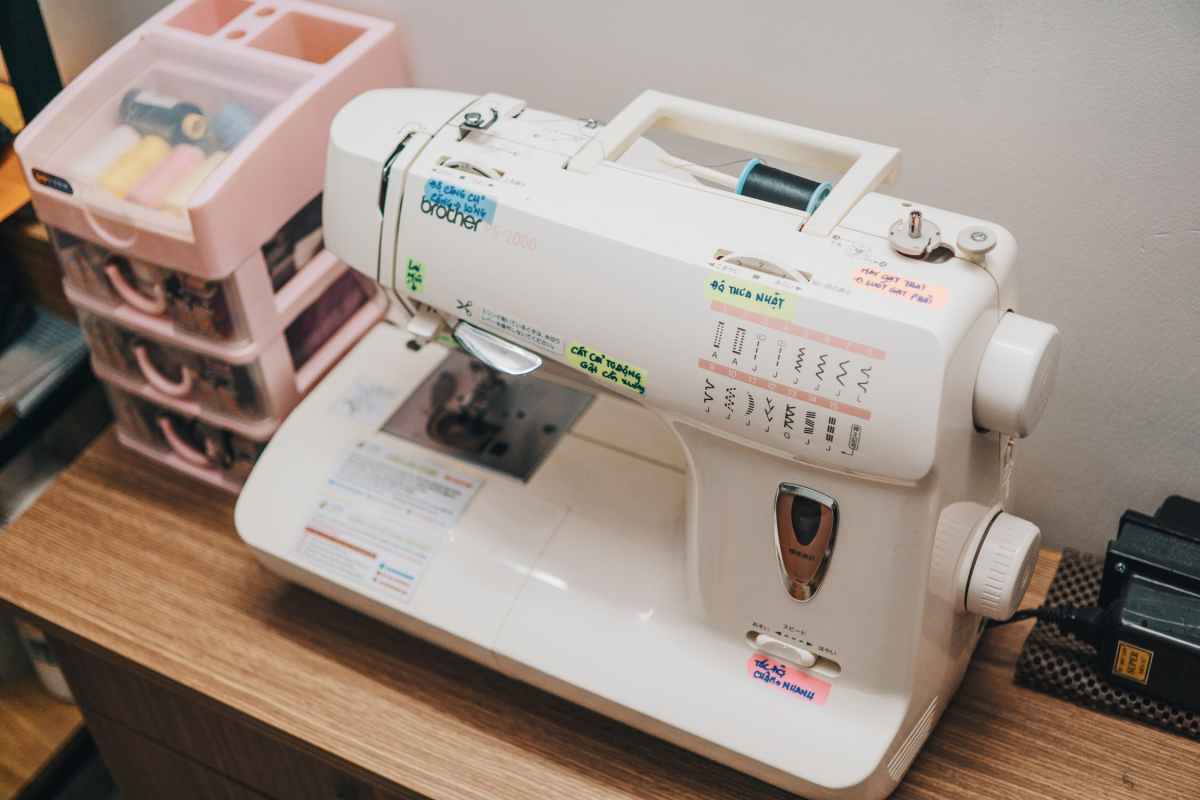
My mother, at least when we were much younger, would also make us clothes. I have a particular memory of her making this beautiful dress for my sister’s dance performance. In our village, schoolchildren perform regularly in school and community events, large group dances that are colorful and festive. After my brother was born, life got a bit more busy, and the sewing machine was stored away and was used more as a decorative coffee table, covered by a nice tablecloth and displayed in the house.

The sewing machine now fulfills many roles in my life. There’s the practical and utilitarian side, since knowing how to sew can help fix clothing and make them last longer. Hand-me-downs and thirfted items, worn by other people who have a different body size become an almost perfect fit for me. There’s the creative side, where a beautiful dress that doesn’t fit my chest anymore can become a beautiful sleeveless blouse, or the collection of old t-shirts can become a quilt for the living room, and the bedroom.

And then, there’s something else that I didn’t quite realize until now. It’s the “positive feeling” of continuing an inter-generational legacy. Perhaps it’s the same feeling that people get when they end up loving the same type of music as their elders, or mastering the same recipe that has been passed down onto the generations.

It’s strange because neither one of them actually taught me how to use the sewing machine. In my mother’s case, I was too young, and then she passed away so soon. During all those years I lived with my grandmother, it was she who was at the sewing machine, not me. And when I would bring home the sewing projects I have made from school, she would even scold me for how I badly did them. But I have been on the receiving end of her sewing handiwork. She would go to the old family home and take several bags of clothes that my aunts use to wear, and then she would tailor them to fit me. I have enough dresses go to to church and to go for Wednesday non-uniform days for an entire year without repeating a single outfit. Grandma would tell me which daughter wore each hand-me-down item that she was tailoring to fit me, and she would also complain about how some of the dresses are just too small for my larger frame.

Now I’m doing similar things. From making rags, to hemming pants, to making a personalized apron for my spouse and lots of quilts and pillow cases. He seems pretty thrilled about the opportunity to have uniquely designed items in the house. These DIY-made linens and clothing, he describes them as “made with love”. He is thrilled that between the two of us, we can prolong the usability of pants and shirts, as it fits right along with his tendency to save money.

This method that provided an intriguing combination of partiality, usefulness, resourcefulness and creativity, these women in my life have passed down to me. I guess that is in my way a way of homage, of acknowledging some kind of legacy.

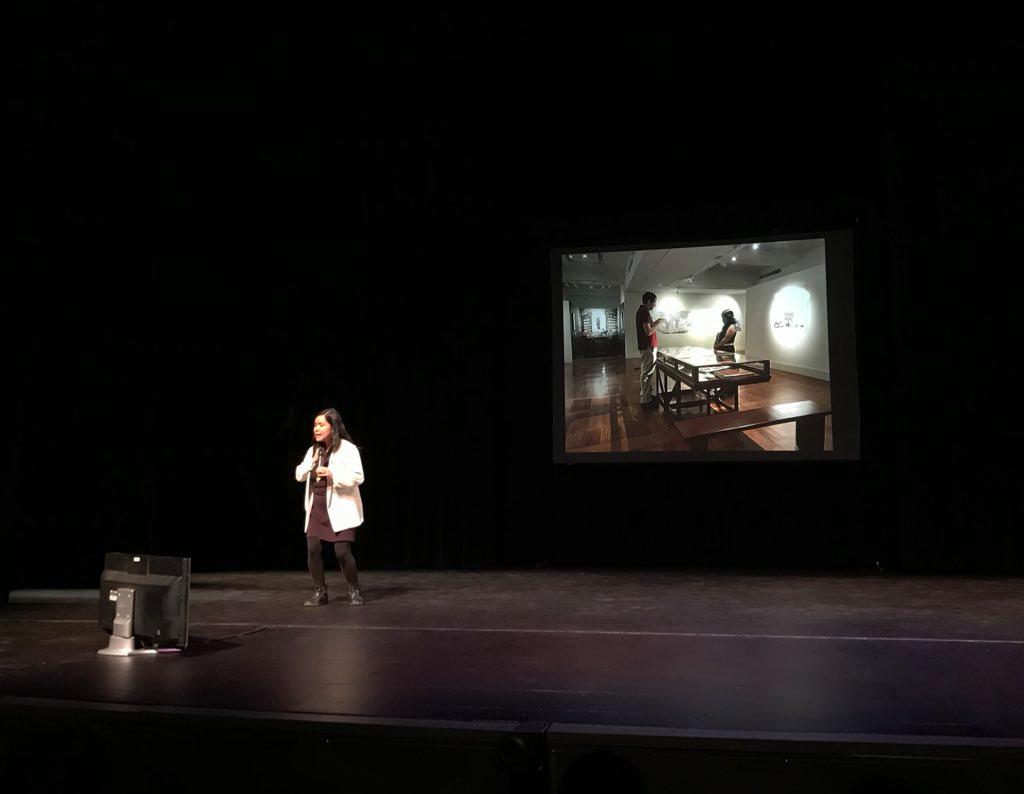
Pecha Kucha Night Speech Transcript: Dating a Sexual Assault Survivor

Pecha Kucha is a presentation format where the presenter has 20 slides, 20 seconds, and it is strictly timed. This is the transcript of the presentation I made on October 30, 2019 entitled “Dating a Sexual Assault Survivor”

  1. This is us, Corey and Giselle. He’s a white guy, born and raised in Edmonton with a complete family, and middle-class upbringing. I’m an orphan girl from a mining village in the Philippines, immigrated as a teenager, and bounced around different homes.
  2. The sexual assault incidents happened during my final year of high school in the Philippines. That same year, I moved to Canada in Aug 2007. It’s a tough year. Let’s say that there wasn’t enough support for me during this difficult time.  
  3. When you date a sexual assault survivor, disclosure will not come immediately. It took me two years since we started dating to feel safe enough to share as much detail as I can. It was a risk. I even told him he can break up with me afterwards.
  4. If you are the lucky one who actually had sex education in school, you may have to be the one to introduce terminology and concepts to your love one who experienced sexual assault. If you do this, be informative and non-judgemental in your approach.
  5.  In his case, he quoted to me the specific Criminal Code of Canada section that outlined the definition of sexual assault. He made it clear that he knows  what happened to me IS indeed, sexual assault – full stop.
  6. It is so important to make your partner feel that you believe them. If the culture, the environment they lived in doesn’t believe in sexual assault, if the people surrounding them didn’t believe either, your reaction and support will make a BIG impact.
  7. If there are other causes of trauma, things can get complicated. I’m also an orphan, and that influences my viewpoint in life in good and bad ways. But with time and support, these can be worked through simultaneously.
  8. In my case, I have a very difficult time asking for help about anything, big and small. It comes both from having to be independent because I’m an orphan, and from not getting the help I needed after I revealed I was being molested.
  9. If the perpetrator will be around, you need to have a plan. There was this trip to the Philippines, where the perpetrator and I will be in the same space during this family gathering. My partner made sure the perpetrator would stay FAR away from me.
  10. Doing your own research about the other challenges your love one experienced is really helpful. In this case, he did a lot of research to help him understand the different types of problematic family dynamics that I experienced but he didn’t to through.
  11. If they finally go to therapy, just be there for them. I went to therapy two years ago for about 8 months.  After every appointment, he’s ready at home with some cuddles and  conversation. We call it “follow-up therapy” – in bed.
  12. And, speaking of bed. When you get intimate, if they say no. LISTEN! If they want to change something, understand them and do it. This takes a lot of courage to say. It usually means that something is REALLY scary or REALLY painful.
  13. Your relationship CAN be the opportunity to realize that vulnerability is worth it, that you CAN be accepted as who you are. A chance to see that sex, intimacy and pleasure can go hand in hand. That saying no is not a deal-breaker.
  14. In many ways, they are experimenting with the idea of consent, which wasn’t there when they were assaulted. The question in their mind is “this time, do I have a say?” “Will I get heard if I actually say something?”
  15. In the summer of 2010 had our first kiss in his car, he actually asked “can I get a kiss goodnight?”. I actually liked it! I like being asked, being consulted, my input being valued. Turns out, consent is sexy.
  16. Reproductive health tasks from pap smears, STD testing, seeing a doctor, ultrasounds is a big deal. Being comfortable to do all these things is a victory. Encourage and celebrate it. And proactive with your own reproductive health as well.
  17. The survivor is primarily responsible for their healing and their journey. As the significant other, you will be there for support, patience and a little bit of push when needed. But this needs to be at their own pace and time. 
  18. It’s also worth nothing that trauma is not a complete excuse for awful behaviour. I’m relieved that I was confronted for my immature reactions and poor decisions, and we managed to talk it out and solve it as a couple.
  19. After 9 years of dating, I proposed to him in July and he said yes! And we just had our wedding last month in Edmonton! I’m grateful for him being in my life and supporting me in my healing process.
  20. This is my journey, other survivors and their loves ones may have a different process, and that’s completely okay. We want the same things for our selves and our love ones, acceptance, being cared for, being cherished for who we are.

This post will be updated once the video of the presentation is available. Thank you to Edmonton’s Next Gen, the organizers of Pecha Kucha Night that takes place three times a year, for the opportunity to present. For more information such as previous presentations how to support or participate, visit https://edmontonnextgen.ca/pkn.